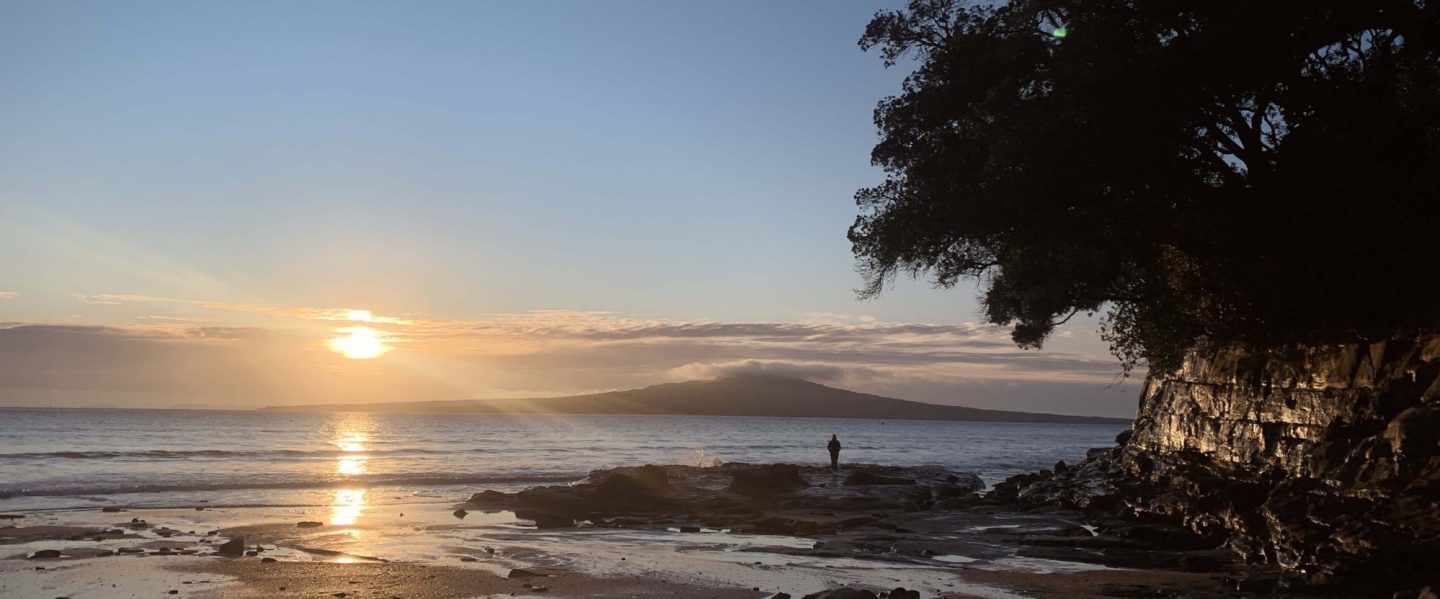


As a monument
tall, pointy, and obvious
some flaunt an ego
As a monument
tall, pointy, and obvious
some flaunt an ego
I’ve seen my share of dictionary definitions, but so far, I haven’t found a single resource that equates traditions with obsessive compulsiveness.
Let’s back up a little.
Today’s a special day where I live. It’s the first day of the Tamil new year, and this means people wake up at 4 am and make “pongal.” It’s a rice-based porridge made in two flavours: savoury and sweet.
Today’s better known as the rice farmer’s festival, because its purpose is to thank the sun god for their year-long kindness to the crops and to wish for the same goodness in the upcoming year.
Farmers and their families celebrate this day with abundant gusto, dedicating today, the first day of the new year, to the sun, and tomorrow, the second day, to the livestock that labour through the fields year round. They deep-clean and decorate their homes, and serve pongal to the gods and cattle as a sign of their appreciation. They then gather round as family, wishing each other a good year ahead, and gobble up pongal all day.
Now that’s a nice picture: Thanksgiving for farmers.
However, it evolved into a generic Tamil festival which led people to adopt the habit of porridge-making in their own homes. What happens when townsfolk and ultra-urban dwellers celebrate Pongal? Well, they wake up early and make both kinds of pongal, serve it to the gods that reside in the kennels they’d built in their houses, and then devour porridge all day.
You could say it’s not too different from what the farmers do—except the underline purpose and the divinity associated with thanking nature for a prosperous crop-yielding year has depreciated altogether.
And so now, every year on this day, we make a big deal of making pongal early in the morning. And if you’re in a village where everyone wakes up at 4 am every day, it’s rather a competition to see who serves porridge to the gods first. If the auspicious time begins at 10:30 am, they try and finish cooking well ahead so they can pray to the gods as soon the time’s right.
That’s just one aspect of the Pongal festival. Another is the custom of making pots-full of both flavours even if it’s too much for a family of three. Farmers live in extended families—they have children, nieces, nephews, and cows to feed.
In the city though, it’s just the parents and a child or two. Since everyone in the neighbourhood also prepares the same pongal, there’s often too much to give around to others.
Regardless of making this mistake every year, and feeling bloated, people repeat it again and again—just because making pongal on this day is a tradition you shouldn’t skip.
Now if that isn’t obsessive compulsiveness, I’m not sure what is.
The day dawned bright
On the east there was light
Whilst the west, still shrouded
Wintry mist on streets crowded
awaited with breath bated—nigh
For their sun to tear through the sky
—
Why today, wondering she had to clench
End precious life, god heartless wretch
Clutching a sorrow note from a friend
Message of death, never can mend
from the west to all the way east
had travelled wretched beast
—
As the world was between years
Our lives were between worlds
Farewell old times, my friend
Here’s a thought: If I knew today that’d I’d be dead by this time next week, what secrets would I want buried with me?
As I sat down to think about all the things that I hold precious, the physical baggage that I won’t be able to carry to my grave, I realised none of it matters as much.
A few weeks ago, I was on a trip with my colleagues. We were at a dam called Manimutharu, and although the waterfalls were too savage for us to shower in, we still explored the lower end of it where the water washed through polished and uncut rocks. I was climbing up one rock from the one I stood on and slipped. I fell face forwards into the water, right in between two big rocks. My head grazed the stone but missed a catastrophic collision by mere inches. My immediate reflex was to get back on my feet and protect my phone. But it took me a couple of seconds to recognise I’d lost my spectacles in the interim. It was a heavy current and all our efforts to find my glasses went in vain.
Now that was an expensive pair of spectacles. It was sun tinted with a cat’s eye frame. No one in my family liked it, but I’d insisted on it. I loved the way I looked wearing it and washed it every day to ensure maximum clarity. And it was gone.
To my surprise, I didn’t care. I knew I’d lost a lot when I lost my glasses, but it didn’t bother me at all. I was just thankful to be standing on my feet again.
That’s when it hit me. Even though I valued that spectacles so much, the experience of falling into the water changed my priorities altogether.
The moment I knew I’d escaped colossal accident, nothing material mattered anymore.
With that experience, I wondered again: do I have anything that I’d want to take away with me when I die?
It took me a while, but there was one thing I didn’t want my family to see: my diary.
When I started writing a journal, it was my emotional outlet. I poured out my happiness, sadness, pain, anger, and frustration to an inanimate character I named, X.
I complained about homework, summarised episodes of my then favourite television series, Robin Hood, and droned on and on about my parents. My family was in disarray, and I was going through a hard time. Every day was a struggle against the depression and self-deprecation that engulfed me.
It was an account of a disturbed teenager’s life. Now that I think about it, I took my inspiration from Anne Frank, one of the many Holocaust victims who died in a concentration camp. Her father published her diary years after her death, and it at once became a chilling reminder for the rest of the world of a time we all wish we could forget.
Although I read and appreciated Anne Frank’s thoughts and emotions, I never wanted others to read mine.
My journal portrayed me in the most vulnerable state I could ever be in. And years later when I moved out of my parents’ house, the diary remained there. I’d made my mother swear never to read it, but I’ve spent many days worrying for the secrecy of its contents. It disturbed my peace so much that I regretted having written it in the first place.
That’s the only thing I’d want to take to my grave.
But last week, I burnt it all.
My dad was getting rid of some weeds in his garden and wanted some papers to help ignite a fire. And as I watched years of diary entries crumble into ashes, I felt an incredible sense of calm.
I’m happy I wrote those emotions down—it was a physical way of letting them go. Now I’m also glad that all that I’d let go will stay gone forever.
If I die next week, I will take nothing but memories.
How about you?
A day of sharing
feasting, commemorating
for those who have all
another day on the street
for those who have none at all
I enjoy the holiday season—not because of the bells and whistles, but because it’s the only time of year I spend with my parents for their sake. Christmas Day is my dad’s birthday, and four days ago was my mother’s. And despite all the differences we have, despite our irritating tendencies towards each other, we still come together. Sometimes it’s more out of duty than love, but we’re there for each other nevertheless.
But not everyone’s like that. This is still just another day for countless of people in our world—first, second, third.
While most of us spend our day with friends and family, some spend it with those who have nothing. It’s important to recognise them, but most important—to sustain well beyond this one day.
I don’t know what Christmas is all about, but I sure as hell know that it’s not about being philanthropic one day and impervious for the rest of the year.
Cheers,
N

