The best place on Earth

I came across a writing prompt today:

“If aliens made contact with you asking for the best place to land, what would you tell them?”

Sunset in the International Rose Test Garden, Portland

Switzerland! Screamed my head.

Portland, said my heart that likes to think it’s well-travelled.

Somewhere in the mountains, quipped my analytical brain.

The more I thought about it, however, the less I wanted to recommend a place at all. Yes, of course, Portland is one of my favourite places. I spent five days exploring the city and I’d move there in a heart beat.

I felt rather the same way about Austin. It was hot and I got tanned on the first afternoon there, but I still enjoyed the greenery that filled my eyes and the breeze that kissed my freckled cheeks.

Seattle was nice too, with Pick Place Market being a great place for an afternoon walk and Alki Beach, a necessary reminder of human history.

Then there’s the place I call home—Trichy—with the Rockfort Temple, a massive rock that people claim to be half as old as our world itself. I had no idea—I just love scaling the mountain to look down at the city and feel ecstatic.

Or Chennai. Or Banaglore. Or Mumbai or Delhi—all the grand metropolitan cities in India.

Times Square perhaps, if the aliens don’t mind getting squashed in the thronging crowds. I can’t help but smile at the thought.

But, no. I would recommend none of these places to an alien visiting Earth.
I would instead ask, why come in the first place?

As I tried to identify the best place for a foreigner to visit, I found myself thinking about the least polluted, least ugly, and least offensive place. And that’s when I realised that although there’re plenty of places that fit the description, there’re also countless undesirable places—polluted, ugly, and so offensive that I wouldn’t wish it upon even my vilest enemy.

Our world’s hurting. It’s tearing at the seams and bleeding from within, and that’s only the physical damage. Aside from the tsunamis, the volcanic eruptions, and the random calamities we label “natural,” we’ve also become the termites that gnaw at the Earth bit by bit.

Just look around—children on a shooting rampage within the school campus, familial relationships crushing under the weight of egotistical self-worth, vulnerable people becoming targets of physical and emotional abuse—there’s no place on Earth left that an alien would feel welcome.

All the world’s travelogues, vlogs, and holiday destination businesses sell a Utopian dream of what the world should be. None of it’s true. I loved Chicago for its grandeur, but I also saw homelessness on every other corner. I cherish New York City’s cultural diversity, but there’re alleyways I couldn’t go past without fearing for my life.

That’s the reality of the world—it’s not a walk on roses. It’s a bleeding, sweating, rotting mess of human flesh.

And if aliens still want to visit, it doesn’t matter where they land because everywhere on Earth has a beautiful spread that’s also spreading thin. Alas, there’s a bitter pill to swallow as we look forward to closing another year on this Earth.
Solo

Solo travellers

strangers, strange conversations

always attracting

Payback

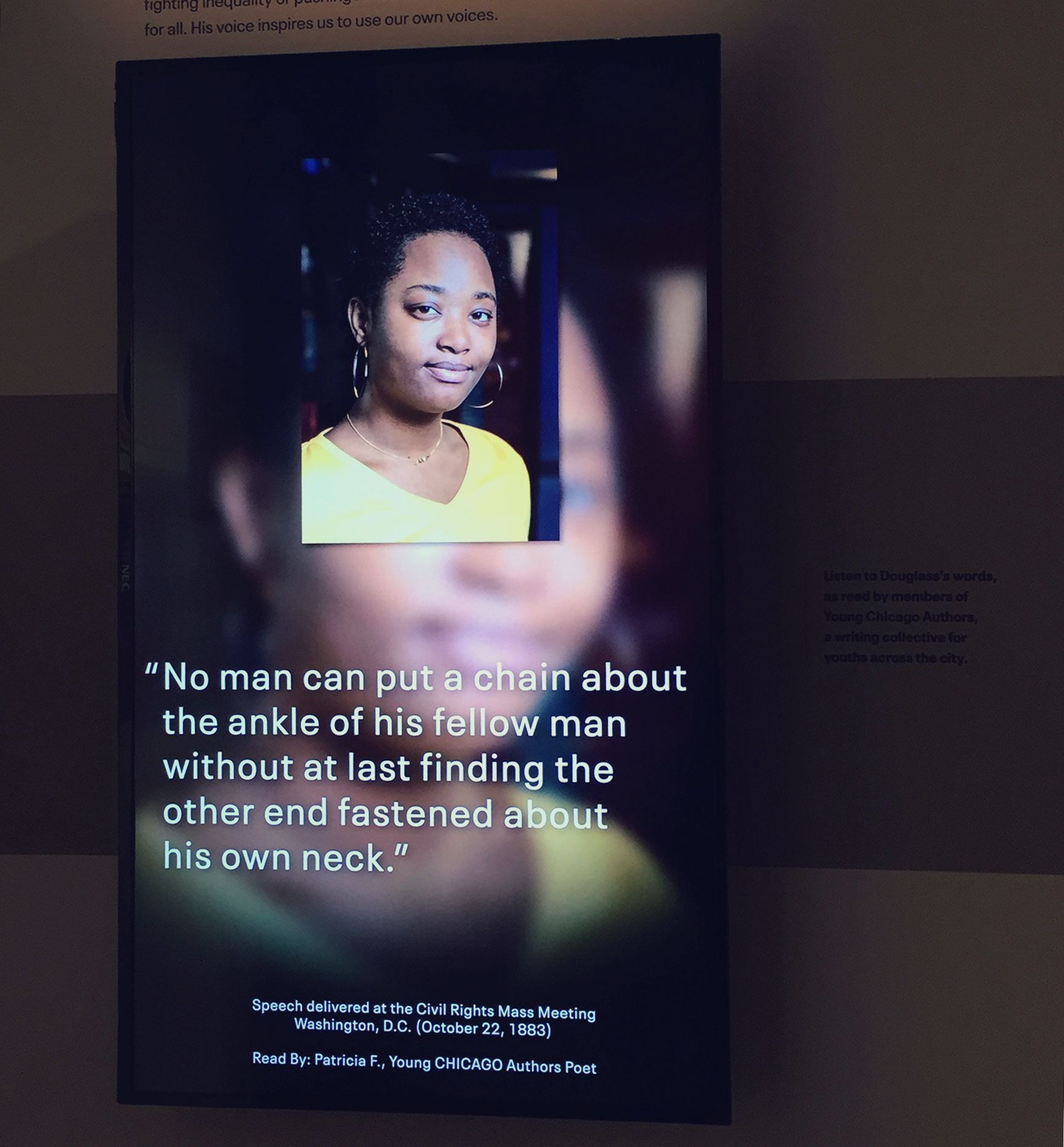
American-Writers-Museum-Chicago---quotes
American Writers Museum, Chicago

Go around ceaseless

like boomerangs, come choices

with consequences


Ping Tom Memorial Park

“Don’t forget to visit Chinatown.”

Advised my friend when he heard I was in Chicago. And I couldn’t let go of such a personal recommendation.

My colleagues were still hung up on the Mag Mile, and feeling bored, I took a quick train ride to Chinatown. Although I’d been to the Chinatown in San Francisco, I wasn’t sure what glittering candour Chicago’s held. I didn’t research beforehand, and so I had no idea what about the locality attracted people.

As I stepped out of the station, the first thing I noticed was that every face was Chinese. It was as if I’d dropped down into the nation of China itself. I never thought I’d be so surprised by the lack of diversity in the area.

To be fair, though, I didn’t venture too deep into Chinatown. The reason is I felt as an alien walking into an unknown territory. For the entire hour and a half I spent in Chinatown, I felt so uncomfortable about being the only non-Chinese person around. What’s more weird, however, is that no one else seemed perturbed by my being there. People went about their usual business, not sparing even a second glance at the foreigner wandering about.

Zooming into my map to find a place I could go, like a temple or shopping street, I identified a park near by. The Ping Tom memorial park was close enough to walk. And so shedding my inhibitions and my doubts, I strode towards the point on my map.

Ping Tom Memorial Park, Chicago - 1

Unlike most of the rest of Chicago, buildings here were smaller and more home-like. The main streets buzzed with people getting by, while the inner streets remained calm and empty. Residential areas were abundant and road traffic wasn’t as stringent as in the busier parts of the city. After a while, it felt nice and even less strange.

The closer I got to the park, the more debris I saw. On both sides of the street, garbage bins overflowed making a scene unworthy of photographs. I cringed, but I also realised—this was the real world. All around Chicago, a lot of the architecture and facilities were flawless, impressive, and inviting to travellers. But what I saw in that small residential part of Chinatown was the reality of most of our lives.

And I’m glad I saw that side of the city a well. Coming from a third-world country, people like me often misinterpret what it’s like to live in a more developed country. Sure, the lifestyle is better, but it’s not all a bed of roses or a dash of perfume.

Ping Tom Memorial Park, Chicago - 2

With that realisation, I entered the park. Built in the traditional Chinese architectural style, was a huge tent-like structure with benches around it. I didn’t know who Ping Tom was, but I did see a bust of him sitting smug in front of the building. Behind the building was a magnificent lake along which people sat breaking bread and laughter. Children rode their bikes around the park while a father ushered his kids to play fair. It was a typical evening at the park—locals spending time with family and friends. And once a while a tourist boat would float along the river, stopping at the park. Tourists would clamber out in clumsy ways, look around, capture moments, and get back into the boat to see the next big monument. And the locals went by their day, the interruption not disturbing them at all.

This slideshow requires JavaScript.

I’ll remember that scene for a long time. That experience, although uncomfortable at first, was eye opening. For the first time, I saw a tight-knit community proud of its heritage, living in a foreign land without compromising their respect for themselves or others.