
They looked at the sky,
moon thrusting the clouds aside —
it was time to howl.
Tag: postaday
A Hundred Years Later
“You’re a ghost, Harry,” whispered James.
The Paradox of Life
“The situation in America, the most highly monetized society the world has ever known, is this: some of our needs are vastly overfulfilled while others go tragically unmet. We in the richest societies have too many calories even as we starve for beautiful, fresh food; we have overlarge houses but lack spaces that truly embody our individuality and connectedness; media surround us everywhere while we starve for authentic communication. We are offered entertainment every second of the day but lack the chance to play. In the ubiquitous realm of money, we hunger for all that is intimate, personal, and unique. We know more about the lives of Michael Jackson, Princess Diana, and Lindsay Lohan than we do about our own neighbors, with the result that we really don’t know anyone, and are barely known by anyone either.”
“The things we need the most are the things we have become most afraid of, such as adventure, intimacy, and authentic communication. We avert our eyes and stick to comfortable topics. . . . We are uncomfortable with intimacy and connection, which are among the greatest of our unmet needs today. To be truly seen and heard, to be truly known, is a deep human need. Our hunger for it is so omnipresent, so much a part of our experience of life, that we no more know what it is we are missing than a fish knows it is wet. We need way more intimacy than nearly anyone considers normal. Always hungry for it, we seek solace and sustenance in the closest available substitutes: television, shopping, pornography, conspicuous consumption — anything to ease the hurt, to feel connected, or to project an image by which we might be seen and known, or at least see and know ourselves.” – Source
I was stunned.
We live a paradoxical life without even realising it. That’s when I decided I should read this book. It’s out of my comfort zone; it’s non-fiction, it’s about money, and it’s called Sacred Economics.
Of the 23 chapters, I’ve stepped into the eighth, and it’s been great so far. There are dull parts of it, parts I cruise over without feeling the words, but there are also parts of the book that I linger, reread, inhale, and wonder in wonder. Not everyone would enjoy reading it, but everyone should understand the essence of it.
I’ve scratched just the surface of the book, but my view of our society’s monetary system has changed forever, already.
Monkey Mouth
It’s a weird idea, fun. No two people have the same perspective of fun. And I didn’t have any photos that are even close to what someone else might consider fun. Except, perhaps, this one.
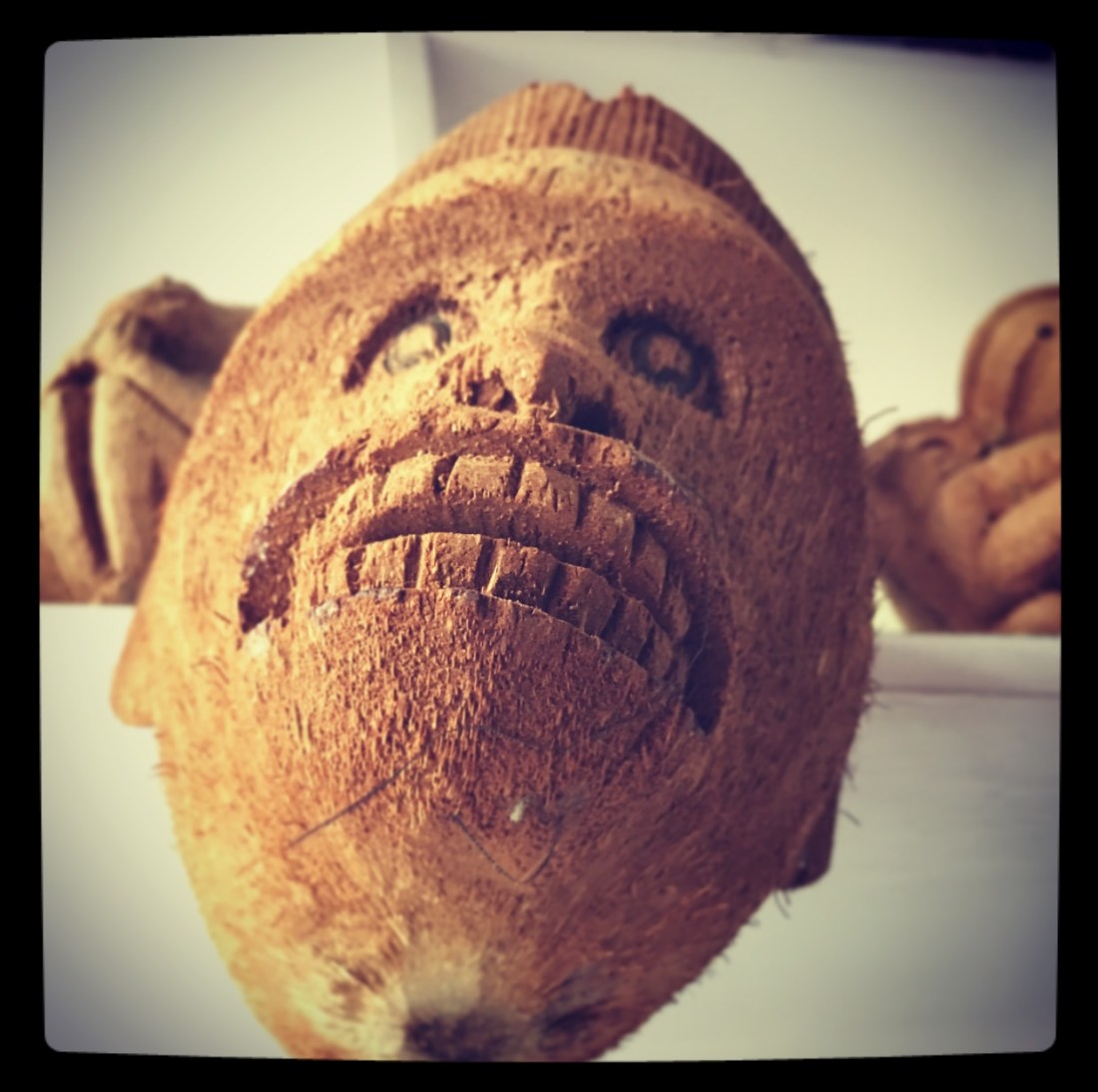
I took this photo at a crafts shop in Thekkady. I’m not the kind who loves to buy and accumulate stuff in my home, but I like appreciating interesting-looking things. And this monkey caught my eye right away. It was amusing, putting in so much handwork to create something almost ugly. And I couldn’t resist a close-up shot of that big mouth.
I was trying to get different angles when the owner of the store “reminded” me photos weren’t allowed. He made no effort whatsoever to hide his irritation at us. Guess we weren’t the first over-enthusiastic tourists at his shop that day.
To Be a Teenager

I once told my mother that I didn’t want her to be my friend. She was my mother, and I wanted her to be just that. But she had got it into her head from some hip self-help book that parents of teenagers should be their friends.
And I didn’t want that. After reading similar emotions on Quora, I realised I wasn’t the only one. And for good reason too.
Teenage is wonderful. It’s when we get to see the world in a new light, experience the pangs of attraction, affection, and even lust. It’s the time to roam around carefree and enjoy life for what it is.
Except, teenage is also when a child goes through a lot of things she doesn’t understand. Like the physical changes in her body, the unpronounceable hormones that show up from nowhere, attraction (or aversion) to people, and (goodness!) mood swings that are just too confusing to comprehend.
What’s more, we’re in the mobile era. The world expects teenagers to know everything; to discuss the latest tech buzz during dinner, finish a 30-inch essay in minutes, do some sort of sport, and break (even Olympic) records that they’ve never heard of before. The 21st century is not the teenager’s haven.
For a child starting out to navigate our conniving society, handle breakups and peer pressure, understand that mom and dad don’t talk to each other, and still perform well in school is too much of an ask.
Their heads are filled with emotions they can’t identify, thoughts they don’t know to express, and doubts they can’t clarify. They’d go to school happy and come back with a broken heart and no clue as to why they feel that way. Is it the teacher yelling at them for a silly grammar mistake, friends getting lunch without them, or that the cute boy in class hadn’t shown up that day? Anything could break their hearts. Because teenage is a myriad of hormones.
That’s why they need direction. They don’t need yet another friend to talk to because their friends have the same problems. What’s more, sometimes they don’t even trust friends.
Teenagers don’t need another friend in their parents. They need advice, instead. They want parents to teach them to handle a situation, not just acknowledge it — as friends do.
Children realise that their parents have already tackled the reins of teenage. And no matter how much they argue, complain, or swear at their parents for imposing a curfew after 10 pm, they know it’s for their good. Deep down, teenagers love their parents for those tiny rules because they know mom’s got their back. After all, a parent is always a stronger authority than a friend.
That’s why teenagers want parents to be parents. Because a mom who’s got her life sorted is motivation for a child to get her’s too.
 The Chaos Within