Oh, money!

The Millennium Park left me craving less touristy experiences of Chicago. Having made up my mind to hit some of the not-so-popular destinations, I stopped by the Federal Reserve Bank of Chicago.

They have a money museum.
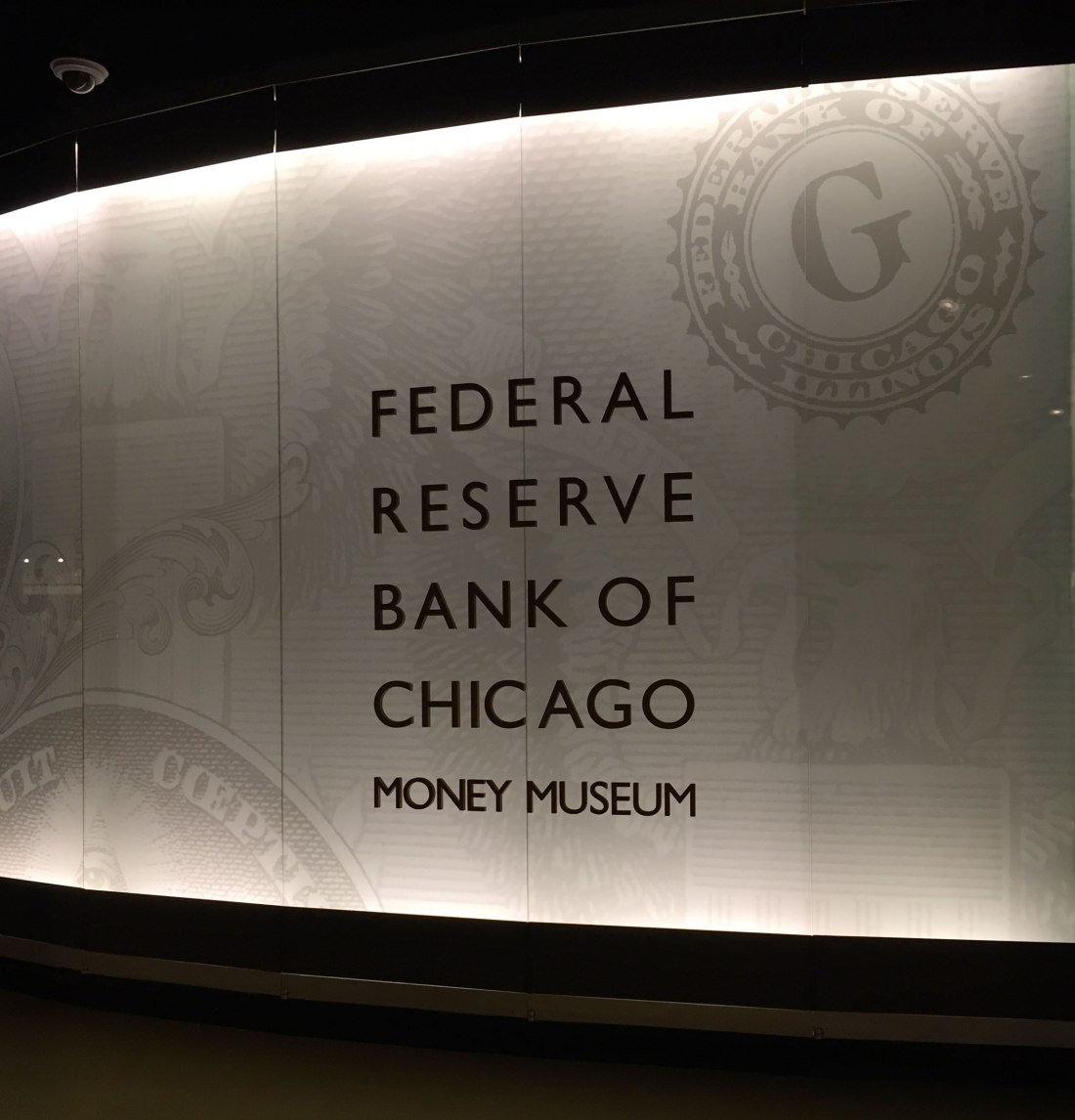
Federal-Reserve-Bank-of-Chicago---money-museum-1

I drew a blank walking in. It was a new idea—a money museum. I wasn’t sure if they’d have piles of money or just the history of money making. They had both.

Banners about Alexander Hamilton lines the walls He was the founder of the national bank, and the banners explained why and how the bank came into, and then went out of, practice.

This slideshow requires JavaScript.

Framed posters or print ads that ran during wartime lined the walls. It was like peaking into the past, observing the government’s strategies to encourage people to save money, and only donate to sensible causes. For someone who hadn’t the slightest knowledge about the financial history of America, it was all fascinating.

Currency notes are cotton and not paper, I learnt. Huh, I wondered—perhaps it was the then-government’s way of recycling and using less paper? It’s possible.

There was an interactive display with stories of the leaders etched in each of denomination of a currency note.  There were titbits about Grover Cleveland, Benjamin Franklin, Ulysses S. Grant, Thomas Jefferson, George Washington, and even more.

This slideshow requires JavaScript.

All the time, while I clicked away at the knobs, I couldn’t help but wonder how unlike a traditional history lesson this was. Instead of scanning through page after page here was a far more playful way for a child or a novice to start learning about a country’s currency system.

To take things further, there was a model of The Lifecycle of the Dollar. It showed how currency goes from production to circulation, and then to shredding and recycling. It took me a while to comprehend the complexity of the process and yet the simplicity of the explanatory model.

Federal-Reserve-Bank-of-Chicago---money-museum-7

Apart from those, were special exhibits about inflation, identifying counterfeit bills, the evolution of money, the types of bills used during various wars.

While I tried to wrap my head around all the new information coming my way, one of the museum staff announced a 30-minute presentation. A federal bank employee took to the stage, playing a 15-minute video explaining the federal bank’s operations in layperson terms. It was neither dense nor full of jargon—the presentation was understandable for someone foreign as I. And soon after the video, the presenter answered questions, dropping mind-blowing facts every now and then.

Who would’ve thought Abraham Lincoln founded the Secret Service a while before his assassination? Or that it’s the Secret Service that checks for counterfeit bills?

The Federal Bank of Chicago stores up to a hundred million dollars in its vaults, and is the only Federal Bank of all 52 states that remains unrobbed. Yet.

I came out of the session far more knowledgeable and curious than I’d ever been before. I was never one to care about banks, but that museum and the presentation made me see things with a renewed perspective.

If you’re in Chicago, visit this museum. It’s not just for kids, although it makes learning so much interesting, but it’s also a wonderful way for grown ups to pause and ruminate about the money we handle every day. We don’t realise this often enough but our purchasing power depends on so many varying factors and individuals. It’s eye-opening to understand how a single fluctuation in global economy can affect our rents, our mortgages, and our salaries.

 

Breaking tea

Bottled up in rows

residue—unlike anger’s

refreshing matcha

– – – – –

Photo: David’s Tea, Chicago

Layered

Building-in-Chicago

Assembled as cakes

from meticulous minds come

concrete puzzles tiered


Plans

plans
Inside the Cultural Center, Chicago

Victory doesn’t last

plan with reckless abandon

failure doesn’t either

– – – – –


The Millennium Park

My first day in Chicago, I decided to visit the bean. Of course, I’d heard from friends who’d visited and from the countless online recommendations that visiting the Millennium Park and The Bean within is a must-do activity while in town.

And so I did. Clutching my umbrella trying to stay dry—on the second day of summer, mind you—I entered the almost empty park. It was a Friday, but the rains had doused minds of potential tourists (I realised on another day).

Unmissable and grand was the Jay Pritzker Pavilion. Facing the Great Lawn, it’s a massive open area fit for concerts and parties for none other than the second-most populous city in the United States.

Jay-Pritzker-Pavilion

It took me a while to comprehend the grandeur of the Pavilion, and even more time to understand how weird the structure is. It’s an architectural marvel, for sure, but to me at first, it looked like a giant spider’s web—but a beautiful one at that, though.

Turning away, I faced the only other thing everyone spoke about—The Bean. I’d never understood what all the hoopla was about it. And I thought perhaps I’d see what’s so great about it when I did indeed see it in real life. I didn’t.

This slideshow requires JavaScript.

Sure, it looked nice. It’s a giant coffee-bean-shaped metal structure that reflects everything in front and underneath it. And because of the unique shape, the reflections are different from one place to another. When I stood outside the bean, my reflection seemed just like on any other mirror, but as I walked underneath, my reflection distorted. It was interesting for a few minutes, but I couldn’t gather why it’s such a huge tourist destination.

At that point I realised: The bean isn’t the only worth-while spot in the city. And I decided to find the other, less known marvels—the places that don’t make it into popular tourism brochures. And I did find some of them, too. (More on them later.)

Expecting something more promising from Chicago, I turned to the Lurie Garden. The raindrops on petals made already enchanting plans even more attractive. It was a beautiful sight. And like any plant-laden area, the scent of wet grass and fresh blossoms cheered me up in an instant.

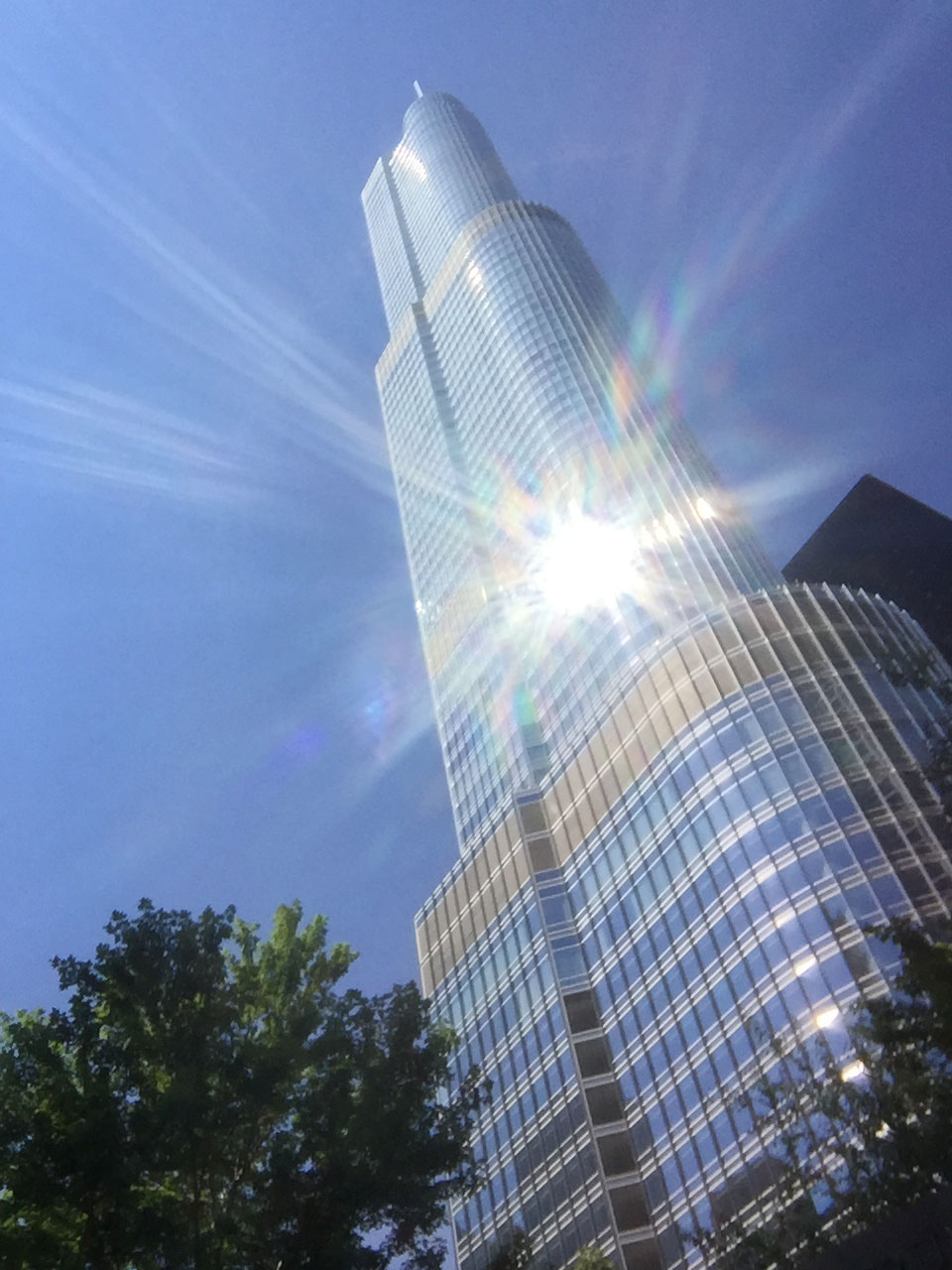
As I walked around the garden, crouching low to read the name cards of the plants, I realised how towering the buildings of Chicago are. All around me were high-rise constructions—some gawk-worthy, to be honest—looking over puny trees and humans alike. I was in a natural sanctuary in the middle of a concrete jungle.

Exiting the garden, I got lost. The Millennium Park is such a large area that it’s only too easy to lose your way. I didn’t mind, though. I like walking and exploring and I ended up going round and round in circles.

Then I saw something odd. It was a huge pillar, sitting snug in the middle of a big clearing. As I approached it, I saw it wasn’t a pillar but a fountain. A huge structure spitting water in an incessant manner. And it was still raining. When I walked around it, I saw there was another one, and with the face of a child on it. It was a pair of fountains, both flashing human faces that spew copious amounts of water.

This slideshow requires JavaScript.

It was fun to watch, but soon lost it’s thunder. It’s a massive attraction for tourists, and as I saw on a different day, children and parents alike play and drench themselves in the fountain.

Crown-Fountain---twins

For me, though, it’s more interesting to think about the resources and effort it took to construct these architectural wonders of the Millennium Park. During my visit I came across hundreds of such large and grand structures that must’ve taken the best of architectures and the most expensive of materials. It put the wealth of corporate America in a new perspective.

Oh, but the trip was wonderful. And more posts (and photos) follow.