An extreme society, narrated

It’s not the first time that I’ve felt this way. It’s not the first time that a book has taken over my entire soul, twisted it, wrung it, and then left me on the counter struggling to unravel myself. But The Handmaid’s Tale did that a lot harder than the other books I’ve read so far.

The Handmaid's Tale

A few days ago, I wrote about a book that confused me, that left me with so many unidentifiable feelings. I was referring to this one. And now that I’ve finished reading it, I can assert that I’m still lost in an ocean of emotion.

A colleague asked me what this book was about, and it took me more than a few moments of staring behind his ears and then some more into his expecting eyes to reply I didn’t know how to explain it. I don’t.

But what I do know is what I felt reading The Handmaid’s Tale. A close friend recommended the book and I obliged. So even as I flipped the cover I knew I’d like the book. I read through the first few pages, and grew confused with every paragraph I read. Who’s this woman, trapped against her will? And why has she accepted her fate without rebellion? Those were the two questions that popped into my head right at the onset. And they remained unanswered throughout the forty-six chapters of the book.

The story is set in a time and place that I didn’t recognize. It wasn’t historic and most characters seemed aware of modern social niceties. Which was good, except for the fact that there was this woman—the protagonist, the narrator—who lived in a closed room much like a prison cell. She had a red uniform and a constant veil over her eyes and head preventing her from looking at others or others from looking at her. She didn’t choose this life, but she didn’t protest against it either. It was her home, and she was a handmaid to a Commander. Her sole duty was to bear children for the Commander, and she had three years to do it. If she failed, she’d be cast aside to a worse fate. A mistress, she says she would’ve been in olden times.

She went to a school where she had to learn to live as a handmaid. She had classmates — other handmaids in training — and yet none of them were young women. They were all middle aged-women, I later learnt, who had led different lives before.

Every page I turned told me something new about this unfamilar world I was venturing into. And the confusion kept me going until all the pieces of the puzzle unravelled before my eyes, leading me to the final few pages — historical notes.

Part of it reminded me of Inception, the movie. A reality and a woman pining for the past. Her past, her life and society of the past is now the reality for me the reader. And so, it felt as if I was reading the life of a woman in the future. But it wasn’t too far into the future because they still had normal television sets and simple cars. It seemed so much to me like the present. Although it was also an alternate reality—no one in their right mind would stifle a woman as a mere container to bear children, at least not in this century.

The further I read, the more I understood what had happened. And that terrified me to the bone. An ordinary woman snatched away from her husband and child, stripped from her ability to live as an independent, and thrust into becoming a utility. And the reasoning: men and women were too busy with their own lives that they didn’t want children anymore. Ha, I mused before my recognition gave way to more terror. That’s what’s happening in our world right now. In the story, birth rates plummeted. In our world, it soon might. In the story, their solution is to force women to give birth. In our world—?

At that moment, I realised that The Handmaid’s Tale could one day become my own. We could walk into a future like that. After all, it’s not unheard of—we’ve seen polygamy in history, maybe that’s the future as well. Maybe, like in the story, we’ll have a bunch of gun-held ruffians walking into a workplace threatening to shoot down the manager unless he dismisses all his women staff. Maybe one day these ruffians would incorporate new laws and bring The Republic of Gilead into existence.

It does seem far-fetched, and even neurotic to an extent, but then again, so’s everything in the news every day.

“Superlative exercise in science,”

Angela Carter calls this book.

It is. In every sense. But it’s also an enjoyable read. I don’t believe that Gilead would one day become a reality, but I do believe that Ms. Atwood has covered the essential mentality of our flippant society. This book will make every woman’s eyes roll in wonder, it’ll inflame her ego and dignity. But it’ll also leave every reader a little scared. It’ll haunt me for the rest of my life, but it’s also one of the best books I’ve read. No regrets.

Reading now

reading

Books never cease to amaze. I’m reading such a book at the moment—one that came with trusted recommendation. I’ve been reading it far longer than my usual pace, but I attribute that to work and insufficient leisure. Nevertheless, it’s the first time that reading a book for a prolonged period hasn’t bothered me. Other times it happened, I got bored and lost my involvement soon enough. This one, however, keeps me coming back every evening, even if it’s only for a couple of pages.

Somedays I don’t even have the time to read through and appreciate an entire chapter. Even then, the narrative is captivating enough to grip my curiosity. It’s not a detective story—there’s no Sherlock-like whiz running around in handsome overcoats solving crimes and annoying cops all over the place. It’s not a romantic comedy with a bride to be, a confused groom to become, and fidgety bridesmaids arguing over nail colours. It’s not even adult fiction with the heroine trying to battle her adolescent pangs and a drug addled mother. All those story lines are common—I’ve seen them in movies, I’ve heard about them from friends who’ve been to the movies, and I’ve read them myself or reviews of such books.

The one I’m reading now, however—which shall remain unnamed until I finish it—is about a woman and how she’s accepted what’s become of her reality. And each page leaves me a terrified. So much so that I turn the page by instinct to find out what happens next. I relate to the main character, but it’s the last thing I want to do. I don’t want a life like hers and yet I can feel her terror, her disgust, and her mindset carrying over to my own. When she squirms, I do too. When she glows for the tiniest of victories, so do I. As she turns away from the people who command her, as do I. I feel her and know her as if she’s me. And in the fleeting second in between turning the page, I wonder—in terror—she could well be me. And that’s what keeps me going, wanting to get to the end of the story.

Despite my eagerness to know what happens at the end of the story, the build up so far also has me apprehensive. What if it doesn’t end well? I won’t want to read through, to live through, this woman’s life only to figure out that she ends up with what she endured: disappointment. And so a part of me wishes this story would go on, that the weirdness would continue—ironic though it seems.

Stay tuned for more detailed observations.

Creator

Wielding her weapon, Margaret felt immense power surge through her veins. Everything rested on her — she could make or break Larry. She could poke, tease, torture him even, and no one to intervene.

She could control him, discipline him, and boss him. Like a puppeteer she could play with his arms and legs, like a sore partner she could mess with his soul, like a disowning parent she could stare until he withered in shame.

She had created him, and she had every right to destroy him. After all, she wouldn’t be the first author to torment her characters.

Good friends and great coffee

We all have human friends and non-human friends. But then some of us have non-living friends, too. As a way to cope with work stress, I’ve been spending a lot more time with myself nowadays. I leave work early, brew up some coffee with dinner, and pick up a book. It’s become an everyday thing now, and those are the most peaceful hours of my day. I read some great books this way: To Kill a Mockingbird, When Breath Becomes Air, Catcher in the Rye, 1984, One Hundred Years of Solitude, and more. And along the way, I met some wonderful characters—Atticus, Jem, Winston, Anne Elliot—who I wish were my friends in real-life.

Good friends

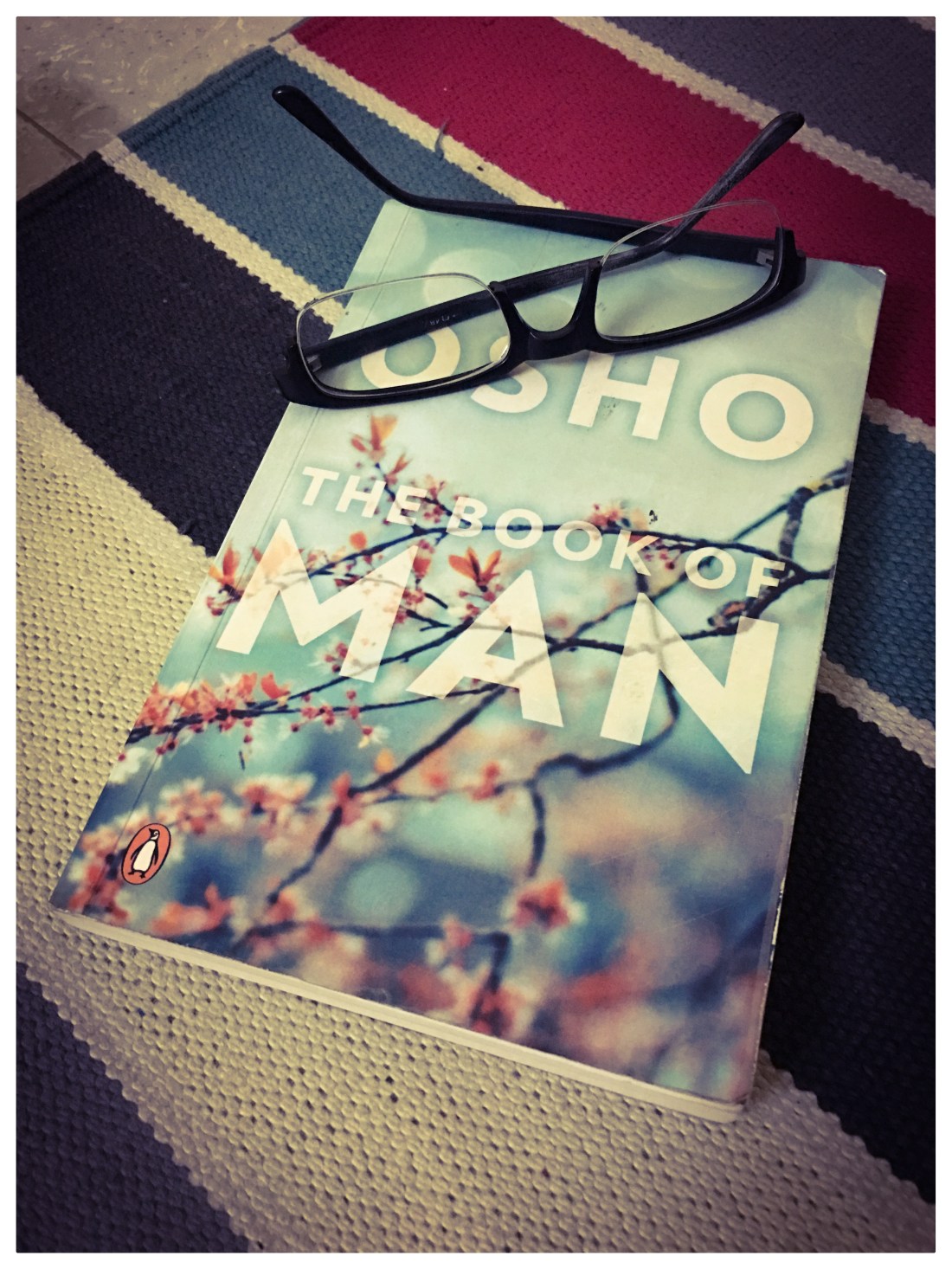
Osho’s Book of Man

I never imagined I’d find a book that I liked and disliked in equal measure. But then I read “The Book of Man” by Osho. He’s a famous Indian godman, and until a few moments ago, I didn’t know he was also a dead man.

I had read quotes of Osho before, and so the idea of reading a book meant for men excited me. But I also wondered how preachy the book would be. I knew that Osho was a Zen master and his disciples were abundant, so I was a little apprehensive I’d find something on the lines of the “do this in life and you’ll have everything you need” dogma.

The first thing that stood out to me in the book is its Contents page. Before I read any book, I go through the chapter names. I try to extract the essence of a book just by looking at the way the writer names their chapters. In this book, Osho addresses various issues from a man’s perspective; from facing the mother to serving the wife, from marital affairs to soulful meditation — every chapter is a name of the various roles a man has in life. Some of the names are, The Zorba, The Macho, The Playboy, The Politician… you get the idea.

It’s a lot similar Shakespeare’s “Seven Ages of Man” except Osho takes a more detailed view of things. Just the few pages amazed me. Simple narrative, great advice, amusing anecdotes brimmed throughout. It was an easy read, also because of its good print and fine paper. And even though I wasn’t the “intended” audience, I enjoyed the book nevertheless.

Reading through these chapters, I realised not just the truth in Osho’s words but also that I agreed with his points of view. To me they seemed obvious, something I already knew deep within my mind. And it made it all the enjoyable to turn page after page.

For example, the idea of raising a child terrifies me. Children are perceptive, they observe so much and learn all they know from what they see and hear. One wrong move by the parent and a child has a wrong idea rooted in its mind for life. And that’s why I try to stay away from kids, even when colleagues bring their kids to work. What if I’m having a bad day, and blurt out something I the kid shouldn’t hear? Of course, it could be just me being me. Not many of my friends think the same way — they love kids, they play with kids, and they never over think it as much as I do. That’s why I almost yelled out in agreement when I read passages like this:

“Children are very vulnerable because they are born as a tabula rasa — nothing is written on them, their minds are pure. You can write anything you want on the child.”

To me, Osho said all the right things, and my first impression of the book and the man soared through the skies.

Commenting about fasting, he says that there’s no point in it. He goes on to say how the world reeks in poverty and starving people while we have all the food and still fast — just for the attention it brings us. Here Osho picks on Mahatma Gandhi.

“Mahatma Ghandi had everything available to him, although he lived like a poor man. One of his intimate followers, a very intelligent woman, Sarojini Naidu — has a statement on record that to keep Mahatma Gandhi poor, they had to spend treasures on him. It was not simple poverty, it was a managed show. He would not drink milk from a buffalo because it is rich, rich in Vitamin A and other vitamins. He would not drink the milk of a cow because that too is rich, and poor people cannot afford it. He would drink only the milk of a goat because that is the cheapest animal and poor people can afford it. But you will be surprised; his goat was being washed twice a day with Lux toilet soap!”

Wikipedia says Osho was an outright critic of Gandhi so I understand the hatred. But this is a powerful moment; a lot of people revere Gandhi and try to live like he did. The writer has scattered the whole book with truths like this, truths that makes the reader cringe.

Excited, I read on. About sixty pages into the book, I stopped. Something had changed, and it was a change too jarring to ignore. His tone became more opinionated, losing sight of reason. Not a god-loving person, he attacks religion and social customs. I do it, too, so that’s not weird. But what was weird, though, is that he lashes out against Christianity and the holy trinity. And to make it a more distributed criticism, he names a few Hindu beliefs silly, too.

As he goes on, some of the claims become narrow and even absurd.

Speaking about homosexuality,

“Homosexuality is a necessary phase in the growth of a man or woman[…] So drop any attitude about homosexuality; that is nothing but the propaganda of the ages. Nothing is wrong in it, it is not a sin. And if you can accept it. And if you can accept it, then naturally you will grow out of it and you will start being interested in women, but you have to pass through it.”

That was painful speed-breaker moment. I read on, though, because I wanted to see where he went with these claims. Turns out, no where.

The quote had a disclaimer about Osho’s four stages of sexual growth: auto-sexuality in a child, homosexuality which precedes heterosexuality, and then the last phase of going beyond phase — brahmacharya.

By that time, I had lost interest in Osho. I had thought his observations were relatable, yet revolutionary in a way. But it turned out that I don’t have the maturity to accept all his teachings. My perspective had changed, and I grew disappointed.

In hindsight, I don’t regret reading the book. Well, there were moments I wished I hadn’t, but there were also moments I cherish. In short, this book sparked such conflicting emotions in me. I wouldn’t recommend this book to anyone, because most of it is too subjective. Also, the writing is almost terrible. As a reader, it turned me off. I began wondering why Osho made the same point in three different sentences. As a web copy writer, I twisted in my seat at the repetition in the book — it was far from thoughtful. If I had edited the manuscript, I would’ve cut out at least 70–80 pages.

Oh, and Osho also wrote a book for women, titled The Book of Woman. And yes, of course, it’s pink.