Points of view

I write a lot of short stories. I even tried writing, what I’m now almost embarrassed to call, a novel. (I was young and determined and I took up the NaNoWriMo challenge.)

But in almost all of the stories I’ve written so far, I’ve gone for the third person narrative. Something about “I” and “me” and “myself” makes me uncomfortable. “She” and “he” and “they” seem easier and natural. Which is fine, I know, except I’m now reading a first-person book, and it’s changed the way I look at the first person narrative.

As I read through the first few chapters of the book, I decided I didn’t like the writing or the flow of the narrative. When I was about to dismiss the author as not my type, I realised that the first person narrative had influenced how I saw the author himself.
That struck me.

I knew nothing about the author and his style of writing. But here I was judging his way of work from just one of his books. I was wrong. A person and a piece of work are two different things.

In the first person for instance, the writer isn’t the author at all. The writer is the narrator, the character. And in the book I am reading, the narrator and the character is a twelve year-old, delusional kid. No wonder I didn’t like the writing—why would a kid, troubled and a smoker, running away from school mind proper grammar and decent vocabulary? What I had considered—for a split second—as a failed writing style soon made me realise that it was indeed brilliant characterisation.

With that revelation, I read on, learning more about the kid and nothing of the author. It’s not the story of a kid as told by an adult, but a story of a kid as told by the kid himself. And that’s where the author struck a chord. He masked himself as a child going into the his mind, abstaining, all the while, from his own adult instincts. That’s hard work. It’s hard, when you’re writing in the first person, to ignore the inner self that nags at you to tell your character to just shut up and grow up.

It’s easier to write in the third person; he called her, she answered him, they fell in love, and then out of love.

But the first person is more effective. I now see how the child’s character develops, what he expects from his life, what the author has in store for him, and how both ‘he’s—the author and the kid—respond to their entwined life.

Some say the third person point of view is the all-knowing, god-like personality. But reading through this particular book, I now think the first person author has more control than the third person author ever will. While the third person author knows what every character is thinking and feeling at the same time, the first person author not only possesses a single character transforming their life from the inside out, but also alters every other character in the story. A first person author is not just the writer, they are the protagonist, the soul of a story, the one person who can change their own life and the storyline as well.

It’s a challenge to write in the first person. A challenge I’d like to take up sometime.

Talk about style

A while ago, I complained that an instruction book I was reading then had no creativity in its narrative. That was a pretty big accusation, considering the author of that book is Seth Godin and it was—needless to say—a bestseller. Although the book had wonderful advice, a pleasing layout with big headings and small, bite-sized paragraphs, even a bunch of clever wordplay strewn across multiple pages, the fact remains that “Tribes, We Need You to Lead Us” was a dull read for me.

I had then dismissed most guide books as dull as Seth Godin’s. I knew they were helpful and worthy in their advice, but I also realised that those aren’t books I’d read for pleasure. They were more like necessary evils you’d have to tolerate because they, in their own weird way, improve your life. And that’s how I had concluded my experience with instructional books that had blurbs saying, “Must read for every marketer” or “best financial advice for the average tax payer.”

It was with almost the same mentality and expectation that I picked up “Style — Ten Lessons in Clarity and Grace” by Joseph M. Williams. It was a part of my reading library at work and I picked that particular book because it had big fonts and reasonable spacing in the margins. Oh, and also because it was nice to caress the thick, white paper between my fingers. Aside from its aesthetic appeal, I expected nothing. That’s why the book caught me unawares spreading within me inexplicable joy, leaving me flicking through the pages to read more.

For the first time in a long time, a how-to-like textbook gripped my interest. It was about writing, and the author explains, with examples, why and how some sentences work and some don’t. Throughout the book, the author speaks of clarity and good sentence structure, which is all classroom stuff; to take it a notch further, however, he also speaks about the ethics of writing and how sometimes, you have to sacrifice clarity and concision because there’s more at stake.

Every teacher teaching writing would say clarity and brevity is the soul of a good piece. It’s important to empathise with the reader, giving them what they need to know, being mindful of their time. Williams agrees, and explains how to write for the reader, but in 10 lessons, 2 two epilogues, an appendix, and a glossary, he also admits that he can’t say how to identify the best way to write. There are no absolute rules to writing because it depends on the purpose, on the audience, on the writer themselves. And unlike so many books and articles that advise on writing, this book addresses that reality of writing.

In addition to the juicy meat of the book, Williams introduces quotations throughout. Every lesson, every chapter, begins with at least three famous sayings relating to the subject he’s about to discuss. To my surprise, some of those words were so witty I laughed out loud. I couldn’t remember the last time I had done that reading a how-to book.

All these were great things about the book. But the greatest thing was the writing itself. It’s not easy to write about writing in a way that readers, who are writers themselves, understand the writer’s intent—a feat that Williams has managed to achieve in an almost effortless way. That’s the actual lure of the book. Anyone who’s written anything knows that easy reading is damn hard writing, and the fact that this book is super easy to read says a lot about Williams as a writer, his process, and his dedication to revise and rethink every first instinct. For me, perhaps that’s the success this book has garnered.

It’s a glorious read for anyone interested in writing. However, for random readers looking to increase their “read” library in Goodreads, it’s just another instructional book.

Get a life!

I had just begun to read One Hundred Years of Solitude. I had left the book on my table while I rummaged in my bag for something when my colleague (a senior) cast me a look as if I were crazy to read such big a book. (It wasn’t that big, still—)

“Why are you reading stuff like this?” He raised his eyebrows in a scorn, then shook his head continuing, “Read about marketing, about selling, business, and technology. Those are the stuff that’s going to help you in future. These are just useless.” He cast a dirty look at the book I had wrapped in a polyethylene cover to protect its beautiful art.

He wasn’t the only one. About three years later, I had a similar conversation with another senior colleague. This time, it was poetry. I had mentioned reading some new poems when he suggested I read about the latest mobile technology instead. Sure, I laughed, I’ll subscribe to all tech magazines and read them, but poetry is for my personal time. And he smiled in a crude way shrugging, “Well, read this during your personal time.”

To which I replied, “I need a life.”

He just laughed it off, but I felt proud of myself. The first time, I was new at the job and worried about being rude to an experienced person at work. The second time, I was more concerned about myself. I had grown up.

But the fact remains: a lot of my colleagues, friends—even my parents—feel that work has become such a large part of our lives that we have no time for anything else. My married colleagues complain how they can’t bond with their in-laws. Some others worry each day that they leave home for work even before their children wake up. Even the typical 9–5 corporate world now has employees clocking in from 8 to 8 or 8 to 12. And it’s not just for a day, it’s for days together.

In a flurry of product launches and a rush of marketing campaigns, we often forget that home is a place away from office. We spend so much time at work, and all of the little time at home thinking about work. The balance goes to the noose.

It’s sad but it’s reality. We’ve lost so much of our life to work that we seldom realise what we’ve lost. We spend all our days toiling to ensure someone else’s luxury while we skip lunches for meetings, put off a family reunion for an official trip, and stay a little longer than midnight to finish testing the code. And the purpose of it all—an extra shift, a higher bonus.

However, at the end of the day, lying in bed, thinking about the tasks for the following day, we fail to feel the warmth of the blankets, hear the soft—yet evident—creak of the fan or the wind tapping against the windows, and notice the curtains swaying in the breeze. Somehow, while we were busy living to work, we lost the will to live at all.

My colleagues are (un)living examples, and I’m walking on the tightrope. It’s time for a change.

Persuasion

When it comes to classic novels, it’s a love or hate relationship. There’s no in-between, no neutrality. At least that’s what I thought.

I bought Persuasion by Jane Austen about a year and a half ago. But I let it rest in my cupboard for a good few months before attempting it. When I did, it took me a long enough to get through just half-way. I admit, it was slow. But I didn’t want to give up.
People had said wonderful things to me about Austen and her Persuasion. And I wanted to see what they saw in her books.

I spoke to a well-read friend, and she mentioned she didn’t like classics like Persuasion. I felt like I had hit a speed bump. Just when I worried that I was the only one doubtful of the book, here was another who was brave enough to admit it. It was reassuring to know that I wasn’t the only one struggling to love Austen.

Not long afterwards, life drifted by, and so did the book. Until a few weeks ago when I decided to finish the goddamn book. Closure is a powerful motivator.
I finished the book in three days and it changed my opinion about Austen and Persuasion. Also, I understood why people had conflicting views about her books.

I liked Persuasion.

The story was great. Anne Elliot’s character is relatable — she isn’t just a pretty face. She hats everything about her false and two-faced society. The small talk, the vain parties—she struggles to get through them on a daily basis. That’s most of today’s women. And Austen wrote this story almost a century ago. That’s the beauty of it, that it holds true even after such a long time. I love how Austen portrays social conventions — how Mr Elliot entertains his rich cousin Lady Dalrymple despite being in weak terms. He worries that Lady Dalrymple hadn’t sent her condolences for his wife’s death (thereby ending ties) only because he hadn’t sent his condolences for the viscount’s death. He wonders how to revive the relationship.

“How to have this anxious business set to rights, and be admitted as cousins again, was the question: and it was a question which, in a more rational manner, neither Lady Russel nor Mr. Elliot thought unimportant.”

“Family connexions were always worth preserving, good company always worth seeking.”

He seeks to trumpet their relationship because of the Lady’s wealth, and not because he cares—that’s the reality of the present society too.

The story was great. But the writing was old. The narrative comprises lengthy sentences, archaic spelling, paragraphs of reported speech, and plenty of passives. Persuasion isn’t for the modern reader. It’s not for the 21st century youth with fleeting memories, and attention spans that span less than a goldfish’s. It’s not for the internet surfer, the scroll-addict, or the lover of the feed.

Persuasion is a classic. It’s for those who read for the pleasure of reading. It’s for those who look below the narrative layer and seek the symbolism in the prose. Complex sentences display the complexity of Austen’s society. Reported speech shows how other characters influence Anne; the words, the thoughts aren’t hers. Weird spellings reveal how outdated the society’s mindset is, even for the 19th century — a mindset that lives even today.

That’s how beautiful the story is. It goes beyond the plot in the page. It takes the reader into the English society that Anne lives in, explaining both in words and in symbols, how others influence our thoughts, our decisions, and the way we live our lives. The book is a truth serum that mirrors our own modern life that isn’t much different from Anne’s.

Of Murder in Non-Fiction

There are two types of readers of murder: one who read fiction and non-fiction and know what they’re reading. The other is those who read non-fiction and complain it’s not as good as fiction.

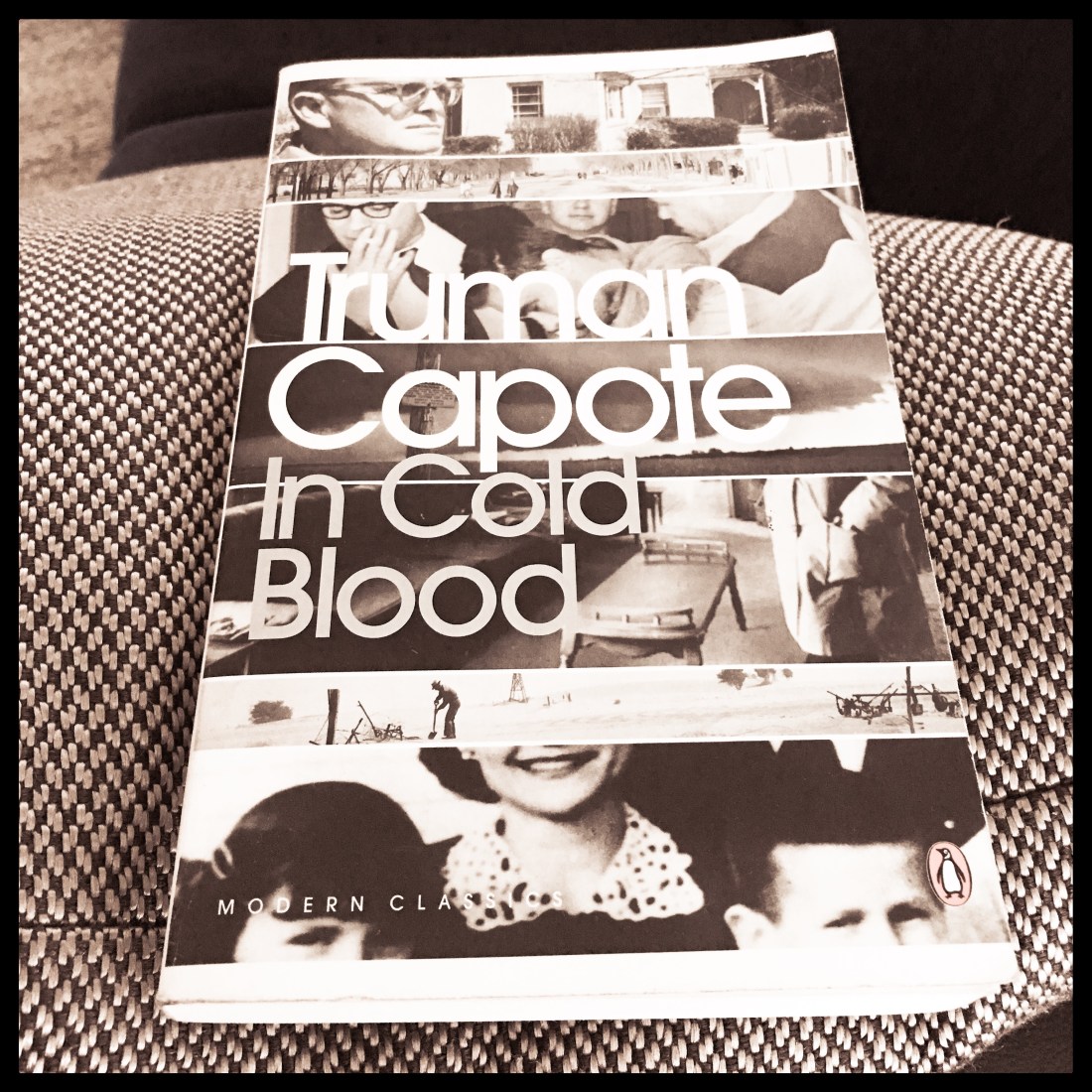
I don’t care about the latter, but I don’t see how they don’t see the difference between the two genres. For instance, In Cold Blood by Truman Capote is non-fiction, and it doesn’t read like fiction. For the adrenaline junkie, it’s no page-turner. For readers who expect an Agatha-Christie like unravelling, non-fiction murders are a bore.

In Cold Blood by Truman Capote

Just a few weeks ago, a close friend recommended In Cold Blood to me. She enjoyed it said I too would. Well, since she knows me and my preferences, I decided to heed her suggestion. However, when I asked around to borrow the book, one voracious reader told me not to waste my time over In Cold Blood. It’s a slow and dull read, she offered.

I was surprised to hear such conflicting views from two well-read people. I read the book nevertheless. That’s when I realised the true difference between murder-fiction and murder-non-fiction.

For one, the intended audience in non-fiction is not the same as in fiction. While almost any reader can appreciate the thrill of chasing an evasive fictitious serial killer, not everyone can understand the subtleties of outlining an actual murderer’s mind. Truman Capote, in the book, isn’t addressing the impatient ones who want to finish the book and lable it “Read” on Goodreads. He, instead, addresses those curious to know the way the mind works. The author speaks of Dick and Perry’s childhood, of Perry’s troubled family and abusive upbringing, of his dreaming of a giant bird, and of his attitude towards his partner in crime. None of these details matter in fiction because no one would care. In non-fiction, however, knowing Perry’s reluctance to swimming because he’s embarrassed by the way his legs appear, makes him relatable—it makes him human. And that’s the kind of depth that no fiction goes into. For someone looking for short bursts of exciting crime, a non-fiction like In Cold Blood is just plain boring.

This is my first non-fiction murder novel. And so it struck me how different the author’s tone is than in fiction. Capote doesn’t try to lure the reader with mysterious adjectives and goosebumps-inducing alleyways. Instead, he sticks to the facts—the cold facts that chill the bone one page at a time. For instance, there’s no element of surprise in In Cold Blood. I had gone less than fifty pages into the book, and I knew the killers, their appearance, and their uncanny ability to smile as they killed—so to speak. That’s how non-fiction works; the author has little to nothing to fold in a heart-stopping moment into the plot. The whole world knew the victims, the killers, and the history of the investigation—even before Capote began writing the book. It’s no surprise that there’s no surprise in the story. Nevertheless, the book reads like a true work of art. The crime was slick, chilling, and brutal. And Capote does nothing to make it sound any less.

Come to think of it, when reading a non-fiction murder story like In Cold Blood, a reader shouldn’t expect anything. The purpose of non-fiction is in itself different from fiction. While fiction has a perfect beginning, a crescendo, a plot twist, and the climax, non-fiction serves a larger purpose: understanding. Non-fiction readers don’t look for the climax, because the book opens with it. Instead, they look to look into the lives of the murderers, the routines of the victims, what they ate the day they were killed, who Nancy helped bake a cake, which part she played in the school play, how much she loved riding the horse with her friend. The non-fiction reader looks for life in murder. They find reality in hostility, and they seek to read the killers’ intentions. Because non-fiction murder isn’t just revenge, it’s the result of an entire lifetime of bottled emotions—boiling down to a moment of unsteadiness. And that’s what a reader hopes to discover.

It’s not just the reader, though. Even the author of non-fiction murder has a purpose that varies from fiction. Writing about murders takes more than time and patience. It’s takes more than writing itself. Capote would’ve spent a lot of time researching the facts, but he also would’ve spent years trying to uncover the mystery of human psychology. I can imagine how it must be for a writer to flip through gruesome photos and statistics. The purpose, again, isn’t to write the most spine-tingling novel. It’s more than that—it’s to bring to life, and show the world, the soul of a human who happened to take a wrong path.

I enjoyed every bit of In Cold Blood. If you haven’t read it already, you should. Be warned, though: if you’re the fiction lover who is reluctant to spend time (even as long as a month) on a single book, then don’t bother. But this is one wonderful book. Capote’s sharp writing would drive through your chest, and you’ll yearn to know more about the men—who could well be your neighbours—who also murdered a family in cold blood.