Under unnatural circumstances

A self-professed nature lover, I adore wild trees with their branches untamed, flowers scattered about, and squirrel-bitten fruits ripening in various stages. Something about unpruned nature gets me excited every time I see it. Whenever I see manicured plants in the various housing apartments in my locality, I cringe and pass silent judgement at those who resort to a vain attempt at getting close to nature.

Regardless of my disdain, however, I realised that I appreciated the same practice when I saw it in the US. Not because it’s a foreign country and that I wouldn’t say anything against such a global leader—no. A dissenter, I can vent about the country at length. But that’s not for now. But the real reason I enjoyed organised nature in the US is because for the first time, I saw it done in style and in clear consideration. It was in Dublin, a small locality in the Pleasanton area of California.

Hacienda Drive, Dublin

The first thing that struck me about Dublin and the rest of Pleasanton is how clean the place is. I’d seen far shabbier localities in San Francisco city, so I knew Pleasanton did something different. It was when my colleague mentioned that Pleasanton is a planned city, that it dawned on me what an artificial place I was at.

Nothing about Pleasanton seemed natural. I began to notice the little things that came from elsewhere, planted and pieced together to form the city. From the trees that lined the footpaths to the pebbles that added beauty and glint, not a twig was out of its place. Shrubberies grew well within their borders, leaves stuck to their branches, and all fruits at the same stage of ripeness.
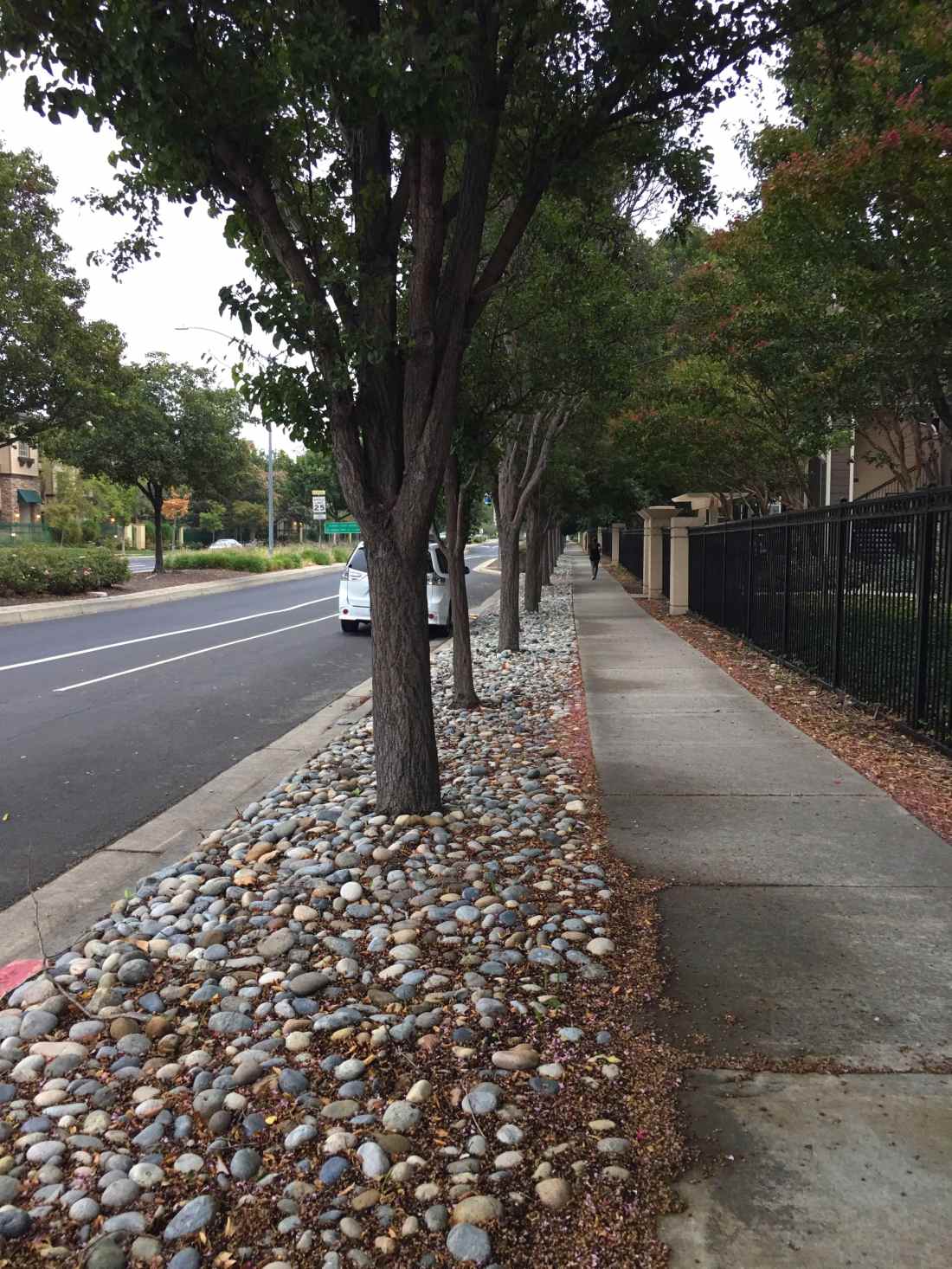
Pathways, Dublin

Regardless of all that, I still enjoyed walking around the neighbourhood. I didn’t know why at first, but the more I explored, the more I understood. Dublin is a rich neighbourhood. Most of its population has passed middle age and is considering settling down and retirement plans. Since a lot others are either business owners or high-level corporate employees, they don’t need to haggle to get through each day. They, unlike people in unplanned cities, can afford to demand perfection. They’re so accustomed to having things their way that improperness gets on their nerves. The whole town, for instance, shuts off at about 9:30 pm. Nightlife is almost non-existent in the streets and silence rings louder than a foghorn.

Houses in Dublin

All of this was new for me. I’d never before shared privileges that the Dublin folk takes for granted. And that’s why the perfection and drastic change of scenery impressed me. Walking by house after house, each competing with the other in terms of class and bigness, I gawked in surprise. Walkways were seamless, street signals on time, traffic rare, and drivers polite. While I admired in wonder at everything I saw, it was as if nothing could surprise the locals. They’re used to everything being the way it is—designed without a single flaw.

Did I cherish my time in Pleasanton? Of course, I did. I felt elite and rich. Although I don’t see myself living in such an environment (until perhaps I’m 60 and cranky about petty things) it was wonderful nevertheless.

Dublin trees

Oh, and though authorities count and account for each tree, the sunlight glittering through them is a sight worth beyond words.
What no one says about travelling

When you read travel blogs, it’s always about how fascinating the journey is, how helpful people are, how charming the kids behave, and how scrumptious the meals are. Few bloggers talk about the sprained ankles, weak knees, and frostbite. And almost no one says how it is to hear about a terror attack in a place they’ve once been in. We should talk about that more often.

Travelling is a wonderful way to spend your life. Not only does travel teach you to handle yourself in a more mature way, but it also teaches you to be respectful, humble, and not be an asshole. Travelling throws you in uncomfortable places, shoves down your throat experiences you don’t want, while still bringing you out feeling fresh and craving more. That’s the beauty of travel. I’ve yet to meet a traveller who’s tired of travelling. I’ve yet to encounter a wanderer who doesn’t want to wander anymore. I’ve yet to camp with a hiker who’s ready to give up high sights for high heels. If there’s anything that all travellers share, it’s the passion for travelling despite the hardship. I’m no different.

Although I haven’t travelled as far and as wide as many other travel bloggers, I’ve seen enough to know that I never want to buy a house and settle down for good. I’ve walked enough to know that I can walk more, and I’ve seen enough to know I’ve seen only a grain of the desert. But I’ve also been to a place that’s no longer the place as I remember it.

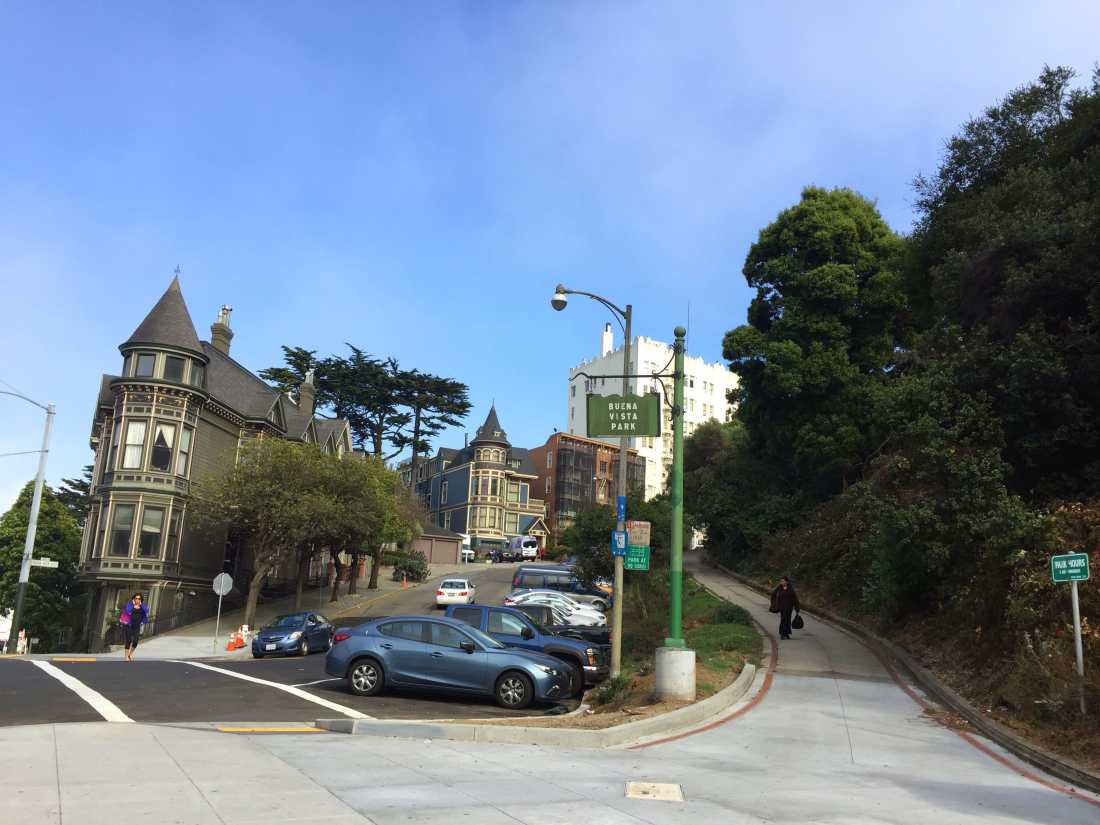
Buena Vista Park, San Francisco

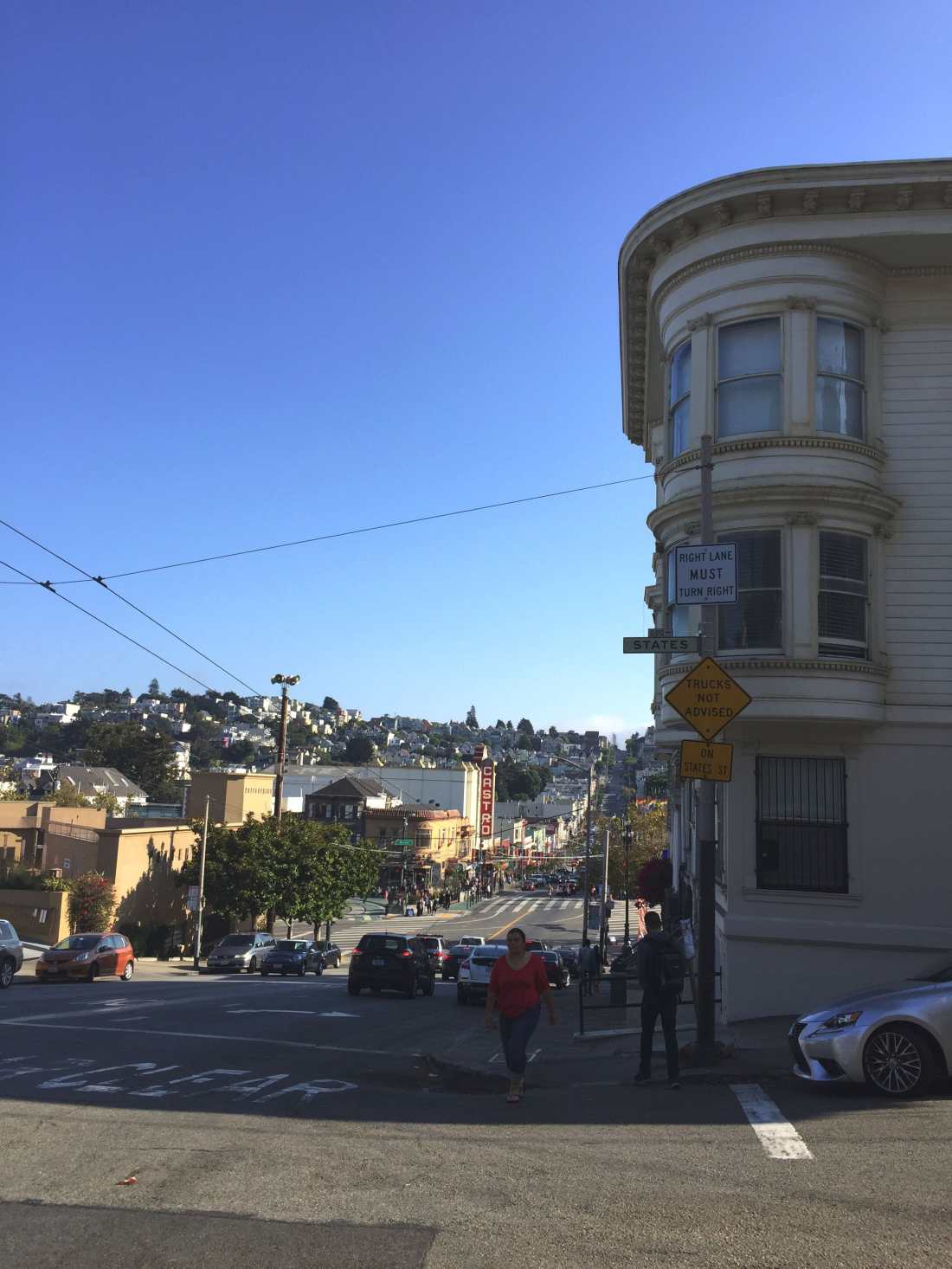
I was in California a few months ago. I was travelling for work, but catching as much as non-work sights as possible. The city of San Francisco sits in my memory as a wonderful and welcoming region of all people and opinions. The district of Castro remains as a place I can always visit and share the cheer. So when I left the country, I felt I knew San Francisco a little better than I did before visiting.

Within a month of being back, I heard news about a random shooting incident in Castro. Several people heard gun shots in the dead of the night, and a police officer got hurt.
Out of nowhere a tight knot clenched my throat. I’d been there. I know where it happened for I’d been standing on that same spot a mere weeks ago. I’d bought coffee in that locality. I’d rested my sore feet after hours of continuous walking. The place that gave me comfort had given someone else a death sentence. I didn’t even know the place anymore.

The streets of Castro
Castro, San Francisco

It was no longer the place I’d fallen in love with. That incident made me wonder if what I’d experienced there was even real. Sure, I was a tourist and tourism isn’t the same as everyday life. When I walked the streets of San Francisco, however, nothing about it showed hatred or a potential threat. That’s why the news left me nonplussed. Over the next week, I read about three different shooting incidents in the same city I’d grown to admire.

While this happened, wildfires raged all over California. Although I knew the state is prone to fires every summer, and seeing hills in their neighbourhood go up in flames isn’t new for the residents, it still shocked me. It pained me to watch graphic images of searing red flames lapping up through grass and grass-fed beef as a vacuum sucking up dog hair.

None of these incidents made me hate California. They, instead, left me lamenting. We no longer care for the things we should care about. We don’t see in our land what a foreigner sees. We’ve reached a point where it takes strangers to identify the beauty around us.

All these have made me more vulnerable to distressing news. I flinch when I hear about a stabbing in a place I’ve visited. Even if the incident isn’t related to me or with even the safety index of that particular city, it still affects me. It’s made me more sensitive and inclined to preaching a peaceful society. Travelling has made me care more about this place we call home.

Perhaps, just perhaps, if people travelled more, we’d appreciate the world more — leaving it better than when we entered.

Well, I can hope, can’t I?

A first-time solo traveller

Aloneness has always been my happy place. Although most people would assume I suffer from social anxiety, it’s in fact a bad case of intense affection to solitude. I find that it helps me focus on my thoughts and prioritise myself. The society I grew up in, however is overprotective to the point of patronising. My parents make constant effort to prevent me from being too alone.

My father, in particular, agonises that I’d end up forever alone. It’s this deep-seethed fear that makes him flare up with emotion every time I hint at going out alone. And to avoid causing more pain than he already feels, I often choose to obey rather than counter argue. It’s easier for the both of us when I avoid confrontation. Besides, at 60+, it’s almost impossible to introduce change in his attitude. There’s just too much inertia there.

It thrilled me when my boss announced I’d be travelling to the US with a colleague for a work event. Here was my chance to venture on my own, a chance I wouldn’t forgo. I decided to extend my trip by five days and inaugurate my solo travel experience.

Hello, SFO
Hello, SFO!

Soon, with lots of help from my North American colleagues, I’d made travel and accommodation arrangements in Portland and in Seattle. I’d spoken to strangers, made flight reservations for myself, and even mapped out my itinerary. I felt proud. I realised I’d organised my life without being my parents’ puppet. By the time I left home and embarked the flight, I had everything for the following month planned out, ready for life to play it out.

Finishing up the work event, my colleague returned home as I prepared to run solo. As I walked out from my employer’s sponsorship and embraced my own, I felt my entire weight on my shoulders. To my sheer surprise, though, it neither scared me nor dragged me down. It, instead, made me feel complete and independent.

For the first time, I realised, I—who’s never felt autonomy in personal life—could manage being a part of the world on my own. Growing more and more fond of that comforting thought, I took off on my journey.

I couldn’t have planned and scheduled any of it without my friends and friends of theirs I acquainted with during the process. But I no longer expected my father to do the talking on my behalf. I didn’t need him to set up my life for me. And that, I think, is the most pivotal part of every first time solo traveller’s life—finding their own path, and accepting its consequences.

Welcoming a New Year

“I’m allergic to negativity. It’s my New Year’s resolution.”

Jessica said to the woman smiling at her from the mirror. She brimmed with self-confidene and positivity. New Year’s Eve had been crazy. She’d dined with friends from work before heading out again to welcome the new year with friends from college. As she washed away the previous night’s vodka and lemon from her hair, she also washed away all her problems.

Shielding her eyes from the bright light, she stepped out of her apartment and into the gleaming Honda Civic fresh from a service. Enjoying the lingering buzz, she zoomed her way to the towering corporate building.

————————————

“Chai!”

Jesintha cowered as her father’s foot jabbed her ribs. She should’ve known. The previous night had been New Year’s Eve—as if he’d needed reason. Before he kicked again, she sat up rubbing her swollen eyes.

Her mother died giving birth to her on a New Year’s Day. The man who’d raised her didn’t resemble a parent. He’d give her enough to last the day—she’d cook, clean, and eat leftovers. He’d sleep at the toddy shop, coming home for tea every morning. Unless she overslept. That’d result in black eyes and aching ribs.

Handing him chai, she wished only one thing: to be elsewhere on her next birthday.

Travelling thoughts

The past year gave me a lot of new experiences. I had to step out of my comfort zone and find new zones I’m comfortable with. A major part of it came from my trip to the US. It was an official trip that taught me more than official stuff.

Even before the actual travel, every bit of preparation was a new journey by itself. From filling up the visa application, biometrics, and visa interview, to planning, packing, clothing, and embarking the boeing, every moment felt special.

From the moment I landed, everything I looked at awed me. Having lived all my life in a third world country, I can’t explain my wonderment at walking through wide roads, observing paved sidewalks, reserved bicycle paths, and moving traffic. India is famous for its clogged streets—not only do we have unmoving vehicles honking in impatience but we also inhale the smoke from out-dated vehicles that should’ve lost their licenses 20 years ago. With the absence of everything I’d become used to at home, my trip abroad showed me the other side of the world. It showed me an alternate reality I couldn’t have imagined.

Union Square, San Francisco

As a bonus, the trip included my first solo adventure. For the first time in my life, I chose my destinations, decoded city codes, made purchases, and arranged accommodation. The experience revealed a side of myself I didn’t know I had. I learnt to plan, to organise, and to communicate with other people to get my work done. It taught me survival skills and negotiating skills.

Not only did I discover my own boldness, but I also discovered I could socialise without feeling bad about myself. Having always shunned away from social interactions, I saw myself initiating conversations, instead—with Uber drivers, restaurant waiters, event caterers, hotel receptionists, kitchen staff, fellow backpackers, and even an 88 year old grandma who headed to the Portland Museum sporting rain boots, a raincoat, and a confident stride. I laughed more than I had all year because intense pleasure seeped through my veins cleansing my soul.

As much as the grandeur of the US of A thrilled me, its subtle faults also stood out. Homelessness, unemployment, drugs, gun violence, homophobia, Islamophobia, inequality, and the over-indulgence of food, all shoved their ugly faces at me. Despite the wonderful people I met, despite the glorious sunrises and sunsets, and regardless of the advanced public transportation systems, I realised that first world countries have their pitfalls too. No matter which part of the earth humans live in, humans will be humans nevertheless. We do good to each other, but we also harm each other. For every thankful moment, there was also a moment I could’ve lived without.

My greatest takeaway from 2017 is the lessons from my trip. Most of the world’s population looks up to the US and to other western countries, expecting them to guide from experience. However, during my time there, I figured the US is as clueless as the rest of the world. Sure, they have nice cars, bigger roads, more money, and less population but when it comes to everyday life matters like equal pay, gender biases, and tipping at restaurants, the first world isn’t too far ahead of third world countries. Yes, the US is a wonderful country, the people of the west are kind and welcoming. Their embrace is warm, their laughter is contagious, and their thoughts are genuine. But even there, unhappiness and dissatisfaction prevails. Alas, no place is perfect.

And with that realisation I headed back home, knowing that the best way to live is to make yourself happy in spite of your physical surroundings. It’s not easy. But hey, if a place gets too dull, you can always get away. One solo trip is all you need to catch the bug forever.