Colour Blind

It had been a rough day. Judge Marsh had sentenced a teenager for pursuing his high school crush. She, the mayor’s daughter, had complained of his misbehaviour. The judge understood only too well.

“Darkness is in his blood,” the judge shook his head as his apprentice gathered his things. Eager to please, “Oh, yes sir!” echoed the disagreeing lad.

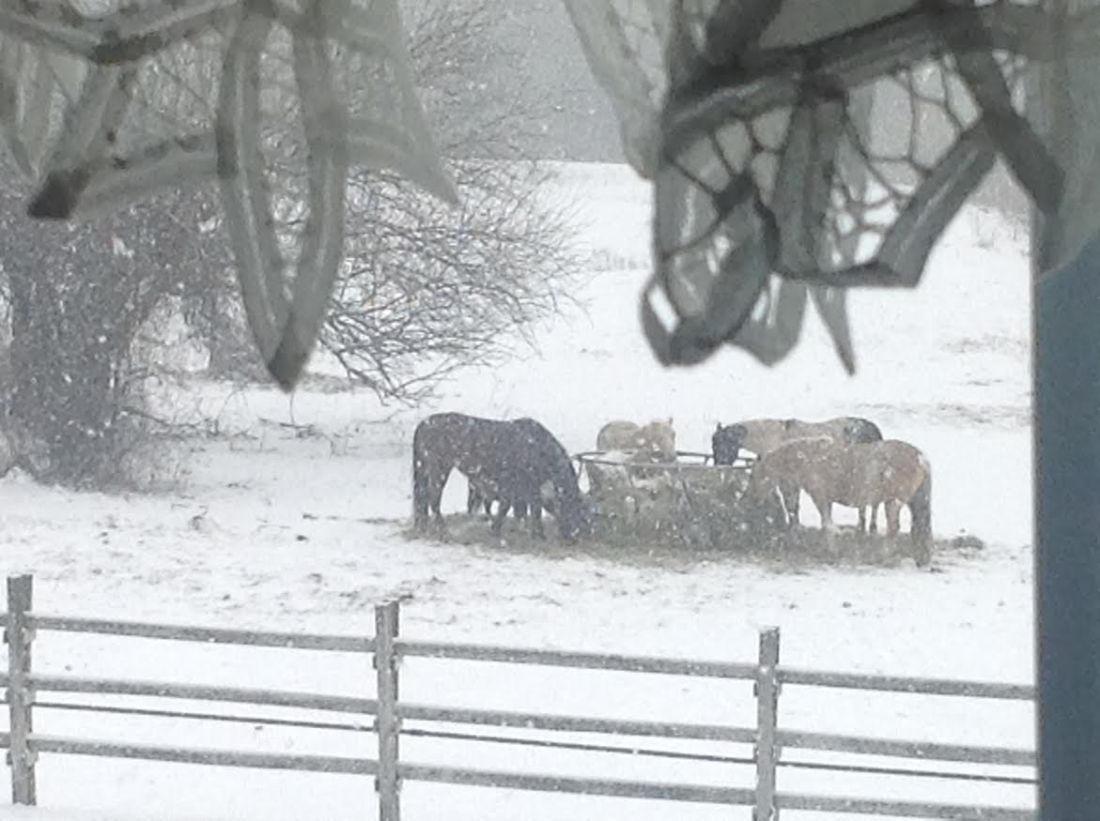
They left, fastening their coats against the snowy breeze. Looking at the team of horses outside, the apprentice couldn’t help but smile.

“Beautiful,” he remarked turning to his boss. “Horses don’t recognize colours do they, sir? Perhaps that’s why they’re inclusive.”

horses-in-snow


A work of fiction for Friday Fictioneers.

What’s the Point of News?

big-news

It was Wednesday, the middle of a wet, clammy, and death-filled week. The sun had almost set outside my window at work and I was too bored to continue. I opened a new tab and typed, “F” — the first letter that came to my mind. And trusty Safari pre-filled my most-visited website, Facebook. Scrolling through weather forecasts, sneaky confessions, Netflix trailers, and random acts of kindness, I paused at one peculiar post.

A news item about the chief minister of my home state. She died a couple of days ago, and ever since, people talk about nothing else, whether at work or at dinner. This post, an opinion piece judging by its title, suggested a conspiracy against the dead CM. And it had appeared on my feed, courtesy of my cousin. I stopped to read the headline; the author believed that one of the CM’s closest allies—we’ll call her S—had turned against her and taken over the party’s reins.

It’s absurd, I know. But for years, our media celebrated their friendship. The friend, S, was the CM’s trusted advisor and remained so until, one fine day, a news channel reported that S was corrupt.

The party’s tables turned too soon for their liking, and the CM cut all ties with her friend. The media went crazy and people wrote articles about how the CM’s decision favoured her in the next election. It was all about winning the election. The friend never came into the spotlight until at the CM’s funeral, where she redefined the word, “weepy.” Sound like House of Cards? Welcome to its creepy Indian version.

All these details rushed into my head as I looked at the article’s headline.

I remember thinking we’d never know the truth about the CM and S. Their friendship was a mystery to everyone outside their circle. Nevertheless, we had news pieces and opinions about them, we heard from young college girls who wanted to be BFFs like the CM and S. And now, a few years later, we have wild theories and 12 things we never knew about the CM’s death.

I felt repulsed. I understand the media’s uncontrollable urge to print sensational news, and yet, I can’t accept their proof-less allegations. All these newspapers flew around me hoping I’d buy the one that features the most exciting gossip.

And that’s why I couldn’t digest the article my cousin shared. My cousin doesn’t understand political talks. I know she shared it only because it has an exciting new thing to talk about over dinner. And that only strengthened my waning interest in politics.

I don’t care who killed whom or who’s conspiring against whom. Because at the end of the day, who knows what’s true? We all live in a society that thinks it knows the truth but knows only what others think is the truth. We may guess, but we’ll never know. There are more than 20 television channels in my state that political parties own. Whichever party (or individual) owns the channel has all the power to create, warp, or kill a news item.

And I don’t see the point of revelling in other people’s convoluted version of reality.

The Real World

Over the past few weeks, every colleague stopping by my desk would take a look at the book next to me and remark that it was such a classic story. I smiled when it happened for the first time. I had known that, of course.

And yet, as more people said the same thing over and over again, I began to get annoyed. I felt like an idiot because I hadn’t read the book for so long. It was 1984, after all.

The book, and not the year — in case you were wondering.

Now, however, I’m done. I’ve finished reading the book and I feel like kicking myself for not reading it sooner. Nevertheless, the book left me astounded, wondering if there was anything in my life that I think is true is indeed true.

It left me with a deep sense of insecurity and self-doubt. I do realise that it’s fiction, but it oozes reality in so many levels.

I’m a minimalist, but I would never apply the same minimal logic to words and human expression. When it comes to speaking and voicing thoughts, the more ways to say it, the better it is. But here’s what scared me: I agree that we should get rid of stuff that mean no meaning anymore. In that sense, when the concept of freedom itself is no more, it makes sense, in certain sense, to eliminate the word altogether — or forget that we even had such a word. But even to think, for a moment, that we don’t need freedom is a messed-up way of life.

And that’s what the book did to me. It messed me up. It messed with my head, and my ability to cope with the reality of the world. It’s possible that our world would become the next Oceania. The Party is, of course, just a bunch of power-hungry people craving to keep the masses out of their way and the working class in their wake. It’s the reality of every nation in the world. There’s just a tiny tipping point between a real party and the Party. Every day, we hear news of people gone missing, of people rebelling, of the rebels who died in battle, of torture and murder, even suppressed free thought. It’s all happening, each day all around us, right in front of us.

And yet, we call 1984 a fiction. It’s not. It’s our lives. Only, we love the Party too much to realise the truth and think for ourselves. In a world that still penalises people of other beliefs, advocates singularity, and abhors variety in even skin tones and vocal chords, it’s only a matter of time before two plus two become five.

Flash news

“Hey, Jude! Did you hear? Hilary lost, Trump won!”

Oh hey, Jason. Trump won, you say? That’s such a surprise. When did this happen, anyway? I must’ve been living under a rock or something. I can’t believe I didn’t know he won. Well, it’s not like I had stayed up watching the three debates live or had discussed with my friends in the US about Trump’s chances. No, thanks so much for letting me know that Trump won the election. You’re my only news source. I wouldn’t have known otherwise.

By the way, how’s that project coming along? Do you realise that our client doesn’t care about the outcome of this election? How far are we on that?

Oh, we haven’t started yet? That’s brilliant. No, that’s fine, we can tell them it’d take a while. After all, we were busy watching the US elections and so was the whole world — our Russian client won’t mind at all. Now, if you’ll excuse me, I’d like to get back to my email.

What’s that? Oh, you just watched Trump’s speech on YouTube? Cool. Huh, the comments say he was high? Well, I don’t know. And you know what, maybe I don’t care. He was scary, you say? Sure, it’s not like I watched his speech live or anything but whether he smokes or not is his problem. Nope, I did not watch the recorded version. You think it was better than watching him live?

Anyway, thanks for the chat. I had been working for ten minutes straight and needed a fifteen-minute power break. By the way, since you know so much about the elections, do you know when Trump’s signing in as president?

Well, that’s weird. How come you didn’t know that there would be an official peaceful transition of power? You’ve been so religious about the election news so far today that I thought you’d know. Anyway, never mind. I guess it’s on the 20th of January. Well, it doesn’t matter anyway, check your mail. The client just emailed us asking for the report. Would you reply to them? And don’t forget to tell them you were busy with the elections.