Productive Mondays

Hello there, Kevin! Sorry, my headphones drowned you out. Good morning to you too.

Or, good afternoon more like. It’s almost 11.30. Yeah, I came in at my usual time, 8.30. Nope, it’s no big deal. You just don’t get drunk the previous night and you won’t be hungover in the morning. It’s that simple. I know, I know, you broke up with your girlfriend. Who told us? Well, you, of course. Remember, when you drunk-texted the whole team last night with your “my endless love” lyrics? I have to say, though, the boss called me up later asking me if you’d gone crazy or something.

But that’s ok. You were upset, it’s understandable. No no, you didn’t disturb us. It’s not like I had planned for a quiet dinner with a special friend or anything.

Anyway, I should get back to work, the boss would be furious if I don’t hand over that report today. Yes, catch you later.

Sigh.

Woah, Tracy you scared me! When did you come? I was just talking to Kevin about the mishap yesterday. Ah no, I wasn’t fumbling with my headphones because I saw you coming in through the corner of my eye. No, I was trying to finish a report. Need focus, you see.

Oh, your sister got engaged last night? Wonderful, thanks for the cake. Now if you’ll excuse me —

Hey Kevin. You again. What’s up? Oh, you came over for the cake, right. Er, no. I’m not getting married, Tracy’s sister is. Oh, well, I’m not thinking about marriage now. No, I’m not in a relationship either. I’d rather not talk about it, ok?

Oh, you think a little chit chat would be alright on a Monday morning? Well, if you won’t leave my place there’s not much I can do. Well, I could punch you. But you have a nice face, and I hate to bloody it. Oh, here she is. Hey Trace, Kevin likes your cake. So much so that he doesn’t want to leave.

Wow, that’s some deep conversation you’re having fellas. And don’t bother taking it elsewhere. I’m jobless anyway, and Kevin, I’m dying to know what happened between you and your girlfriend. Well, that report can wait, I guess. You know, Tracy’s always told me (she somehow gets through my headphones) you and your girlfriend weren’t at all a match. Notice her eyes pitying you? And then maybe notice mine too, because they’re hurling fireballs at you.

Ok guys, sorry to break you up. The boss just walked in gestured to me that and he wants a chat with you, Kevin. Maybe you should go, and see what he wants? Oh, don’t worry. It’ll be fine. And we’ll be right here when you get back, we want to hear more about your breakup.

Trace, I’m off to a meeting. No, not a team meeting, it’s — it’s an impromptu meeting. With a friend — from the 3rd floor — it’s personal, ok? Yeah, I’m taking my laptop too. Anyway, see you.

A Festival of Darkness

I’m home alone, marvelling Pirates of the Caribbean for the uncountable time. My room mates have left for their hometowns and so have my colleagues and friends.

Today is Diwali or Deepawali, a special Indian holiday. People working away from their hometowns throng home to spend the day with family. Most religions celebrate this day as the day good destroyed the evil in the world.

diwali-fiewworks
Not real bombs. Just fireworks.

Yet it’s ironic that we celebrate the end of all evil by spreading more evil.

We all love spending time with our families, sharing a meal, and smiling at the kids who run around the neighbourhood fighting over candy while parents share a drink. That’s how foreigners see Diwali. It’s a day of joy and sweets and all things nice. There’s no evil in that.

So it would seem.

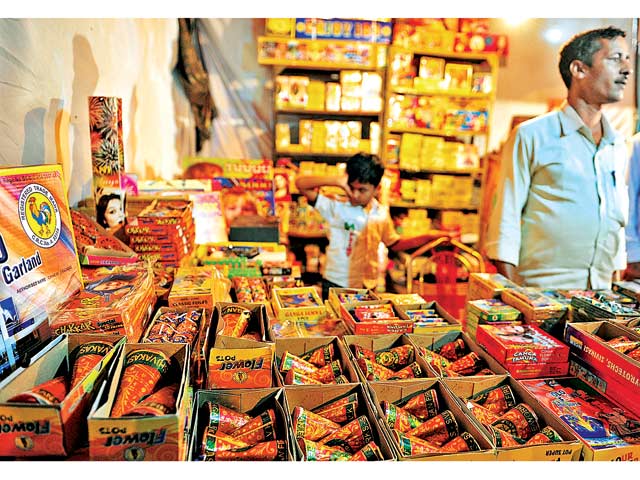
Diwali is the festival of lights. And the reason: We celebrate the day lighting firecrackers and scaring the crap out of our domestic animals. It’s common for people to have cows and buffalos as pets, along with dogs, cats, and fish. And while I enjoy Jack Sparrow’s adventures in my room, I hear these bigger animals wailing in fear as the fireworks go up a little too close to their feet.

As I shake my head disgusted at parents who let their kids torment animals, my phone lights up with flash news: “Fire in Gujarat’s fireworks shop, over 10 people dead.” Every year, Diwali brings a handful of fire accidents in fireworks shops. And every year people debate whether we should continue selling and manufacturing fireworks because of all the death and destruction. And yet, year after year, people light up their stash of smoky hell, laughing at lights and lolling like maniacs.

fireworks-shop
Fireworks. A livelihood.

There’s more to Diwali than killing lives and scaring animals, though. Fireworks are expensive. And every household with children or light-liking adults spends about $30 in fireworks. Not to mention other expenses like buying sweets and savouries and new clothes for the entire family. These don’t come cheap. Tis the season where employers give employees a Diwali bonus, too.

On the day of Diwali, people wake up early, clean up real good, wear new clothes, have breakfast, and go outdoors to light up fireworks. An hour or two later they’d break for coffee and snacks. Then again, they go back for more fireworks. and in between the festivities, comes other traditions like visiting neighbours and friends to give away snacks, and all-day feasting in cholesterol-full foods. The whole day wanes, and we call this the single biggest festival of the year.

However, like all things Indian, there’s also a counter-culture to this Diwali madness. There are some who don’t throw money away on fireworks or shopping. They don’t spend all day indulging guilt-free on guilt foods, laugh at animals cowering in fear, or trigger heart attacks in patients in a nearby hospital.

These are the ones who see festivals as a chance reconnect with their family without tearing other families apart. We are the misfits, the tradition-less, and the unholy. We call Diwali the festival of darkness because we are the ones who care for the greater good.

The Twentieth Century

Here in India, we love the West. And by West, I mean the Western culture — or what we think we know about it. As technology crossed the seas and landed the television in an otherwise untelevised society, we became adept at making Friends our weeknight companions. We went from staring at stars in the sky to staring at stars on the screen.

While we indulged in “Seinfeld” and “The 70s Show,” and laughed at Homer’s jokes, the British came over telling us to “Mind Your Language.”

And we thought that was funny. Every time a funny episode aired, we’d huddle around and gape at white women sporting little black dresses and short shiny skirts. And as time went by, it didn’t feel awkward anymore. The white men in the sitcoms didn’t think it weird, so perhaps it isn’t.

Our women tried fancy clothes and our men tried perfumed sprays. Oiled hair became gelled hair, and the once turmeric-clad skin now looked “up to ten years younger.”
Thirteen-year-old girls went to school instead of their mother-in-law’s house. They learned to do their homework rather than their home work.

India — or a part — of it, saw a whole new world blooming under the influence of the West. There was a time when we got goosebumps as the hero and heroine made eye contact, but now, not even public display of affection (or PDA!) makes us flinch.

And we have fewer 19-year-old mothers cradling 2-year-old children. The system of the woman in the kitchen and the man on the porch reading a newspaper made less sense to a breed of youngsters born in a new era.

We’re now in a world of promise and freedom of thought. From being a suppressed generation of youth, we’ve embraced the wisdom that came with booze and books. We learned, and we craved for more. We adopted new ways and gave way to newfangled emotions.

We fell in love with the modernity that the West showed us. And we shunned the peculiarity that home instilled in us.

From being a society that had its eyes cast down, we began looking up at others. We started talking to the others, dating, falling in love, and did everything else we hadn’t heard of before. Arranged marriages are no longer the norm. We’ve dabbled in life and experienced things we’ve seen only in sitcoms before, like nuclear families, sex before marriage, pregnancy before you’re ready, miscarriage, abortion, divorce, and — distortion of reality.

We thought we had become forward. We thought we had it all figured out. We thought we’d become trendy folks, that we’re revolutionary, that we’d gained the right to free speech and opinionated blog posts.

We love the West because we think it changed our thinking.

It didn’t. The West changed our thinking about thinking. We think we’re more open-minded and free . We live in fallacy. Because, every day, at least one person undergoes harassment and abuse because of our “modern thinking.”

It’s not the fancy skirt, and it’s not the drinking. It’s the thinking.

We’ve adopted many important practices from the West, but we missed the vital ones. Sex is fine but talking about it isn’t. We don’t have sex education in school but encourage aborting unwanted pregnancies. We say love is universal but *gulp* men holding hands? We talk about the wage gap in careers and ignore the chore gap at home. We think like the West, and we stop at thinking. Thinking is no good unless we do something.

It’s the twenty-first century. But for most of India, it’s still the twentieth. We’ve moved on from vintage to montage, but most people live under taboos and traditions. We’re nowhere close to the West of twenty years ago. We are not modern. We just live in a fake version of reality that we created to feel good about ourselves.

Even though we haven’t moved on since Friends, the world has. Sure, technology will bring us closer to the West, but we need more than ideal ideas and tall talks.

Otherwise, we’re just a powerful society clueless about the power they hold.

But First…

bean

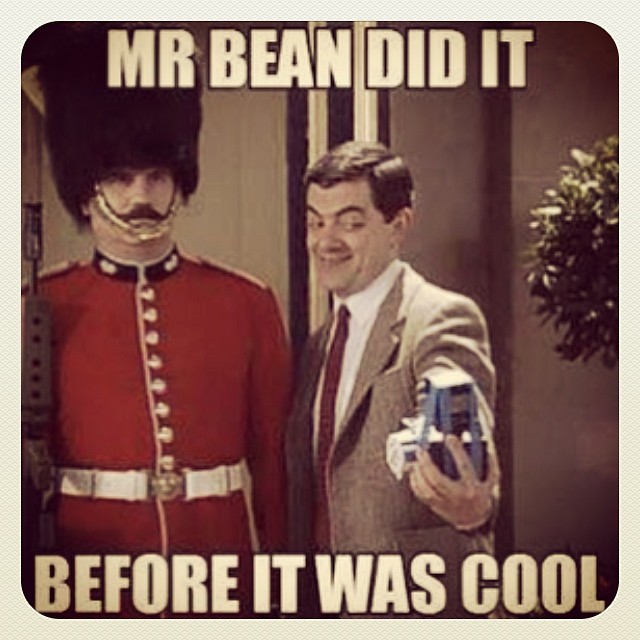
Pouting lips, crinkled eyes, and crooked smiles. “Aww, poor girls! Beautiful but handicapped,” crooned my 85-year-old grandmother.

She was looking over my shoulder as I flipped through my friend’s selfies on Facebook. My friend, along with her cousins, had gone to Goa for the weekend.

From what I could see, they had had great fun. They’d spent all night in the casino, all afternoon at the Agoda fort, and all morning going from the Basilica of Bom Jesus to the Se Cathedral. And all these I knew because I could see fantastic structures looming behind their heads.

My 20-year-old friend was at the peak of her life. And life for her was travel and photography. Or selfies, as they now call it.

She’d been to all over South India and has over a thousand selfies to prove it. She neither remembers the names of the places she’s visited nor know how old some of those churches are, but she knew she’d been there.

Until a few years ago, if we’re on a road trip and notice a monkey chasing another, we’d dive into our bags hoping we had a camera with. We yearned to freeze moments in time to make them last forever. But that was once upon a time.

Nowadays, though, we have a camera on us at all times; we may forget to pack our lunch, but never our phones.

My friend, for instance, travels just for the sake of selfies. And with every selfie, she becomes more conscious of her looks. Her photos now show a slender, lip-glossed, powder-puffed woman posing in front of an old, waning Chitra Museum.

Once, people travelled to get away from their routine lives, for solitude. Now, however, people go places for selfies that would fetch them likes and love.

My friend is no different. She goes for the rush of standing before a renowned construction as if she’s conquered the old conquerors. Her parents stay abroad, and she with her grandmother, who, by the way, is too busy doing charity to keep up with her grand-daughter. Every time she posts a selfie on Facebook or Instagram, she writes a message to us, asking for opinions. And she’d accept nothing less than a Like. And thanks to Facebook’s new updates, she can also get the Love she so craves.

We’re all a bit like her. Smiling for the camera, dressing up for a like, or making fools out of ourselves for some acceptance.

Perhaps, we should leave our phones behind, and climb a mountain just for the fun of it. Or go on a hike just because our knees are strong enough. Perhaps, for once, we should live the moment — flyaway hair and all.

Growing Up…

growing-up

We all have to go through that unpleasant funnel called growing up. It’s irreversible and inevitable.

It was great being young and unwitting. It was easier to spend all evenings watching Tom chase Jerry or Coyote the Roadrunner.

I remember when I was in primary school I’d come home tired, and sleep for an hour or two. And then I’d wake up to television, with tea and baked goodness on my side.

And growing up only made me realise that that’s how I gained weight in my mid region.

It was fun when I didn’t have to worry about anything but my homework. Whereas now I worry about everything from clocking into office on time, finishing my tasks without lags, and eating something healthy for each meal.

Until a few years ago, my life had seemed perfect. I had taken everything for granted — without caring for my health, making enough for a living, or saving up for a future. It now feels like a miracle that I once all that mattered to me was getting strong tea and stronger coffee.

And now, though, I can’t help but notice when people litter on the streets. It bothers me that 10-year-olds have their heads in a screen when they should have their heads in the clouds.

I’m now inclined to think of the big stuff. I’m wishing the ozone didn’t have holes, hoping humanity wouldn’t decimate itself, and wondering why aliens haven’t done that already.

As sad as it sounds to shed the innocence of a childhood gone by, I’ve grown to grow concerned about everything around me. It now matters to me that the world faces a crisis. It makes me wonder how it would affect me. It makes me a little aware, a little knowledgeable, and, at times, a little bitchy.

Until last year I didn’t know how a business works after launching a product. Since then, I’ve seen people coming up with new tactics, new products, and even new ways to fail.

I’ve been there and done that, but I’ve also been around others who did the same. I’m no longer that awkward kid with a dazed look. And that comes only when you’ve lived through ignorance and broken through the barriers of youth.

Youth is wonderful. Everyone should experience it. But growing up is a vaccination everyone should swallow to survive.