Tea Factor

I’ve spoken far too many times about tea in this blog. I can’t help it, it’s my poison. That, and coffee.

But I don’t cherish just the cuppa in my hand. I admire the entire process of tea estates, from plucking the leaves, and adding pressure to them, to pressing them to extract every essence of goodness. It’s such a sensitive job — to treat every leaf as a drop in someone else’s wake up call.

Morning tea is the most important part of my day. And I don’t believe in portion control. I try to do some reading while I sip my tea, but it never happens. When I sniff my tea, my mind goes blank and only tea matters.

I’ve visited a few tea estates in my life, lived in one of them too. It’s a divine feeling to walk amidst tea leaves at 6 am and get a whiff of the leaves, even months before they’re ready to go in my cup.

admire.jpg

The Gandhi Zone

I didn’t realise for a long time how much we, as an Indian community, use Gandhi’s name on everything. It’s become so common that from being a credibility-booster, it’s become a marketing ploy. Like some low ball technique we use to get our way in the world. Or as an excuse to take pride in our stupidities.

“In the land of Gandhi!” they say. Or proclaim, in fact. In the land of Gandhi, we did this, and that, and all other things we didn’t do.

Which is fine with me, except that we’ve exhausted the name now. In futile attempts to show how much we adore the man, we even named streets after him. And in more cases than one, M.G.Road is a city’s official shopping zone.

There was one in Darjeeling too.

MGRoad 1

It’s amazing how the name “Mahatma Gandhi Road” is a shoppers’ stop when the man himself advocated ultimate simplicity. Guess it’s just another of our inherent paradoxes.

As I walked along M.G.Road, I saw all the things Gandhi stood against, while he himself stood next to a fountain, as erect as a guard.

Watching him watch the tourists, I remembered studying in an old school book that he preached simple attire. Whereas in M.G.Road, people ogled at woollen sweaters, silken scarves, and sleeveless dresses studded with little stones that mirrored the chandeliers.

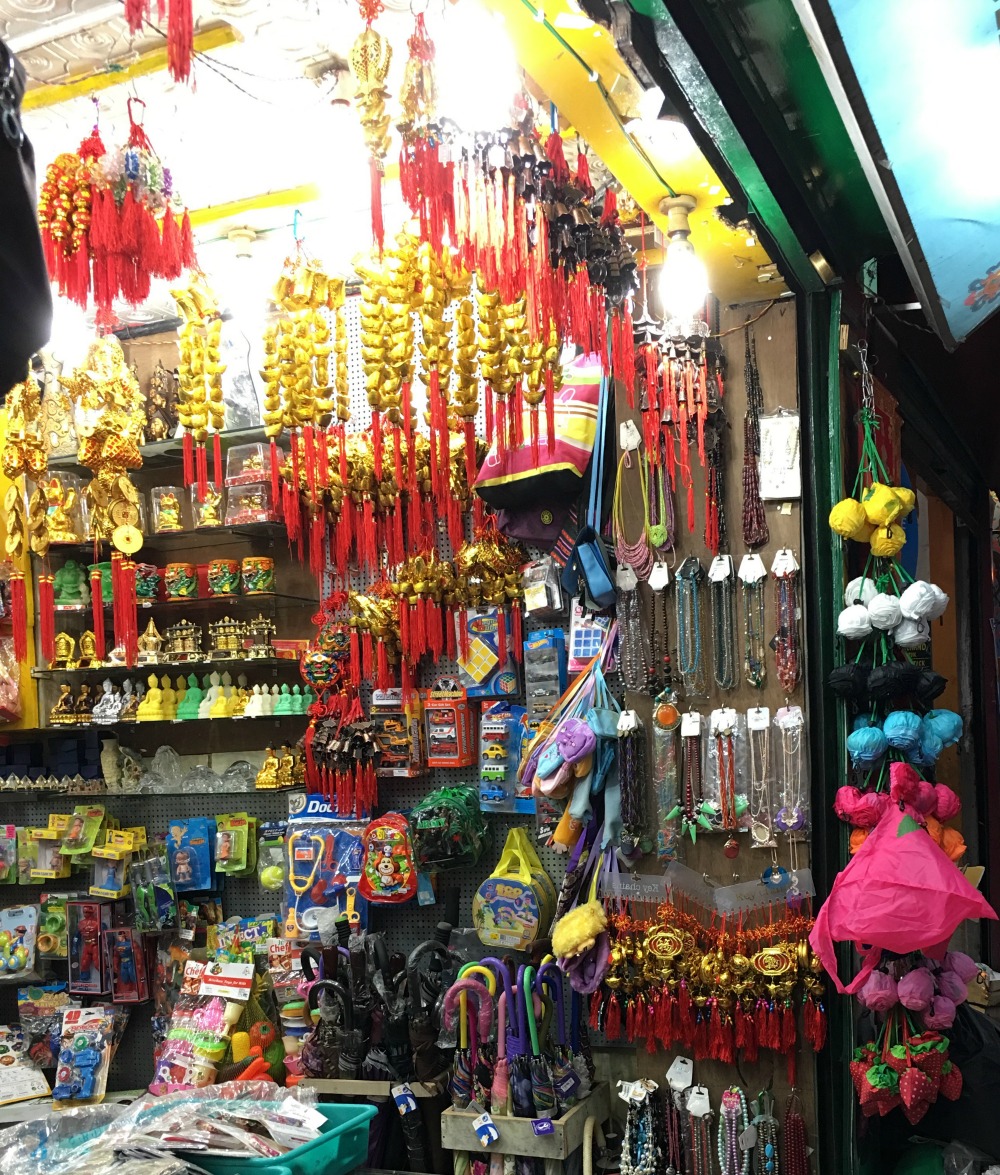
There were bakeries stuffed with all things self-raising, and salty, buttery goodness. And sweet shops showcasing the pride of West Bengal. While stacks of shops sold home-made foods, there were cafes and snack stalls too. Some places sold tea, some coffee, and some places just disgraced the emotions of tea and coffee.

MGRoad 2

And of course, countless liquor stores luring in the fancy folk who preferred things stronger than a simple cuppa. Oh, and tobacco too.

In the middle of all these, stood Gandhi’s figure, deep in observation. Not that he could do anything, of course.

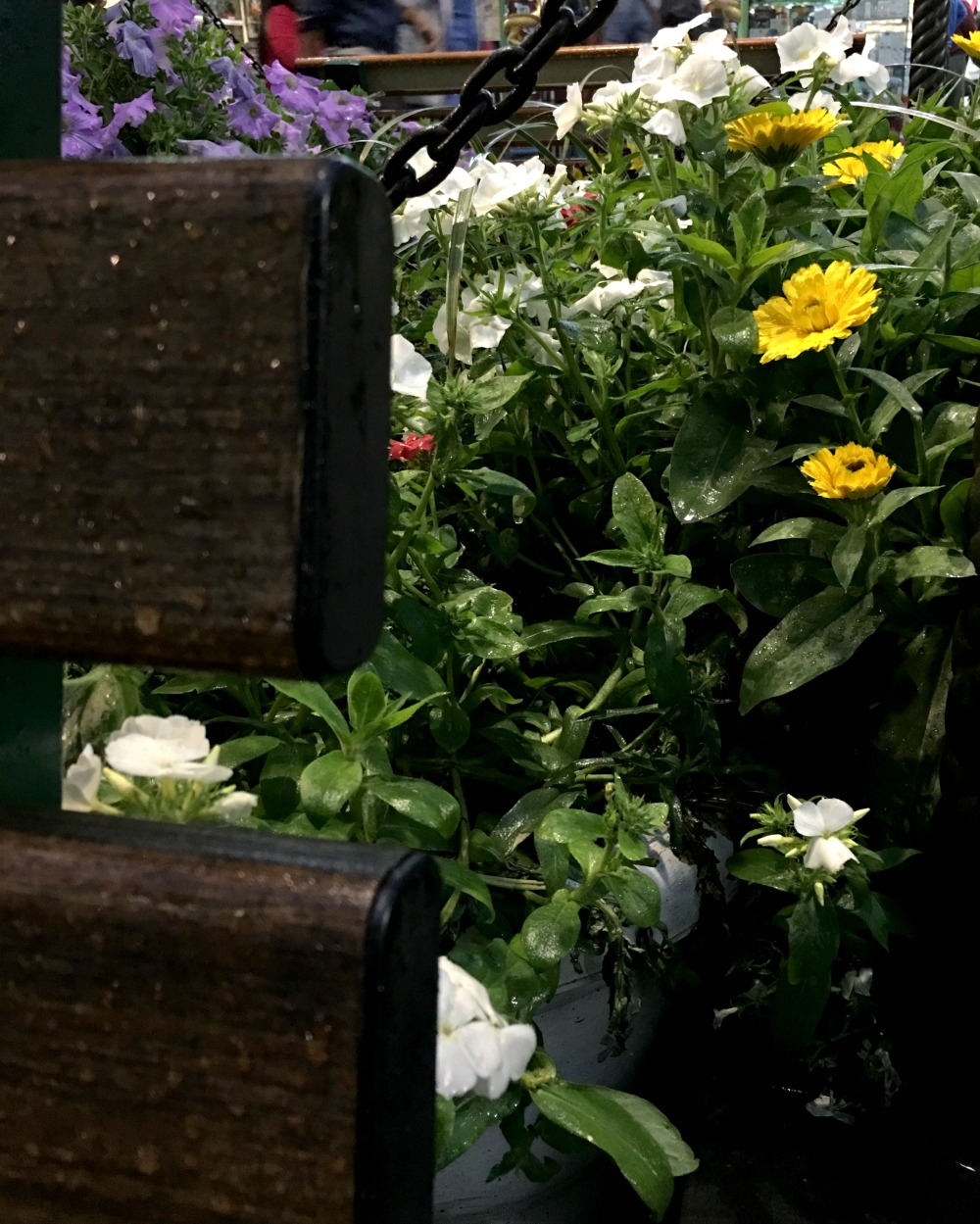
And then — the flowers. So may flowers. So many colours, so many shades, so many tiny petals bearing tiny leftover droplets from the rain of just moments before.

MGRoad 3

It was a magnificent sight. Even for me who hated shopping in every sense of the traditional word. I loved walking through that street. And the best part of it all: The street is always closed to vehicles from late in the day to later on in the evening. That made it all the more welcoming. With the rain adding a dash of chilliness to the cold breeze, the smell of someone’s strong cigar wafting through the air, the steaming cup of tea in my hands, and the bunch of friends ready to laugh at a good joke — what more could I have asked for?

Tea Talk

Sometimes, to understand some things, you have to be there. That’s how Darjeeling is. I had to be there to realize what the most talked-about tea was all about.

It’s just tea. But the mystic romanticism involved with Darjeeling tea is enough to make any dog out peep through the window.

That’s why I had to know what the ruckus was about. From my research, I learnt that locals add unsalted butter to their tea. Well, with plummeting temperatures, they need to be bulletproof of course.

We never got to try it though. It could be because we were just a fancy group of people walking around with flashy phones and discount DSLRs, pretending to be professionals. Typical tourists tend to put the locals off.

Nevertheless, there was tea. There’s always tea.

cups

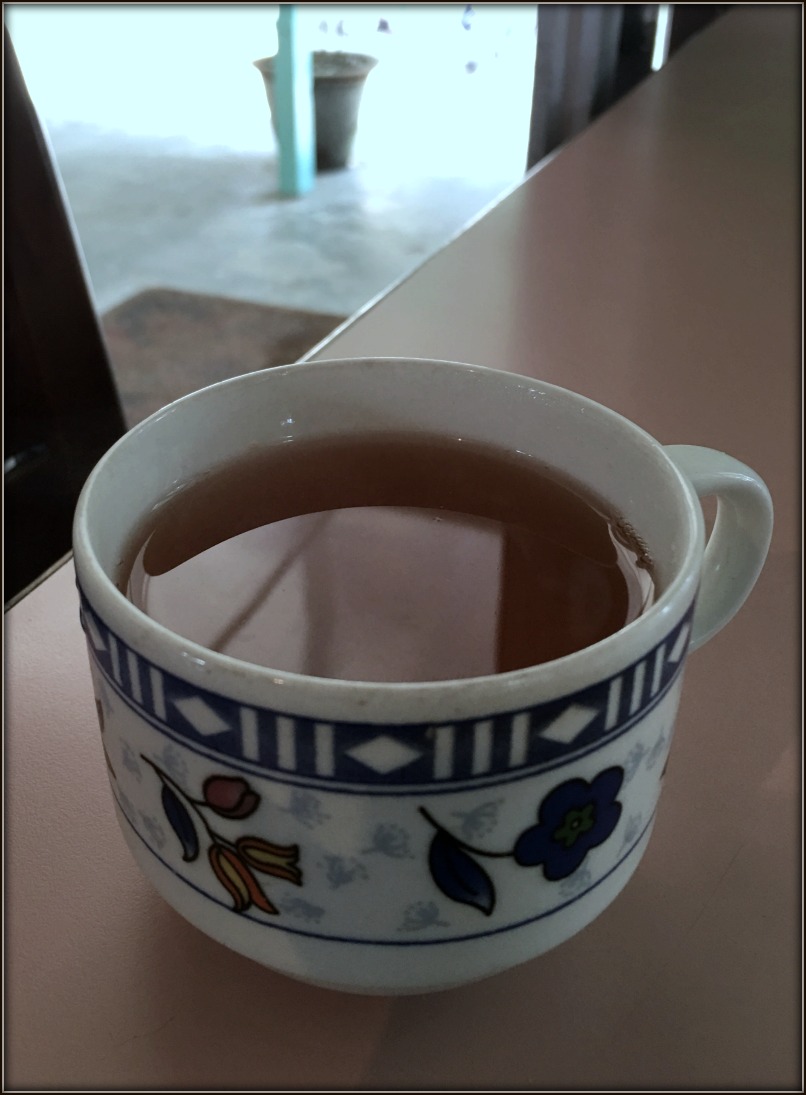
But it was commercialised tea. Good, yes, but some shops denied justice to the perfect combination of milk and water. Because milk does’t suit Darjeeling. We shouldn’t have expected a perfect cup of tea with full cream milk and two spoons of sugar.

When in Darjeeling, you should drink tea without milk. As for the sugar, maybe a little. That’s the essence of tea in that hill.

I love tea in all forms. I adore the strong smell wafting through my nostrils, invigorating the brain all the way to the last bone. And the earthy flavour that lingers in my throat, even hours afterward.

Milk just ruins the whole experience. At least in Darjeeling.

As an avid tea-fanatic, I can vouch that colour is most important while drinking tea. And if you like your milk strong, you can’t have your tea as strong. Darjeeling is famous for leaf-based tea, and not the dust that’s common throughout the rest of India. That’s what makes Darjeeling tea unique: It’s all leaf and no powder. And that’s why it needs to brew, not cook.

Tea making is an art. Making Darjeeling tea is another one altogether. It’s a process: You put the pot to boil, and wait for the bubbles to pop up, threatening to evaporate all your water. You switch off the stove, and let it sit for a few seconds while you measure out a few leaves. Sniff in the scent of fresh toxic before throwing them into the pot and closing the lid.

And then you wait.

For a minute or two. For the leaves to seep through the heat, to distil the purest of flavours, and transform plain water into a royal drink. Then strain and enjoy. It’s worth the whole 2 minutes you’d have spent standing by the pot.
tea

But making Darjeeling tea isn’t as easy as four steps. Let it seep for an extra few minutes, and you’d end up with some bitter tea that’ll make you feel like a dethroned royal.

Despite that, I bought back five packets of Darjeeling tea. I know, some days would be bad tea days. But every day, I’d be royal.

One True Love

one-love

Over the years, I’ve fallen in and out of love with so many things, so many times. But no matter what I declared my love to, I always came back to came back to tea and biscuits.

Something about that pair, something about the way the biscuit crumbles in my mouth and the tea washes down all my problems, along with the biscuit’s buttery remains  — it’s my one true love.

The Soul Drink

I love coffee. Nothing soothes me like good coffee. But even I can’t deny the times when coffee falls just short. It’s sad, yes. But there’s always tea.

That awesome English beverage that has enough caffeine to satiate the soul.

I like my coffee in any way: hot, cold, black, sugar-less, freshly ground, without chicory – it rarely matters, as long as it’s there. But tea – there are plenty of conditions. And that’s why it’s so difficult to find the best cuppa. Oh yes, I’m in love with that English term as well.

Perhaps it’s the rarity that makes me crave it. Perhaps it’s also why I can’t refrain from photographing my tea.

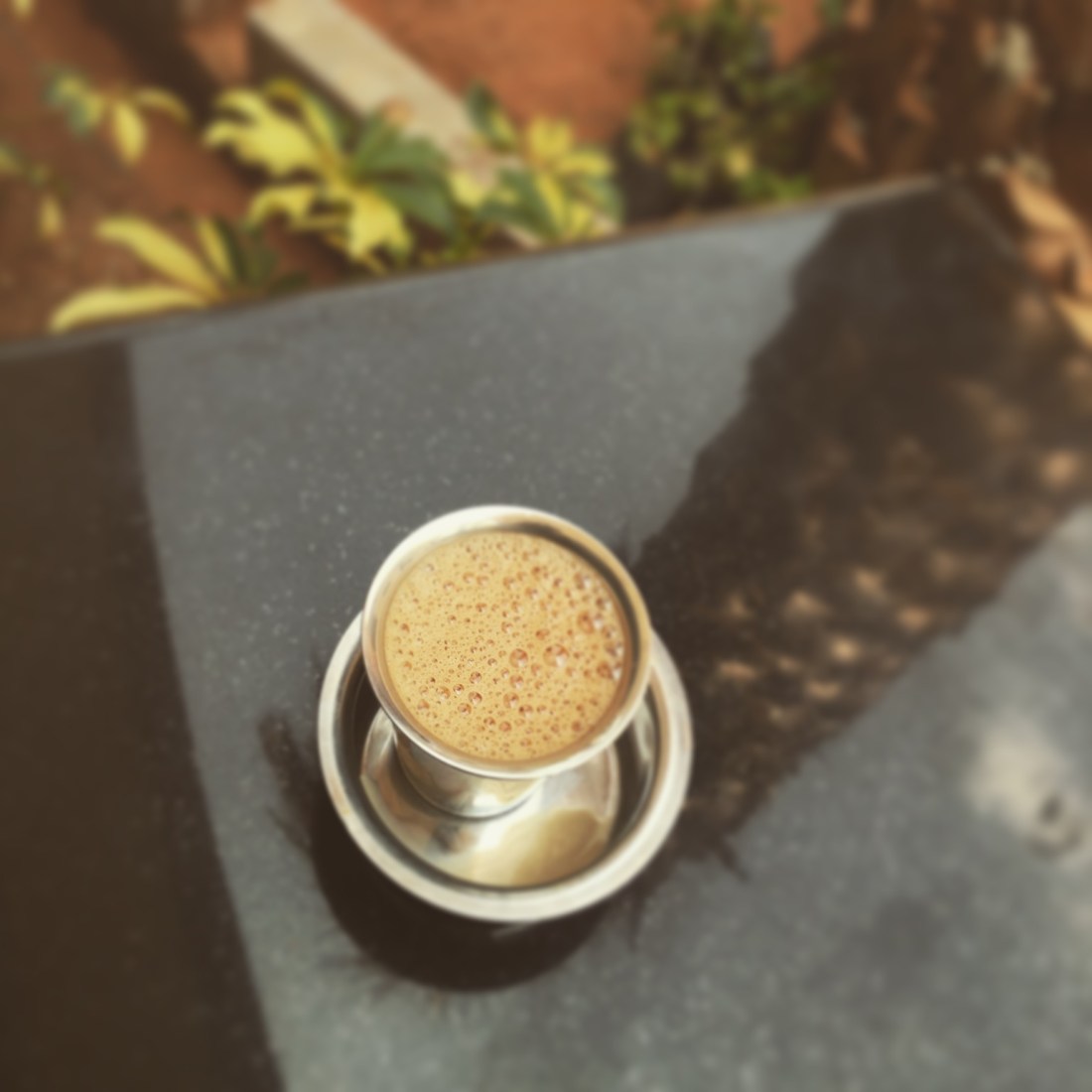
the soul drink I can hardly stop looking at this photo. I fell in love with my own work and Instagram.

Some things in life are minute. It takes an artful look to see through the beauty of miniature. Much like the froth that brims in this cup of tea.

The photo is a moment captured in time. When you look close enough, you’ll see your reflection on the tiny bubbles. To capture such a moment on a lasting frame is a great feeling. And if an amateur like myself can do a decent job of it, I cringe to think what professionals could do.

I’m biased, but I love everything about this photo. The tumbler isn’t perfectly aligned with the dabara (the cup). But that’s what makes it natural. It looks like a cup I’m going to drink from, and not a model for product photography.

The lighting is average. I know nothing about the technical aspects of aperture and lens light. All I know is to point and click.

The bench, its shade,the blurry finish, the reflection of the tree – everything adds a little to the story. And plants improperly aligned – everything says outdoor.

Above all, it’s the reflection of the tree’s branches around the dabara that impresses me. They might be negligible, but it makes the photo all the more likable.

However much I boast about my photo, I can’t deny that none of its tiny, lovable aspects was intentional. It was a happy accident that Instagram highlighted and transformed.

Which makes me wonder about human nature. We don’t look at anything as it is. We constantly sharpen, hone and improve. It’s natural to pay attention to details, obsess over them, to give importance to even the negligible aspects of an object – to make it look better.

And that ability is worth more than anything else. A photo, a sculpture, a portrait, or a piece of writing – every work of art reveals mankind’s scrutiny. And that’s worth more than a thousand words.