A letter

Dear Sir,

I’m writing to express my disagreement with your idea of entertainment. I am, of course, referring to a number of programmes telecast in your channel.

First, let’s talk about the reality show you call, Real People, Real Lives. For one, I don’t think there’s anything real about paying celebrities to pretend to live together for a month, and appointing a mediator to solve petty disagreements between them. After all, these celebrities have no reason to live together—except perhaps for the money you pay them, and for the controversial paparazzi that ensues. If you and your children spend your evenings watching this show, I’m sorry, but you all need to get a life.

Second, I came across a programme that your channel’s hosts dub as Share your Feelings. Now, I may have to agree that sharing emotions and deep feelings may have a positive effect on the person doing the sharing. Having said that, however, I do not agree that sharing on national television, a story about how I let my boyfriend down by lying to him, is not a decent way of expressing my feelings. And I don’t think that you or your channel’s hosts should encourage such behaviour, and play irrelevant songs to trigger even more emotional callers. Callers might get some solace — sad though it is — but for a young family watching the show at home over dinner, it’s nothing more than a mindless way to spend the evening.

Now I understand that your choice of programmes doesn’t depend on what your audience wants to or needs to watch. Instead, it depends on what will get them excited to keep on watching. It doesn’t take a master’s degree in Psychology to decode your algorithm: You just give people sensational issues so that they get used to it and keep coming back for more. It’s not unlike training a dog by giving it chocolate treats that you know would only harm it. It’s simple logic, yet a powerful influence.

And that’s the reason I ask—implore(well… no)—you to reconsider your offering. Not only are your shows mind-numbing and disgust-inducing, but they are also a spark of painful-disagreement between husbands and wives all over the country. Well, yes, I haven’t spoken to my wife in a few days, and that’s perhaps why I decided to write to you in the first place, but nevertheless, it’s time for you and your channel’s administrators to call that long over-due meeting and reassess your goals for the new year.

With that I conclude this letter. And although I’m certain—beyond belief—that you would never acknowledge reading this letter, or even the existence of it, I would still like to tell you that your feature programme titled News Around the World in 60 Seconds is the best of all in your agenda.

I don’t look forward to hearing from you,

Not a fan,

n

When copywriters code

I’m a hopeless romantic, if I have to say the least about myself. Robert M. Pirsig, in his Zen and the Art of Motorcycle Maintenance, classifies people into two types: romantics and classics. I’m the romantic. In the bluntest of terms, romantics are creative thinkers and classics are logical thinkers. Of course both types would have interchangeable qualities, but on a macro level, romantics dream up while classics drill down.

Now that I’ve established a basic, arguable nonetheless, definition of the term, let me emphasise. I’m a romantic, and I’m hopeless at that.

Romantics don’t think like machines. We learn to look at nature, to observe what’s around us, and interpret them in the most beautiful way, or in the most natural way. Classics, on the other hand, learn to look at something and analyse why something appears some way. We appreciate how a flower’s stem balances its five petals whereas classics calculate the stem’s ability to bear the petals. It’s a slight difference when you put it that way, but a much more alarming one when you look at it in a real workplace scenario.

I am a copywriter surrounded by software engineers. I’m a romantic in the midst of classics. I write stories, and they write software. We co-exist to help customers do better business. Now that’s a nice picture. But the real problem arises during a conversation, when the programmers talk about parse and encryption and my mind’s thinking about prose and enchantment.

It didn’t take long for me to realise I was out of place, and I had to learn to code to feel in place. I didn’t have to become a developer—I knew I never could—but I had to develop basic knowledge of how programmers use language. And so I began. I sat with a developer while they wrote a piece of program, and I observed in their eyes the frantic whizzing in their mind. They spoke to the screen in front of them, reasoning out the flow of script. The first line of code would run once before moving on to the second. Swapping the order of the lines would disrupt the entire program. Replacing a semicolon, adding an extra colon or an extra space would topple things in the most inconvenient way. (“Yay!” I yelled. “It’s the same with writing,” though the developers weren’t as excited.)

After a few days under development, I concluded that we romantics don’t learn to think the way computers do. Regardless of all technology innovations, computers don’t and won’t think like humans. As a non-developer I could see how I had to alter my way of thinking and approaching a problem to explain it to a computer. For a logical flow that I take for granted, the computer needs a line of script. When I think I’d fetch water, my mind knows I’d drink it. But if I told a computer to fetch water, it’d fetch it and keep it aside until I tell it—again—that it should drink half of it and save the rest.

We romantics don’t condition our minds to think one step at a time. That’s why it’s hard for us to learn programming at a later age. We think in blocks of actions, in phrases, in groups of words, and instructions. We read poetry that distributes one meaning in five lines. We process a poem as a whole to understand its meaning. We’re clustered thinkers because it’s ingrained in our minds. Classics, however, think in a sequence. That’s what a degree in computer science gives them. They take actions one step at a time. They’re more organised thinkers because that’s what’s ingrained in their minds.

My eureka moment: With enough practice, I could start thinking like a programmer, too. It felt like I had opened the door to a whole new world. I could speak to any computer, and tell it what to and when to do. The thought awed me, and terrified me at the same time.

Perhaps classics would feel the same way if they spent a few days reading Shakespeare.

Another day at work

It looks like the morning after a campfire. Here and there people lift their heads from the confines of their laptops and hard wood tables. The day had dawned, and they had to all go home, get some sleep, and return later in the evening for another night-long gig as customer support representative. I, however, remain here until my rep returns for work. I remain, his faithful telephone, ready to serve whenever he is.

We’re almost 22 hours ahead of our customers, living in the other corner of the world, picking up calls and answering emails when customers are awake and our families are asleep. It’s all part of the job description and sleepless nights aren’t a problem for us anymore. We even have fun.

As the day wanes and darkness embraces the glass building we live in, the day-shift teams head out eager to spend the night cuddling in their beds. We, on the other hand, wire up, preparing to take on calls that would soon enough rain upon us.

“Hello there!” My neighbour has already received her first call and she sounds like this customer would have their problems solved in a jiffy. While I observe her in silence, I feel a vibration crawling up my wires. It feels like an agitated customer wanting answers. The next second, the vibration reaches my speaker and I blare at my partner. He smiles before picking up my receiver.

“Hello, you’ve reached our company. How may I help you today?” It’s a good start to the night, I realise as I hear a gentleman raising his concerns in a soft voice from other side.
The rep in the cubicle behind us was having a lot less luck, though. He muted his call, and in a tirade, explained to us that his customer was looking for something beyond our scope. Pity we had to turn a customer down, but that wasn’t the most pitiable part. Not only did the customer demand an explanation, but they also swore at our rep. In return, our rep muted the call and began swearing on his own. The whole team laughed out loud, appreciating an inside joke that only the support team understands.

Every day, customers call in to test the nerves of our reps. But despite all that, we laugh and celebrate the end of the week by ordering take out. We’ll do anything for sincere customers, but when rotten customers show up, we know how to handle them. It’s not part of the job description, but it is part of the job.

Inevitable change

“You know I’m right, Beth. This is the only we earn. We won’t survive otherwise. Look around.”

Bethany did. One by one, cubicles emptied every day. Her colleagues were leaving either by choice or by force. It didn’t matter how they left; they left because they had nothing left to do at work.

The Beacon had been glorious once. People woke up excited to read what they had to say about the world. Their opinions were legend, and guest columns envied.

That was before emagazines.

“It’s fine to tailor the facts. That’s what media does.” Mark convinced lead editor, Beth.

What’s the point of reality television?

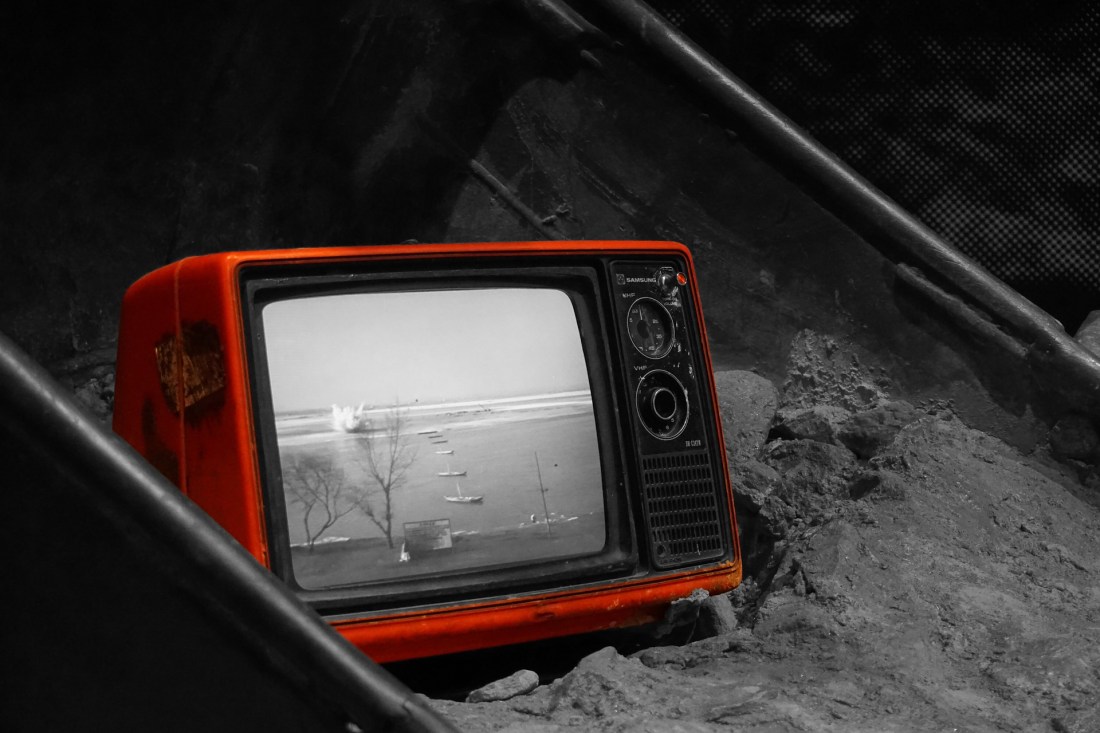
If there’s one thing that drives the television industry, it’s our persistent craving for potato chips and late night binges. We’ve contained the meaning of entertainment to a single idiot box from which comes forth loud music and wailing that we glare at with widening eyes and dropping jaws.

Come to think of it, we’ve become so reliant on television shows that we no longer have time to rise from the couch to watch the sun set. We no longer have the motivation to wake up at dawn, and we don’t even have the simple sense to leave the couch for water. Why should we, when Bay Watch is on and the roommate is passing by the fridge?

Reality television has made us lazy. We’ve run headlong into a devil that’s reality. Not trying to overdo the graphic here, but television shows nowadays do more harm that the good they claim to do. Not only do we spend more time sitting idle, snacking, but we also seldom realize what’s happening around us.

It’s not unlike mobile phones. People complain that youngsters nowadays are so busy staring at their phones that they don’t even talk to the person sitting right next to them. Television shows aren’t much different. For instance, when I reach home after work, my roommates are busy biting their nails over what’s happening in X Factor, all the while stealing glances at their phones to check if they’ve received a reply on their WhatsApp chats. Not that I care much, but I’d rather go out to the terrace and take a breath of the monsoon breeze grazing along the horizon. Or take a peak at the waning moon, and count the days left until the next full moon. Or better yet, stare at the moon long enough until I think I see the American flag flapping away. For me, that’s more of a fun evening than wondering who’ll become America’s or Australia’s next top model.

I understand, though. We toil hard enough and want nothing more than to unwind at the end of a long work day. And television shows are a great mindless activity to get our minds away from the gruelling tasks of everyday life. So I don’t blame my roommates for not spending more time outside. What I’m unhappy about, though, is by using work stress as an excuse to plunge into a stream of television-watching, we’re only stressing our bodies and minds even more. It seems petty to me to have a heated argument over lunch about who’s a better singer in a country halfway across the world, on a show that’s running only for the rocketing ratings it brings to the channel. Also it’s a little sad that we depend on unknown faces and satellite connections to entertain us.

In the end, we’d have spent all our time either working for others’ benefit or worrying about others’ lives, losing ours somewhere in between the first and the second ad commercial.