Speaking of likes…

Speaking of likes

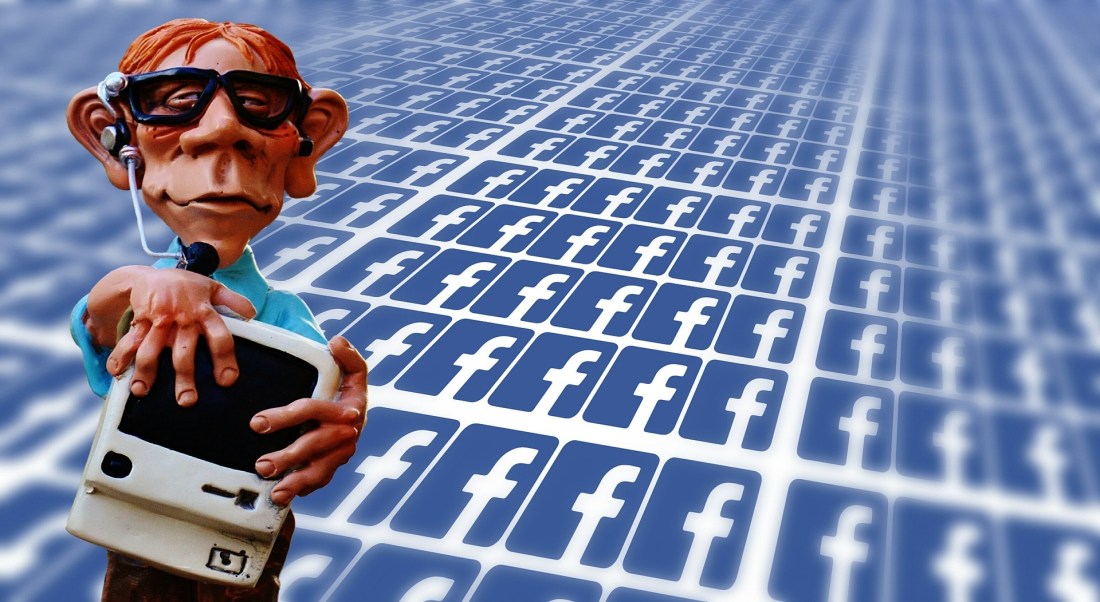
For a few years now, everyone I know is obsessed over likes on Facebook. It’s become the sort of thing that gives identity to a person. Like a beacon that assures them they’re in the right path.

Everything is about likes. It’s as if our need for recognition and social acceptance has surpassed our ability to self assess. I know I’ve made a decent photograph of the moon last night, and yet I can’t accept it unless I’ve seen a few tens of likes affirming it for me. And if the tens grow into hundreds, my confidence grows with it.

It’s a good thing in a way, because we need self-confidence to uphold ourselves in society. At the same time, however, this incessant desire for others’ approval is making us more dependent than ever. I’ve lived in the eastern part of the world all my life, and the one thing that differentiates the East from the West is that it’s more of a pluralistic society. The western world, however, is more individualistic by nature.

We see pluralism everywhere in the East; from schools that over-indulge in group activities, to local societies that promote the extended family system, to parents who expect children to live with them until they are married off. (That’s a story by itself.)

As people continue to crave more social media recognition, even the West may head towards a more pluralistic society. The current generation is, by principle, broad minded, and so it doesn’t shy away from accepting its dependence on fellows or the previous generation. Even then, this social shift seems to grow faster now than it did in previous years. Soon, we may all become more social. But — for all the wrong reasons.

The problem is social media recognition isn’t genuine. Most of the time, people on Facebook hit on the like button not because they like the post but because they want to acknowledge whoever’s shared the post. It’s a way to let the entire friends community know that they’re just round the corner. In a way, it’s a desperate measure by one person to remind others that they exist.

Though plenty of people use Facebook and other social media for specific reasons like business ads, community building, local selling, and interests and hobbies, that’s only a niche compared to the vast pool of youth who get on Facebook to chat with friends they’ve just said goodbye to at school. I remember, when in school, my classmates making appointments to meet on Facebook at a designated time just so they could chat on FB. It was a status symbol then—about seven years ago. Not much has changed since, except now it’s Snapchat.

This tendency is making us — both the eastern and western population — unable to survive without one another. What’s ironic though, is that while a proper pluralistic society means to promote healthy social living, we, in reality, aren’t looking for actual human interaction. We’re, instead, seeking recognition through the inanimate, yet animated GIFs and laughing faces. It’d be interesting to see how our society progresses from here. Do you folks agree? Or am I just being paranoid? (I’ve heard I could be.)
Manipulator

“‘Mazing!” the boss appreciated. “This is such a great piece, Stan. I might give you a raise right away.”

Stan looked up. He hadn’t had a raise in two years because of ‘unfavourable economic conditions’. “Now?” His heart swelled, but the boss just smiled, and lifting his belly, waddled out the room.

Stan’s interns sat next to him. “It’s going to be okay,” assured Mark, a rich kid whose parents had “purchased” his internship.

“Well,” The boss had returned. “Wrap up that maze of an agreement. It’s brilliant—so binding that people wouldn’t know what hit them. Jackpot!” He exclaimed.

The unexpected

Our world is full of tiny surprises. Each day I walk down the street, I see something new and eye-catching—a bud blooms while another flower dies nearby, a bee buzzes around my ear while a silent caterpillar crawls by my feet, a child waters her begonia while another picks a rose for her mother—it’s little things like these that bring out the beauty of living.

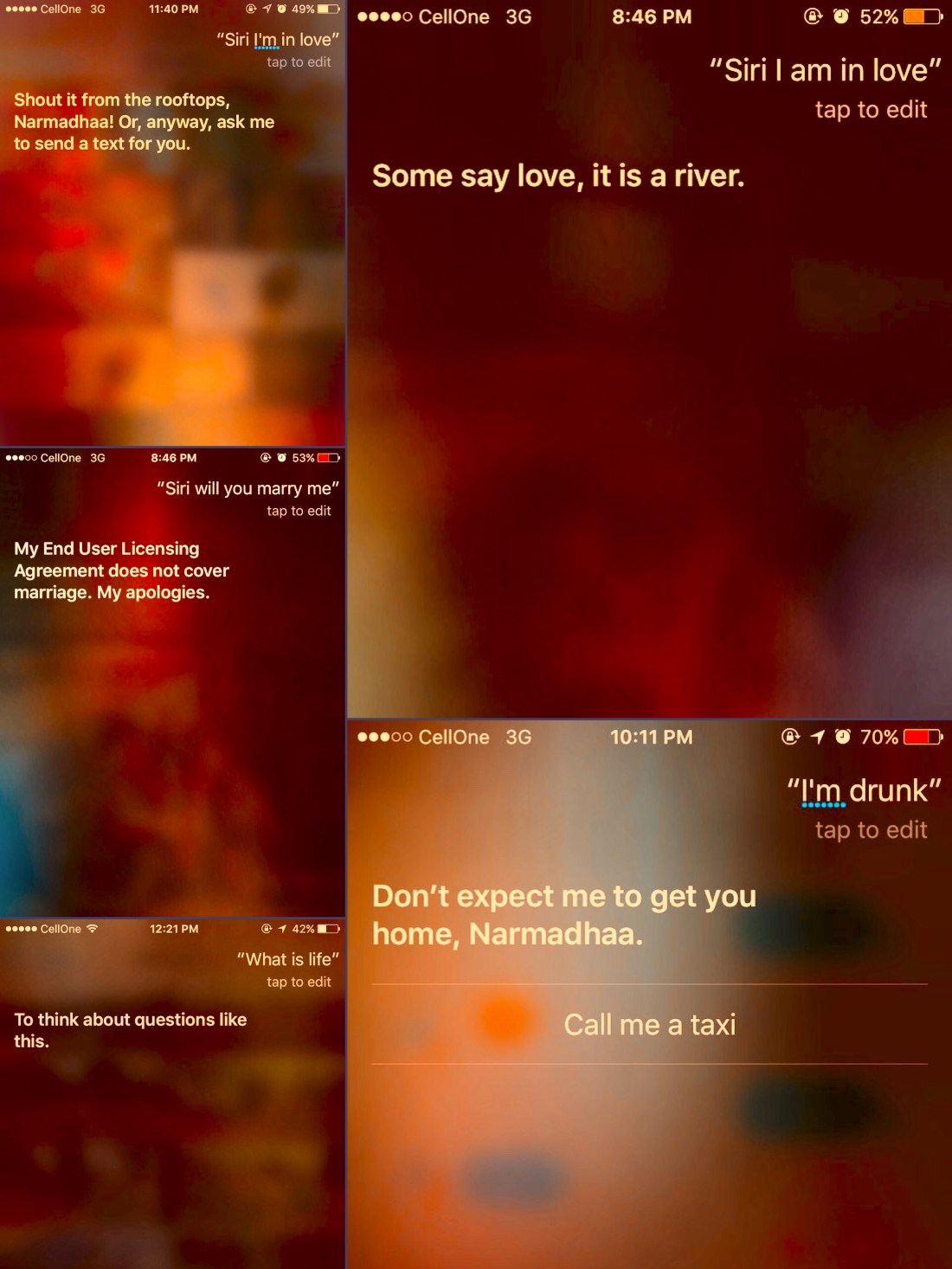
And then there’s Siri. Out of no where, Siri has the most surprising answers to the most uncanny of questions.

Nature makes life worthwhile, Siri makes technology.

Siri


Get a life!

I had just begun to read One Hundred Years of Solitude. I had left the book on my table while I rummaged in my bag for something when my colleague (a senior) cast me a look as if I were crazy to read such big a book. (It wasn’t that big, still—)

“Why are you reading stuff like this?” He raised his eyebrows in a scorn, then shook his head continuing, “Read about marketing, about selling, business, and technology. Those are the stuff that’s going to help you in future. These are just useless.” He cast a dirty look at the book I had wrapped in a polyethylene cover to protect its beautiful art.

He wasn’t the only one. About three years later, I had a similar conversation with another senior colleague. This time, it was poetry. I had mentioned reading some new poems when he suggested I read about the latest mobile technology instead. Sure, I laughed, I’ll subscribe to all tech magazines and read them, but poetry is for my personal time. And he smiled in a crude way shrugging, “Well, read this during your personal time.”

To which I replied, “I need a life.”

He just laughed it off, but I felt proud of myself. The first time, I was new at the job and worried about being rude to an experienced person at work. The second time, I was more concerned about myself. I had grown up.

But the fact remains: a lot of my colleagues, friends—even my parents—feel that work has become such a large part of our lives that we have no time for anything else. My married colleagues complain how they can’t bond with their in-laws. Some others worry each day that they leave home for work even before their children wake up. Even the typical 9–5 corporate world now has employees clocking in from 8 to 8 or 8 to 12. And it’s not just for a day, it’s for days together.

In a flurry of product launches and a rush of marketing campaigns, we often forget that home is a place away from office. We spend so much time at work, and all of the little time at home thinking about work. The balance goes to the noose.

It’s sad but it’s reality. We’ve lost so much of our life to work that we seldom realise what we’ve lost. We spend all our days toiling to ensure someone else’s luxury while we skip lunches for meetings, put off a family reunion for an official trip, and stay a little longer than midnight to finish testing the code. And the purpose of it all—an extra shift, a higher bonus.

However, at the end of the day, lying in bed, thinking about the tasks for the following day, we fail to feel the warmth of the blankets, hear the soft—yet evident—creak of the fan or the wind tapping against the windows, and notice the curtains swaying in the breeze. Somehow, while we were busy living to work, we lost the will to live at all.

My colleagues are (un)living examples, and I’m walking on the tightrope. It’s time for a change.

Subject: Your Offer Letter

Message: 

Welcome to the largest conglomerate in the city. You’ll be a part of an exciting team of talented individuals who come together every morning with one major goal: creating world-class products and selling to the world over.

We’re excited that you’ve decided to join these individuals in bringing your skills and unique personality to serve the greater good. We appreciate you and your talent, and as a rewarding gesture, we offer the following work perquisites.

Flexible work hours: We believe that every person has their own schedule and preferences. We respect that. That’s why you can come in and leave at any time you want. What’s more, our office is so comfortable (with couches and bean bags and footrests and sliding drawers) you’d want to come in early, and wouldn’t want to leave.

Recreation: Work while you work, play while you play. That’s our motto — at least it’s one. When a launch drags your workday, you don’t have to risk leaving late. Instead, you can finish it off and spend the night in the office. There’s a sleeping area — separate for men and women.
When you need a break, during the day, you don’t have to get out. Instead, just walk in to the playing area—from tennis and ping pong, to carrom and chess, pick your sport and let the muscles relax. No more healthy gaming in the sun and heading out for unhealthy pizza afterward. Whether you win or lose, we have fresh juice and ice. All inside the campus.

No micro-managing: Our company’s culture is seeded with self-driven teams that organize their own work. No big bosses, no small bosses. No task allocation, no work pressure, no time constraints.

Don’t worry, though. When it’s time for a pay rise, your supervisors will offer what you deserve. We have a successful history of understanding what every employee enjoys doing and letting them do what they want.

We don’t define job roles and responsibilities; everyone’s a marketer and anyone’s a developer, if they’re interested enough.

You may not know where to begin, or how, but it’s our belief that you will learn as you go. And there’s no better way of learning than by doing.

Apart from said perks, you will also enjoy the following:

  • We provide unlimited, wholesome meals three times a day, and snacks throughout the day. It’s free of charge so you don’t have to leave the building and eat unhealthy.
  • You don’t have to stay at your desk to finish up your tasks. When you have a long commute, just avail the free transport to and from the office, equipped with super-fast wifi connection.
  • We love our pets, too. If your cat is ill, you can even work from your couch. We’ll offer free smartphones and sim cards, and reimburse your internet bills. You’ll absorb the latest technology for work and play alike.

We’ve built a workplace and a tradition within our company in such a way that our employees are among the happiest in the world. In fact, [insert the name of a big research company] has named our company as the fifth most desirable place to work in [insert current year].

Glad to have you on board.