
What’s the Point of News?

big-news

It was Wednesday, the middle of a wet, clammy, and death-filled week. The sun had almost set outside my window at work and I was too bored to continue. I opened a new tab and typed, “F” — the first letter that came to my mind. And trusty Safari pre-filled my most-visited website, Facebook. Scrolling through weather forecasts, sneaky confessions, Netflix trailers, and random acts of kindness, I paused at one peculiar post.

A news item about the chief minister of my home state. She died a couple of days ago, and ever since, people talk about nothing else, whether at work or at dinner. This post, an opinion piece judging by its title, suggested a conspiracy against the dead CM. And it had appeared on my feed, courtesy of my cousin. I stopped to read the headline; the author believed that one of the CM’s closest allies—we’ll call her S—had turned against her and taken over the party’s reins.

It’s absurd, I know. But for years, our media celebrated their friendship. The friend, S, was the CM’s trusted advisor and remained so until, one fine day, a news channel reported that S was corrupt.

The party’s tables turned too soon for their liking, and the CM cut all ties with her friend. The media went crazy and people wrote articles about how the CM’s decision favoured her in the next election. It was all about winning the election. The friend never came into the spotlight until at the CM’s funeral, where she redefined the word, “weepy.” Sound like House of Cards? Welcome to its creepy Indian version.

All these details rushed into my head as I looked at the article’s headline.

I remember thinking we’d never know the truth about the CM and S. Their friendship was a mystery to everyone outside their circle. Nevertheless, we had news pieces and opinions about them, we heard from young college girls who wanted to be BFFs like the CM and S. And now, a few years later, we have wild theories and 12 things we never knew about the CM’s death.

I felt repulsed. I understand the media’s uncontrollable urge to print sensational news, and yet, I can’t accept their proof-less allegations. All these newspapers flew around me hoping I’d buy the one that features the most exciting gossip.

And that’s why I couldn’t digest the article my cousin shared. My cousin doesn’t understand political talks. I know she shared it only because it has an exciting new thing to talk about over dinner. And that only strengthened my waning interest in politics.

I don’t care who killed whom or who’s conspiring against whom. Because at the end of the day, who knows what’s true? We all live in a society that thinks it knows the truth but knows only what others think is the truth. We may guess, but we’ll never know. There are more than 20 television channels in my state that political parties own. Whichever party (or individual) owns the channel has all the power to create, warp, or kill a news item.

And I don’t see the point of revelling in other people’s convoluted version of reality.
An Unforgettable Ride. One I’d Rather Forget.

On a normal day, there’s not much to say about a two-hour bus ride. Unless you’re already late and have less than twenty hours to explore a city of French croissant, Italian pasta, soulful coffee, and sinful chocolate.

In that case, a two-hour bus journey is one hell of a ride.

When it comes to planning and preparing an itinerary, everyone’s an expert. We aren’t any different, my friend and I. We’d planned to leave at 7.30 am, and I even chipped in saying we could leave earlier, too, if we could manage to. By the time we reached the bus stop at 8 am, we’d already missed a few buses that would’ve gotten us to our destination on time. When we, at last, boarded the bus towards Pondicherry, we took a deep breath. It seemed like we had crossed one great barrier: waking up early when the chilly December fog still pressed onto our bedroom windows.

And then came the next barrier: The great Indian problem of over-population and the people’s urge to travel. Squishing ourselves in between giant arms and travelling bags, we got tickets to what we knew would be the final stop of the bus. We had a long way to go and the crowds seemed unwilling to thin out. We stood for a while, jumping up and down to the speed breakers on the road, and dancing to and fro as the bus swerved to avoid potholes.

About a half hour into the ride, we found a seat. Being gracious and accommodating, I offered it to my friend, preferring to stand myself. Most people disapprove when I stand and hold on to a seat handle, but I had always felt comfortable standing. After all, when you’re five feet tall and sitting on a seat that’s your eye-level, you get to see a lot of stuff that you’d rather not. I love staring out the windows, but on an aisle seat, all I see is big butts. And I cannot lie that I don’t mind.

And so, I stood, jerking this way and that and looking at the watch whenever I could risk taking my hand away from the pole that I clung to. The first time I checked, it had been only an hour since we had climbed on. We had another hour and a half to look forward to, and I was looking forward to it less and less.

Meanwhile, my friend sat hugging her and my bags, looking as miserable as I felt. As we lumbered on, the crowd in the bus thinned and thickened from time to time. The scenery, however, grew greener; we were riding deep into villages.

But the more paddy fields we saw, the more skeptical my friend became. Perhaps, she doubted, the driver had taken a detour into all the tiny villages, dropping off and picking up villagers, and would take longer than Google’s fastest route. She checked the map, and sure enough, we were headed into a small unknown area that took us further from our destination. Estimated time was over another hour and a half.

She panicked. I was frustrated. So much so, that I couldn’t even bring myself to swear at the driver. I found a vacant seat by the window, grabbed it, and set to finish reading 1984.
My friend stood up from her seat, a valiant look in her eyes. She had decided to talk to the conductor. A minute later, she came back, a weird look on her face. She opened up Google Maps and checked the route again. We were just 20 minutes away. That was much sooner than we had expected in the first place.

She explained: Our driver had taken a route less travelled, a route that didn’t show on Google Maps. Technology still has a long way to go.

All of a sudden, the journey wasn’t tiring anymore. The roads had become smooth, a few grand old buildings whizzed by, a couple on the bus smiled at me, and soon, a woman showed us where to get off.

We had arrived. On time.

To Visit or Not to Visit

I love my parents. Well, who doesn’t? They raised me all these years, taught me what’s good and what’s not good, tried to teach me to make my own bed, and even instilled in me some values of cleanliness. They are the best parents I could’ve ever asked for, and I even considered giving my dad a “World’s best Dad” mug for his sixtieth birthday—which is all so normal and obvious.

That’s what parents are like; sweet, caring, nurturing, and deserving of our affection and compassion. Nothing wrong with any of those things.

All these aside, though, I still have second thoughts about visiting my parents. I can’t stand the thought of them looking up and down at me with crinkled eyebrows, and commenting I’ve lost far too much weight. I cringe to think of spending two days trying to endure their manipulating talks about saving up to build a house, gaining weight so I look my age, and not cutting my hair any shorter. Home for me is just a weekend of torture.

Is it just me, I often wonder.

And I realise it’s not just me. Most of my friends are like me: Dreading visiting parents. But then I spoke to another colleague. She loves to visit her parents. She plans her weekends in advance and allocates time for everyone that matter to her. She’d set up a movie date with her mother, a dinner with her schoolmate, and a tiny lunch party with the entire family. And when she comes back from home, she’d be downcast for a couple of days in the least.

It was a wonder to me.

And then I realised I don’t hate my parents. Despite being reluctant to visit them, I still care for my parents. So much so that I’d call them up to ensure they take their medication on time. I love spending time with them. I love the little chats my mother and I share while we make a mid-day meal. I cherish holding my dad’s hand while we walk to the grocery store. I crave for those moments when I catch up with their stories, smile at their weak attempts at making jokes, and even when I help them navigate the technology I have trouble with myself. I value those little hours we spend for each other. Nevertheless, every time I enter the house, I also look forward to leaving.

People talk so much about parenting, the rules, and best practices of being a good parent. But not enough people realise the challenges of being a daughter, a child. It pains me to yell at my mother who calls me at work because she’s bored at home. How would I tell her to do something for herself, something she’d enjoy doing (other than talking to me)? That is, alas, a question no one can answer. Good “daughtering” is all about finding the sweet spot between spending too much time and too little time with your parents. And I’m still looking for it. Any advice? Please shoot.

Corporate Culture

My cousin rolled her eyes at me over her cup of cold coffee. When she lowered her glass, I saw she had developed a chocolate-cream-covered mustache.

I had just asked her how she liked her new job in the big city. In her first week, she had sent me about a hundred messages, all photos of her new workplace, the free meals, and unlimited candy, and the dorm rooms with their cozy bedspreads. The company even gave away free gadgets to employees.

Yet here she was three months later, the life drained from her eyes. I’d expected her to be more excited to talk about the new startup in the block.

She explained. And when corporate employees confess, it’s not pretty.

She got free food three times a day. And unlimited coffee, snacks, and chocolate (dark, too) anytime she wanted. And if she wanted to blow steam off, she could go next door to the playing area to shoot darts or pocket some carrom coins.

She spent over ten hours at work. She didn’t while away or go for tea breaks across the street. She could have anything she wanted from the pantry. And she could bring it back to her desk, working between bites.

She didn’t have a proper mentor either because most startups don’t believe in micromanagers and hierarchy. And with flexible office timings and unrestricted internet access, the only thing that stopped employees from watching porn all day was the creepy open-office setting. But no one felt bad about scrolling through Facebook because that was a part of a healthy productive day.

At first, she loved her job. With no boss to boss her around, it seemed like paradise. However, a few weeks later, she realised she was going nowhere. The company was doing alright; they had received foreign investments and decided to upgrade the playing area with a badminton court. But despite the fresh startup fever, work had become rather dry.

She thought about work while eating, she talked about work while playing, and worked while she travelled, too, (on the company’s free shuttle services) to and from work. Her colleagues stayed over at the office because they’d work all night, and the office beds seemed more comfortable than the one at home.

But they had the weekends off. So they could feel like they had a life. She knew she had none, though.

Just three months into a job, she wanted out. She couldn’t imagine giving up the benefits, but she knew she wasn’t growing where she was. However, if she made the move, her family wouldn’t understand and pressure her to go back in. She felt stuck, wishing they’d fire her.

As she paused to take another swig of coffee, I smiled at her. The lure of corporate culture. Fancy on the outside, finicky on the inside. I’ve seen a few of them myself.

The Kindling

kindle-vs-books

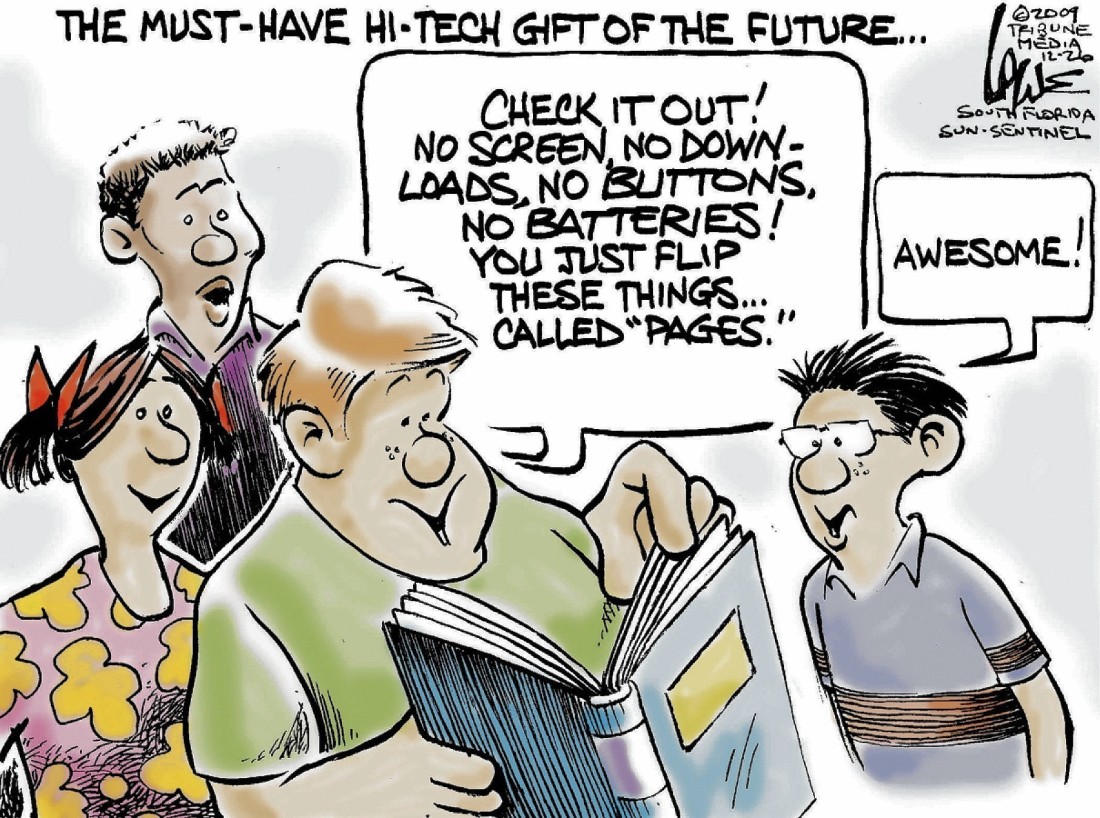
“Get real,” she said. “No one’s going to spend time reading bulky books in future. Why would they, when we already have audio books and kindle?”

My friend and I were having coffee at a famous fast food chain. We had left the office for lunch but decided to grab a muffin and an espresso instead.

When someone said such a thing, I’d flare back at them without a second thought. But now I held my tongue. My friend made sense, and I hated myself for admitting it. I said nothing, however. My coffee lingered under my tongue sending shots of bitterness through my system.

I love reading physical books. And I’ve admitted more times than I know, that despite the Kindle app’s animation to turn pages, an ebook just doesn’t feel the same way. But I’m reading four or five books now, and all of them are on my mobile. It’s easy because I never know when I’d get the time to read a page or two, and my phone’s just lying there in my pocket.

But I’m also against the digital revolution that’s almost killed paperbacks. It saddens me that leather bounds are now classed as exclusive collector’s items.

Books are books. They’re made up of words that can twist and tug at the deepest of heartstrings, and not antiques held together with age-old rust and dust.

Books are books. They’re living things filled with opinions and teachings. They can weigh in when you’re down, though sometimes even weigh too much when you’re carrying a burden.

Books are books. They are a mark of history written. They’re proof that people lived through them; they behold fingerprints and memories of thousands of enlightened minds who’ve cherished every page, every word, and every curve of the “g”s in them.

Whereas Kindle is cold. It’s a case that displays what it contains, and it contains a new thing every day.

Kindle is just a Kindle. It’s sleek to the touch, fits into your arms, and easy to carry.

Kindle is just a Kindle. It’s got hundreds of voices screaming for your attention, and if you’re ever appalled by the violence in one page, you can always find some zen in another.

The Kindle is just a Kindle. It’s versatile with multiple stories and multiple stands. It will neither weigh in for you nor weigh you down.

Kindle is kindling in the name only. It kindles not one but many emotions, which is good for some but too many for most. Bulky books rekindle spirits. There’s no escape from the secrets within a bound book. You either take all it in or give it all up. There’s no intervention, and there’s no mid-ground.

But even as all these thoughts rushed through my head, I still kept my mouth shut. As much as I hated it, ebooks and Kindles are the new way of reading.

With the rise of 140 characters, facebook-like attention spans, and books you can listen to while watching silent movies, many people think hot chocolate and the sofa near the foggy window is more suitable for the family kitten. My friend was right. In future, not many people would read heavy books. We’d intake lines and lines of words like we inhale air. And like air, most of it wouldn’t even reach our brains. It’s the age of the Kindle and unkindled souls.