Travelling thoughts

The past year gave me a lot of new experiences. I had to step out of my comfort zone and find new zones I’m comfortable with. A major part of it came from my trip to the US. It was an official trip that taught me more than official stuff.

Even before the actual travel, every bit of preparation was a new journey by itself. From filling up the visa application, biometrics, and visa interview, to planning, packing, clothing, and embarking the boeing, every moment felt special.

From the moment I landed, everything I looked at awed me. Having lived all my life in a third world country, I can’t explain my wonderment at walking through wide roads, observing paved sidewalks, reserved bicycle paths, and moving traffic. India is famous for its clogged streets—not only do we have unmoving vehicles honking in impatience but we also inhale the smoke from out-dated vehicles that should’ve lost their licenses 20 years ago. With the absence of everything I’d become used to at home, my trip abroad showed me the other side of the world. It showed me an alternate reality I couldn’t have imagined.

Union Square, San Francisco

As a bonus, the trip included my first solo adventure. For the first time in my life, I chose my destinations, decoded city codes, made purchases, and arranged accommodation. The experience revealed a side of myself I didn’t know I had. I learnt to plan, to organise, and to communicate with other people to get my work done. It taught me survival skills and negotiating skills.

Not only did I discover my own boldness, but I also discovered I could socialise without feeling bad about myself. Having always shunned away from social interactions, I saw myself initiating conversations, instead—with Uber drivers, restaurant waiters, event caterers, hotel receptionists, kitchen staff, fellow backpackers, and even an 88 year old grandma who headed to the Portland Museum sporting rain boots, a raincoat, and a confident stride. I laughed more than I had all year because intense pleasure seeped through my veins cleansing my soul.

As much as the grandeur of the US of A thrilled me, its subtle faults also stood out. Homelessness, unemployment, drugs, gun violence, homophobia, Islamophobia, inequality, and the over-indulgence of food, all shoved their ugly faces at me. Despite the wonderful people I met, despite the glorious sunrises and sunsets, and regardless of the advanced public transportation systems, I realised that first world countries have their pitfalls too. No matter which part of the earth humans live in, humans will be humans nevertheless. We do good to each other, but we also harm each other. For every thankful moment, there was also a moment I could’ve lived without.

My greatest takeaway from 2017 is the lessons from my trip. Most of the world’s population looks up to the US and to other western countries, expecting them to guide from experience. However, during my time there, I figured the US is as clueless as the rest of the world. Sure, they have nice cars, bigger roads, more money, and less population but when it comes to everyday life matters like equal pay, gender biases, and tipping at restaurants, the first world isn’t too far ahead of third world countries. Yes, the US is a wonderful country, the people of the west are kind and welcoming. Their embrace is warm, their laughter is contagious, and their thoughts are genuine. But even there, unhappiness and dissatisfaction prevails. Alas, no place is perfect.

And with that realisation I headed back home, knowing that the best way to live is to make yourself happy in spite of your physical surroundings. It’s not easy. But hey, if a place gets too dull, you can always get away. One solo trip is all you need to catch the bug forever.
Redefining parks

A park is a large garden or area for recreation. It’s set in a natural surrounding, and is well-groomed for the public to enjoy. When you think of parks, you think of kids flying kites, dogs chasing their tails, and couples on a tryst. Nothing about the word park indicates wilderness and untamed trees. At least not to me. From where I am, parks are mild areas, havens for kids and pets. You’d see a bunch of manicured trees and bushes lining the circumference of the park, and often, swings, merry-go-rounds, slides and ladders, among other play things. A typical park includes not only enthusiastic people on their toes, but also older folk walking or meditating. Having grown up with that image, it’s an understatement when I say the parks I went to in Seattle were wild.

I visited the Lincoln Park and the Faultleroy Park in southwest Seattle, and both redefined the word parks for me.

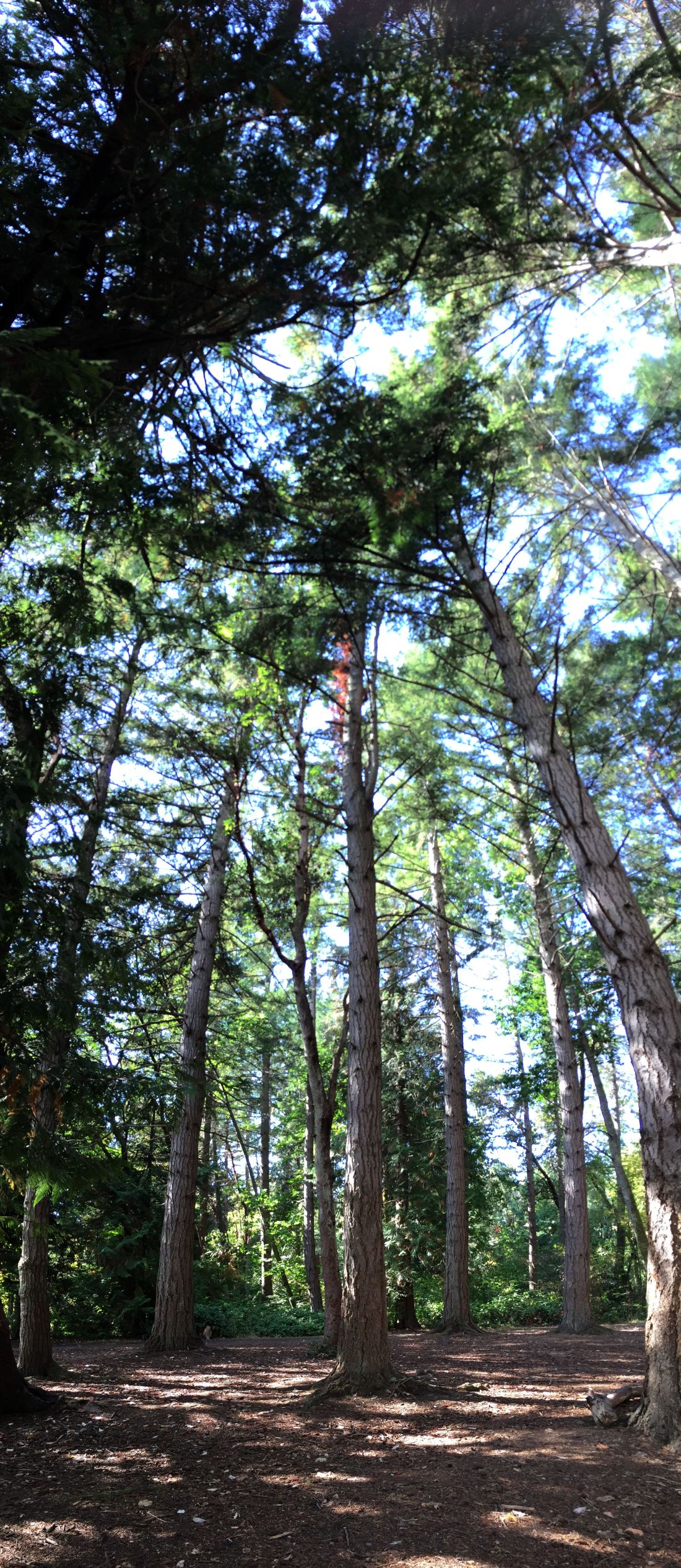
The moment I saw Lincoln park on the map, I knew I had to visit. Not only is it located in an interesting intersection, but it’s also a massive triangular-shaped piece of land. When I got down at the bus station, facing me was a wall of towering trees. To my left were trees and to my right were more trees. In front, a small path led straight within to whatever the trees surrounded. Beyond the first few tens of steps, I couldn’t see anything but the dark interior of more trees. Nonplussed, I began walking to the left searching for an indication—a sign, a gate—to entering the park. Finding no help, I saw straight ahead. There was only one way left to go.

Lincoln Park 1

Despite it being midday on a waning summer day, as soon as I stepped into the shades of the trees, coolness engulfed me. It felt as if I’d walked into another, much colder, world that drowned the noise of humankind, giving way only to the melodies of birds and the rustling of leaves.

The trail led me on, and I followed unable to differentiate between the path I was heading and the path I should’ve headed toward. Only greenery surrounded me. Unlike a supposed walkway, the path appeared more like a beaten track. It’s as if thousands of footsteps everyday had trodden it into existence. And yet, although so many people traversed through the same way, no authority has cleared up the sideway. And I’ve never been more thankful.

Although trees and wild bushes grew all over the place, the walk within the park itself wasn’t stressful. I felt extreme joy as I grazed past overgrown weeds and overhanging branches. That’s the greatest thing about the park: it’s lack of civility. Experiencing nature in its natural form seemed the only natural way to make an afternoon useful. And for a nature lover as myself, a day amongst centuries-old trees is a day well spent.

Lincoln Park 4

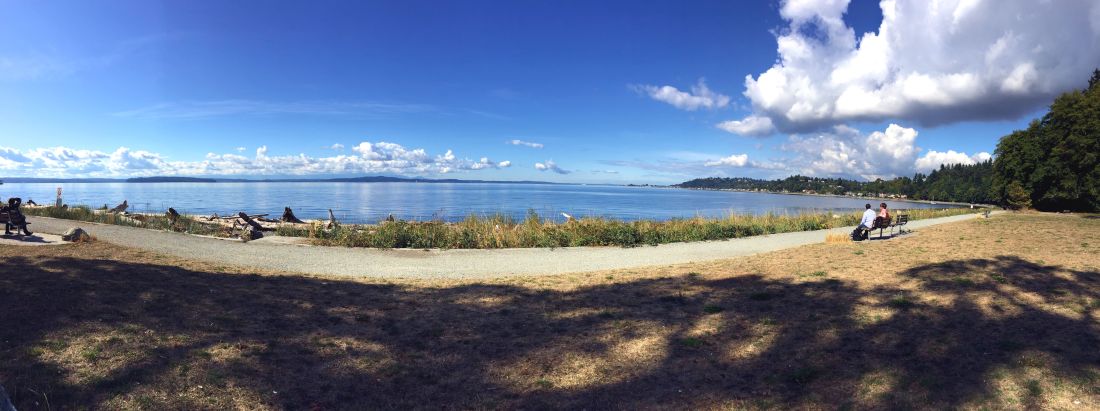
After a while, still seeing nothing but dense trees, I wondered if I’d lost my way. Looking at the map, I realised multiple tracks in the park led to the tip of the triangle—the ocean. I sped up, eager to see the end of the trail. My path twisted and twirled, but when I approached the end of the track, I was standing on a large, leafy rock looking down at the sea. Turning left onto the path that led downward to the ocean, I felt excitement rising within me. When I reached the bottom, the entire ocean sprawled in front of me, bluish water studded with the sun’s reflection. Just watching the sea, for longer than I know, was a treat.

Lincoln Park 2

Along the coast, I followed the trail leading back to the street. On my way to the sea and all the way back, I saw plenty of dogs with their humans. People choose any of the many trails and, walking with their pets, it’s an everyday exercise for the feet and a necessary trigger for regular bowel movement.

Smiling to myself, I couldn’t believe how wonderful the park was. The Fauntleroy park was the same. With countless trails, all starting and ending in different streets, both parks were a mystery to me. It didn’t take me long to realise I couldn’t ever explore all the trails. It left me in wonder, knowing there’s a world of eye candy so close to me, and yet so far. It was a lesson for life: you often have many options, and everything changes based on the path you choose.

The best of all

The best thing about 2017 is that I had a lot of new experiences. I had the opportunity to step out of my comfort zone and find new zones I’m comfortable with. Thanks to an official trip, I managed a week of personal travel. It was the best of all that happened to me this year. It taught me a side of myself I didn’t know I had. It taught me to plan, to organise, and to communicate with other people. It gave me survival skills, nurtured my negotiating skills, and taught me the true value of good companionship. Travelling solo left me craving more.

Travelling solo


Coffee love

Coffee is an emotion. It’s what wakes you up and keeps you up all day. From where I am, typical coffee is a milk-laden sugar-infused chicory-blended concoction no one can live without. Although I don’t take my coffee that way, I do know its value in Indian homes. Coffee for Indians is what tea is for British. We’re snobby about our proportions and always willing for more. Having lived through all the drama that revolves around coffee, I felt prepared for what I’d experience in the US. At least I thought so.

On my first day in the US, my colleague showed me around, introducing me to the concept that is the K cup. I’d heard about and read about K cups before, but it was the first time I saw how it looked and learned how it worked. As my colleague picked up a fresh cup, flipped the machine open, inserted the cup and pressed the lid shut, I looked in wonderment at the amount of plastic waste that a one cup of coffee entails. I knew from a long-lost article that K cups aren’t recyclable, and wondered how much wastage that created. I could use up to five cups a day, and I was just one of the many hundreds at work. The math of how it’d magnify stumped me into silence.

Although at that moment I felt I should give up coffee altogether, when I saw the fresh black essence drip from the machine into my coffee cup, I felt little guilt. I felt more elated. Eight ounces of steaming black liquid waited for me to gulp down. Cupping the cup in my hands, I inhaled the scent of well-roasted beans wafting through the tall cup right into my nostrils. From there it travelled to my left and right brain spreading wakefulness all over my being. I sipped. Warmth rushed down my throat plummeting to fill up my empty stomach.

I ran about high in energy and joy. I’d experienced the real kick of coffee. I’d read about it before and I’d raised eyebrows at articles that claimed coffee disrupts sleep. None of the coffee I’d had so far had the such an invigorating effect on me. It wasn’t until I tasted the drip coffee that I understood the real power of it. It didn’t take me long to get addicted.

In Seattle I fell in love with fresh brewed coffee. My host’s medium-roasted coffee felt rich and yet less toasty in my throat. Portland gave me the taste of the bitter and sour Colombian coffee. Both were far different from the dark-roasted K cups I’d had in Pleasanton, and they were both comforting. I’ve no idea how many cups of coffee or kinds of coffee I tried while in the US. The only thing I do know, however, is that every cup delivered its promise. Every time I needed something to lift my spirits, coffee came to my rescue.

A lesson in history

Alki beach had been a feast to sore eyes. Having spent the entire morning taking in the ocean, I wondered what other unique local sights Alki offered. Though I only asked for directions, a wonderful woman—Kate—sympathised with me as I lamented missing the Alki Point Lighthouse tour. To satiate my cravings for luscious history, she suggested I visit the Log House Museum. She gave me directions and landmarks and I, unsure what I’d find, walked a few blocks down the beach to the Log House Museum of Alki.

Alki 9

It was more like a cottage. From afar it was quaint, nestled within a garden of fresh flowers and lots of greenery. A sign hung from the roof, of the two-storey building, almost hiding in plain sight. A flight of wooden steps led to an old fashioned door. As I approached the door, a sign explained how Alki is the birthplace of Seattle. Reading it, I understood that Alki—like most of America—was home to natives for hundreds of years before an unidentified landing party transformed their lives. The Denny Party landed in 1851. For a few years they tried transforming Alki into a profitable and habitable place for them—much like the city of New York on the other side of the country. Soon realising the futility of this venture, they built downtown Seattle, instead. And so began another era, the era of an unassuming port becoming Seattle.

Alki 8

I’d been in the museum for less than five minutes—I hadn’t event gone inside yet—but then and there I knew I’d come to the right place. Thanking Kate for her excellent guidance, I walked in through the door to meet an excited volunteer. He explained to me how one of the early settlers of Alki, the Bernards, had built their home. In 1902 they’d fused the styles of a modern summer cottage with comfort and luxury. The result was the Fir Lodge. Over the course of 90+ years, the log structure had been home to hundreds of people. It is now a restaurant. Made from Douglas fir logs, a portion of the Fir Lodge is the carriage house, which is the current museum. The Southwest Seattle Historical Society renovated it in 1995, and opened it to the public in ’97 on the 146th anniversary of the landing party.

This slideshow requires JavaScript.

Taking in all these scraps of history, a sense of self-importance and awe spread within me. All I’d done was listen to a man talk about incidents of yore, and that’d given me goosebumps already. To make the experience even more worthwhile, he welcomed me to look around at the exhibits: original photographs from the various families that had lived in the exact space I stood at. Aside from photos were also snippets from letters that passed between members of the families—letters of love, letters of pain, and even some letters that lamented loss of their homes.

For the second time that day, I felt glad to have found accommodation in Southwest Seattle instead of downtown. I wouldn’t have otherwise visited Alki, and would’ve missed out on all that I shouldn’t have. Standing over the past lives of so many people, observing what was once theirs, leaning on the walls they once leaned on, and tracing their footsteps, I’d walked into a well-preserved monument that initiated the boom that’s Seattle. As exciting as downtown Seattle was, the modest museum at Alki was a treasure cove of the humble beginnings of a city that’s now a world icon. Not only was it fascinating to encounter such a culture-rich monument, but it was also so moving to realise that even though we evolve into something much larger and different from our roots, it’s those roots that bind us to the world.

I left the museum a little overwhelmed, but as I walked around the log house onto the street, I knew I’d made value of my time in Seattle. I didn’t splurge, I didn’t shop around aisle after aisle, I didn’t bring back material things for anyone, but I brought back memories and stories worth a lifetime. That’s priceless.