Climb every mountain

The city of San Francisco, didn’t have a great first impression on me. But it did do better the more I looked around. Within hours I had gone from feeling alienated to feeling elated. One of the many things that surprised me was that the city was built on a hill. It seems trivial in hindsight, but when I discovered it ascending a steep slope, it was as if the city was challenging me—a challenge I was eager to take on.

San Francisco


A day at Alki beach

My first day in Southwest Seattle, I woke up shivering. It was cold and the last thing my tired feet wanted to do was venture out on its own. But I’d never felt more excited to do that exact thing.

Rain, though forecast, wasn’t in the picture. That boost my morale just enough for me to get dressed and follow the map to the nearest coffee shop. Since I’d already gulped down a mugful of my host’s fresh brewed coffee, I picked up a ginger molasses cookie from the cafe to nibble on during my ride to Alki beach.
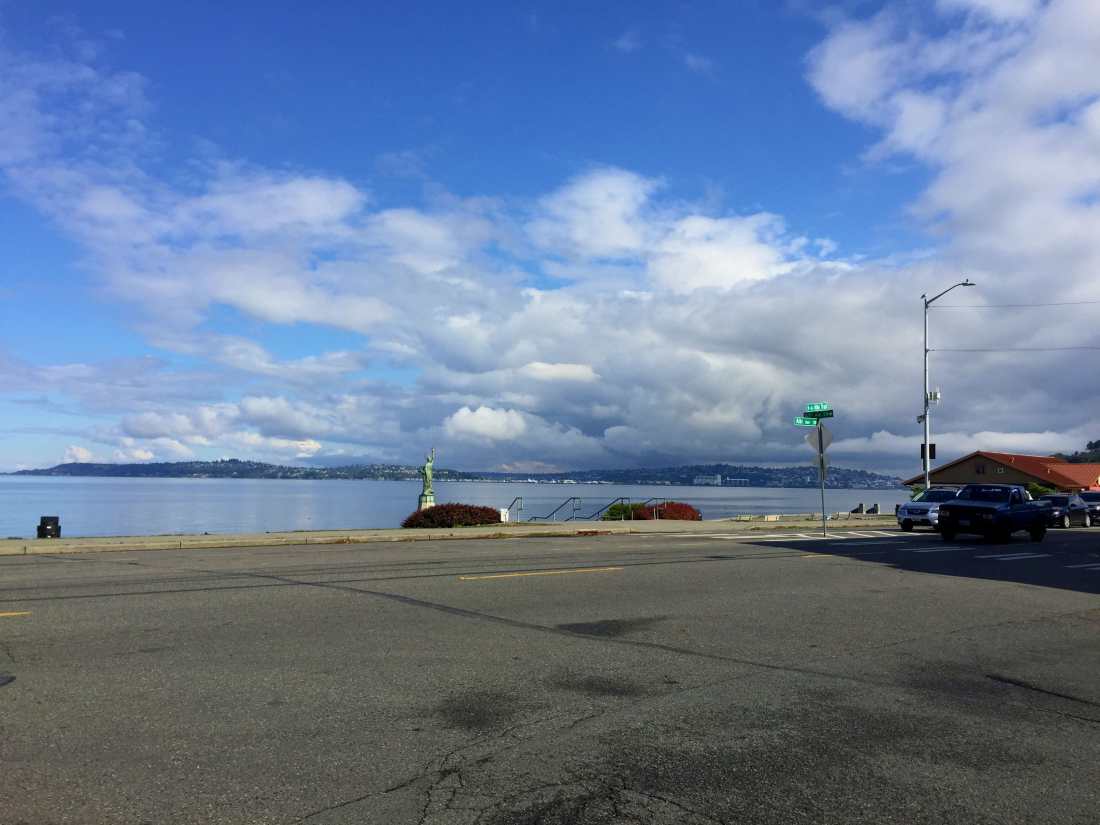
Alki, Seattle

When I got off the bus at Alki, it was about 10 am. The sun streamed through silver-lined clouds and I—feeling warm and idiotic—removed the heavy woollen jacket my host had lent me. Walking towards the beach, I paused face-to-face with the Statue of Liberty. Although my general knowledge told me the sight belonged a five-hour flight away, my eyes had me doubting my mind. When I approached the statue, however, things came into better focus.

The miniature Statue of Liberty in Alki beach is one of 200 across the nation. Back in 1950, according to the inscription on the statue, the Boy Scouts of America celebrated its 40th anniversary with a campaign called Strengthen the Arm of Liberty. They made replicas of the statue in New York, erecting them in 200 cities across the US including in California and Oregon—two states I’d visited before Washington and yet had no idea about this piece of history.

Although the inscription didn’t admit it, it was obvious that these stamped copper statues aren’t perfect replicas. Regardless of its minor flaws, however, the statue stood tall and proud, welcoming proud natives, sceptic perfectionists, and awestruck tourists alike. I lingered by the statue, musing on the magnitude of its significance. A local significance that’s diminished because of the iconic Space Needle. Folks touring downtown Seattle would seldom consider travelling over 45 minutes to stop by Alki. I wouldn’t have, I realised, if I’d found accommodation in the heart of the city. As I walked down to the beach, breathing in the fresh scent of the ocean, I felt thankful that my host lived in the South West where people’s hearts were as wide as the streets.

The vast ocean opened up in front of me, a calm blue spreading its serenity within me. Not a being was in sight, except for tiny ducks frolicking along the shore. Below my feet pebbles personifying perfection and imperfection scattered about raising a crescendo in the wake of my footsteps. Inhaling the freedom that a vacant beach offered, I walked along the shore, looking far and beyond, admiring the pointy Needle, and smiling at the only other person on the beach who crouched looking for pebbles. Feeling nostalgic myself, I stooped and grabbed a few pebbles. As I gathered them in my hand, I felt an immense sense of importance. It was as if I tried to capture a part of my trip to take home to my parents. As though I tried to solidify an intangible experience, in a feeble attempt at preserving it forever. How often we do that, I wonder now. Unsatisfied with the moment we’re in, we all try to monumentalise something that we should, instead, internalise.

Looking for pebbles on the beach

Not thinking about all of that, however, I choose four unique looking pebbles to travel back with me to India. Stowing them away in my backpack, I continued along, my head to the right, towards the sea. Its surface remained pure and undeterred as a ship or two sailed on, casting a mild grey smoke and a great wild impression. At the end of the beach, I knew, was the Alki Point lighthouse. Marking it as my destination, I walked on savouring my every step on the pebble-laden shore. After about 20-30 minutes my view on the left changed from the open street to mansions and palaces. Huge beach houses towered with no sign of habitation. It surprised me that people would build houses in such close proximity to the ocean, and I started wondering how the salty soil supported such structures. Buried in my own thoughts, I continued straight ahead stepping over seaweed and sea shells.

Alki beach

As I approached the end of the beach, the top of the lighthouse came into view. Seeing it, I felt let down. I’d imagined the lighthouse as a towering cone, higher than any other building in the vicinity. What I saw, instead, was a tiny peak peeking a little above the rest of the houses around it. Confused, I reached the end, only to realise that the shore ended with a fence on my left and rocks in front. I had no choice but either to turn back or climb over into—it was clear—private property. Curiosity replaced my excitement. From where I stood, there was a large wall fence around the lighthouse, an obvious attempt to keep visitors away. Turning away, I walked back to where the line of houses began. That’s when I noticed them: multiple notice boards marking the area as a private beach. Where the street ended to my left, the public beach also ended. From that point forward, leading up to the lighthouse was private property that I’d trespassed on. Laughing at my absent-mindedness, I recalled I’d seen the backside of houses with paddle boats and ocean gear. I’d thought they were touring businesses or local guides.

This slideshow requires JavaScript.

Getting onto the road, I entered the residential street. Now on my right were the entrances to the houses I’d seen from the beach. As understanding dawned on me, I sped up hoping to see the entrance of the lighthouse, too. When I approached the tower, though, I saw a large bolted gate with a massive sign on it. Moving closer, I read the notice.

The Alki Point Lighthouse belonged to the US Department of Homeland Security, and the lighthouse quarters is now the residence of the 13th District Commander, also the senior Coast Guard Officer.
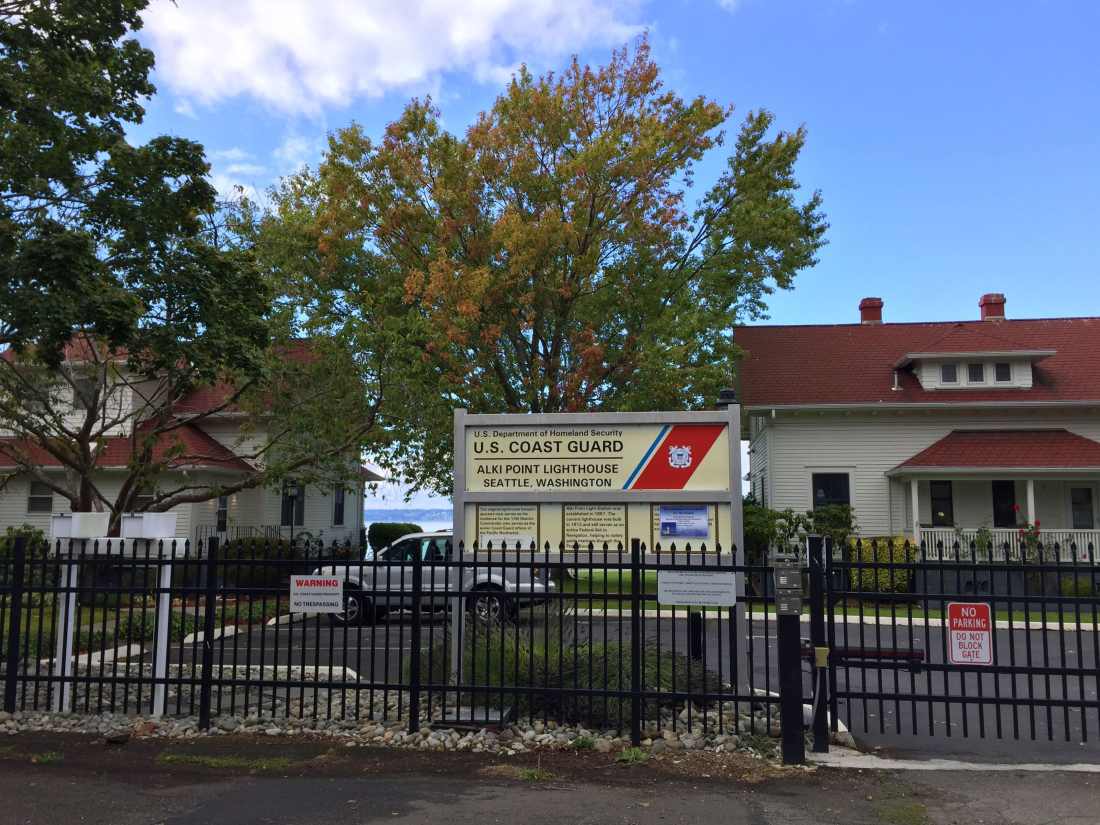
Alki Point lighthouse quarters

To douse my already sinking emotions, another informed that tours had closed for the season. The lighthouse was now someone’s home, and I’d be wrong to disturb the family while they enjoyed breakfast in peace.

Looking at the sign, I felt so upset. Once a national monument, a tourist attraction, is now out-of-bounds. The lighthouse that once served as the beacon for every ship gone astray, as the pride of the local population, as the treasure that made Alki so special, was now an abandoned tower in the middle of a home. It made me wonder how inevitable change is in our lives. Although we try to cling onto fleeting time, it goes by and what remains is often old stones and faded memories.

With that, I turned away. I hadn’t seen the last of Alki.

A mystery that’s Seattle

I had been in the US for almost a month before visiting Seattle. Although I had acclimatised myself with the ways of the first world, the ways of King County still took me my surprise. From the moment I stepped out of the train, and during my long walk along the waterfront, everything I saw still felt new and fascinating. There was something different about Seattle, something I couldn’t discern. As I walked down the streets, the city by itself felt more grand and more elite than Portland or Pleasanton had ever felt.

By the time I exited Pike Place Market, my awe at Seattle had only bounded manifold. Even in hindsight, it’s tough to point out one thing about the city that emitted such a romantic glow. Even the smallest things like an engraved staircase amazed me. What a nice way of teaching aliens about the various aliases for the city, I mused. Messy staircases don’t excite me, but Seattle’s did. And it’s for that exact reason that I explored further.

Pioneer Building, Seattle

With my fingers wrapped around a gingersnap cookie — my first taste at a gingersnap (wow!) — I walked towards one of the greatest attractions of Downtown Seattle: The Space Needle. According to my friend although Seattle is the same size as Portland, it appears much larger in life. I realised the reality of that statement at my first glimpse of the Needle, from far away.

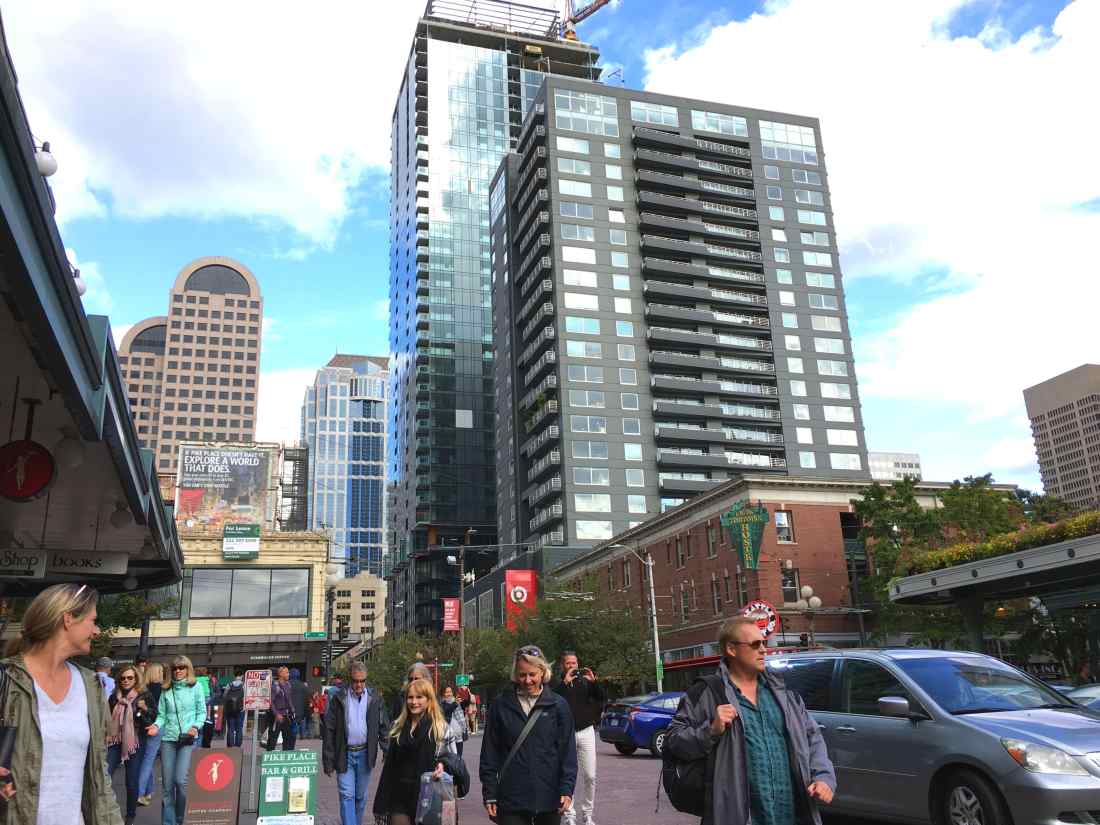
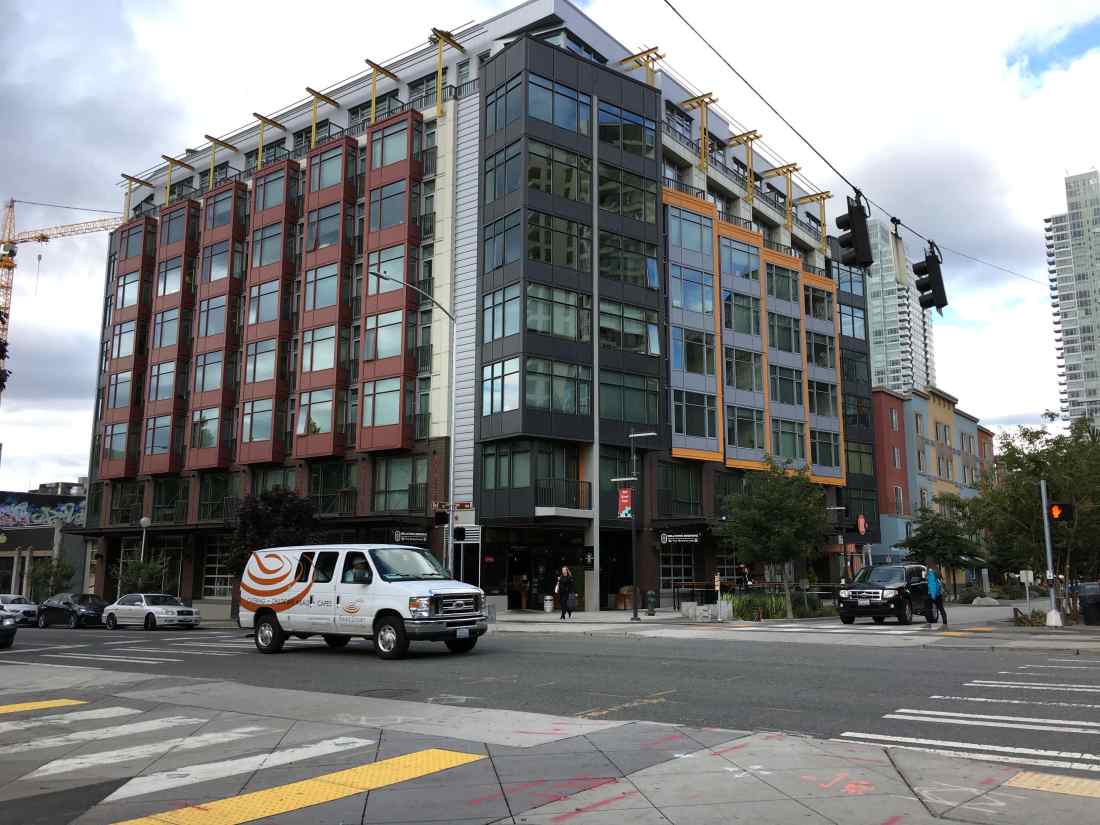
With my map leading me through the many walkways of the city, I stopped often to gaze at the architectural marvels that make the city what it is. Ancient buildings stood aside newer glass structures. Cranes craned overhead while men were at work, and pedestrians at walk. People followed traffic lights, and vehicles halted for me to cross. An inaudible hum hung above scattering vibes of calm all around. I heard no honking and no screeching, and yet saw so many vehicles. No one yelled at each other, because no one got in each other’s ways or nerves. It wasn’t the most silent of streets, but it was one of the most peaceful. There seemed no reason to rush, no bus to catch, and nothing to miss at the nick of time. All that was so surprising because Seattle is one of the most happening cities in the Pacific Northwest. Multinational corporates are galore in Seattle. Tensions can get high and consequences may come by, and yet the street I was walking on reflected none of that.

The closer I got to the Needle, the more of it I could see. As any other tourist, the sight of the iconic structure brought a massive smile on my lips and had me reaching for my phone.

All around me people went about their day as any other day. Taking their eyes of their phone long enough to cross the road, fixing appointments over phone calls, grabbing a coffee at the local Starbucks, settling on a bench and flipping the front page of the newspaper, sneaking a glance at their watch while waiting for the signal to change… No one seemed to be as thrilled as I at the sight the sliver of the building. It was, for them, nothing more than another building.

Amazing how something so valuable to me is negligible for those accustomed to seeing it every day. I couldn’t digest that they couldn’t appreciate the Space Needle, so unlike the rest of the world. Perhaps if I’d lived in Seattle for years altogether, I’d become like them, too. Perhaps it’s the same where I am. Although I don’t notice the subtleties that make my hometown worth visiting, someone stopping by for the first time would sing praises. And I’d walk by without a second glance.

By the time my wonderings aligned with my wandering feet at the Seattle Center, I’d arrived right underneath the Space Needle. Looking up, I couldn’t help but appreciate human intelligence. It didn’t last long, though. By the time I came face-to-face with it, it seemed like any other building. To me, every building in the city was magnificent and larger than any else I’d seen. So was the Space Needle. Besides, I realised, much of the tower’s beauty radiates after dark when it’s illuminated.

The Space Needle

The Seattle Center, the home of the Space Needle, had much more to see. Aside from the Needle, the Center also hosted the Seattle Stadium, the Chihuly Garden and Glass, Museum of Pop Culture, Pacific Science Center, the Mural Amphitheatre, Seattle’s Children’s Museum, and plenty of gardens and shops. Even though the Space Needle trumps the rest of the cultural and architectural monuments in the Center, the Museum of Pop Culture stood out to me more than anything else. Not only was it too large for my range of vision, but the building’s shape itself challenges every rule in the book. From the outside, it embodied the sense of rebellion that echoes with pop culture. Thinking of Michael Jackson, for instance, brings his non-conforming style of performance to mind. His story is legendary, making way from ordinary to extraordinary by defying customs and set ways. It was the same defiance that the museum stood for.

Humouring myself I walked on. For the most part of my trip, I was discovering things in real time—visiting and seeing things without researching them beforehand. It’s only now, in hindsight, that I look for the stories behind the places I’ve been to. And so without a clue about what I’d find inside, I walked inside a large building that said Armory. I’d assumed I was going to experience a world of high-grade weaponry and machinery. I saw, instead, rows upon rows of food stalls and restaurants. About 25 stalls ranging from names I’d never heard of to the world-renowned Starbucks had business in the Armory.

Seattle Center, Armory

Disappointed, I left the Armory and arrived on the other side of the Space Needle where the most excitement was afoot. Children, parents, and grandparents alike queued up for tickets to a ride up the Needle. Long before I’d arrived in Seattle, I’d decided not to do that one thing every tourist did. Not that I harboured a fear of heights, but don’t understand the hoopla around spending money on petty things. Moving along, I felt my lack of understanding grow stronger as I looked around the Space Needle gift shop. Businesses make mementoes of all that makes Seattle, Seattle and charge ridiculous prices.

Smiling to myself, I decided to call it a day. My first day in Seattle had been full of little lessons about the first world, and about myself and my ways of life. My first day in Seattle had been more than eventful, it had been educational and one that I’d cherish for the rest of my life.

To market, to market

I spent my first few hours in Seattle breathing in sea breeze and getting accustomed to the lack of sunshine. Having walked down the waterfront, I halted at the end of the road right in front of the Pike Place Market. Although I’d heard about the iconic market, I had no idea what to expect. From what I’d heard from friends, it’s the ultimate destination for all types of fresh produce and oceanic catch.

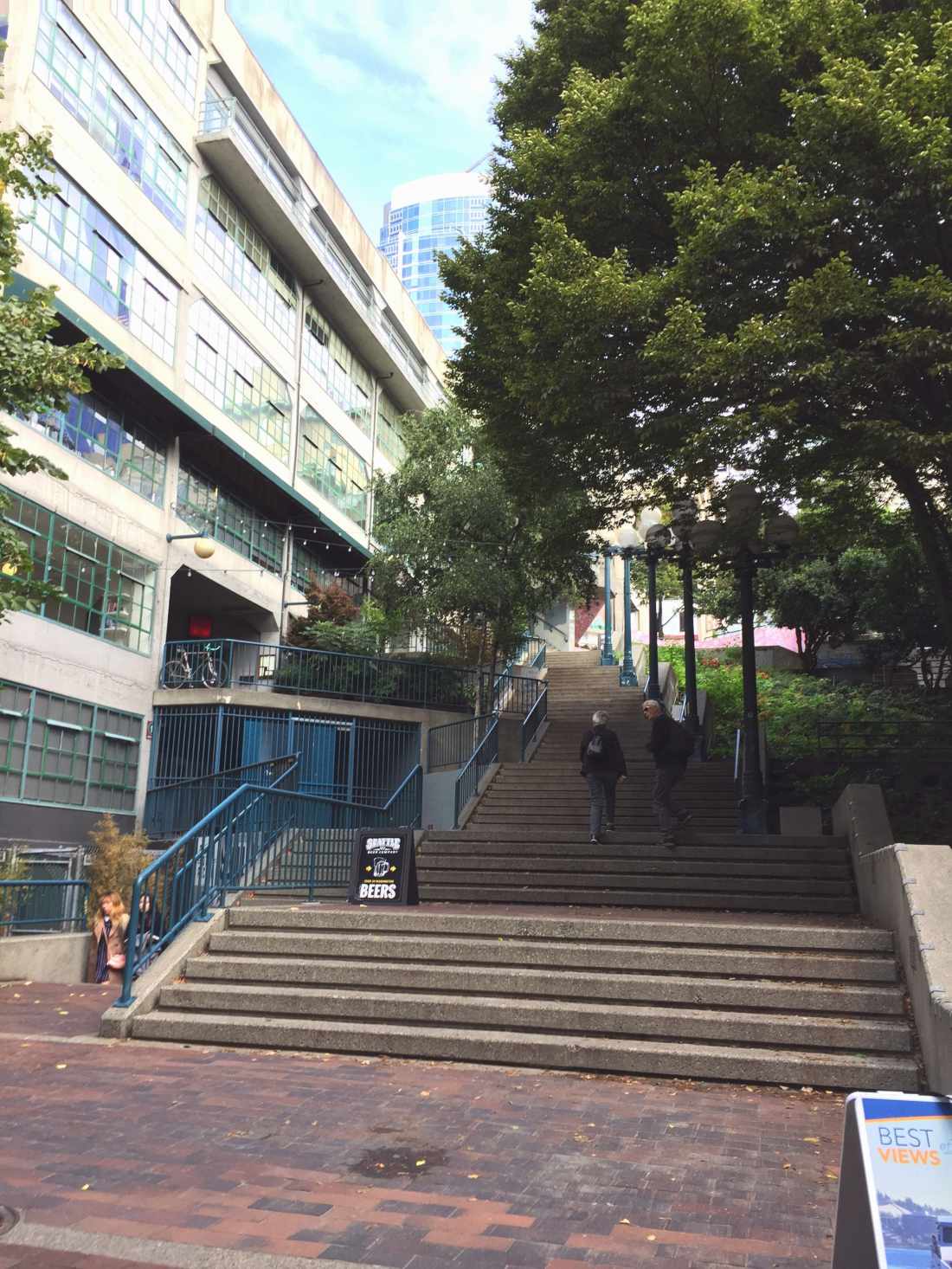
As I climbed the stairs, leading to the market, I noticed weird facades and odd-shaped stairwells leading to and from the corners. Set atop hills, the city of Seattle and the market area in particular, have no flat surfaces. Not only did it feel as if I was climbing a hill on top of a hill, but it also felt as though I was riding up and down waves that were the curves of the hills.

Pike Place Market 4

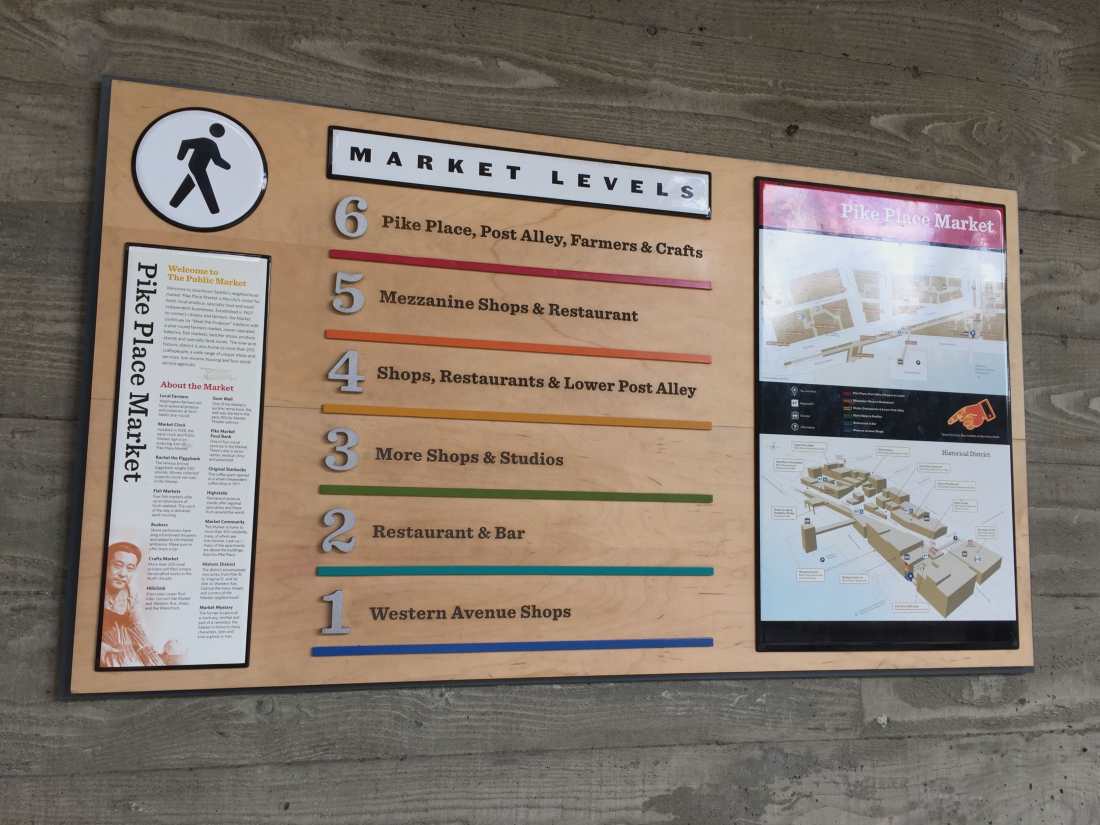
Life teemed in and around the market. It was a Wednesday, and despite it being midday when most people would be in their offices, the market resembled a Sunday carnival. When I reached the top, a little sign welcomed me with information and a map of the market. Trying to be smart about my strategy, I took the elevator all the way to the top floor so I could walk down each floor missing nothing.

When the lift doors opened at the sixth floor, a wave of dim light and buzzing voices greeted me. It was as if I’d taken the lift to a dark movie from the 70s. Facing me was the entrance to a supermarket selling all types of candy, weird foods, and random home items. Wondering what about the market attracted so many eyeballs and footfalls, I began walking around the floor, and then from floor to floor, observing the many stylistic and curious shops.

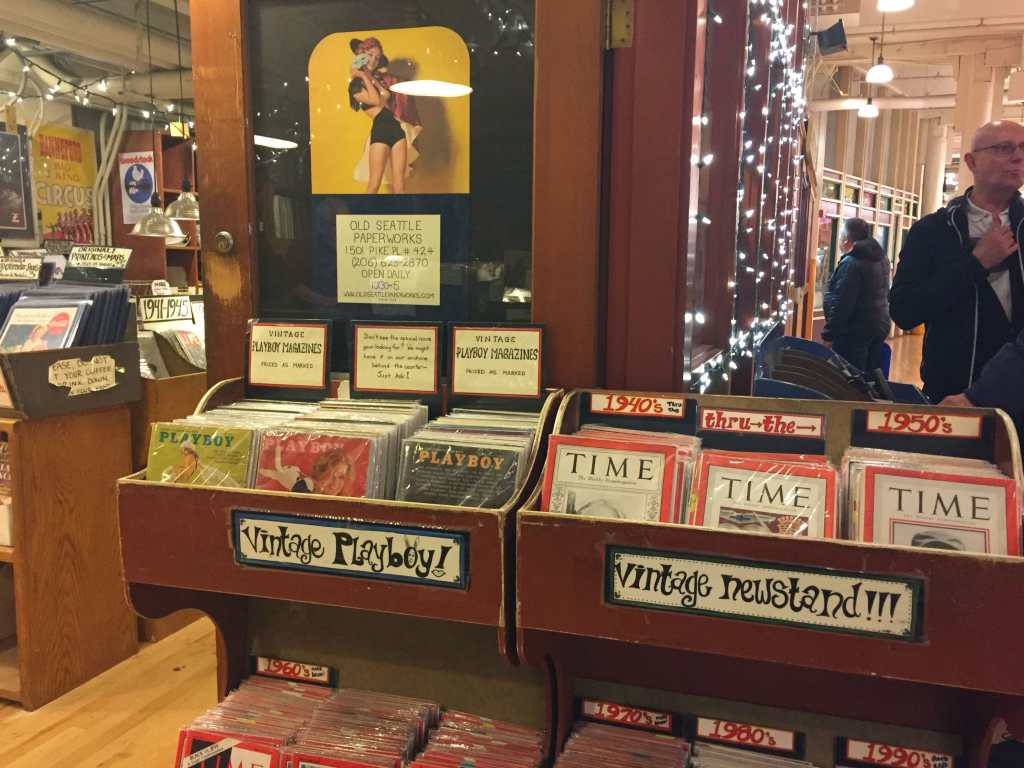
Each floor I stopped at had a variety of stores. From eerie stores selling Halloween and magic merchandise to a magazine shop selling vintage Playboys and Time magazines from the 40s, to a saloon that invited customers, every corner filled up with something worth staring at or dropping my jaw on. Tibetan artefacts, leather bags, indie artist studios, thrift shops, liquor stores, stationary, carpentry shops, jewellery stores, clothing like t-shirts, hats, ties, and belts, pet care, human care, hair styles, Seattle mementoes, and thousands of other little and large shops lit up as customers thronged.

As if that weren’t overwhelming enough, the pillars of the building itself told stories of the history of the Pike Place Market.

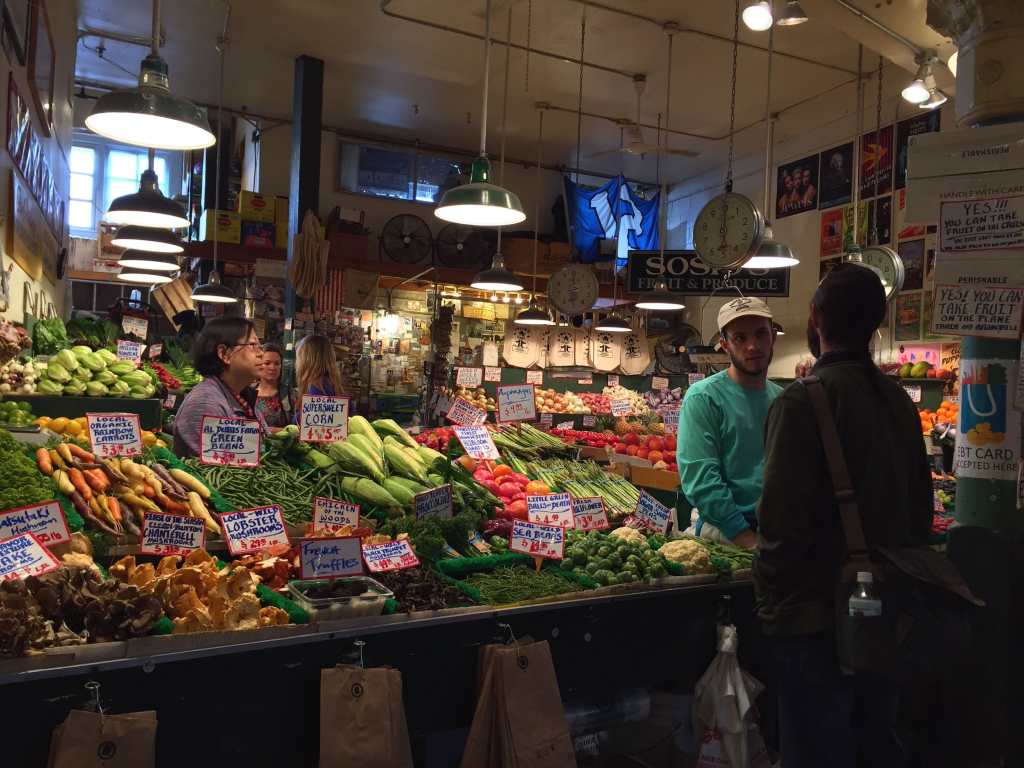
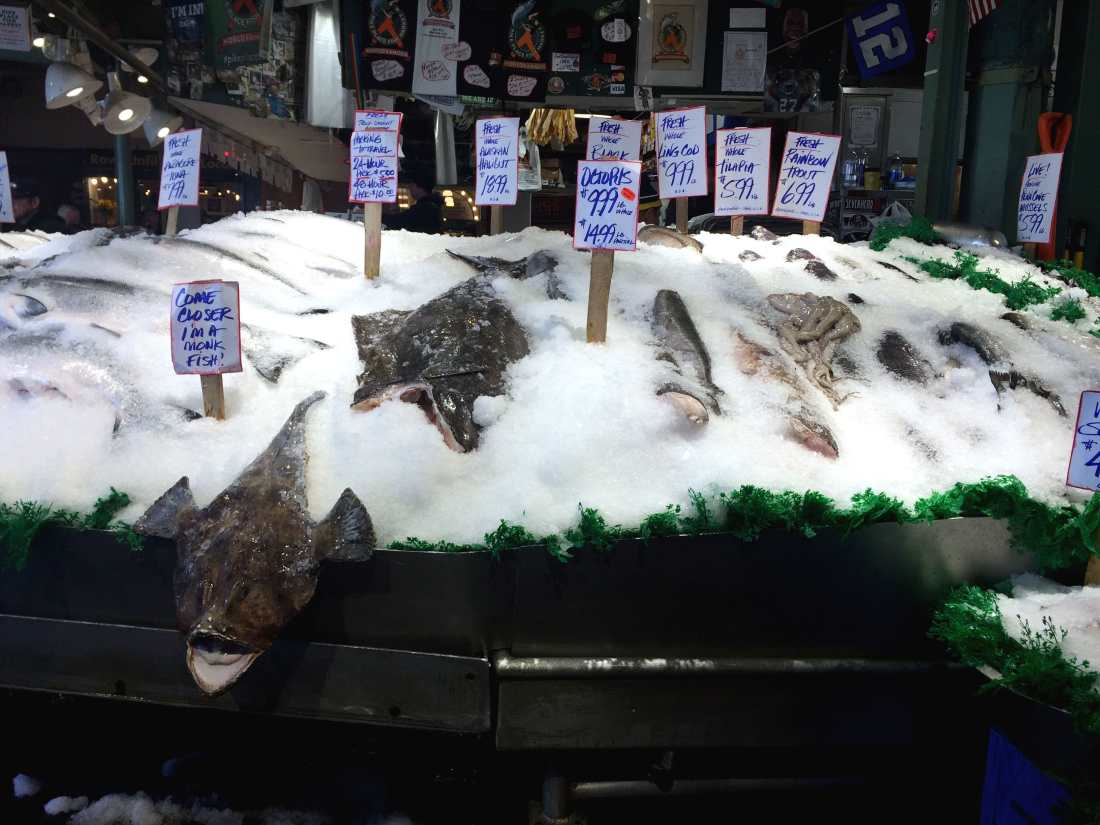
By the time I reached the ground floor, I’d seen so much more than I’d ever thought I’d see in a lifetime. It wasn’t the end, though. The ground covered more shops, most of which were food and perishables. On one corner, farmers from all over Seattle displayed fresh produce, some even handing out sliced fruit for samples. Gorging on the freshest piece of plum, I kept walking along the market, my eyes widening at the sight of fruits and vegetables in quantities and quality like never before. On another corner, young fishermen entertained onlookers by playing catch with 10-pound fish. Even more fishermen posed with their catch sprawled on ice blocks for tourists clicking photos at will.

Pike Place Market 6

A little further away were cafés, bakeries, restaurants, and smaller family owned businesses. They sold products like coffee, tea, chocolate, jams and condiments, and even a noteworthy pepper jelly.

Walking by so many shops, it was only too easy to get lost. Every time I tried to find my way back, I ended up finding something new altogether. That’s how I came upon the world-renowned Gum Wall. Although I knew it was somewhere around the market, I didn’t know how close it was until I ran into the pungent smell of stale gooeyness and deafening roar of a drilling machine. Though it’s been a symbol of love and an icon of the city for many years, the Gum Wall was messy and repulsive when I saw it. For better or worse, it was the first of a scheduled two-day cleaning of the wall. Each year, authorities scrape away old gum, fumigate the wall and its surroundings, and then re-stick the gum to its former glory. It’s become a necessary cleansing ritual because of the thousands of visitors who enter the alley every day to freeze the Gum Wall in their wall frames.

This slideshow requires JavaScript.

It was in the same unintentional way that I found the Pike Place Brewery. The moment I stepped in, scores of posters and beer references stunned me. It’s a bar with their own brewery underground. Loud music followed me to every corner of the bar as I scanned the wall shelves for interesting bottles and eye-catching displays.

Drunk by all that I’d seen, I exited the brewery and the market to stuff myself with some homemade cheese.

This slideshow requires JavaScript.

I’d had no idea Seattle had so much to show.

Along Seattle Waterfront

I was on the train from Portland to Seattle. While swishing past SeaTac, the sky outside my window looked gloomy and dark. According to forecasts, the rains would make a stop in Seattle as well. Shuddering within myself, I looked up the current temperature, and gulped several times as I realised I might not be able to handle 11 degrees. It would be the first time I visited an unfamiliar city and would have to find my own way to my host’s place. And I wasn’t thrilled about the idea of having to do all that and shivering in the cold at the same time.

By the time the train halted at the Kings Cross station in Seattle, the temperature had risen to 13 degrees, which was still cold for me. Wondering what to do, I left the train, and making sure to get some photographs of the wonderful Amtrak Cascades, walked into the warmth of the station. Despite being indoors, the cold stung at my skin, and as I pulled my sweater closer to myself, my insides squirmed in cold and hunger. Swallowing hard, and wishing I didn’t have to do it, I plunged myself outside the great doors, onto the street. The chilly breeze slapped my face, and the mild sun was far from comforting.

Downtown Seattle 1

It was around 12:30 in the afternoon, and my host wouldn’t expect me until 5:00 pm. Besides, I reasoned, my host lived so far away from Downtown Seattle that I didn’t want to come back into town the next day. So I decided to set my discomfort aside and experience what I’d arrived in Seattle for. The last thing I wanted was to stay in the same place feeling miserable and cold. I may as well have a look around while at it, I concluded. With my map for visual guidance and my host’s directions for assurance, I  followed the route to Alascan Way, the road along the sea line.

As soon as I entered the bustling streets, I understood what made Seattle so romantic to visitors. Not only was the city full of towering buildings, it also teemed with excited life. During the three weeks I’d stayed in Pleasanton, although I saw a lot of high-rise buildings, I almost saw no excitement on the streets. People went about their daily business, smiling and welcoming but it was nothing more than respectful behaviour. San Francisco, on the other hand, had been overwhelming with so full of people and so much energy.

Downtown Seattle 2

Seattle, however, was a delicate balance between the two. It was a pleasant experience walking along the footpath, turning my head this way and that, eager to catch everything within my visual range and cautious of missing nothing. Within ten minutes on the street, I grew accustomed to the weather. The cold no longer bothered me, and the breeze felt easy on my face. Surprised myself, I pulled my hands from within my pockets and I didn’t even feel like ice shards were stabbing me. I smiled. Perhaps this wouldn’t be such a bad day, after all. And sure enough, I soon realised that almost everyone on the streets of Seattle wore light jackets and sweaters—I fitted right in with the locals.

Seattle waterfront 3

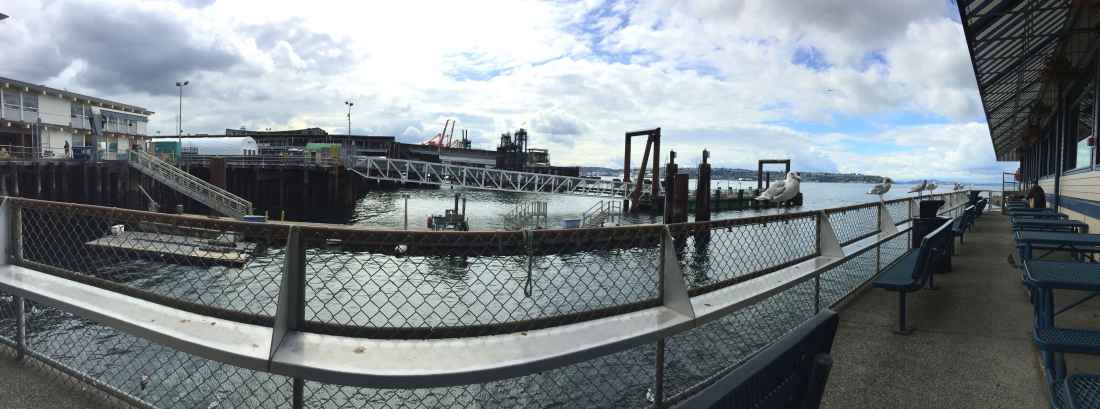
Getting on the Alaskan way, I found my way to the waterfront. The moment I stepped onto the path, I saw the ocean in front of me and a host of excitement a little further. A range of restaurants, delis, shops, and people hung around the area. It was as I if I’d entered a massive, yet horizontal, carnival space. Large wooden buildings hoarded rental boats, offering ferry rides, sightseeing tours, and assuring personal guides. I stepped onto a ledge-like structure that extended into sea. Standing on the ledge, I looked around and saw boats setting out into the sea, pelicans taking off, birds soaring in the distance, and the sea, a calm and glittering sheen under a mere sun.

Continuing down the path, the gigantic Ferris wheel of Seattle came into my view. Although a national monument by itself, the Great Wheel is far less recognised than the iconic Space Needle. I hadn’t realised how magnificent it was until I saw the wheel right in front of me. I’d always imagined the Needle as the only extraordinary piece of architecture in Seattle. Oh, how glad I am to be wrong about that. I didn’t get too close to the wheel, but from where I stood, it held my attention long enough for me to preach myself never again to judge anything or anyone too soon.

This slideshow requires JavaScript.

The entire path—the Waterfront Park—was a tourist magnet. So many people stood around, taking photos, gawking at the sea, and dropping jaws at the sights. Regardless of the tourists, I never felt, even for a moment, uncomfortable or distressed. There was so much space for all of us that we could be our own stupid touristy self without disturbing the next tourist. Coming from an over-populated country and city, I enjoyed being a part of the waterfront atmosphere, going with the flow, and being just another person on the street.

Seattle waterfront 1

When I’d seen all that I had to see at the Waterfront Park, the path turned right. And when I looked to my right, I saw a flight of stairs leading to the a place I’d been looking forward to: The Pike Place Market.

Seattle was just beginning to thrill me.