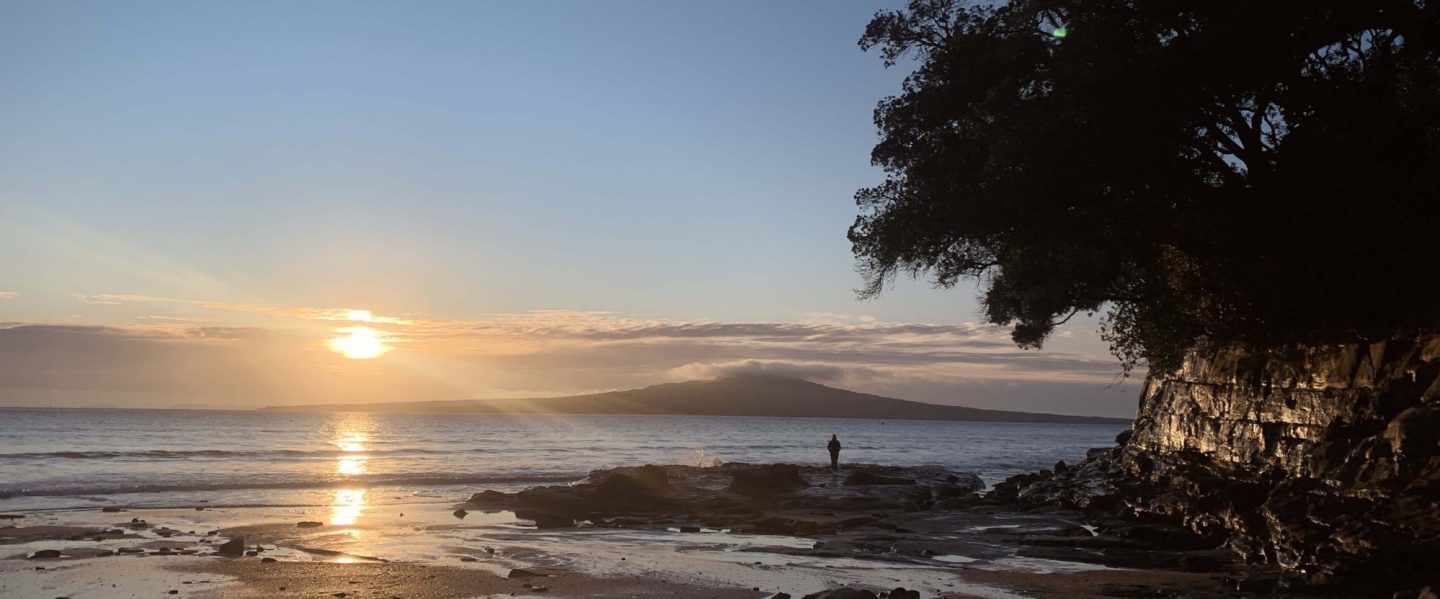
Seattle is a beautiful city for many reasons. Most people, however, think and know only about the Space Needle. I was no different. I, as any tourist visiting the city for the first time, had the big needle as a major pin in my agenda. But it was only when I got to Seattle that I realised there’s more to the city than just its most advertised monument. I walked along the waterfront park and went up the Pike Place Market. From a vantage point at the market, I caught a glimpse of this underrated beauty of Seattle. The Great Wheel is known well enough, but it often has to peek to garner attention.
My last day in Pleasanton, I went out for dinner with friends. I should’ve stayed back packing, instead. I don’t regret the dinner, though, because I had some of the best Italian food I had ever had. I did, however, return to my hotel late and spent another couple of hours preparing for the next leg of my trip to the US: Portland.
At 9:30 the next morning, I would fly to the great Oregon city. And I stayed awake until 12:30 am making sure I had everything I needed. Then I was just too excited to sleep. When I reached the Oakland International Airport well ahead of time (I get anxious if I’m late), I realised I didn’t know what to do. It was my first time in the US and I was about to fly a domestic airlines, which I had no idea works how. Nevertheless, I stepped right into the information counter of Alaska Air, the airlines I was flying. Expecting a decent reply, I asked the gentleman what to do. He took a look at my online checkin confirmation and boarding pass, and asked me to head right over to the security checks. Huh? I remember feeling. It was hard to believe that that was all I had to do—ask.
Goodbye Bay Area
Touchdown Portland
Although the lack of airport complexity surprised me, I was even more astonished at how easy things had become when I asked for help. In retrospect, if I hadn’t asked for information, I would’ve walked in circles like a lost child at the airport. Sure, I would’ve found my way some way or the other, but it would’ve been a more daunting experience. As a first time solo traveller, that was my first lesson: Ask, and people will help.
And so I asked again. This time, at the queue for security checks. As I headed for gate 10, I realised I had to join the only queue there was—regardless of gate number. I asked another passenger—in an incredulous voice—if there were no other queues. He shook his head in frustration, “Nope. It’s the only queue. Oakland’s a small airport, you know…” he trailed off with a vague shrug between resenting and understanding.
Smiling to myself, I joined the end of the queue. I had over an hour before boarding began and so I resorted to people watching—my favourite low-energy-exerting sport. A couple of women discussed an event they were attending, wondering if their clothes were appropriate. One of them mentioned she wore the light jacket to hide a hole in her t-shirt. They smiled at me, and I at them. After all, I know only too well the art of patch working my clothes. A little ahead of us stood another woman waving a bottle of water around asking if anyone would like some. It was still early in the day and as is the common scene, high-schoolers sipped sodas and coffees while scrolling through their mobile screens.
The lined moved and so did I.
Cleared, I headed to the waiting area and looked around more. Airports always fascinate me—massive winged beasts come and go, and no one even bats an eye. I, however, can’t take my eyes off them. When it was boarding time, it struck me how small the aircraft was. But when I found my seat, it was still a snug fit. The gentleman who sat next to me, slept through the entire hour of the flight, while I amused myself at the clouds below. We ascended and it struck me how beautiful the bay area is. San Francisco city came into view and as it went out of my view, I couldn’t help but feel a tinge of sadness. California had been nice. I don’t know if I’d ever return, but I knew at that moment—hovering in the air above the city—that it had changed my perspective of life forever.
After a long walk around the infamous Lake Merritt, I wrote to a friend saying I was in town. When she replied that she needed another hour to get ready and walk up to where I was, I decided to walk to her place, instead. It was only then that I realised she lived on the other side of the lake, another half a mile away. Not wanting to go around the lake again—the sun had come out stronger than I expected—I took a path through the streets observing the buildings flanking the sidewalks.
Oakland was quiet even for a Sunday. Having experienced flabbergasting activity in the streets of San Francisco, Oakland was such a contrast. Walking down empty streets I realised that Oakland was more of a residential town. It helps that Oakland has far fewer attractions than San Francisco. Tourists don’t spend five days sightseeing Oakland. Although there’s plenty to see and do in Oakland—not much interests typical tourists. I was glad I was atypical that way. Spending hours on Oakland streets was great for me.
After a cinnamon coffee and a lengthy catching-up conversation, my friend suggested we hit the Oakland Pride Festival. It was the day after my visit to Castro and so I was all in for another such experience. What I wasn’t sure of, however, was the meaning of pride festivals.
It was mid September, and according to my friend, Oakland always has its pride festival in September or October, unlike the rest of the US does in June. I listened in polite silence. What she said meant nothing to me. I had no idea what a pride festival was, how it’d be, or what people would do there.
I was curious, though.
Perhaps that’s why she suggested it in the first place. She knew I wanted to learn and understand and visiting the festival would be a good way to start. And so we walked a little more. The festival took up two entire streets and traffic was re-routed. Even as we walked towards the end of a long line, we heard music and singing ring through the air. The queue moved fast enough and before long we had our own pride bracelets. Everywhere we turned were people sporting multicoloured clothes, waving flags, calling out hellos to each other, and drowning bottles of water and soda—it was a warm day.
I made a quick observation: Oakland has a massive LGBTQ community. The moment we walked in, high-energy music and excited voices hit us that it was hard not to join in. It wasn’t crowded, though, for which I am thankful. The pride festival of San Francisco, according to my friend, attracted thousands of people every year. Oakland contented with a few hundreds. There were stalls on every side and people walking from one to another buying pride merchandise or just saying hello to each other. Everything imaginable was shaded rainbow—bow ties, flags, t-shirts, scarves, jewellery, fancy costumes, and even eye masks. It was a congregation of all things bright and colourful. Pride festivals are for the allies and the LGBTQ community to flaunt their existence at the same time. Not only is it a way of declaring their rights, but also a celebration of it.
It wasn’t all happiness and laughter, though. Pride festivals bring out so many emotions, I learnt from my friend. Most LGBTQ people have a rough time coming out to the world. Parents shun children, and society gives ill treats them every where they go. This was even more dire during the 60s and 70s. That’s when pride festivals took root. That’s when all these people whom society disregarded came together to share their stories and to encourage each other to stay strong. Nowadays, though, pride festivals have transitioned as a more lighter gathering. Nevertheless, the price scene still invites everyone who’s been hurt or hurting and embraces them with encouragement. After all, everyone should be proud of who they are.
Rounds represent completion, encapsulation, and to an extent, closure. And that’s why this week’s photo prompt reminded me of cookies—round cookies baked to a crisp perfection, gooey on the middle and crunchy on the edges. As I heaved a huge sigh just thinking about cookies and the closure they offer, I remembered something else that had the same effect on me in San Francisco: It was the experience of looking down at the city from a vantage point. I was at the de Young Museum observatory, observing the false silence if the city below me. Looking down from one side, I saw tiny grass patches, water bodies, and walkways around the museum for visitors to enjoy. And from up above, I tried my best to round them all in one picture.
While in Pleasanton, I asked my colleagues about places I could look around, walk by, and just spend a quiet day. In a unanimous voice, most of them responded with: Lake Merritt. I looked in to it. It was a huge lake in Oakland, California, and—according to my maps—lots of space to walk around.
That was more than enough to hook me in. Although, I realised as I prodded my map further, I would have to take a 20-25 minute train ride to get there. Lucky for me there’s a train station right by the lake, making it easier to get to and from the lake. Everyone I spoke to agreed the lake would be worthwhile indeed.
The heart-shaped lake is a 3.4-mile (5.5 kms) walk around.
It happened to be the day after I visited the Golden Gate Park. I had walked about 23 kilometres at the park and woke up the next morning with my legs stretched out in an awkward angle. My thighs were sore, my feet were tired, and yet I was excited beyond words to see the lake. I left my hotel at about 7:30 and reached Oakland’s Lake Merritt station at about 9:15. It was a bright summer day and the sun showed signs of warming up later. I walked on to the street.
The first thing I noticed was the silence. Then I realised why: lack of people. I was at the Oakland Museum of California and I saw no one in sight. It exuded the feeling of a narrow dark alleyway without the stink or the unfriendliness of it. My first impression of Oakland was that it was a weird combination of a welcoming and, yet, human-deprived place. I loved it.
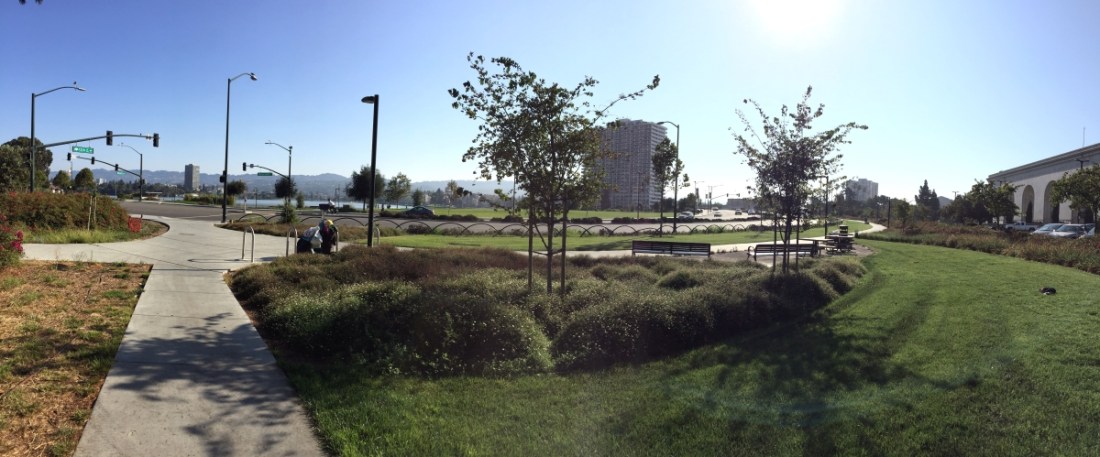
Following the map on my phone, I stopped when I saw the lake stretching out in front of me. I had arrived at a main street juncture. With long and tall buildings flanking either side of me, lots of greenery extended in front of me. Beyond it I could spot a streak of blue that’s Lake Merritt.
Vehicles whizzed past, people going to do whatever they had to do on a Sunday morn. Even then, there were fewer vehicles than in San Francisco. Oakland yet again presented a smaller, quieter, city. The massive open space in front of me housed railings and benches, glittering in the morning sun bearing early walkers and joggers. I crossed the road and approached the railings. It was 9:30 and all around me people stretched themselves, talked to each other or into their earphones. Some walked with children, some walked with parents, and even a few dogs walked their humans.
Finding no sign or guide lines about walking the lake, I took to my right and started off staring at the lake and at the buildings that loomed over it. Although Oakland didn’t compare to the glamour and rush of San Francisco, it’s in no way secondary to the high-rise buildings it prides upon. Towering structures made me pick up my jaw many times over. And I stopped walking every few minutes to try and encapsulate entire buildings into the screen of my minuscule iPhone 6.
Lake Merritt is huge, and beautiful. It was still early in the day when I started walking around the lake and the moon from the previous night lingered until about 10:00 am. For some weird reason I felt so at peace seeing the moon hovering on the left side over my head while the sun shone on my right. It was as if I stood in between the best of two worlds. The lake, I later learnt, is in fact a lagoon, and was formed in 1870 and is home to the oldest wildlife refuge in the United States.
As I walked around the 155-acre lake, I experienced mainstream life of Oakland. Everywhere I went in the US with fellow travellers, we were tourists. But on that day, not only was I alone, but I also had a backpack like any college student. I strolled for a while, stepped up my pace in some places, and stood gazing at the water in most instances. And as I walked, I encountered people going on with their lives unperturbed by this scrawny person unfamiliar with their town. A couple discussed alternative running locations for the following week while two older women fed pigeons in silence. Parents dragged kids in trams, and a teenager argued with her mother on the phone. Glass buildings floated on the water and elegant trees, twisting from the ground up, posed for cameras without a shame.
Those pillars bear short stories from young writers
Corporate buildings line the lake
No one noticed a duck doing a backflip. They’d seen in hundreds of times already.
It was all new for me, though. It was a glorious day to spend outside, and joy from inside of me. It wasn’t until I finished a complete round of the lake that I felt the pain in my legs return. But it was nothing—numbing physical pain was no match to the soul-touching experience of inhaling fresh water breeze.