When I walked into the Himalayan Mountaineering Institute and museum in Darjeeling, I didn’t know what I was hoping to see. In hindsight, it seemed obvious that they’d display the tools, the gear, and even the remains of some of the Himalayan creatures.
But it wasn’t so obvious then, and it was all the more disappointing when they had a clear sign prohibiting all forms of photography. We walked through dozens of glass boxes that rose to the ceiling, encasing mementos from mountaineers who had conquered Himalayas. From little chisels, stoves, and crockery, to even the tents they slept in during their expeditions. They were all in there. And for a moment, I couldn’t grasp the magnitude of what I faced.
The Himalayas wasn’t just something we heard about in the media anymore. It wasn’t just the highest mountain range, with a cold index that no one should underestimate. Standing there, looking at the plate a mountaineer had eaten out of when he was camping in the Himalayas made me realise how big the whole thing was. From being a natural phenomenon that mankind could never conquer, to watching photographs, and clay sculptures of the mountain itself, of the climbers picking their way through the snow caps — it all became too real too soon.
I marvelled at the fact that people just like you an I have managed such a huge feat. They weren’t some weirdos or a mysterious elite. They could have been as ordinary as our noisy neighbours. And yet, somehow, extraordinary. Looking at their possessions, I wondered, that particular mountaineer must’ve have liked his tea like I did mine: A mugful.
And that realisation brought me closer to humans than anything else had ever done.
I didn’t realise for a long time how much we, as an Indian community, use Gandhi’s name on everything. It’s become so common that from being a credibility-booster, it’s become a marketing ploy. Like some low ball technique we use to get our way in the world. Or as an excuse to take pride in our stupidities.
“In the land of Gandhi!” they say. Or proclaim, in fact. In the land of Gandhi, we did this, and that, and all other things we didn’t do.
Which is fine with me, except that we’ve exhausted the name now. In futile attempts to show how much we adore the man, we even named streets after him. And in more cases than one, M.G.Road is a city’s official shopping zone.
There was one in Darjeeling too.
It’s amazing how the name “Mahatma Gandhi Road” is a shoppers’ stop when the man himself advocated ultimate simplicity. Guess it’s just another of our inherent paradoxes.
As I walked along M.G.Road, I saw all the things Gandhi stood against, while he himself stood next to a fountain, as erect as a guard.
Watching him watch the tourists, I remembered studying in an old school book that he preached simple attire. Whereas in M.G.Road, people ogled at woollen sweaters, silken scarves, and sleeveless dresses studded with little stones that mirrored the chandeliers.
There were bakeries stuffed with all things self-raising, and salty, buttery goodness. And sweet shops showcasing the pride of West Bengal. While stacks of shops sold home-made foods, there were cafes and snack stalls too. Some places sold tea, some coffee, and some places just disgraced the emotions of tea and coffee.
And of course, countless liquor stores luring in the fancy folk who preferred things stronger than a simple cuppa. Oh, and tobacco too.
In the middle of all these, stood Gandhi’s figure, deep in observation. Not that he could do anything, of course.
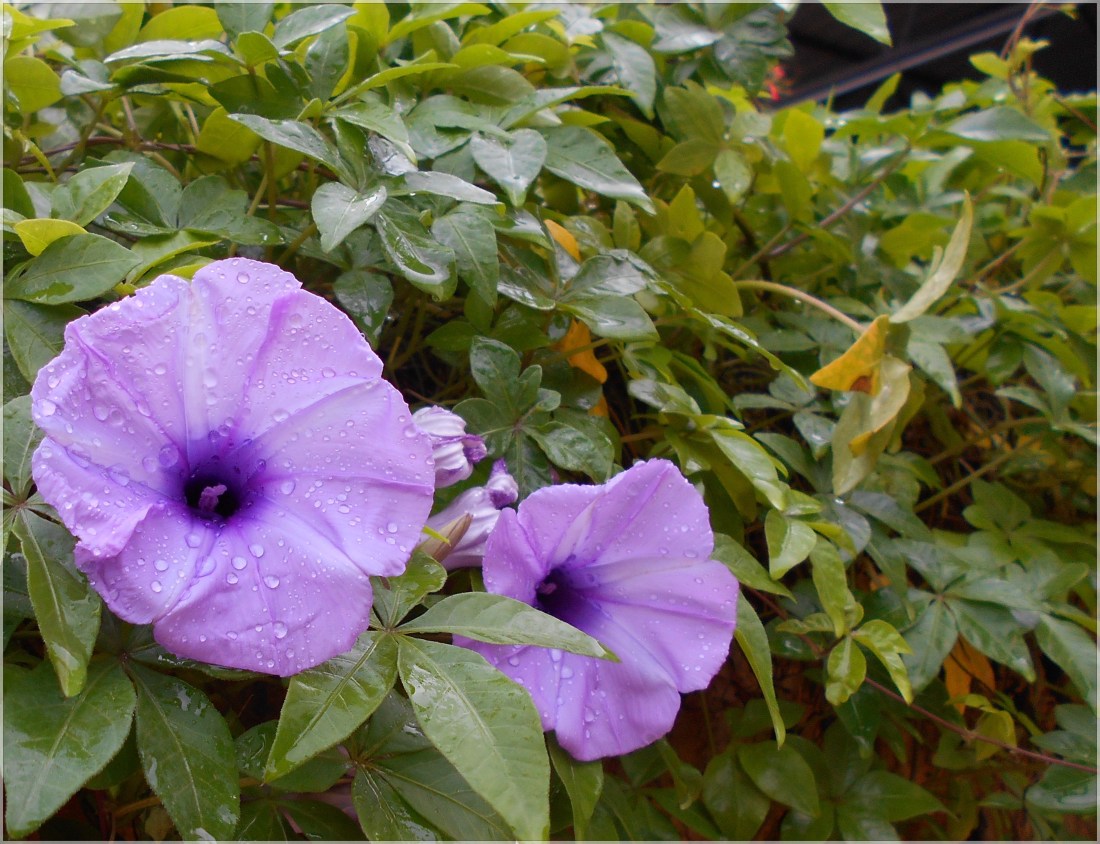
And then — the flowers. So may flowers. So many colours, so many shades, so many tiny petals bearing tiny leftover droplets from the rain of just moments before.
It was a magnificent sight. Even for me who hated shopping in every sense of the traditional word. I loved walking through that street. And the best part of it all: The street is always closed to vehicles from late in the day to later on in the evening. That made it all the more welcoming. With the rain adding a dash of chilliness to the cold breeze, the smell of someone’s strong cigar wafting through the air, the steaming cup of tea in my hands, and the bunch of friends ready to laugh at a good joke — what more could I have asked for?
Sometimes, to understand some things, you have to be there. That’s how Darjeeling is. I had to be there to realize what the most talked-about tea was all about.
It’s just tea. But the mystic romanticism involved with Darjeeling tea is enough to make any dog out peep through the window.
That’s why I had to know what the ruckus was about. From my research, I learnt that locals add unsalted butter to their tea. Well, with plummeting temperatures, they need to be bulletproof of course.
We never got to try it though. It could be because we were just a fancy group of people walking around with flashy phones and discount DSLRs, pretending to be professionals. Typical tourists tend to put the locals off.
Nevertheless, there was tea. There’s always tea.
But it was commercialised tea. Good, yes, but some shops denied justice to the perfect combination of milk and water. Because milk does’t suit Darjeeling. We shouldn’t have expected a perfect cup of tea with full cream milk and two spoons of sugar.
When in Darjeeling, you should drink tea without milk. As for the sugar, maybe a little. That’s the essence of tea in that hill.
I love tea in all forms. I adore the strong smell wafting through my nostrils, invigorating the brain all the way to the last bone. And the earthy flavour that lingers in my throat, even hours afterward.
Milk just ruins the whole experience. At least in Darjeeling.
As an avid tea-fanatic, I can vouch that colour is most important while drinking tea. And if you like your milk strong, you can’t have your tea as strong. Darjeeling is famous for leaf-based tea, and not the dust that’s common throughout the rest of India. That’s what makes Darjeeling tea unique: It’s all leaf and no powder. And that’s why it needs to brew, not cook.
Tea making is an art. Making Darjeeling tea is another one altogether. It’s a process: You put the pot to boil, and wait for the bubbles to pop up, threatening to evaporate all your water. You switch off the stove, and let it sit for a few seconds while you measure out a few leaves. Sniff in the scent of fresh toxic before throwing them into the pot and closing the lid.
And then you wait.
For a minute or two. For the leaves to seep through the heat, to distil the purest of flavours, and transform plain water into a royal drink. Then strain and enjoy. It’s worth the whole 2 minutes you’d have spent standing by the pot.
But making Darjeeling tea isn’t as easy as four steps. Let it seep for an extra few minutes, and you’d end up with some bitter tea that’ll make you feel like a dethroned royal.
Despite that, I bought back five packets of Darjeeling tea. I know, some days would be bad tea days. But every day, I’d be royal.
Amazing how man’s thirst to conquer the gods led him to the aircraft. Once a phenomenon, is now so commonplace that people resort to cotton buds, ear plugs, and constant whining about the noise.
It’s weird, flying.
It was weird to sit in an airplane, typing away on mobile — while I longed for the familiar pen and paper. It was weird to write, when I had prepared to read.
But the weirdest thing: I didn’t feel any stress, awkwardness, or discomfort. Not even mild irritation. Which was good, because I get irritated, a lot. Around unmanageable kids, in particular.
But what did I feel?
I heard a mild hum ringing throughout the craft. I felt a morsel of sound reverberating through to the end of my spine. My eyes grew groggy — was it the flight or something in the water I drank?
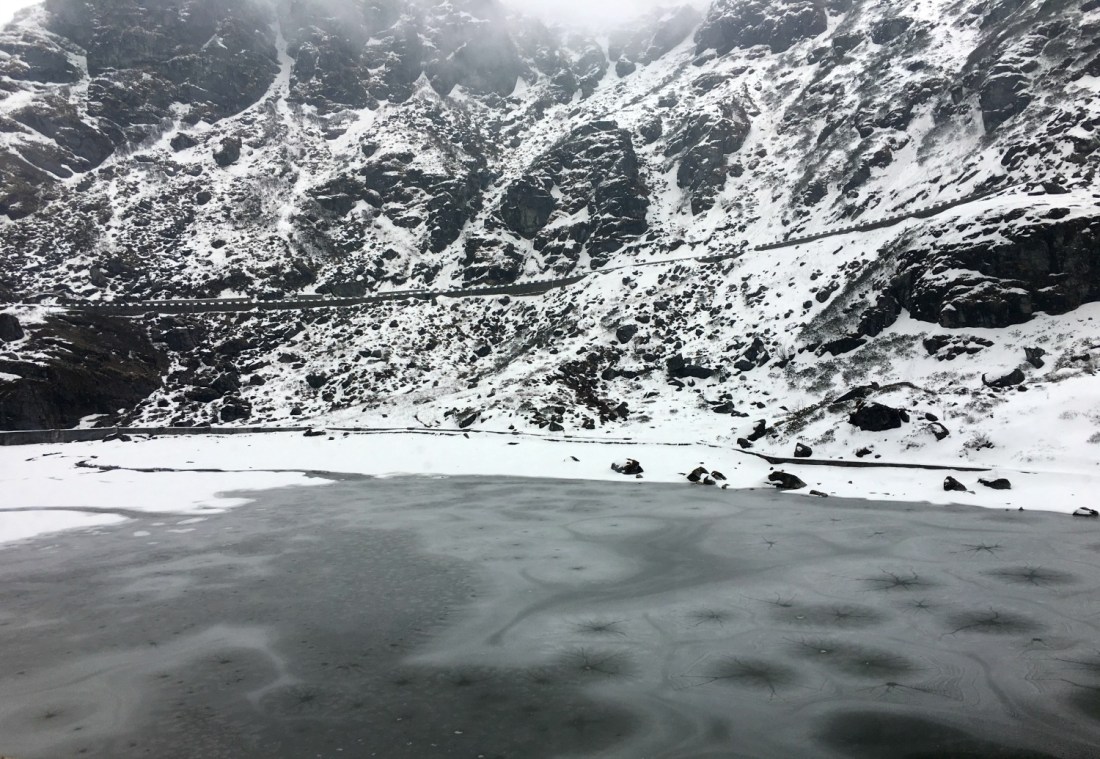
Every new sensation, every breath made me wonder: Could I stand the cold? After all, our destination was snow. And then I looked at the people in my group, those who carried one-year-olds without the least worry about their immunity and teeth chattering, and I realised: I could make it safe.
A monotonous voice announced something neither I nor she understood. Something lit up over my head. It was the “fasten your seatbelt” sign. Someone said something about a landing. The air hostess continued her impassive narrative into what looked like a telephone receiver.
We were about 10 minutes behind schedule, I heard. It’s the 21st century; air traffic is a valid excuse.
For some, the experience was one of a lifetime. It showed too. Kids shouting, restless toddlers trying to evade their parents’ grasp, teenagers gulping, and a few bold faces skimming through newspapers that flashed, “Egyptian aircraft hijacked.”
I mused at the cabin crew. For them, it’s a job. Just another day, just another flight, with just another bunch of fliers. People ogling at them, taking photos without the courtesy to ask first, pointing fingers, and passing lewd comments were all part of the job profile.
What’s not part of the profile, however, is understanding smiles, good afternoons, and sincere thank yous. They aren’t used to it. They don’t even expect humaneness from the countless so-called humans they serve all day, every day. And that’s the saddest part of their job. You can’t blame them for throwing a nonplussed look at you when you smile and greet them good morning.
And then, I felt it. The rumbling had grown louder, so loud that it rang through the craft, and even within my ears. I peered past my co-passenger — who disgraced the window seat playing solitaire on her phone — and saw, looming near, winding sand lakes that, in a while, became tiny squares of brown and green.
With another shudder, the plane shook. From outside, the sun streamed into my face, lighting up the aircraft with a natural glow that all the fluorescent bulbs could never achieve.
With a final thud, we touched down. And I reached down to pick up my phone from the floor.
I didn’t know I’d cross the border and go shopping in Nepal until I did. It was one of those “pleasant surprise” moments. When my co-traveller told me we’d be visiting the Nepal border, I assumed we’d get just a glimpse of the border gate. I imagined soldiers with rifles as long as my arm, guarding the gate. I even pictured their predicament: Tourists begging for permission to click away, some sneaking their cameras trying to be clever, and some staring at them, unabashed.
And yet, like so many times in this trip, surprises awaited me. There was a gate, sure. And there were a few soldiers. But they didn’t stand tall and handsome. Instead, they sat in a small shack, overseeing tourists who enter.
We had to undergo some procedures, yes. Like submitting an identity proof. But I hadn’t anticipated it to be so simple to walk into another country. But that day, for the second time in a three days, my dream of crossing an international border came true. I’m not complaining. It’s a good thing that India and Nepal are pals.
But photos are not allowed, they warned us. And so, we crossed the border — in special vehicles available there. Not sure who managed those, but the drivers weren’t Indian. They allowed seven people in one van, and drove us for about one kilometre past the border gate. I’d have liked to cross that distance on foot, but the authorities forbade us. Don’t know why though, there were some great little shack shops on the way.
As we travelled, I couldn’t help but think of those movies in which kidnappers stuff people into a vehicle, and drive through unknown terrains. It felt like that. The seven of us huddled congested, and the road needed to see some decent tar.
About ten minutes later, we stopped, and got down at what looked like a deserted shopping area. The weather was chilly, and I gaped at the countless shops loaded with goods. It looked so peaceful, yet felt so wrong; only a handful of people hung around. I hate going shopping back home because the streets always overflowed with people carrying purchases they don’t need.
This is how empty the street was. At 3 in the evening.
But here, though, I grew curious. I wanted to go through all the shops, look around, and see what’s new in Nepal. We had a half hour to explore.
Most of the shops sold woolen clothes fit for the climate, some sold leather garments and boots. Some displayed candy with funny-looking labels. Beads of every colour and bags of every shade hung in some stores. And, sure enough, steaming food for the weary soul.
The road was much better here. It was one winding slope that brought a smile on my lips when my walk became more of a trot.
One shop lured me in, in spite of me trying to remain on the surface. I could never resist antiques. But the owner wasn’t there. I was looking for good photographs, but wasn’t sure if the owner would approve.
Nevertheless, I went in and tried to capture all I could — from varying angles. I moved around to experiment with the lighting, took a few steps back to capture whole idols, and even went close to peer into Buddha’s eyes.
And then, all of a sudden, a man entered. Unlike me, he strode into the shop with the authority only an owner could expel. I stumbled within me for a moment, and “Just photographs,” I said, raising my phone. In an instant, he smiled wide, surprising me. With a single nod of the head, he gave me the go signal, and I know I beamed.
I’m still a novice photographer, and so I continued looking for the perfect angle, not sure what I hoped to capture. As for the owner, he grabbed the guitar by the cash counter, took a seat, and began adjusting his tune.
The next moment, he broke into a song, so smooth, so soft, and oh so beautiful. He wasn’t loud, he wasn’t looking for attention. He became an artist playing just for himself. I told him he was good, and he nodded with a smile. I’ll never know if he understood what I said, but I understood: character depends on an individual, not their country.