
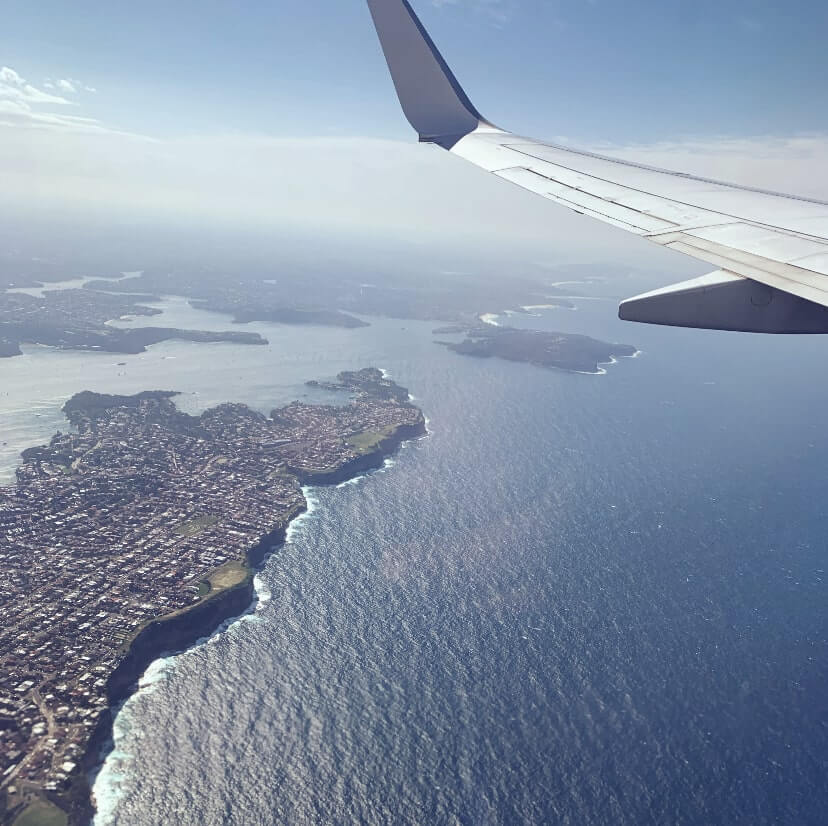
Morbid love affair
obsession of possession
story of sieges
Morbid love affair
obsession of possession
story of sieges
In the few months that I’ve lived here, Australia has taught me a lot of valuable lessons. For instance, I learnt that the pricing system is not systematic at all, and even a bunch of bananas could double in price overnight. I learnt that people here can handle extreme, dry heat, but haven’t the faintest tolerance to spice. Everyone’s way more active and outdoorsy than I could’ve imagined—they bask in the sun wining, bike across an entire state, walk 8 to 10 kilometres as an everyday commute, and run up to 10 kilometres every day just because they can.
But the most crucial thing Australia has taught me is to give nature the respect it deserves.
People say anything in Australia can kill you. Even the sun—it can burn through and cause skin cancer, or it can ignite bushes as it does every year, leaving devastation in its wake. Equally dangerous are the animals. Not only is this country home to some of the world’s vicious, venomous snakes and spiders, but it’s also a haven for aggressive insects and birds.
Swooping magpies are a seasonal menace. Every year around mid-August, news sites flash warnings and incident updates in big, bold headlines. There’s even an official website that shows live updates on magpie swooping: https://www.magpiealert.com

Cyclists, joggers, and pedestrians are warned to be extra cautious and avoid tracks that’ve had swooping accidents. Once, while walking past a university building, I came across a poster on the sidewalk announcing magpie sightings and suggesting alternative routes. There were 1500+ attacks this year, just halfway through the season.
Although it seems as if anything Australian is out to get you, magpies are also widely misunderstood. They don’t always swoop and scoop out people’s eyes or pick at their ears or poke into their foreheads. They, like most living creatures, swoop in defence. And they do so only for six weeks—the period when their eggs hatch and the chicks find their feet.
It would still hurt, though, to be on the receiving end of a magpie’s beak. Deaths aren’t unheard of either.
But ducks should be fine, eh?
Apparently, no. It came as a surprise, but in three days, I was almost attacked by ducks twice. Those squishy-looking, waddling, quacking, seemingly-harmless creatures can flap their wings quite ferociously when they want to chase after you. And to think I grew up pitying the ugly duckling in the children’s tale, empathising with the helpless outcast! If only I’d known what little brats they could be.
When I looked it up, I realised that drakes—or male ducks—are aggressive either to show off their alpha-ness or to express interest in mating. Ah, what vain creatures, ducks. So much like humans.
Musing about how natural elements naturally want to harm humans, my respect for the earth swells. It’s proof—despite all the technology and the modernity that humankind has injected into the earth, it continues to demonstrate how easily it can overpower us.
Nature is a force to be reckoned with. Denying that will cost us dearly.
Australia is famous for many things. One of which is the largest living organism in the world—The Great Barrier Reef—that sprawls across a large part of eastern Australia. And then there’s Ayers Rock or UluruAyers Rock in the north, Port Arthur way down in Tasmania, the Opera House, the Old Melbourne Gaol, and countless other convict houses that framed the history of this great country that remains a wondrous mystery to the rest of the world.
There’re so many cultural and monumental buildings and memories in this country that global history texts celebrate. And yet, there’re also so many iconic elements that go entirely unnoticed—even by Australians themselves. People talk more about the gorgeous wine regions* than about the more noteworthy things they ought to talk about.
Here’s an example.
I was chatting with some friends, who come from various parts of the country and have travelled and lived much around the world, and I learnt that the world’s oldest living thing is right here in Australia, an unknown fact to most people.
It’s not the Reef. That’s the largest.
The oldest is a natural phenomenon called stromatolite or stromatolith. My enthusiasm for geology makes up for my beyond pathetic knowledge of the science. Stromatolites are rock formations. They’re layers of sheet-like sediments of silt, limestone, and a single-celled microbe called cyanobacteria. The word’s root comes from Greek and translates to “stratum” or more loosely to “stony cushion.”

Stromatolites are common and occur in many places. However, in Western Australia’s North Pole (apparently, WA has a North Pole of its own. Who knew?), you’ll find stromatolites as old as 3.5 billion years. They’re officially the oldest in the record.
The most extensive collection of stromatolites is in a Hamlin Pool in Shark Bay, also in Western Australia. These are about 4500 years old. And you can just as easily walk up to them as you would to a tree in your back garden.
We seldom appreciate the greatness within our reach. As in a game of hide and seek, we seek the special all around us, sometimes even going far off in the wrong direction, only to have equally uninformed guides misguiding us under the false impression of finding the right spot. And we think we’ve found it too—until we see it for real, and realise, that it’s been sitting in silence right under our noses.
*Don’t get me wrong—Australia is home to some of the world’s best wine regions. And it’s critical to showcase them too. I only call for a more balanced distribution of paparazzi.
When I awoke this morning with nothing to do, I mused at the rarity of it. I always have something to occupy myself with over the weekends. After rummaging Facebook for a while, I concluded that I could either go to a street market, where I knew a few of my friends would be, or take a solo trip to the Royal Australian Mint—something I’d been putting off for a long time because it was just too far away.
The food market sounded fun, but considering I’d probably buy nothing and wander around aimless, I decided to do the wandering at the Mint instead.

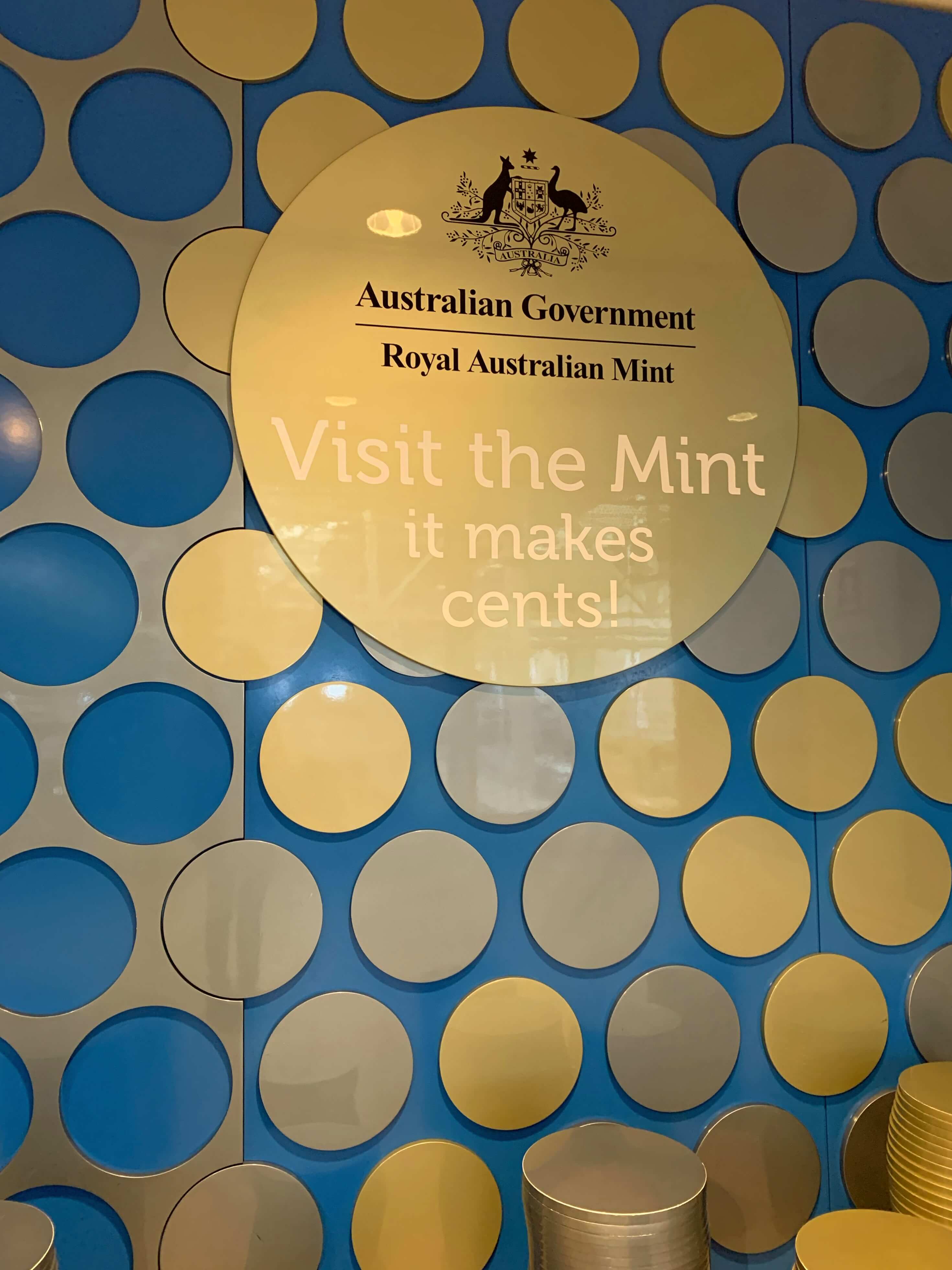
After two buses and about 45 minutes, I entered the building that runs Australia’s coin system. A big pot of gold coins greeted me. Next to it, a staircase led to the upper level and the main exhibition. Stepping upwards, I couldn’t miss the thousands of coins studded into the stairs.

On the upper level, famous Australian bushrangers greeted me in large cutouts. From time to time, the Royal Australian Mint makes comparative coins marking important events and people. This year, they’ve made a unique set of coins to acknowledge and appreciate the contribution of bushrangers to Australian cultures and stories. It was an excellent way to remember history’s villains, most of whom died in captivity.

Moving on, I entered a corridor full of stunning displays. Hundreds of coins marked the timeline of Australia’s currency system, dating way back to the first foreign coins found in shipwrecks. Since some of the first outsiders to arrive in Australia were prisoners and war slaves, most of their currency became the initial seedling for Australia’s current monetary system. These coins gradually replaced the natives’ barter system.

Walking my way down the timeline, I learnt how, from using coins of unknown lands, the country progressed to establishing a proper way to assess the value of these random coins. From there, they moved on to adopting the shilling-and-penny system that Britain was using. As a country, Australia was under the British reign for a long time, and it only made sense to use the same coins.

Then came the decimal period. From farthings and halfpennies, Australia went to cents and dollars. Displays showed how designers formulate the images and engravings that mark a coin. Looking at the detailing of each drawing, I was amazed to see how most of the coins in current use incorporate unique Australian fauna. There’s more to this country than kangaroos and possums. And sometimes, even though we handle and pass on these coins countless times every day, we don’t often pause to observe.

Apart from these coins, the Mint also had displays of other collectible coins and medals that it’s made over the years. There were 1kg coins in both gold ($3000) and silver ($30) marking the Mint’s partnership in the 2016 Olympic games. There were gold, silver, and bronze medals offered to winners at the 2000 Olympic Games in Sydney. Also on display were the medals presented at the 2019 INAS Global Games. And my favourite, three special coins celebrating the Great Barrier Reef.
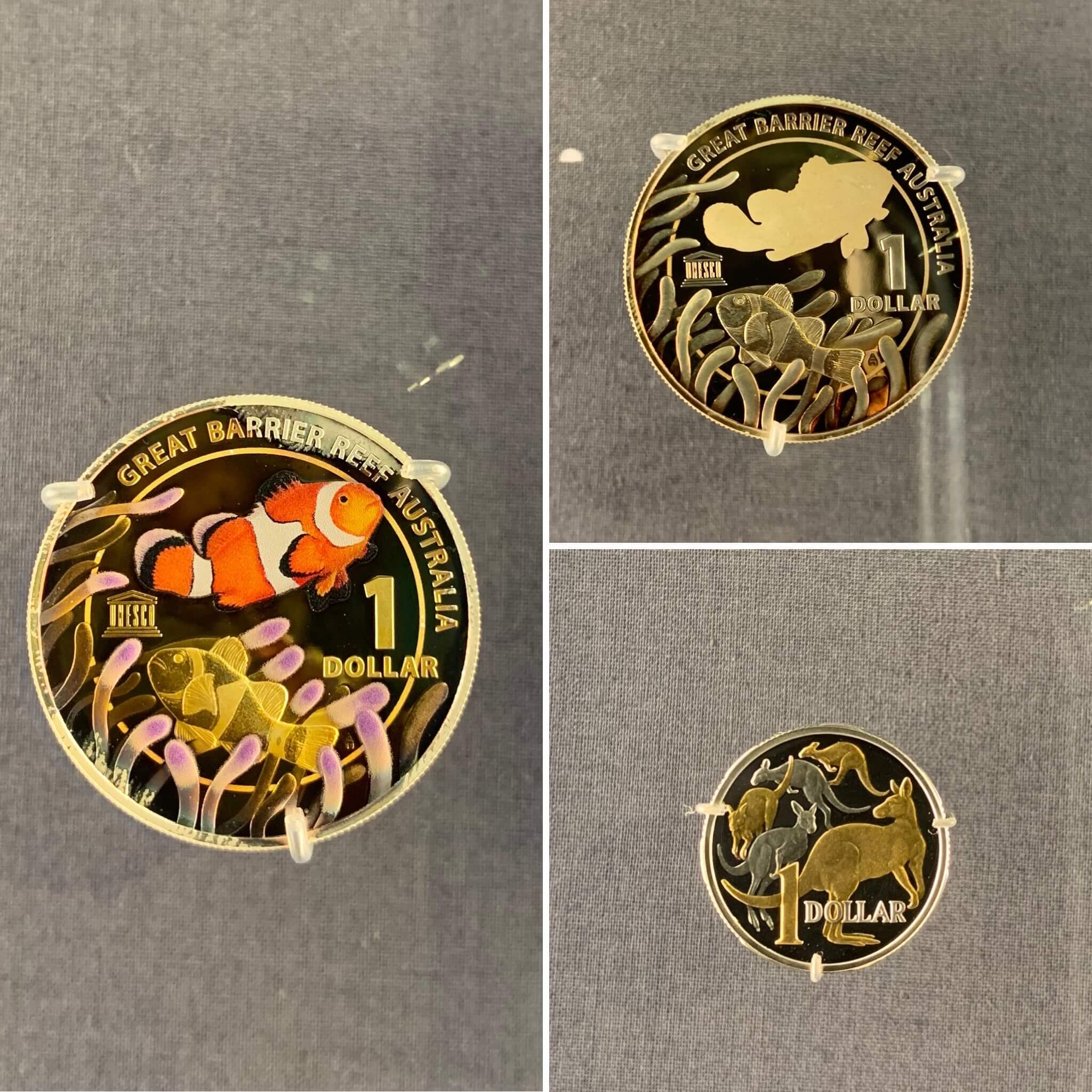
It took me about an hour and a half to look and read through all the displays. From the various metal combinations tested for a single coin and the different designs they considered, to the actual robot that helps with heavy lifting and transporting during the minting process, the Royal Australian Mint has so much awe to offer. I’m glad I skipped the markets for this.
“Er—”
As a lover of both, it’s one of the biggest dilemmas I face in a gathering. Most people are either tea drinkers or coffee fanatics. I understand that. However, I come from a long history of tea estate owners and workers who used to wake up to the decadent smell of dewy tea leaves outside their windows, and who washed down their morning carbohydrates with a steaming pot of black tea. To say I’m a tea lover is like saying the Joker is eccentric. It’s moot.
That said, I also partly come from a society that relies on the laxative power of coffee to kickstart their day and metabolism. A hot cup of flutter coffee infused with sugar and milk is the stable beverage of a typical south Indian household.
And so when choosing one, I struggle like a mother being forced to choose between husband and child. While the former leads to the discovery of the other, the other only increases her passion for the first.
I like tea. I like coffee. And I always struggle to choose between the two.
So for a long time, I made a compromise in such a way that I give both of them equal importance in my life. Instant black coffee served as the first dregs of fuel for my engine, kicking off the day, whereas a cup of tea became my standard breakfast. Afternoons were dedicated to either lemon tea or black filtered coffee, depending on the weather, while the other one became my regular dinnertime beverage. Some days lemon tea went with lunch and some days with dinner. Either way, I was sure to get enough of both in a day.
Then I went to Melbourne for the first time, the coffee capital of Australia. It offered me some of the best-tasting coffees I’ve had in my life. Not to mention affordable, even in the central business district (CBD). However, that wasn’t the most noteworthy thing about Melbourne. Aside from the impeccable coffee, I discovered a strange thing called dirty chai.
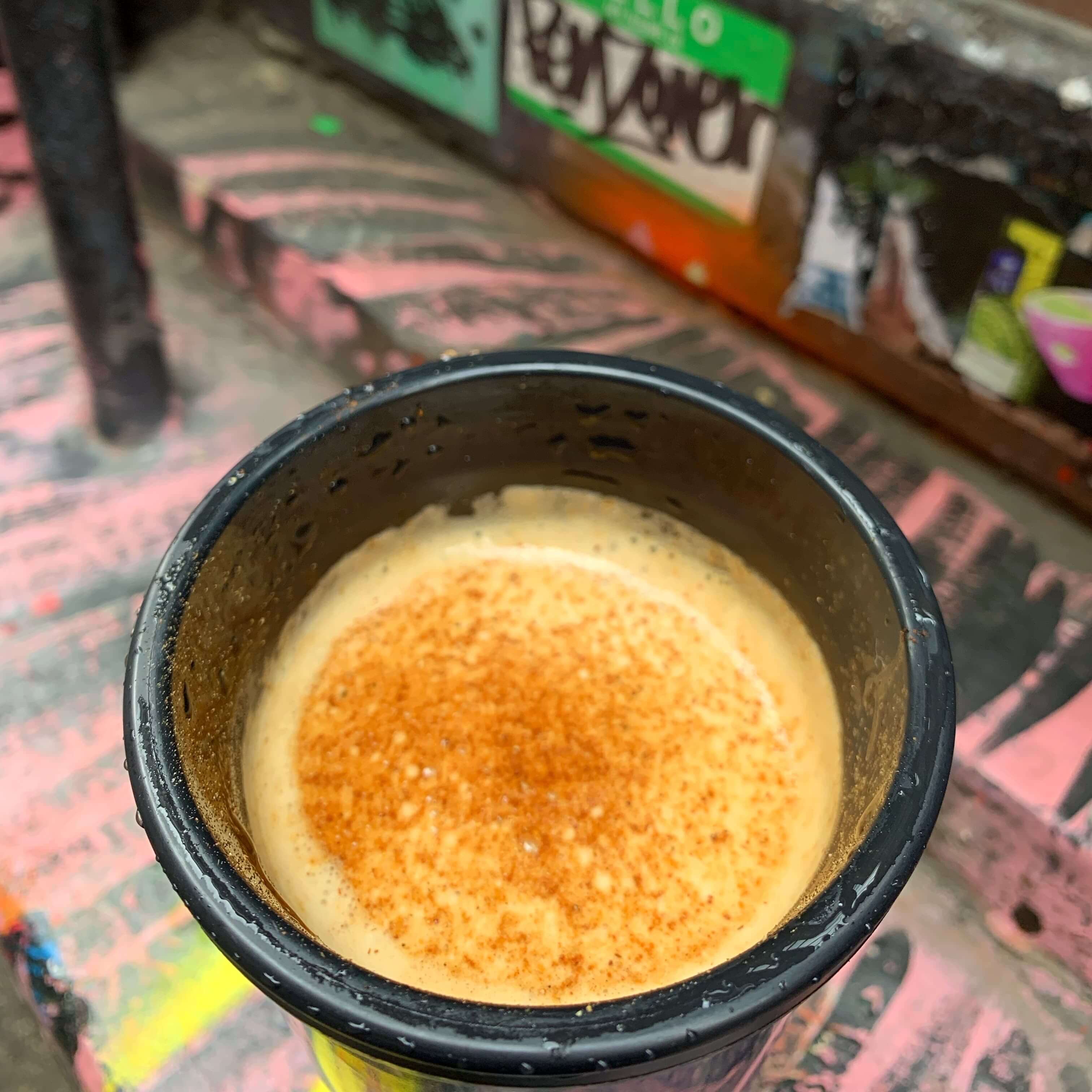
One of my American colleagues (who was visiting Australia) introduced me to the miracle that is the dirty chai. I had no idea that you could mix tea and coffee and end up with a concoction so addictive and mesmerising that it’s unbelievable it’s not more prevalent.
Yet, there it was—a simple brew of stewed tea leaves and a shot of espresso, melded to create a beverage that not only thrills the tastebuds but also satisfies, satiates, the penduluming soul of the tea-coffee lover.
It’s one of the many reasons to love Melbourne. It has such good coffee that it transforms a plain chai into a dirty chai that you’d love to cuddle between your palms, taking in one of the world’s best fusion creations.
 The Chaos Within