
Guns fired, canons flared
a national salute,
while his baby mewled.
Guns fired, canons flared
a national salute,
while his baby mewled.

We are naught without our beliefs,
they said
We have to defend our rights,
they said
We should show them who we are
they said
“Forward! Charge for the guns,”
they said —
based behind ballistic glass.
There’s something so disturbing, yet divine about death, devastation, and destruction.
If that makes me an evil an twisted sadist, so be it. I’m addicted to war poetry. And in a world that’s addicted to war itself, that’s saying something.
Anything about young soldiers dying before their time, having their lives sucked out through their rifles, and soul-less bodies strewn across no man’s land, is so powerful that it makes me crave more and more. It’s pain, but it’s gratifying. It’s sorrow, but it’s a lesson. It’s proof of what we, as a breed, are capable of, of what I could do to my neighbour if I wanted to.
It’s scary to read Sassoon, Owen, and Tennyson. It’s scary that mere words on paper can bring to life the worst acts of terror we inflict upon this world.
And it’s amusing how even after pulling so many meaningful lives apart, we’re still willing to walk the same path. Every time we raise a weapon, every time we declare war on war, every day since the first boy was killed in action, we’ve been doing the same, wishing for a different outcome.
And even if we do get a different outcome, does it make a difference to the soldiers dreaming of firelit homes and clean beds?
Alas. Thus is the way of the world.
Dreamers
Soldiers are citizens of death’s grey land,
Drawing no dividend from time’s to-morrows.
In the great hour of destiny they stand,
Each with his feuds, and jealousies, and sorrows.
Soldiers are sworn to action; they must win
Some flaming, fatal climax with their lives.
Soldiers are dreamers; when the guns begin
They think of firelit homes, clean beds and wives.
I see them in foul dug-outs, gnawed by rats,
And in the ruined trenches, lashed with rain,
Dreaming of things they did with balls and bats,
And mocked by hopeless longing to regain
Bank-holidays, and picture shows, and spats,
And going to the office in the train.
— Siegfried Sassoon
I’ve always enjoyed poetry. But I never understood reason, until now.
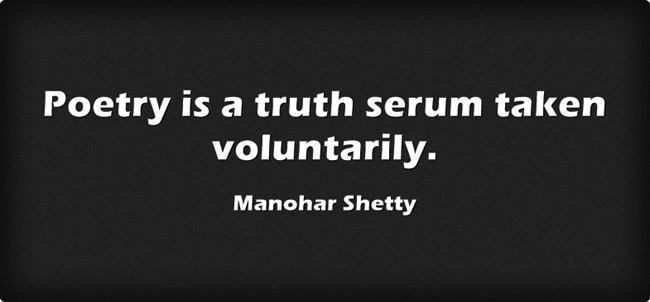
It’s true, people write in poems things they can’t speak of, things that are too personal, things that make us vulnerable, that make us cringe at ourselves, laugh at our stupidity, and scorn at our vanity.
Every poem is a bitter reminder of the truth we’d rather not hear. Every rhythm and every rhyming couplet — from “black wires grow on her head,” to “The old Lie: dulce et decorum est pro patria mori” — every piece of poetry is a whiplash to humanity.
And maybe it’s necessary, to take that serum once in a while, to hit ourselves with a dose of poetry and question everything we ever stand by.
Oh, I miss those days,
when all that mattered
was the next class —
carrying a bulky book,
and caressing with a love
that none understood.
*
I miss that thrill —
of having the book open,
of reading a piece of prose —
or a poem — yes,
I’d like that — a poem.
*
A war poem, perhaps,
with a touch of sarcasm
and plenty pathos
oh, I’d love that; reading
analyzing, and discussing
the figures of speech and
reading between the lines —
decoding puzzling poetry.
*
I miss being awed
by the ceaseless Caesar,
and Brutus back stabbing;
the hair that be wires;
and the stunned disbelief
when love’s not love.
*
I miss those days —
of classroom revelations,
of shared appreciations
and new born respect —
oh, for god’s sake,
I meant for literature.
 The Chaos Within