Careless people

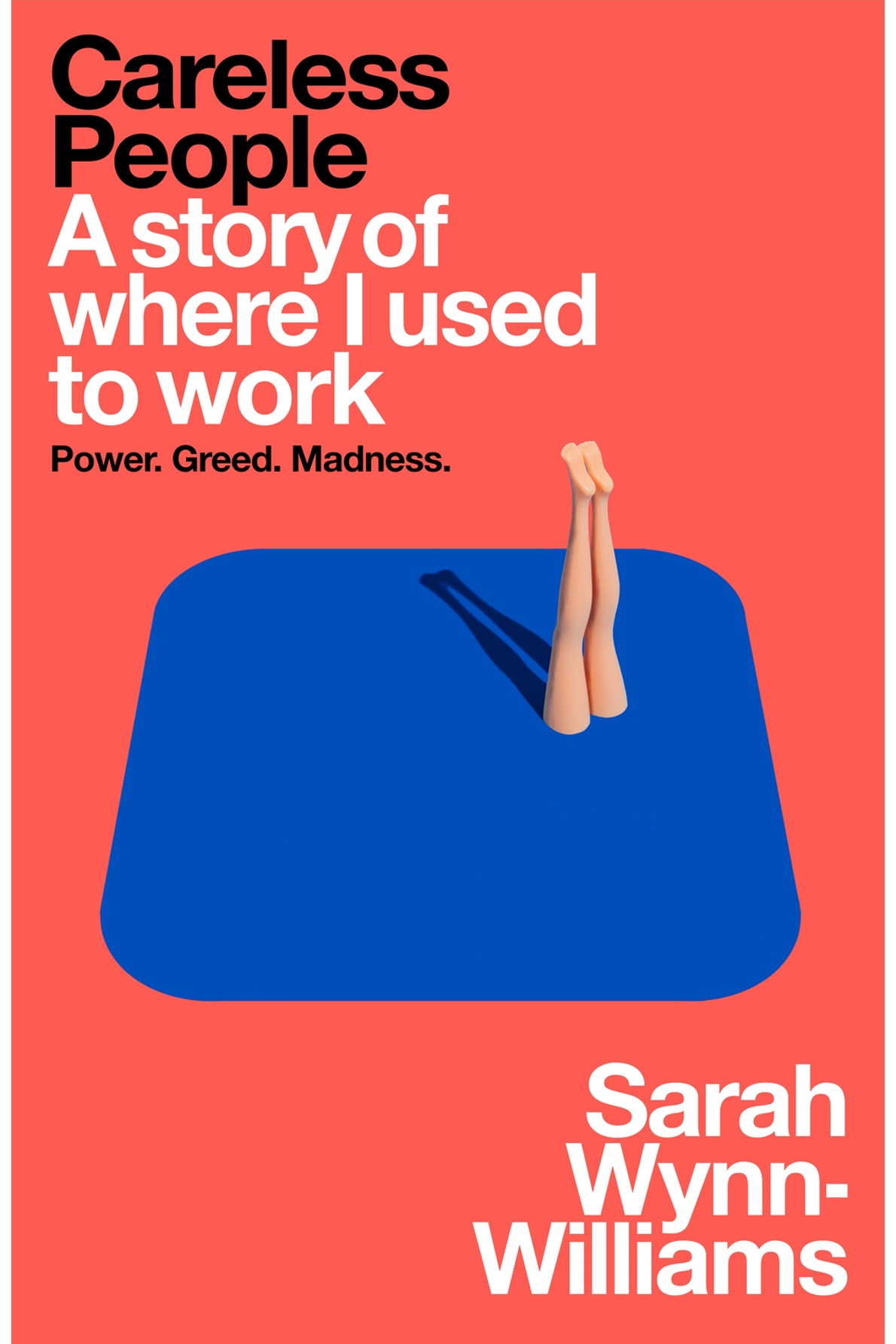
Photo of the cover of Sarah Wynn-Williams' book, Careless people - A story of where I used to work

In 2021, when Sophie Zhang, a data scientist, blew the whistle on her former employer, Facebook, the world was shocked at just how much power Facebook had had over global political and social issues.

But no one was surprised that the company wasn’t the saintly, do-gooder it had claimed to be in the early 2000s, when most of us embraced Facebook for connecting us with old school mates.

Since then, the façade gradually fell and many of us grew skeptical of Facebook as the platform designed for community building and social connection. After the 2016 presidential election, however, whatever appreciation we had for Facebook plummeted down to the ditches and remained there.

There are so many things that Facebook did well in its early years. But as any registered company, Facebook also has the legal obligation to further its own commercial interests. Consequently, the platform that claimed to want to democratise the internet ended up causing extreme psychosocial harm across the world. The road to hell is paved with good intensions, as they say.

Over the weekend, I finished reading a book titled Careless people – A story of where I used to work. A book I devoured during my runs, gasping mildly, smirking, and shaking my head in disbelief at what I was hearing. It’s dark and funny and deeply disturbing.

It’s a memoir of a Kiwi-American, former-diplomat who created the international policy team at Facebook—just before it started engaging with governments. She remained in a leadership position throughout some of the biggest political and social events that Facebook was involved in, including (but not limited to) the internet[.]org project’s entry into Asia, the hate crimes in Myanmar, the “Facebook elections” in the Philippines and the US, the company’s stealth launch in China, and the preparations for the senate hearing.

In her book, Sarah Wynn-Williams talks about how careless the company’s leadership was in their handling of the power that comes with owning and managing tools that can manipulate the truth at scale.

There are plenty of themes in this book that’re great for staying up at night.

Things like workplace culture, how the corporate world sees motherhood and maternity leave, how sometimes girl bosses can be bad bosses, how the idea of heroes is deeply flawed, how whistleblowers spend years silent and complicit, how even big companies with thousands of employees can be dangerously  understaffed, and so much more.

I’ll be thinking and writing about these in the coming weeks, and if you also read the book, I’d love to hear your thoughts.
Of working from home

I’m a remote worker. And for the first time in a long time, I spent an entire day at home. Working.

Writing for work, without a break, hoping to get the damn thing finished so I could spend more time writing more stuff—poetry, opinions, random strings of sentences I wish would make a reasonable story.

Then, I’d edit my works in progress, expecting to get a lot done, as much as I could, within my limited daytime.

As I wrote on, my heart longed for the great outdoors. Through my window, soft breeze and cloudy sky called for me. After three months of bushfire smoke haze, the rains of last week had cleared the air and people’s lungs of deadly particles. It was, at last, beautiful outside.

Over the last week, it seemed like summer had decided to call it a day. The temperatures had cooled down, delaying sunrises and expediting sunsets. Though I still saw the light at quarter to eight, the sun had already retired, taking much of the heat with it.

And all the while, I sat on my desk, typing away, taking a minute or two to distract myself on Facebook or to tune into the radio to hear the last of the daily quiz show.

Just as I finished my work stuff, I realised I hadn’t showered in two days. Though my pedestal fan prevented any perspiration, I was still uncomfortable in my own skin. A bath later, I remembered I still had to meal prep for the next couple of days. As the light waned in the garden, I let my imagination and hopes melt in the heat of the stove. All the stirring, sautéing, and the dishwashing that followed left me drained.

Nothing worse than when the body is able, but the mind has already shut down for the day.

I felt claustrophobic, even with so much light and ventilation. It was like being in a cubicle, shut off from the rest of the world. I love my home, but it drove me crazy. It felt wrong not to go out, to interact with people, walk, or rush for the bus. As if everything normal in my life had taken a sudden break, crippling me.

That’s when I realised: working from home is great, as long as you’re not in your home.

The security

“Hey Liv, did you see the new security guy?”

I looked up from my desk, mouth full of noodles. It was another lunch-at-the-desk day. I’d just hit submit on the report I’d been working all morning, and had turned to stuff my face into my meal-prepped lunchbox. 

Spaghetti in a sautéed tomato-mushroom sauce. Homemade food had never tasted so good. Perhaps Pinterest wasn’t kidding—maybe cooking on Sundays is a better idea than brunch with friends. I even managed to get the laundry done, and folded it for good measure.

I shook my head at Jesse’s raised eyebrows. She’s not the kind who’d bring up the security guy unless it was important. Perhaps he was cute.

“Nope.” I supplied swallowing the carby goodness. “Why?”

“It’s an old man!” She almost shrieked, sitting down on my desk, despite knowing how much I hated that. But she didn’t seem to be in her right mind today. Her usually straight black hair was bouncing off her shoulders in curls. Her mascara was a little too much to look at, and she’d force-matched her tiered skirt with a pair of high heels she looked terribly uncomfortable in. But she was gleaming with joy. Unable to figure it out, I decided to wait for her flamboyant explanation later.

“So what if it’s an old chap?”

Everyone needed money. It’s possible that this man didn’t have enough retirement funds. Or his kids weren’t around to help him. After all, I’d seen a lot of older folks struggling to make a living. It was sad, sure, but certainly didn’t warrant a hiatus during lunch. 

I went back to my noodles, ignoring the penciled eyebrows glowering at me. After a while, she gave up and went back to her seat. And I turned to the pile of reports that still needed finishing, verifying, and submitting.

Sigh. It’s going to be a long day.

For the rest of the afternoon, I carefully avoided running into Jesse in the bathroom or the vending machine. I knew she ached to discuss the old security guy. It wouldn’t be the first time—she imagined herself an upstanding citizen being the change she wanted to see. A couple of weeks ago, I’d spent an hour listening to her lament the fate of migrants working casual jobs and unconventional shifts. All because she was drunk on a Friday night and ordered pizza. Her delivery guy was an African hoping for a permanent stay.

My escape was short lived. Just as I stepped out in the terrace, glad that I’d finally completed the week’s backlog, I jumped. 

“I spoke to him.”

Not seeing her crawl up behind me, I turned ready to punch her shrugging childish face. Before I did however, she continued, eyes rounding in sadness. “He was missing his daughter. He took the job so that he’s not bored and lonely at home anymore.”

She was Puss in Boots begging to go with Shrek.

My frustration deflated. It was no use fighting it—she wouldn’t rest until she’d gleaned a response from me. 

“Yes,” I rubbed my stiff neck hoping she’d take a hint. “That is sad.”

Thankfully, that was the end of our conversation. I went back to doing some light reading and recipe hunting before heading home to Netflix.

As the office doors swung shut behind me, I saw him. A tall man in a khaki suit. He didn’t see me approach him—something through the window seemed to have caught his eye and he peered, his shoulders hunched.

“Have a good night!” I faked a cheer, pressing the elevator button. I was exhausted and famished.

He swung around, taken aback. 

“Dad!”

The wheel

“Yo cartwheeler!”

That’s what those kids called him. Who could blame them? He was, after all, the man pushing shopping carts at the supermarket. Not that it was anything to be shamed of, he told his reflection every morning navigating floss around his teeth.

But he had a name.

Ruman. 

Growing up he’d often wonder if his parents detested his existence so much so as to bestow upon him such an uncharacteristic name. Not a childhood day had gone by without him repeating and spelling it out for people to understand.

And even then perplexity clouded their face whenever they uttered it. As if they’d rather not. As if something wasn’t just quite right.

It was still better than “cartwheeler” he thought.

They even told random shoppers about his nickname, pointing him out, the long, brown, migrant who stumbled through the car park collecting empty carts people thrust away. Shoppers who’d smile jovially at their juvenile innocence—they were just school kids, hanging out at the mall during the holidays.

It was all good fun for everyone, of course. Seasonal cheer hung in their air, overnight rosters hung over his.

Three years of regular supermarket shifts had served him well, though. With the weekends off, he’d taken up to flipping burgers for additional bucks. He was now the proud owner of three high-visibility vests, a third-owner car that needed service, and a son who’d be starting school next year. He was already a year behind others of his age. Ruman’s wife had taken a second job too, to save up for school. 

He seldom had time to talk to her. 

Never mind. He’d be cartwheeler as long as it took. Nothing mattered more than a good school for his son. Whatever necessary so his son didn’t end up at the mall catcalling another migrant, “Yo cartwheeler!”