Taking a walk

About a year and a half ago, I moved to New Zealand. The company I work for had been looking to expand into the country, and I asked if there’s an opportunity for me to move and build up the business here. They said yes.

I had no idea what I was getting into. Turns out, they didn’t either.

Because even though I arrived as a marketing person, we needed more than a marketer. We needed someone who people can go to for… anything. It started a “here’s your local point of contact” that soon ballooned into a constant barrage of emails and calls from partners and customers and prospects asking questions, escalating issues, validating ideas, pitching events, and so much more. Plus, I was actively building my network—attending events, talking to people, trying to build partnerships, understanding how businesses operate… it’s fair to say I had a lot going on.

More than once, I’d be typing away in my home office at 3:45pm and remember I’d run out of food or toothpaste or shampoo or toilet paper. Or I’d walk into my living room and realise I hadn’t vacuumed or taken the recycling out for weeks. I’d laugh about it with colleagues after, while secretly wondering why I was so active, energetic, focussed on work but so careless and lazy about my home.

I enjoy 70 percent of my work. It involves meeting lots of new people, learning about their life and work, and trying to identify how we might work together.

The other 30 percent is gruelling. That involves working closely with my colleagues overseas. So lots of late nights, trying to get my brain to think straight even after it’d been running on work mode for 12 hours straight. Then I’d go to bed with my mind racing and refusing to shut down for another two hours. I never really stopped to think how crazy it was that that was week after week and month after month, rather than just a one-time thing.

Plenty of times I told myself it was just for this one project or one event, and things would become a lot less hectic after that. But after a year of it, I had to admit it wasn’t going to slow down. Don’t get me wrong, I had lots of “slow” days that I cherished. But those slow days were about 8-9 hours of work without any late meetings, events, or otherwise large stressors. In reality, that’s not a “slow” day, that’s the definition of a normal day.

I have a fairly high tolerance for stress. However, I’m also aware of what chronic stress can do to the body, inside and out, even if it doesn’t show straightaway. Sidenote—if you haven’t yet, I highly recommend reading Why Zebras Don’t get Ulcers by Robert Sapolsky.

So even though I knew I could keep pushing, I also knew that I shouldn’t. When you do weight training, they say you should do as many reps as you can until the point of failure. That’s how I’ve always thought about work stress as well—keep pushing until you can’t. One of my good friends once said that she’ll quit her job when she has her first heart attack. Not if but when. She’d been in that job for about 18 years, and she knew the stress would probably cause her to break. Work isn’t weight training. Yes, I want to get better and stronger and more accomplished in my work, but I don’t want to do that at the cost of getting sick.

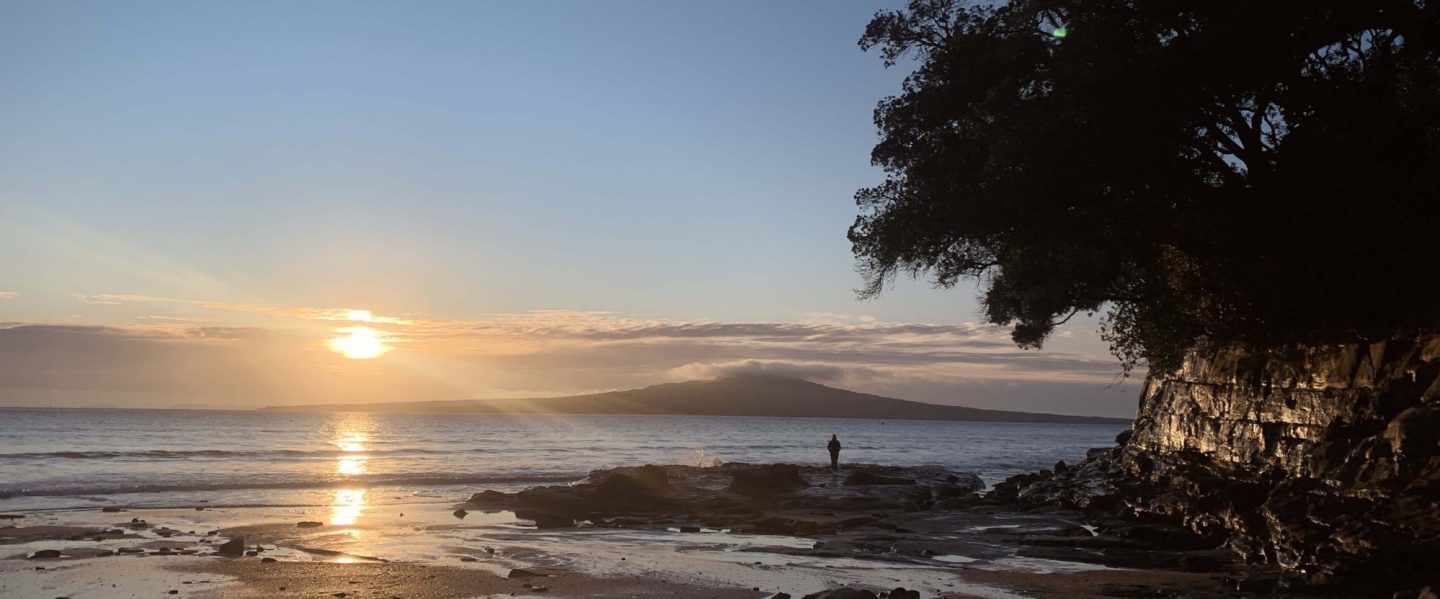
So I decided to take a walk to clear my head.

I’d been wanting to walk Te Araroa for years now. It’s a tramping trail that runs the entire length of New Zealand. It’s always been one of those, “Oh, I’ll do it someday” kind of things. So in December last year, I sat down to think through what it’d really take to do this walk. There’s a lot—food, accomodation, trail logistics, gear, safety, hygiene, loneliness, weather, and so many things that we take for granted on a daily basis.

So I started planning. I watched a lot of videos on YouTube, followed all the Facebook groups, looked through the trail inch by inch (got tired mid-way through the North Island), started collecting hundreds of links of potential gear, and created high-density, high calorie food recipes.

It was a glorious three weeks of intense work. Then the Christmas/New Year break ended and we went back to work. The full force of my daily routine returned, and this time it hit harder. We’d built momentum the previous year so now it was about accelerating—about doing more things, bigger things, and doing them faster. I love this stuff, remember. So I dove headfirst. I said yes to all the things, forgetting—every time—that I was also saying yes to more late night meetings. As much fun as it was, it was also utterly exhausting. Every chance I got, I went back to my Te Araroa Trello board and looked through my research, adding a few more links. As March and May rolled around, I was in the thick of work with no brain power left even to write my daily haiku. For the first time in over five years, I stopped writing haiku every day. I had no energy left to give to my creativity. But I knew I still wanted to walk TA this year.

So in June this year, I rolled up my metaphorical sleeves and started narrowing down my gear options. By July I had most of my gear, and a lot of uncertainty about how many layers I’d need. I also spoke to my boss about taking time off. He took a couple of days to think it over and told me he couldn’t let me take time off. It was too much disruption for the business to lose the only marketing person in the country.

So I spent the next three weeks trying to convince myself to do the walk next year, instead. To keep pushing for another year because I know it’ll be fine.

But I couldn’t do it. The idea of doing it all for another year without a break scared me. Even if others don’t see it that way, I saw it as a health and safety issue. I didn’t want to end up in hospital for me to wake up and give myself a break.

I went back to boss and explained that I’m totally spent, and I need this time off. He understood, of course. He always did. But when you work for a big company, things like this need to be run up the food chain to be formally approved.

Now we wait.

I also just ordered a couple of water bladders and a backcountry bidet for the trip.
Could I be happy?

I was chatting with a friend recently and said I could be happy stacking shelves at the supermarket.

Walking home after that meeting, I kept replaying that moment. Because I’d said the quiet part aloud, and I wondered what that’d sound like to someone who values their career growth and ambition.

But the bigger internal question was whether I’d truly be happy stacking shelves, or if I just said that because my best friend recently started a job stacking shelves, and I’ve been hearing all about it.

For the record, my friend thinks it’s a boring job. It’s a lot of heavy lifting and staring at hundreds and hundreds of chip packets and cola bottles and stifling the urge to comment on why we have a health crisis—for about 10 hours a day.

I’d be bored, too. It’s like hand weeding your garden in winter. There’s so much to do with so few creative challenges, and it feels never ending.

Could I be happy, though?

In hindsight, weeding my garden every other Saturday with my friend brought me so much joy. It was a comfortable routine—it didn’t require me to talk or perform all the time, I could find a comfortable position to sit at, and when we stopped for coffee, we saw the meaningful change our work had made.

Now, obviously, the stress is different when it’s your livelihood and not just a hobby.

But I also think we tend to mix up happiness with a certain job description. Happiness can come from being content with where we are and what we do. For some people, that sounds like having a low bar, but I’ve found that that doesn’t prevent me from chasing big goals, doing hard things, and giving my 100%. It just means that joy doesn’t have to depend too much on those things.

Hello, again.

When I first started this blog several years ago, I was so young and naive that I needed my brother to help set it up. He was already working in the tech field so he knew all about this thing called blogging that was taking over the internet, with so much promise to change the world with powerful words and images. And I guess blogs did that for a long time… until louder forms of content showed up and we gradually lost interest in reading long-form prose, instead craving more and more short and snappy and entertaining pieces.

But I digress.

When my brother helped me set up this blog, he told me he was going to buy a domain—my name—and pay for it. I pushed back. Would it be worth the money? What if I don’t publish any writing and the domain just sat there useless?

He told me to use that doubt as fuel. To write and publish something every day, “even when you have exams,” I remember him saying, making sure our dad was out of earshot. That way, I could feed my passion for writing and also make the spend worth it.

So I did. I took that advice to heart and wrote every day. For nearly a decade, I made sure that I wrote something, anything, and hit publish. I wrote my exams in the morning and on my blog in the evening. Once I started working, I went to office at 7am so I could write before work.

If I had to travel for weeks, I’d spend hours binge writing so I’d have enough posts to schedule for the days I’d be away. I wrote everywhere—in airports and train stations, in my head on my morning runs or while doing the dishes. I wrote ferociously and veraciously (no, Claude, that’s not a typo). I wrote poetry, short stories, random musings, travelogues, book reviews, and so many things. I even taught myself how to write myself out of a writing block.

Even when I moved countries, I kept writing. Even when I enrolled in a full-time degree while working full-time I managed to keep my one-haiku-a-day habit alive.

And then a few months ago, after far too many months working 12-14 hours a day, my mind finally showed me how exhausted I was. When I wasn’t working, all I wanted to do was to while away. Writing for the sake of writing started to feel a bit too heavy.

So I skipped writing for a day and felt deeply guilty about it. It didn’t feel right to let go, even temporarily, of the only thing my entire personality and life was centred around. Since I was 12, all I’ve ever wanted was to be in a constant state of writing.

Then I skipped another day. And another. And another. And I wasn’t feeling as guilty anymore. I just told myself I was writing on LinkedIn thrice a week and that still counted as writing.

It didn’t. Because as much as I enjoy the stories on LinkedIn, the cognitive load required to filter out the bullshit, to read between the lines, to not judge a post by its pouting lips but by its intellect takes a lot out of me.

And so I found myself tonight, as most nights these days, scrolling through LinkedIn and trying to conjure up the energy to write something that’s professional, meaningful, and enjoyable. And I somehow found myself here, instead.

Careless people

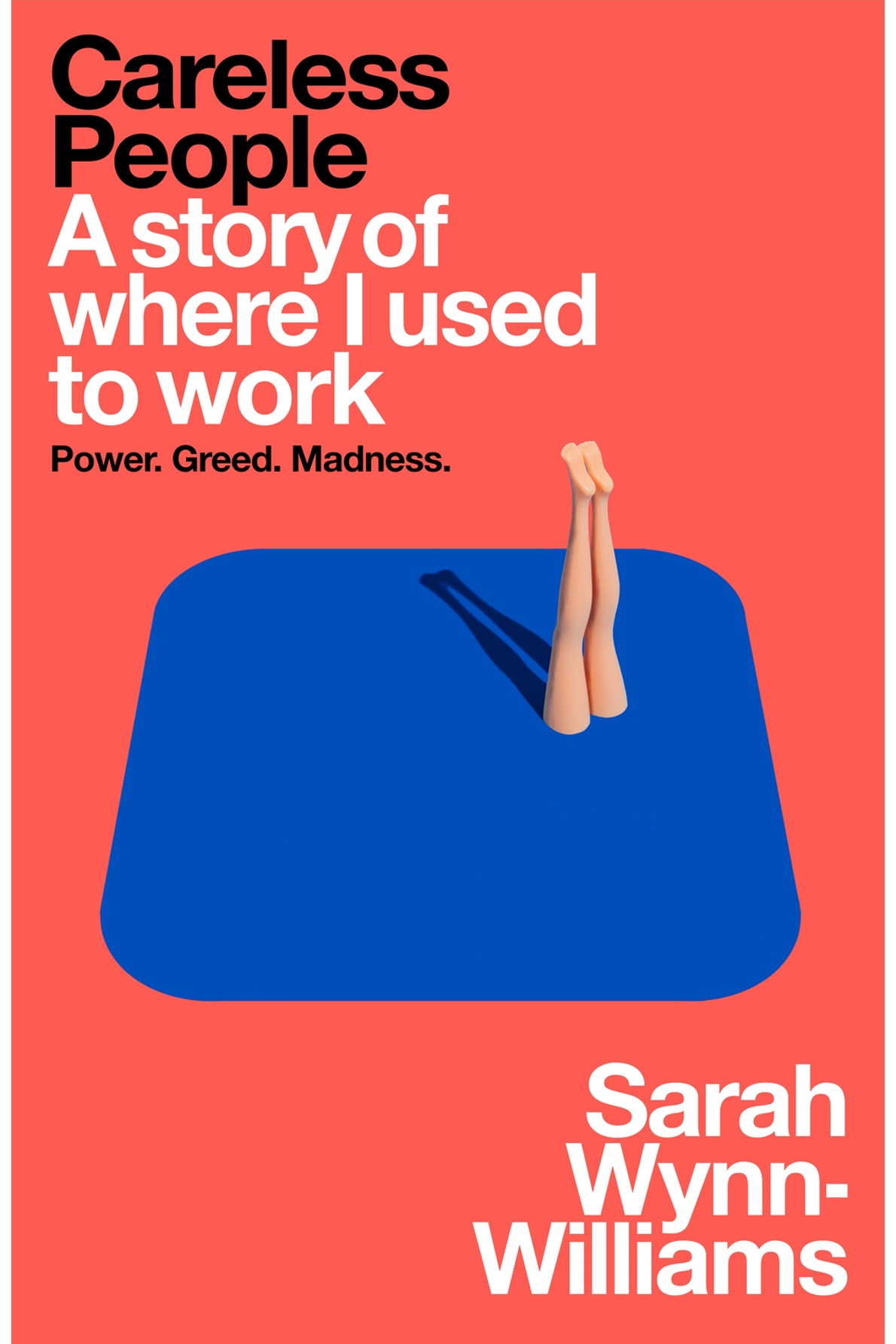
Photo of the cover of Sarah Wynn-Williams' book, Careless people - A story of where I used to work

In 2021, when Sophie Zhang, a data scientist, blew the whistle on her former employer, Facebook, the world was shocked at just how much power Facebook had had over global political and social issues.

But no one was surprised that the company wasn’t the saintly, do-gooder it had claimed to be in the early 2000s, when most of us embraced Facebook for connecting us with old school mates.

Since then, the façade gradually fell and many of us grew skeptical of Facebook as the platform designed for community building and social connection. After the 2016 presidential election, however, whatever appreciation we had for Facebook plummeted down to the ditches and remained there.

There are so many things that Facebook did well in its early years. But as any registered company, Facebook also has the legal obligation to further its own commercial interests. Consequently, the platform that claimed to want to democratise the internet ended up causing extreme psychosocial harm across the world. The road to hell is paved with good intensions, as they say.

Over the weekend, I finished reading a book titled Careless people – A story of where I used to work. A book I devoured during my runs, gasping mildly, smirking, and shaking my head in disbelief at what I was hearing. It’s dark and funny and deeply disturbing.

It’s a memoir of a Kiwi-American, former-diplomat who created the international policy team at Facebook—just before it started engaging with governments. She remained in a leadership position throughout some of the biggest political and social events that Facebook was involved in, including (but not limited to) the internet[.]org project’s entry into Asia, the hate crimes in Myanmar, the “Facebook elections” in the Philippines and the US, the company’s stealth launch in China, and the preparations for the senate hearing.

In her book, Sarah Wynn-Williams talks about how careless the company’s leadership was in their handling of the power that comes with owning and managing tools that can manipulate the truth at scale.

There are plenty of themes in this book that’re great for staying up at night.

Things like workplace culture, how the corporate world sees motherhood and maternity leave, how sometimes girl bosses can be bad bosses, how the idea of heroes is deeply flawed, how whistleblowers spend years silent and complicit, how even big companies with thousands of employees can be dangerously  understaffed, and so much more.

I’ll be thinking and writing about these in the coming weeks, and if you also read the book, I’d love to hear your thoughts.