The why of writing

“So I heard you have a habit of writing every day?”

That’s the clear winner if there’s ever a contest for the silliest thing you can ask a writer.

And yet it still confounds many that a writer would, after all, write. Although I can see how the confusion arises, it’s surprising that we’re now part of a society where corporate copywriters aren’t writers in real life.

It all started with a colleague who raised their eyebrows as I admitted to writing every day. They couldn’t understand the reason. Why would I spend an hour or so every morning writing, before I started work which was alsoโ€”writing?

As I stood there, stumped, I realised I didn’t have a ready-made answer. No, it wasn’t because “I love writing” or because “I’ve always imagined myself a writer” or because “I don’t know anything else.” Although those statements ring true in many ways, it’s also true that they’re resumรฉ answersโ€”something you’d say to impress a potential employer into giving you the job.

I have different reasons.

For one, it was my writing habit that landed me a career as a copywriter. And despite writing countless types of pieces at work, I still don’t write what I want, the way I want. And for a good reason, too, because a corporate copywriter shouldn’t possess a powerful personal tone that disrupts the business’s tone. Therefore everything I write depends on the company, its offering, and audience. When I come home after a day of such scrutinised writing, all I can think of is work. Not only do I don’t have time for myself, but my thoughts revolve around work as well. The mind goes around in circles in constant debate and debacleโ€””perhaps I should’ve used a better title for the blog, or added a banner image, or tweeted it out with a GIF.”

Dabble in this long enough, and you’ll wane. A writer who’s lost the ability to expand beyond work isn’t far from losing the ability to write altogether.

Consider those who write only emails all day. They become accomplished at conveying their purpose in an email, but when asked to write something differentโ€”a comment on social media, a guest blog, a webpage, or even a catchy advertisementโ€”they’d crumble under pressure. The reason? They no longer have the creative spark to think outside email jargon.

A full-time copywriter isn’t any better. The longer they seep in familiar territory, the more comfortable they become. They get used to using certain phrases and styles and avoiding others that don’t sit well with the business they write for. And it’s often already too late when they realise they’d forgotten how it feels to come up with something unconventional. When a writer foregoes the spine-tingling sensation that results from framing an excellent metaphor, or the jubilance that emanates from dropping a witty pun, a writer ceases to exist. What remains is the shell of a person who can create ideal corporate content.

That’s why I write every dayโ€”to keep the chaos within alive. I don’t write flawless pieces in my blog. I don’t put forth impeccable grammatical sentences or distinguished vocabulary. What I do write, instead, is random thoughts, scribblings, and haikuโ€”all the things that help me remember why I still write.

A little less introverted

Last time I was in the US, I presented a talk to a roomful of people who intended to hear me speak. And I delivered that presentation across four cities. It was a work thing and I, along with my colleagues, helped customers figure out better ways to use our product.

It wasn’t my first time, so I wasn’t as stressed as I thought I’d be. On my first time, however, I spent weeks sleepless, burning myself out, almost to the point of hallucinating. But even then I managed to stand my ground facing an audience of about 75-100.

And during yet another trip, I attended an event called ISTE. It was a global conference for educators, and my goal was to talk to as many people as possible, understand their pain points, and identify ways to pitch our product to them. I initiated conversations with hundreds of strangers without creeping them out.


I want to say I was tall and skinny at thirteen, but I wasn’t. I was short and quite plump, and I enjoyed school life. The internet wasn’t in my life then so I had plenty of time to spend watching cartoons, reading, musing about my life, and creating random verses I called poetry.

At seventeen, things had improved a little. I was online at last and made my first contact with the alien world of Facebook. Not long after, I set up this blog (thanks bro for naming it and paying for the domain). I soon transitioned from journal writing and self-pity poetry to more general writing. As if in an epiphany, I realised I could write about anything and with practice, become good at it. Every day became a hunt for a writing prompt, and I craved more to publish blog posts than to meet friends outside of school. Social life? Near non-existent.

How, regardless of all that, I landed a writing internship at nineteen is rather surprising. But I took it, and eight months later, joined the company as a marketing copywriter.


By the time I was twenty-two, I had presented in front of an American audience. For the first time, circumstances thrust me into a room full of people I’d never met before. And it was fine.

I’ve come a long way since my high school days of scrawling in my journal. From being a timid teenager who preferred to stay away from people, who believed the stereotypes of introversion and revelled in being one, I’ve seen a drastic change in myself.

I’m still an introvert. I sometimes even take the long way to avoid running into people or stay in on weekends instead of partying with friends. But I no longer try and fit myself into other people’s opinion of an introvert.

There’re countless articles online that try and decode an introvert’s behaviour, all the while enforcing new guidelines for being one.

My work life changed my perspective on introversion. Being forced to meet people, I learnt that I enjoy working with various personalities. I saw that I was even good at making lasting connections. “Understand the introvert” type of articles will tell you most writers are introverts, that we live in a bubble, and aren’t conversation starters. That’s not always true. I write for a living, and I don’t shy away from extending the first word, but that doesn’t make me any less of an introvert.

We all face apprehension in life. I did too when it came to communicating with people. Tying that to introversion is unwise to say the least.

Introvert or not, some peopleย need time and exposure to become a better communicator. Simple as that.

When solo traveller goes with a group

Iโ€™m not as well-travelled as Iโ€™d like to be, but everywhere Iโ€™ve been to, Iโ€™ve been with other people. Even my three visits to the US were work trips with colleagues close behind me. However, when we werenโ€™t working, and when it was time to explore, Iโ€™d leave them to their plans and fly solo.

Iโ€™ve always been that way, and Iโ€™ve never felt bad about it either. My reasons are simple enough: I donโ€™t want to go to the same places they do, and I donโ€™t want to do the same activities as they. When Iโ€™m travelling with colleagues, no matter where weโ€™re at, they will always want to go shopping. Which is fine by me, except they have people to give things to and I donโ€™t. Iโ€™ve never been much of a shopaholic or the typical tourist, but my colleagues are. And thatโ€™s the reason I head out on my own. Of course, itโ€™s unfair to ask them to spend time with me on activities they’d rather not indulge in.

With such strong reasoning, I discovered the joys of travelling solo. And it taught me a lot of great things too. For the first time, I was responsible for myself. And it wasnโ€™t as scary as my parents had told me it’d be. On the contrary, it was fun. It was, of course, little unnerving at times, when I struggled to figure out the way ahead or how to handle situations, but I got through them fine. And I realised the benefits of solo travel far outweighed its negatives.

Never compromise

The inevitable factor about social living is that we have to compromise. And I did compromise in my work trips, with the flight preferences, hotel reservations, seats and transport modes, and sometimes even food. But as soon as I ventured on my own, I didnโ€™t have to compromise anymore. I could take the bus if I wanted to or save time eating a bagel on the way rather than waiting for my co-travellers to finish a five-course veal meal. I could, most of all, stop where my heard did. 

It was the best feeling everโ€”freedom in every sense of the word. Since I didnโ€™t have to endure their endeavours for souvenirs or their selfie experiments, I got more time to do what I likeโ€”whether itโ€™s window shopping at a bakery or hiking up a hill for the breathtaking views, I loved having complete autonomy.

While I was basking in the glory of travelling alone, my teammates planned a team trip. And I was to go along with about ten other people. I had misgivings even before we left. Unused to going along with others, I didn’t know if I’d manage it. I even asked myself if itโ€™s worth going at all, knowing full well I won’t have a good time.

But I went anyway. And I wasnโ€™t all wrong. It wasnโ€™t easy for me to adjust to othersโ€™ routines and plans. It wasnโ€™t the best experience squishing seven people in a five-seater car or listening to music I donโ€™t like all the way on a road trip. Although most of us wanted to go on a sunrise drive, I hated waking the reluctant others at 3:00 am. It pained me to be the plant eater in a meat restaurant watching the group order piece after piece.

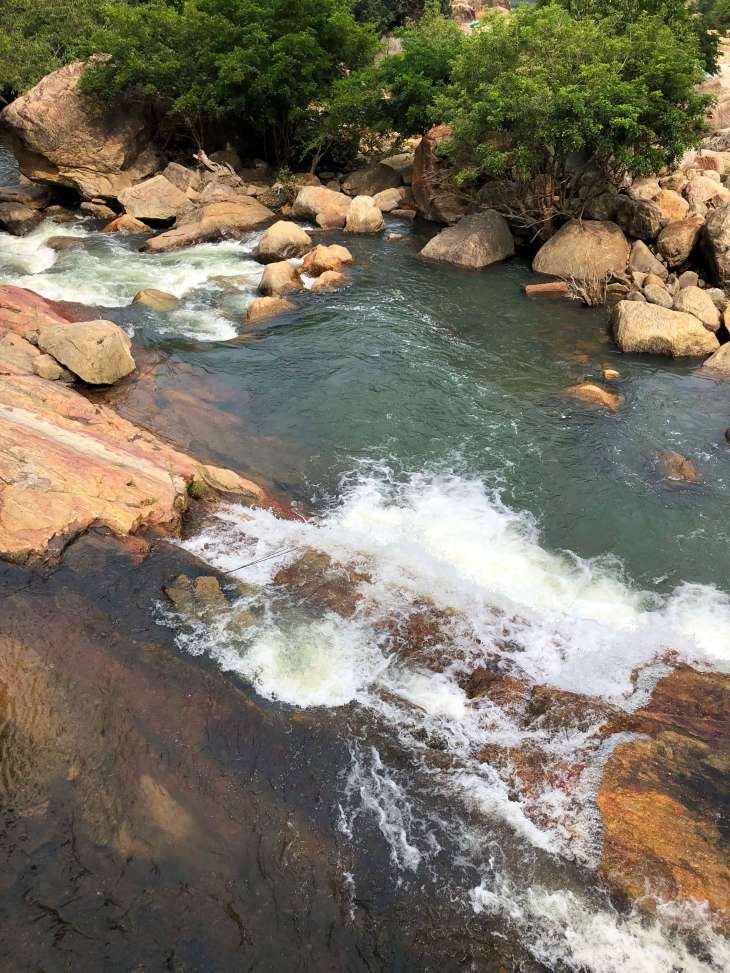
Regardless of all this, every time we were out together, at a waterfall or a bridge, or a street walk, I enjoyed myself in spite of myself. Sure, I wish we hadnโ€™t taken so many group photos and selfies or spent so much time waiting for the others to get ready, but I also had small moments I cherish to this day.

I didnโ€™t have to be the only responsible one throughout. Or watch behind my shoulders all the time. Or ask for directions or pay for every meal. For once, I was part of something bigger than myself. Yes, I had to check we were heading in the right direction, and stay awake talking to prevent our driver from falling asleep, but at the end of it, it wasnโ€™t only about me, and that didnโ€™t feel so bad.

Go with the flow

Iโ€™d visited countless waterfalls before. But for the first time, I showered in a waterfall during the team trip. As I saw my colleagues run into the water, I was happy to join them without worrying whoโ€™ll watch my stuff (lucky for me, some of my team-mates are afraid of water).

I learnt to let the inevitable flow of events engulf me, and to my surprise, I had fun. I laughed more than I thought I would, made friends of unexpected people, and even had someone interested in taking my picture. Travelling with a group, I realised, isnโ€™t so bad after all. After all, you get to know for real about people you thought you knew.

Solo travel makes you feel like you own the world, while group travel makes you feel belonged.

Which is better, though, is subjective. Iโ€™ll always vote for going alone, but I wouldnโ€™t negate the thrill of travelling with others.

Let’s forget

Forgetfulness gets a bad reputation.

Of course, loss of memory is a bad thing and no one should say otherwise. However, for the last couple of days, Iโ€™ve been fiddling with the idea of mindful forgetfulness.

The more I think about it, the more I feel its validity. When weโ€™re conscious of what we want to forget, we forget memories that arenโ€™t worth clinging to anymore. Like a bitter breakup, an embarrassing presentation at work, an ungrateful argument with familyโ€ฆ all those incidents that we wish had never happened will fade away when we choose to forget.

But even as I write that, I know itโ€™s not just about forgetting. Humans donโ€™t forget the bad things so soon. In fact, we sometimes may never forget, letting it rot inside our mind, poisoning our being, and making us more miserable than we deserve to be.

Thatโ€™s why we should forgive.

We should forgive ourselves for the mistakes weโ€™ve made. And forgive others whoโ€™ve wronged us. Because once we forgive, it wonโ€™t affect us anymore. When we forgive ourselves for messing up the presentation at work, we set ourselves free of the bitter memory. Weโ€™ll work harder next time, and not let the failure hang over our heads as a threat.

This way, we are free from harrowing thoughts, and our lives will fill up with positive energy. With the negativity gone, weโ€™ll have more time and willingness to remember what matters most to us and cherish the small things in life.

Perhaps mindful forgetfulness isnโ€™t so bad after all.

โ€“ โ€“ โ€“ โ€“ โ€“ โ€“

Thanks for the muse, Kumud Ajmani and #SpiritChat.