When arts and science collide

As an arts student in school, I had a hard time mingling with the science kids. For them, I was the one who read literature, making fiction the reality of my life. Whereas they micro-examined every organism, demystifying the nature of life. For them, I was nothing but a flimsy girl who walked around with her head in the clouds. My, they were so arrogant at times.

Most science students had the same egotistic attitude, and I so I began hating the elite that was science. Pity, since I enjoyed drawing sketching the heart, naming its parts, and narrating the story of how during inhalation, oxygenated blood runs through the veins, reaching every organ while deoxygenated blood travels through in the opposite direction. It was fun to create poetry about the body—for which I had to know about both. It wasn’t meant to be, though, because I didn’t want to become a bully as they.

I held on to literature, letting science off.
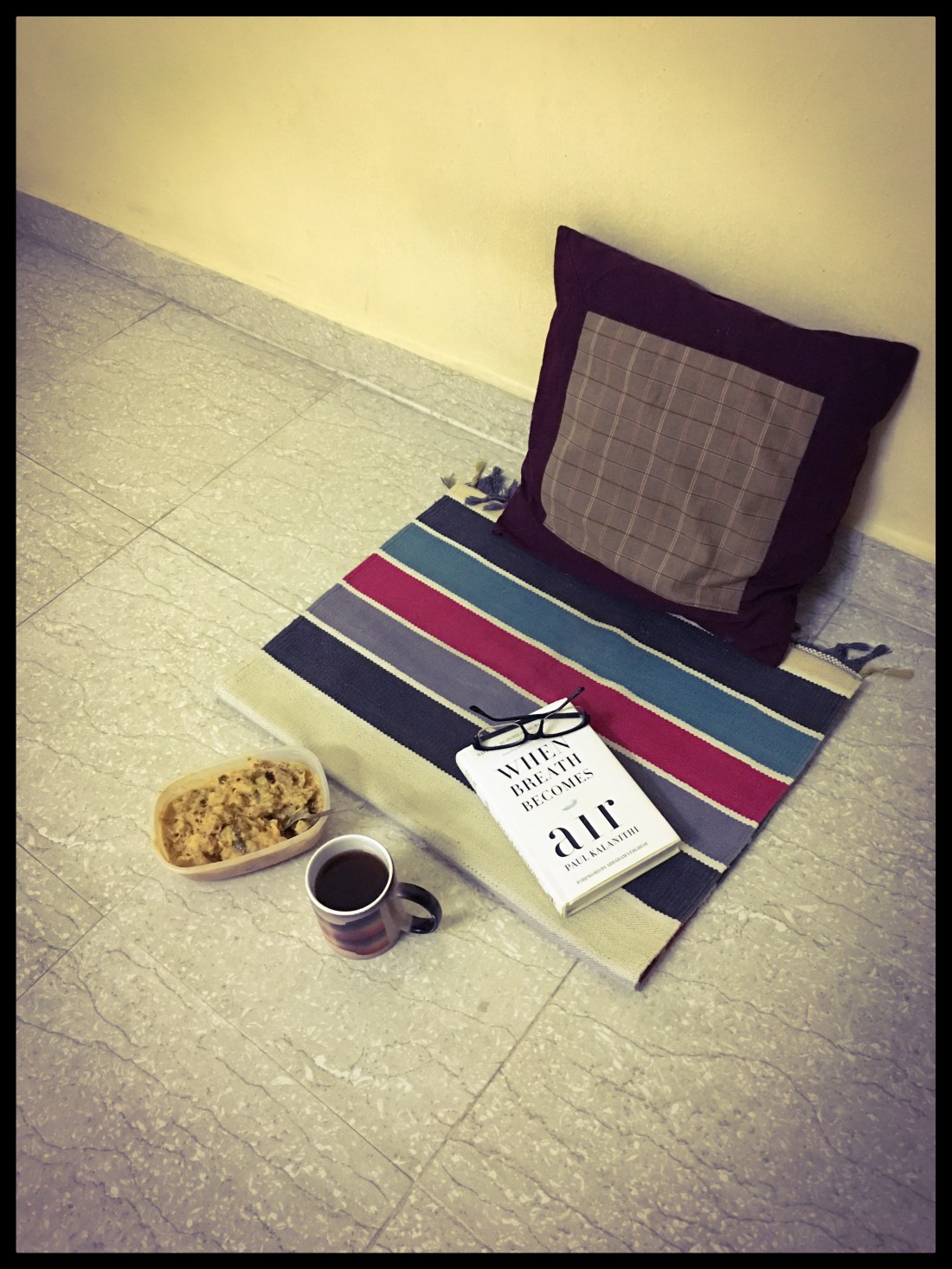
When Breath Becoms Air

And so when a friend recommended a book written by a doctor battling lung cancer, I hesitated. Did I want to read a fantastic, ego-filled book about how medical practice taught this doctor the fleeting nature of life?

My friend insisted, and I decided to give Paul Kalanithi’s When Breath Becomes Air, a try.

Just a few pages into the book, I realised I had been wrong about the author. He wasn’t just a doctor, but a literature major before he ventured into medicine. It was the first time I had heard of a doctor being sympathetic to those dabbling in the fictitious world of literature trying to reveal to the rest of the world that books speak reality, even though they guise as fiction. Paul not only studied literature, but used it as a coping mecanism during his treatment. He was a man of science and facts, but even he needed poetry and prose to survive.

According to the book, Paul loved writing, and reading the book, it’s evident that he did. I breezed through the book taking in all the emotions of a dying man speaking about death and disparity with indifference. In the first half of the book, Kalanithi talks about his journey from a literature student to a medical resident. He narrates his days and nights at the hospital tending to sick, even delusional patients. He writes about his fascination, how he approached anatomy classes, how the blade sliced through the belly of a pregnant woman as his attending doctor performed a C-section, he describes the pounding of a patient’s heart when they had cut through him to operate on the lung, he reminisces an incident when an annoying patient—who had to be conscious while Paul removed a tumor from his brain—swore at the doctors throughout the process urging them to get the stupid thing out of his head. As a reader, I felt myself crooning for most of Paul’s patients, and wishing that last one had died. Paul narrates such powerful stories, that you can’t help but emote along with him.

As a neurosurgeon, Paul speaks of the subtleties of the brain and the care that goes into each surgery. He speaks of the process in such a delicate manner that you, as a reader, can feel the sensitivities involved. As a writer, Paul employs the simplest of language, basic sentence structures, easy vocabulary—all of which makes for a needle sharp impact. The writing is straightforward and factual, the matter he writes about is moving and stiking. As a combination, the book is a joy to the beholder.

The second half of the book is more about Paul himself, about how his life, as a surgeon and as a husband, changed after his diagnosis. He speaks of his waking days and wakeful nights. He speaks of chemo and the pain that pricks at his spine, he speaks of discussing symptoms with fellow doctors, he speaks of his tears, of his fears, of his marriage, and the birth of his daughter.

I’m glad I read this book. It wasn’t life changing, it wasn’t a pool of advice, it wasn’t dramatic, mystic, or any of those things. Instead, it was simple, it was honest, and most of all, humble. And that makes When Breath Becomes Air a worthy read.

Meaning

“We need to talk.” Jason was tucking in when Jennifer entered, still in her work clothes. “What’s up?” He sat in rapt attention.

Sighing, she removed her hair band rubbing her stiff neck. “Joe’s a bit peaky.” She turned to him, worried. “Maybe we choose wrong?”

Jason smiled, gesturing her to sit. “He’s getting used to being independent. He’ll be fine.” She wasn’t convinced. “Should we get him something to help adjust?” Jason flashed a crude smile. “Like a quick zip? I’d love that.”

“Jason!” Jennifer exclaimed in horror. “I meant a zipper, Honey. It’s a stress buster, you know.”

Points of view

I write a lot of short stories. I even tried writing, what I’m now almost embarrassed to call, a novel. (I was young and determined and I took up the NaNoWriMo challenge.)

But in almost all of the stories I’ve written so far, I’ve gone for the third person narrative. Something about “I” and “me” and “myself” makes me uncomfortable. “She” and “he” and “they” seem easier and natural. Which is fine, I know, except I’m now reading a first-person book, and it’s changed the way I look at the first person narrative.

As I read through the first few chapters of the book, I decided I didn’t like the writing or the flow of the narrative. When I was about to dismiss the author as not my type, I realised that the first person narrative had influenced how I saw the author himself.
That struck me.

I knew nothing about the author and his style of writing. But here I was judging his way of work from just one of his books. I was wrong. A person and a piece of work are two different things.

In the first person for instance, the writer isn’t the author at all. The writer is the narrator, the character. And in the book I am reading, the narrator and the character is a twelve year-old, delusional kid. No wonder I didn’t like the writing—why would a kid, troubled and a smoker, running away from school mind proper grammar and decent vocabulary? What I had considered—for a split second—as a failed writing style soon made me realise that it was indeed brilliant characterisation.

With that revelation, I read on, learning more about the kid and nothing of the author. It’s not the story of a kid as told by an adult, but a story of a kid as told by the kid himself. And that’s where the author struck a chord. He masked himself as a child going into the his mind, abstaining, all the while, from his own adult instincts. That’s hard work. It’s hard, when you’re writing in the first person, to ignore the inner self that nags at you to tell your character to just shut up and grow up.

It’s easier to write in the third person; he called her, she answered him, they fell in love, and then out of love.

But the first person is more effective. I now see how the child’s character develops, what he expects from his life, what the author has in store for him, and how both ‘he’s—the author and the kid—respond to their entwined life.

Some say the third person point of view is the all-knowing, god-like personality. But reading through this particular book, I now think the first person author has more control than the third person author ever will. While the third person author knows what every character is thinking and feeling at the same time, the first person author not only possesses a single character transforming their life from the inside out, but also alters every other character in the story. A first person author is not just the writer, they are the protagonist, the soul of a story, the one person who can change their own life and the storyline as well.

It’s a challenge to write in the first person. A challenge I’d like to take up sometime.

Kickstarter

Sunday’s dying embers started waning inspite of daylight savings. He switched on his table lamp, mother’s advice ringing in his ears; “don’t work in the dark.”

He sat with a straight back, a stiff neck, rigid arms resting on the keyboard. The laptop remained open, the tiny, bitten apple still alight since seven that morning. Facing him was a white page, the next chapter of his book—the first chapter of his book.

His phone lit up, a notification pushing for attention. His regular coffee shop had a discount: “Midnight orders: 60% off. Jolt your week with a shot of caffeine.”

Talk about style

A while ago, I complained that an instruction book I was reading then had no creativity in its narrative. That was a pretty big accusation, considering the author of that book is Seth Godin and it was—needless to say—a bestseller. Although the book had wonderful advice, a pleasing layout with big headings and small, bite-sized paragraphs, even a bunch of clever wordplay strewn across multiple pages, the fact remains that “Tribes, We Need You to Lead Us” was a dull read for me.

I had then dismissed most guide books as dull as Seth Godin’s. I knew they were helpful and worthy in their advice, but I also realised that those aren’t books I’d read for pleasure. They were more like necessary evils you’d have to tolerate because they, in their own weird way, improve your life. And that’s how I had concluded my experience with instructional books that had blurbs saying, “Must read for every marketer” or “best financial advice for the average tax payer.”

It was with almost the same mentality and expectation that I picked up “Style — Ten Lessons in Clarity and Grace” by Joseph M. Williams. It was a part of my reading library at work and I picked that particular book because it had big fonts and reasonable spacing in the margins. Oh, and also because it was nice to caress the thick, white paper between my fingers. Aside from its aesthetic appeal, I expected nothing. That’s why the book caught me unawares spreading within me inexplicable joy, leaving me flicking through the pages to read more.

For the first time in a long time, a how-to-like textbook gripped my interest. It was about writing, and the author explains, with examples, why and how some sentences work and some don’t. Throughout the book, the author speaks of clarity and good sentence structure, which is all classroom stuff; to take it a notch further, however, he also speaks about the ethics of writing and how sometimes, you have to sacrifice clarity and concision because there’s more at stake.

Every teacher teaching writing would say clarity and brevity is the soul of a good piece. It’s important to empathise with the reader, giving them what they need to know, being mindful of their time. Williams agrees, and explains how to write for the reader, but in 10 lessons, 2 two epilogues, an appendix, and a glossary, he also admits that he can’t say how to identify the best way to write. There are no absolute rules to writing because it depends on the purpose, on the audience, on the writer themselves. And unlike so many books and articles that advise on writing, this book addresses that reality of writing.

In addition to the juicy meat of the book, Williams introduces quotations throughout. Every lesson, every chapter, begins with at least three famous sayings relating to the subject he’s about to discuss. To my surprise, some of those words were so witty I laughed out loud. I couldn’t remember the last time I had done that reading a how-to book.

All these were great things about the book. But the greatest thing was the writing itself. It’s not easy to write about writing in a way that readers, who are writers themselves, understand the writer’s intent—a feat that Williams has managed to achieve in an almost effortless way. That’s the actual lure of the book. Anyone who’s written anything knows that easy reading is damn hard writing, and the fact that this book is super easy to read says a lot about Williams as a writer, his process, and his dedication to revise and rethink every first instinct. For me, perhaps that’s the success this book has garnered.

It’s a glorious read for anyone interested in writing. However, for random readers looking to increase their “read” library in Goodreads, it’s just another instructional book.