
Time heals broken hearts—
seals the seams, picks up pieces—
words, though, eternise.
When it comes to classic novels, it’s a love or hate relationship. There’s no in-between, no neutrality. At least that’s what I thought.
I bought Persuasion by Jane Austen about a year and a half ago. But I let it rest in my cupboard for a good few months before attempting it. When I did, it took me a long enough to get through just half-way. I admit, it was slow. But I didn’t want to give up.
People had said wonderful things to me about Austen and her Persuasion. And I wanted to see what they saw in her books.
I spoke to a well-read friend, and she mentioned she didn’t like classics like Persuasion. I felt like I had hit a speed bump. Just when I worried that I was the only one doubtful of the book, here was another who was brave enough to admit it. It was reassuring to know that I wasn’t the only one struggling to love Austen.
Not long afterwards, life drifted by, and so did the book. Until a few weeks ago when I decided to finish the goddamn book. Closure is a powerful motivator.
I finished the book in three days and it changed my opinion about Austen and Persuasion. Also, I understood why people had conflicting views about her books.
I liked Persuasion.
The story was great. Anne Elliot’s character is relatable — she isn’t just a pretty face. She hats everything about her false and two-faced society. The small talk, the vain parties—she struggles to get through them on a daily basis. That’s most of today’s women. And Austen wrote this story almost a century ago. That’s the beauty of it, that it holds true even after such a long time. I love how Austen portrays social conventions — how Mr Elliot entertains his rich cousin Lady Dalrymple despite being in weak terms. He worries that Lady Dalrymple hadn’t sent her condolences for his wife’s death (thereby ending ties) only because he hadn’t sent his condolences for the viscount’s death. He wonders how to revive the relationship.
“How to have this anxious business set to rights, and be admitted as cousins again, was the question: and it was a question which, in a more rational manner, neither Lady Russel nor Mr. Elliot thought unimportant.”
“Family connexions were always worth preserving, good company always worth seeking.”
He seeks to trumpet their relationship because of the Lady’s wealth, and not because he cares—that’s the reality of the present society too.
The story was great. But the writing was old. The narrative comprises lengthy sentences, archaic spelling, paragraphs of reported speech, and plenty of passives. Persuasion isn’t for the modern reader. It’s not for the 21st century youth with fleeting memories, and attention spans that span less than a goldfish’s. It’s not for the internet surfer, the scroll-addict, or the lover of the feed.
Persuasion is a classic. It’s for those who read for the pleasure of reading. It’s for those who look below the narrative layer and seek the symbolism in the prose. Complex sentences display the complexity of Austen’s society. Reported speech shows how other characters influence Anne; the words, the thoughts aren’t hers. Weird spellings reveal how outdated the society’s mindset is, even for the 19th century — a mindset that lives even today.
That’s how beautiful the story is. It goes beyond the plot in the page. It takes the reader into the English society that Anne lives in, explaining both in words and in symbols, how others influence our thoughts, our decisions, and the way we live our lives. The book is a truth serum that mirrors our own modern life that isn’t much different from Anne’s.
There are two types of readers of murder: one who read fiction and non-fiction and know what they’re reading. The other is those who read non-fiction and complain it’s not as good as fiction.
I don’t care about the latter, but I don’t see how they don’t see the difference between the two genres. For instance, In Cold Blood by Truman Capote is non-fiction, and it doesn’t read like fiction. For the adrenaline junkie, it’s no page-turner. For readers who expect an Agatha-Christie like unravelling, non-fiction murders are a bore.
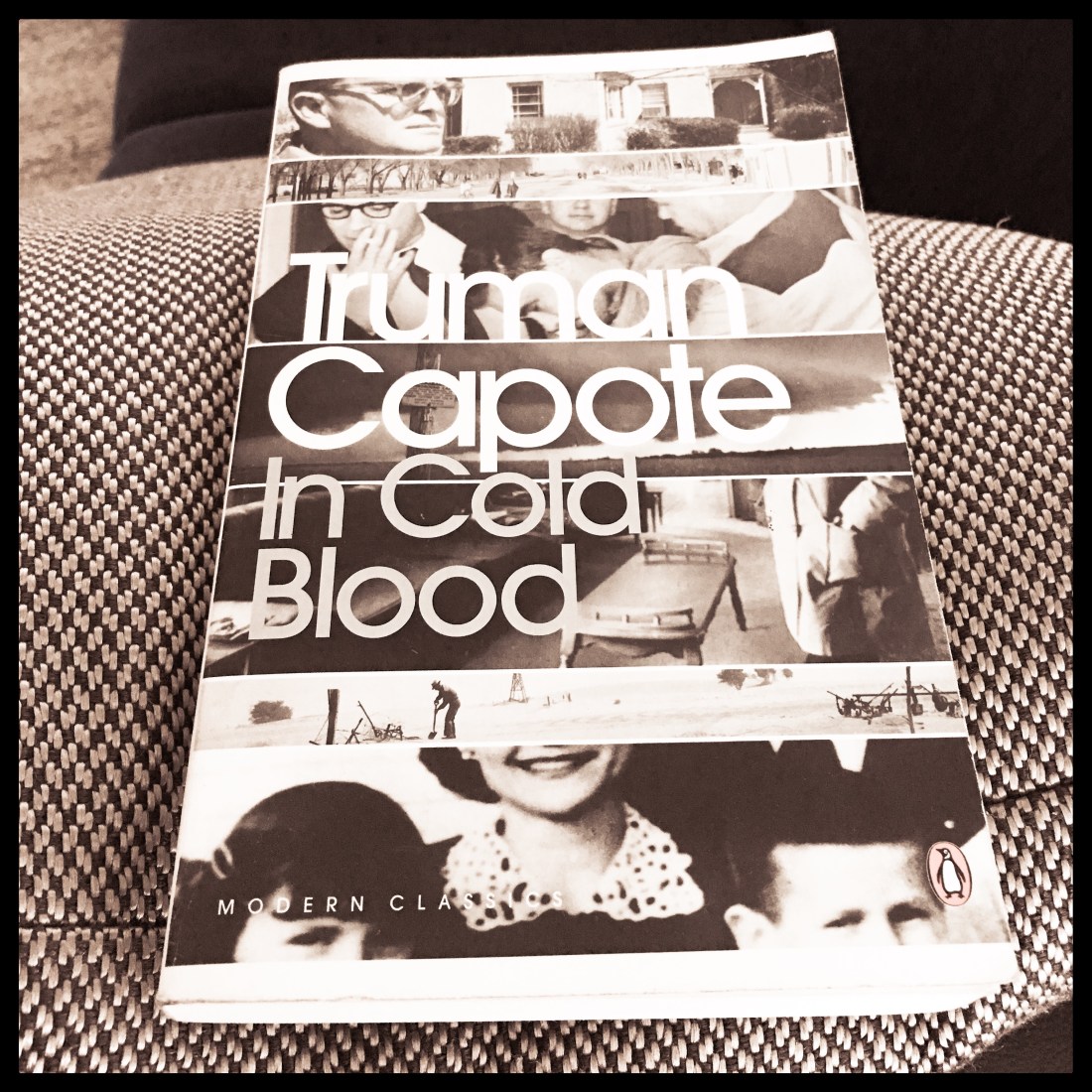
Just a few weeks ago, a close friend recommended In Cold Blood to me. She enjoyed it said I too would. Well, since she knows me and my preferences, I decided to heed her suggestion. However, when I asked around to borrow the book, one voracious reader told me not to waste my time over In Cold Blood. It’s a slow and dull read, she offered.
I was surprised to hear such conflicting views from two well-read people. I read the book nevertheless. That’s when I realised the true difference between murder-fiction and murder-non-fiction.
For one, the intended audience in non-fiction is not the same as in fiction. While almost any reader can appreciate the thrill of chasing an evasive fictitious serial killer, not everyone can understand the subtleties of outlining an actual murderer’s mind. Truman Capote, in the book, isn’t addressing the impatient ones who want to finish the book and lable it “Read” on Goodreads. He, instead, addresses those curious to know the way the mind works. The author speaks of Dick and Perry’s childhood, of Perry’s troubled family and abusive upbringing, of his dreaming of a giant bird, and of his attitude towards his partner in crime. None of these details matter in fiction because no one would care. In non-fiction, however, knowing Perry’s reluctance to swimming because he’s embarrassed by the way his legs appear, makes him relatable—it makes him human. And that’s the kind of depth that no fiction goes into. For someone looking for short bursts of exciting crime, a non-fiction like In Cold Blood is just plain boring.
This is my first non-fiction murder novel. And so it struck me how different the author’s tone is than in fiction. Capote doesn’t try to lure the reader with mysterious adjectives and goosebumps-inducing alleyways. Instead, he sticks to the facts—the cold facts that chill the bone one page at a time. For instance, there’s no element of surprise in In Cold Blood. I had gone less than fifty pages into the book, and I knew the killers, their appearance, and their uncanny ability to smile as they killed—so to speak. That’s how non-fiction works; the author has little to nothing to fold in a heart-stopping moment into the plot. The whole world knew the victims, the killers, and the history of the investigation—even before Capote began writing the book. It’s no surprise that there’s no surprise in the story. Nevertheless, the book reads like a true work of art. The crime was slick, chilling, and brutal. And Capote does nothing to make it sound any less.
Come to think of it, when reading a non-fiction murder story like In Cold Blood, a reader shouldn’t expect anything. The purpose of non-fiction is in itself different from fiction. While fiction has a perfect beginning, a crescendo, a plot twist, and the climax, non-fiction serves a larger purpose: understanding. Non-fiction readers don’t look for the climax, because the book opens with it. Instead, they look to look into the lives of the murderers, the routines of the victims, what they ate the day they were killed, who Nancy helped bake a cake, which part she played in the school play, how much she loved riding the horse with her friend. The non-fiction reader looks for life in murder. They find reality in hostility, and they seek to read the killers’ intentions. Because non-fiction murder isn’t just revenge, it’s the result of an entire lifetime of bottled emotions—boiling down to a moment of unsteadiness. And that’s what a reader hopes to discover.
It’s not just the reader, though. Even the author of non-fiction murder has a purpose that varies from fiction. Writing about murders takes more than time and patience. It’s takes more than writing itself. Capote would’ve spent a lot of time researching the facts, but he also would’ve spent years trying to uncover the mystery of human psychology. I can imagine how it must be for a writer to flip through gruesome photos and statistics. The purpose, again, isn’t to write the most spine-tingling novel. It’s more than that—it’s to bring to life, and show the world, the soul of a human who happened to take a wrong path.
I enjoyed every bit of In Cold Blood. If you haven’t read it already, you should. Be warned, though: if you’re the fiction lover who is reluctant to spend time (even as long as a month) on a single book, then don’t bother. But this is one wonderful book. Capote’s sharp writing would drive through your chest, and you’ll yearn to know more about the men—who could well be your neighbours—who also murdered a family in cold blood.

If it’s not sitting
at the typewriter, bleeding,
what else is writing?
Where I live, it’s the day after Women’s Day. It’s the last day to redeem discount coupons for beauty products and the final chance to feel “special” before we can feel it again next year.
What a scam women’s day has become. Last year this time around, my Facebook feed flooded with hashtags. He for she, she for all, woman of steel, wonder woman, girl power, and all those goosebumps-inducing supposed-motivational videos, plus “25 quotes from Malala that makes every girl love herself.”
Fast forward a year, and this time, my feed says hashtag whatever. My feed is full of women holding cards that echo the same emotion: we’re tired of glorifying women for a day and trashing them through the rest of the year.
Well, I can sympathise with that.
Except, all these against-Women’s Day hoopla come from corporates, and people just retweet or repost them, making it a marketing success for the brands involved.
Whereas until a year ago, the same brands flashed stereotypical “women are the best” campaigns, and we retweeted and reposted them then too. Last year that worked. This year, brands wanted a new kind of campaign and they chose a more “be bold everyday” message.
If celebrating women on Women’s Day was the marketing ploy of yesteryear, shunning Women’s Day celebrations is the marketing ploy of this year.
And lost in all these ploys is the true essence of Women’s Day: where we dedicate a day in our calendars to thank women for being a part of our lives, wishing each other all success in years to come. It’s no different from Labour Day, Mothers’ Day, Fathers’ Day, or Teachers’ Day. Or even Children’s Day.
Women’s Day is yet another of those social days where we take a moment to appreciate women. Nothing’s wrong with that. What’s wrong, though, is what the biggest brands of our capitalist world have transformed this day into. Gender disparity at work and home is a common issue. Just like teachers being respected less over scientists. Just like child abuse, or less-than-minimum wages.
We seldom make a marketing blast connecting low wages with Labour Day. Or child labour with Children’s Day (thought that’s becoming a trend now). Or abortions with Mothers’ Day.
But Women’s Day has been beaten to death, and somewhere along the way, the sincere thought of appreciation is lost forever.
 The Chaos Within