
Learns new words each day–
But when I professed my love,
She had none for me.
Inspired by an old Daily Prompt.
Learns new words each day–
But when I professed my love,
She had none for me.
Inspired by an old Daily Prompt.
Yesterday, I read an article about goldfish. The author claimed that the human attention span has equalled a goldfish’s.

So now my attention span is just about 9 seconds. That’s one piece of trivia I can relate to. I forget to finish a lot of my tasks, and I don’t read past the headlines in most of the pieces I see online. And thanks to Buzzfeed’s listicle culture, most articles nowadays follow the same format. So I don’t need to read past the heading of each paragraph. As someone who writes for a living, I can sympathize with the writer’s hard work, but I still I don’t read that huge chunk of content myself.
It’s obvious. People take articles for granted now. No one expects a random online surfer to read through an entire piece about how the economic bubble is bubbling. And so, most writers, too, focus only on the headlines and a paragraph or two in between. (Just in case.)
And the article I read yesterday also said people don’t read longer posts because they’re mobile most of the time, looking for instant answers. And the author also says we jump from one tab to another.
Sure, I do that. If I can’t find what I’m looking for in a website, I close the tab and move on. Any writer beating about the bush would drive readers away. After all, there are plenty of sites out there littered with information.
Why do we do that, though? I wouldn’t go to another site if I get what I want from the site I’m looking at. That’s more of a case of what’s in the article than a case of my attention span.
So I disagree with the author. Our attention span isn’t that limited. Plenty of people read a thousand-word article and still stay on in the same page. I’ve done it and I can attest that even impatient readers will sit through an article if it’s gripping enough.
Attention span and content are two different things. If I’m boring, I’ve lost my reader. If my title doesn’t resonate with the reader, they won’t read more. If my writing is too convoluted, I’ve lost my reader. If I make the reader refer a dictionary for every second word, I should know they’re not coming back.
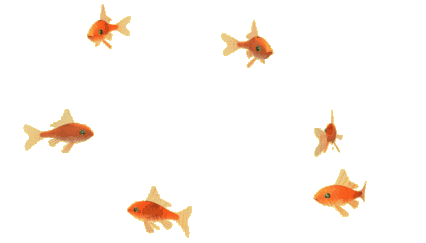
It’s got nothing to do with the goldfish and its attention span. I don’t often credit people enough, but humans are cleverer than fish. We have the capacity to assess before we process, and process before we prosecute. Goldfish can’t do that.
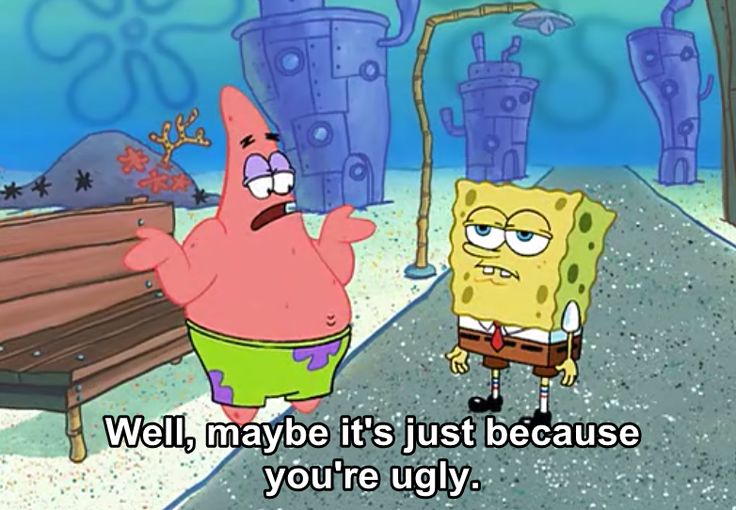
From primary school to middle and even in high school, we’ve vouched for honesty countless times. It’s embedded in our heads even without our consent.
But we also know they’re just empty words.How honest could we sound about being honest when we know so well that it would squash us? It’s how life is. Nowadays, no one can be honest and have a peaceful life at the same time.
How honest could we sound about being honest when we know so well that it would squash us? It’s how life is. Nowadays, no one can be honest and have a peaceful life at the same time.
Because once you realise the truth leads to misery, you wouldn’t want to take that route.
It starts small, like students telling their parents they finished homework, when they hadn’t. It’s so common that it’s not even breaking the being honest rule. Besides, telling the truth is too much trouble to deal with.
Likewise, a self-respecting adult wouldn’t walk up to a cop and declare they’ve hidden a stash in their car. You can’t do that and expect the law to let you go — just because you were honest.
Or perhaps this: “Honey, you look hideous. But I love you.” That’s a good punch line. And in the current state of our society, the guy may be charged with body shaming and sexism as well.
Being truthful is painful. And as humans, we try to avoid it. So much so that we don’t even feel guilty of being dishonest anymore. Why bother? It’s not as if there’s a SWAT team outside a thirteen-year old’s door sniffing for a whiff of beer.
It’s easier to hide the wrong stuff.
And we’ve landed an intolerable society because we chose the easy way rather than the right way.
For far too long, we’ve been telling children to be honest, without teaching them how. From the small things like forgetting to get the report card signed, to bigger things like forgetting to pay the taxes, it’s all about honesty — or the lack of it.
We’ve said it too many times. As a result, we nullified the meaning of it. Like when Mark Antony called Brutus an honourable man. By the end of that speech, no one thought Brutus honourable.
It’s no different with honesty. What was once a moral became a proverb, and is now a cliché. And we avoid clichés like the plague.
The government doesn’t go through every individual’s tax payments. The police don’t scour every college dorm for narcotics. And there’s no FBI breaking down doors looking for illegal weapon holders.
We shouldn’t enforce honesty but introduce it early.
We don’t need teachers reading out to students from a book that says, “Honesty is the best policy”. What we need, instead, is for them to explain the truth and the reality of facing consequences.
Some say money is irrelevant, and there are things more important in life. Like human relationships, for instance. Or trust or humility.
Which is all fine, but how often do we find ourselves starving and rummaging amidst pennies, while staring through the window of Subway or Starbucks?
At that moment, nothing matters more than a few currency notes. Never would we appreciate paper more than we would then. It’s just paper, but it’s also the world. No one’s got time for humility when they’ve got a rumbling tummy.
It’s not as if Subway would handover a sandwich to an under-nourished kid living on the streets. Or as if Santa would bring us lifetime supply of basic necessities for Christmas if we’re good this year.
Life’s not school where the teacher would give you a gold star for attending class every day. Nor does life give you a tree of golden leaves you could pick any time you want some.
Life is harsh. While for some it’s painful to live without familiar faces around them, for some others living is painful in itself. No single mother who scrubs pans to feed two sons and a daughter would declare money is irrelevant. When you’ve been alone, penniless, and helpless for far too long, family and human relationships mean less than rain water puddles.
Life is ruthless. Every 20 something graduating with a degree he didn’t want in the first place, buckles under the weight of an education loan that’d tie him to a desk job for the next ten years.
Life is mischievous. It gives you countless options and yet stumps you with a catch. You could be a doctor, a teacher, an artist, even. But before you become anyone, you need to turn out your pockets to our great education system. And then frees you up to do that creative writing course you yearned for.
Catch, though: The Humanities are dead. You go down that path, and you’re future’s lost for ever. The Dead Poets Society makes it worse.
No one struggling to keep their head above water would say money is secondary. Sure, we all know the importance of being a good citizen, and that our values matter more than our lives. But when it comes to reality, nothing is louder than the voice of money.
Besides, if you notice, almost all those who care naught for money have too much of it already. We hear only their voices. Because when you’ve never struggled to make ends meet, when you’ve grown up oblivious of a Pay Day loan, money isn’t the most important thing in life.

Three years ago, I completed my schooling. I was ready to start spending my life writing away. I walked in to interview for an internship knowing I knew enough to crack it. And then came the question.“What do you want to do with your life?”
“What do you want to do with your life?”
It seemed obvious to me. After all, I had chosen to write and I interviewing for a writing job. Why then would they ask me what I want to do with my life? Not understanding what the world hurled at my face, I stifled my mirth at her question. But someone had to think straight and my interviewer and potential teammate worried I was throwing my life away.
“I want to write.”
And if there’s anything scarier than saying it, it’s doing what I said.
Writing, like art, is a hobby. No one believed I could do that for a living. It couldn’t be a career choice. At least not one that pays well. Most people I know who write, also have a day job that’s not writing.
They write when they can, they say. And that means they’d write something sometime in between 9 hours of work each day, 3 hours of Blacklist reruns, and a weekend filled with booze and buzz.
Still, when I said I wanted to write, I had no idea what that meant to me in the long run. And sure enough, my interviewer knew I didn’t. She tried to save me, help me see sense, and chase me off to get a degree in something I could fall back to when things turned nasty.
My family and friends couldn’t agree more. Almost everyone was certain my choice would go bad. I wasn’t too confident either. When negativity encapsulates you, knocking the breath off your ribs, you can’t help but give in. And so I told my father it would be temporary. Six to eight months — it was just an internship anyway. I’d soon know my standard and could go back to the typical career timeline of college after school.
—
I hated my first day at work. People were cold.
I was nineteen in a city too big for me to grasp, and worried I was too fat. My doctor had advised me to lose weight and my family to lose my job.
For my first assignment, I wrote a bunch of articles. My teammates suggested we print them out and mark the parts I should rework on. They ended up underlining almost all of my work. Except, perhaps, a few ands and ors.
I was furious. I had put my soul into words and an unknown person swept them all away as if they were flies on his cheese. He had no idea how long I sat in one place, stringing words together in proper grammar and (almost) precise punctuation.
No one had any right, whatsoever, to meddle with my writing. I had been writing personal blogs for two years before I started working. I had experience, and it annoyed me when they treated me as a novice.
According to them, everything I wrote was crap.
It took me more than 6 months to feel better about myself. They still pointed out faults in my work, but I had grown to enjoy talking about it. After I’d been around for a while, my colleagues were open to sharing their opinions, and I was open to listening. They helped me work out strategies, they gave me ideas, and I realised that no two people read a sentence the same way.
That was a revelation. I saw the marvels of varying perspectives and unintended interpretations. While some thought it was fine to end with prepositions, some people abhorred the idea. And as always, the Oxford comma sparked discussions that transitioned from face-to-face debates to chat messages well into the night. Some chose the Chicago manual style over the AP style guide. And some others just ignored everything passive.
And then I saw it: What’s crap for one person isn’t so for another.
Everything came down to perspectives. I had chosen a career that was so unstable and wavering that even industry specialists had made peace with their disagreements.
And while I sunk neck-deep in learning the nuances of a semicolon and wondering if I should use words like “nuances,” my internship ended and I became an official employee.
The city felt old now, and I no longer was nineteen or fat.
But my father remembered my promise and began nagging me. My life seemed fine at the moment but I should have something to fall back to — when things turn nasty. They wanted me to get a degree for a career I could live on.
For some weird reason, my family didn’t think I was already living. They acted as if all I had done was extend my internship. And so to please them — to get them off my back, rather — I signed up for a course in literature.
It seemed like the right thing to do. I wanted to write, and what’s more natural for a writer to study than good writing itself?
I thought myself mature, but I had been naive about the quality of our education system. It didn’t take me long to realise it was a waste of my time. My parents, however, were hell bent on getting me through the course.
As a result, my degree in literature killed my passion for conventional literary education. And in the process, it convinced me further that a piece of paper stamping me qualified for employment is just society’s way of circulating money.
It got me thinking. According to my society, a career in arts isn’t worth pursuing because there’s no future in it. As for Engineering, medicine, and now MBA — they are future-proof courses. Plus, they have a heavy “return on investment”. Nowadays people only speak in economic jargon because life’s all about what pays you well.
It’s funny because people are passionate when talking about Italian art museums and French sculptures, and how we should protect ours as well. But they also discourage any child who puts a brush or a pen to paper.
Alas, I’m not immune to the rest of the world and its changing fancies.
From my parents who think I’m in ruins and relatives who claim to love me, to people I called my closest friends, everyone’s told me I need a backup plan—any plan beyond my stigma for writing.
However, when people ask me what I want to do with my life, I still say the same thing: “I want to write”. I began as a content writer, and three years later, I’ve morphed into a content marketer. And that gives me hope. I may not become the greatest novelist the world has ever seen, but I’ve been writing.
Sure, life hasn’t been as perfumed roses. I’ve written plenty of poor prose and pathetic poems. But every time I sit down on a mission to tether words to meaning, and meaning to sentences, I feel the adrenaline pumping through my veins. And I realise: There’s a good chance I’d never become a published author.
There are countless writers out there with a passion for words and parents with money. And I see myself scavenging my purse for coins at the end of every month. My family could be right, and life may turn nasty; I never can be sure it won’t.
Nevertheless, one thing I’m sure of — as long as my lungs can hold air, I will write.
Cross-posting from my Medium blog.
 The Chaos Within