
To write is —
to accept your right
to write, and write until
they accept you’re right.
To write is —
to accept your right
to write, and write until
they accept you’re right.
As someone who’s spent the most of her free time writing crap and reading about how to write, I can claim, with certain authority, that editing hurts. Not internal editing, mind. That’s an undeniable part of every writer. I mean the external editing. The proofreading. The extra pair of eyeballs that eye your writing. And it does not help that the extra eyeballs are so focussed on putting you off.
Because editing hurts.
It hurts to write a 200-word piece where you think and rethink each word, each phrase, every pause, and punctuation, just so that someone else (who knows nothing about the effort you’ve put in) comes up and sweeps away all your work down the drain.
Editing hurts.
I’ve spent my whole life fantasising. I want to publish my own novels. I want to write, and write what’s right for me. And for me, writing is personal. It’s my democracy. For me, by me. But not everyone thinks so. As long as I wrote pieces beginning with “Dear diary,” I could write anything without anyone’s interference. But once I moved out into the light, once I started craving the appreciation that good writing deserves, I came under the spotlight of editing. I had more balls than ever, eyeing my work. I had more colours in my page than I liked. My blogs started looking like an ethnic clothing brand, and my sentences had less of me and more of others.
My writing had improved like never before. But, editing hurts.
It hurts the writer in me who spent sleepless nights scrolling through quotes on Twitter that egged on writers with promises of isolation and unlimited caffeine. Writers are an elite, I learnt. And the internet became an endless stream of encouragement: “Writing is a lonely job,” “Writers write about depression, because they’re depressed themselves,” “Writers write it better than saying it.” It was a glimpse of a life we, as writers, should grow to expect. And I expected that. Until I was proven wrong.
Editing hurts.
So much so because editing is collaboration. Which contradicted everything the internet had fed me. It puts me in an awkward position where I had to “collaborate across borders,” come up with “out-of-the-box” phrases, and share documents “on-the-go.” I used to be a part of a group that revelled in veiling itself. And then, all of a sudden, I had to come out into the open and volunteer to vulnerability. Because — the greater good.
And that’s why editing hurts. It improves me, it improves my writing, and it gives me a clearer view of what I say. But it kills the elite. It destroys the isolation that I’m so used to.
And what does that mean to me, a self-writer? I publish refined content, which —like fast food— feels good, but is stripped of natural goodness.
But what does that mean to me? It makes me doubt my writing. I get lost without my editors. What if I make a mistake, or use the wrong punctuation? What if there’s an easier way to say something?
What if I get so scared of publishing bad writing, that I stop writing altogether? Just like in food, too much of refining makes you sick.
And that’s why I still rely on this blog to keep me sane.
To write is —
to trick yourself,
into believing you can.
to show weakness,
and persist inspite of it.
to welcome shame,
with wide arms and smiles.
to string words,
that end up stringing you.
Warning: Contains no (intentional) philosophy.

I’ve been writing for a bunch of different audiences for a while now. And I realise why a writer needs to write for herself.
We know: Writers write.
But to whom?
Most often than not, writers write for someone they don’t know. In case of a blogger, the audience is their readers.
But for a writer working for a corporate, the audience is much wider, ranging from tech experts, to teachers, and even doctors. And oftentimes, the writer is so focussed on conveying a point to so many people, that she forgets that there’s reader within starving for attention.
When we write, we talk. We convey out thoughts to another person in such a way that we hope they understand. But do we even understand ourselves? Do we ever feed our own soul?
When we’ve been writing for so long for others — to meet criteria that fit external causes, to write in a way that others would agree or appreciate — that we lose our sense of personality.
We become writers who write what needs to be written. In other words, we write whatever we need to, to get the point across. Or, being honest, to pay the bills.
What’s then, the difference between someone who chose a professional career because that pays more and a writer who chose to write because she wanted to write?
If a writer is to survive (soul-wise), she needs to write something other that what others tell her to write. A writer needs to write imperfect prose. Because no one who writes for themself cares how it reads, it’s all about communicating your deepest desire; not just getting the right tone, the right call to action, and the perfect sentence length to match the design.
And sometimes, a personal journal is the way to go. Think about the days when you could just go, “Dear Diary, Jane was mean to me today…”
There’s something reassuring about writing to yourself. Because when you write to yourself, you write for yourself.
When you just let go of all the restrictions of a writing job, you understand there’s a whole world of ways to say the same thing. It gives you a shift of perspective your narrow-minded job would never approve of.
And that’s the beauty of it. When you’re just writing to make yourself smile a little wider each day, you see that it doesn’t matter what others think of your writing. It doesn’t matter that the word choice is a little awkward or the pun is too abusive, or, that your sentence has no emphasis at all.
Because when you write for yourself, you’re free to write.
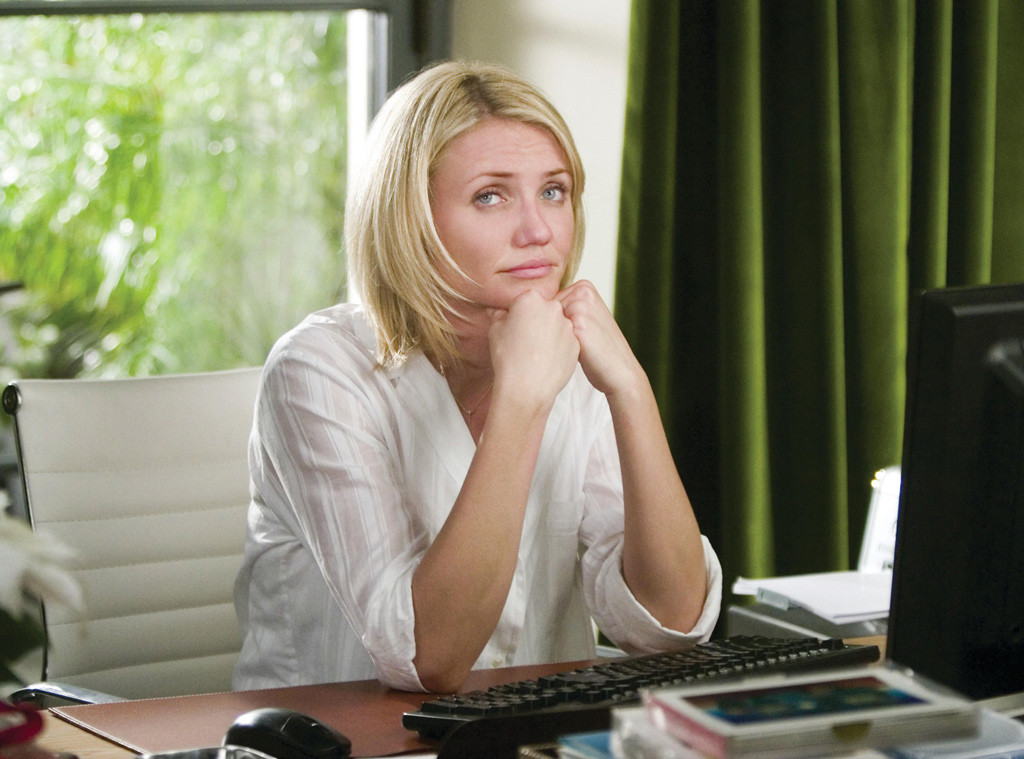
She never quite liked that word. She didn’t like the way it rang in her ears; the way the sound lingered, echoing. Every time someone uttered that word, it took her back to her childhood.
Her father would call her that, every crack of day, every close of day. He used it as a nick name when he shoved her into her room, tucked her into bed (grinding his teeth as he did so), and when he passed her the plate of omelette — with a clatter that alarmed her dog.
Every time someone uttered that word, she’d close her eyes to see her father’s beetle eyes loom back at her.
People thought she hated being called sentimental.
But it was the “mental.”
 The Chaos Within