What is The Chaos Within?

I often wonder what this blog is about. It’s been three years, and I still can’t seem to figure out which category my blog falls into.

chaos

Sometimes it’s frustrating.

“What do you write about?”

“Ah — just, stuff.”

“What kind of stuff?”

“You know — stuff.”

That’s my problem. I don’t have one definitive topic. I just write. Stuff.I’ve been thinking about it, and about what I can do about it.

And I’ve found an answer. This is not a parenting blog, this isn’t a DIY blog, not a lifestyle blog, certainly not a fashion blog — it’s a coping blog.

The more I think about it, the more it feels right. Mine is a coping blog. It tells you everything you need to know about someone who’s coping up with life. There are stories, poems and musings, but there’s also photos, quotes and books I enjoy.

I don’t write on one topic, I write on my life. And my life is a bit of everything, it’s a bit of everything mashed up. It’s the chaos within me.

Ah! Self-realization!

The Man

For the past few weeks, I’ve been reading Shakespeare’s Hamlet. The original play in full. And it’s given me moments of solitary pleasure and bliss like none other.

A long time ago, I read a simplified version of the play, and I thought it was just too cinematical. It felt like watching an old movie with a plot that’s been beaten to boredom.

But when I read the play now, I realize how wrong I had been. The story isn’t new, yes, except that everything about it feels new. Shakespeare’s use of words, his insults, his puns and vivid descriptions make Hamlet such an interesting read.

And no one makes imaginary characters utter advice and words of wisdom like Shakespeare does. I’ve found a new respect towards the man. He’s The Man.

And here’s a little titbit.

“Conceit in weakest bodies strongest works”

Pure genius, huh? I know!

Crafting A Dream City

Cristian

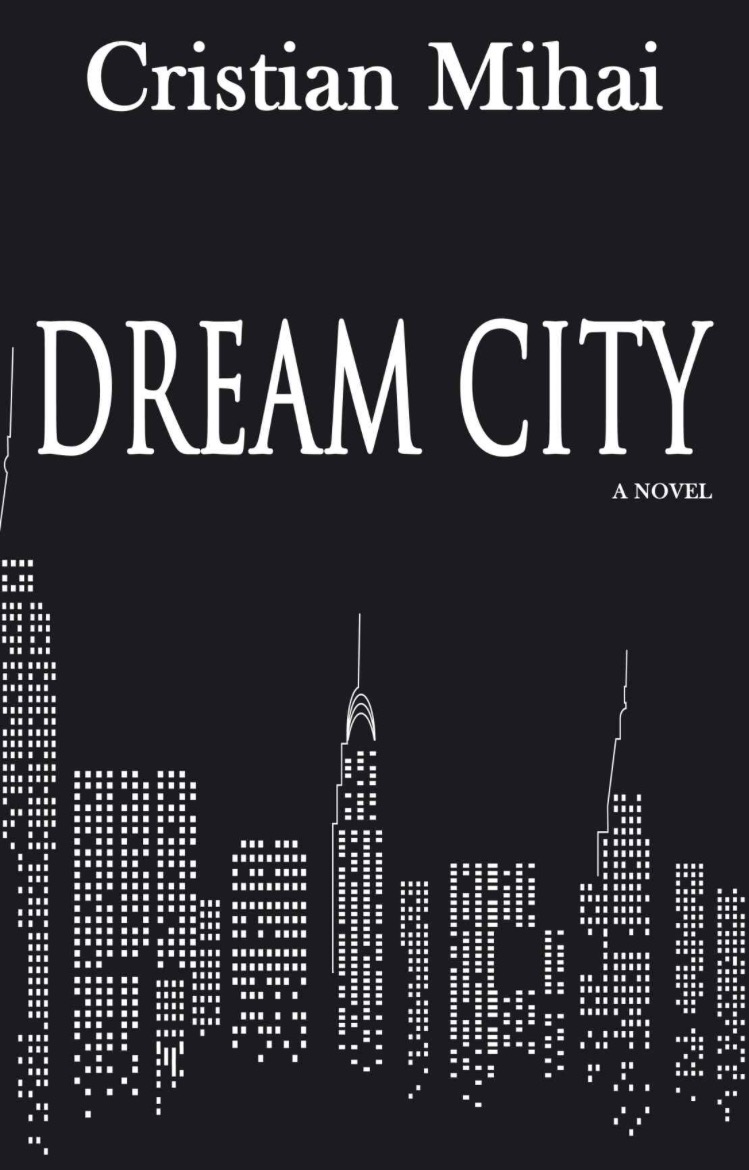
I’ve been following Cristian’s blog for a while and I feel guilty each time I read one of his posts. Because though I’ve had his book on my kindle for a long time, I’ve never read it.

I should have read it sooner.

The one constant in the story is Cristian’s voice. He kept seeping through the words. There were either sentences he often uses in his posts or thoughts that every writer could relate to. The story itself is about artists, art and the consequences of choosing art.

I loved the story. And the main reason: simple words ringing hard in your ears. This book lingers.

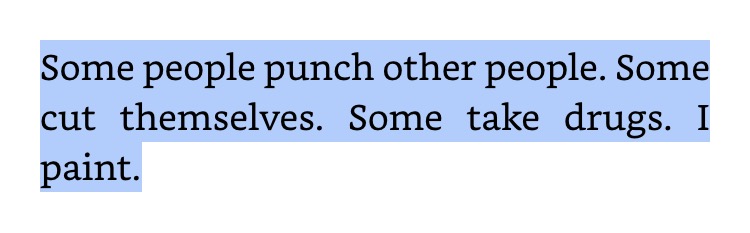
“But the truth is, what doesn’t kill you makes you wish it did.” – Cristian Mihai, Dream City

This is Cristian. Every syllable of that line screams Cristian. And it’s more; it’s every artist. And it was gripping that in many places, I felt the protagonist and Cristian interchange. Not just him, I felt myself intermingle with the protagonist too. Because the characters speak to you, and you suddenly realize their life is your life.

The author knows the pain of being an artist, and he translates the emotion with so much art.

Dream City

That’s it. The essence of everything we do.

Shakespeare, the Marketeer


write on

For a long time, people have believed that writing and marketing are two different entities.

Marketing is the art of selling stuff to people. And writing —  well writing is just bleeding.

But we’ve also seen great writers shine as great marketeers too. And who else should I point out than the beloved Shakespeare himself? (or herself?!)

We know Shakespeare was a good writer. We also know — but don’t accept it — that he was one of the greatest marketeers in history.

I’m not exaggerating.

People have said for ages that good content sells itself. But people have said that for ages without realizing what it meant.

Shakespeare’s plays and sonnets became successful because they were good. But good as in, not with perfect grammar and flawless sentence structure. Shakespeare didn’t care for grammar rules; he took the license and brandished it with such fierceness in the face of the literary world. He violated every rule in the grammar book. He wrote dialogues in poetry, and invented words to suit his personal situations.

He played with spelling, he altered rules, he teased restrictions — but his works were good. And the state approved of them.

So how did Shakespeare manage to sell his “faulty” works to such a well-educated state — to what we now call the golden age of Literature?

Shakespeare cared naught for the templates. It didn’t matter what the rule book said, because he didn’t write for the rule book.

Shakespeare wrote for the people.

He wrote for the poor people, for the uneducated, for the drunk, for the sober, for men drunk with love and for the women behind tapestries.

And he wrote about people. He wrote about envious kings, doubtful husbands, about runaway lovers, of boy kings and tomboys.

Shakespeare wrote for the people.

His works spoke about being human. He created vulnerable stories, he spoke about the things that are in our minds all day. He spoke about sex, about money, about greed and passion. He spoke to our souls, to our inner most feelings. His words resonated with us, and we related to them.

And that’s why Shakespeare sparks excitement in us. And that’s why, even centuries later, you have to spend more than a handful to get your hands on Shakespeare’s works. If that doesn’t make him one of the greatest marketeers in history, I don’t know what does.