The thing about routine

November is National Novel Writing Month. That means, aspiring novelists, and even established ones, spend an entire month feverishly writing a full-length novel of at least 50000 words. NaNoWriMo (short for National Novel Writing Month) is also a non-profit organisation that mentors participants, keeps them motivated with pep talks, and organises group meet-ups across the world for people to write together and make the most out their time this month.

November is also National Blog Posting Month (NaBloPoMo). For the less motivated and less ambitious than the NaNoWriMo participants, this month is all about posting at least one blog post a day. 

About five years ago, I tried NaNoWriMo and finished writing my first full-length novel. I was thrilled. Over the moon, to put it in figurative terms. The following year, I took up NaBloPoMo. And to my utter surprise, I managed to succeed in that as well.

Since then, though, I haven’t officially participated in NaBloPoMo or NaNoWriMo. I did challenge myself to finish a shorter novel (of 30000 words) during Camp NaNoWriMo in July, and I did. However, I have lost interest in joining others as they declared their big goals for November, of writing at least a little everyday so they can meet their goal. I have my goals too, but I no longer feel the need to broadcast them. And the reason for that, I think, is that ever since I did the one blog post a day challenge, I’ve been posting at least once a day. For over two years now, I’ve had a blog post go live every day at the same time. To do this, I’ve had to often force myself to write something every day. Some days it flowed easily, but some days it didn’t. Some days, while travelling in particular, I’d schedule a bunch of haikus to go live even if I couldn’t publish them myself.

Therefore, for the last three or four years, I’ve written and published every day. Some days I don’t do too well, but some other days, I impress even myself.

During this practice, I’ve learnt that writing something, anything, every day is a great way to keep the brain muscles oiled and nourished. I’ve now developed a certain itching in my mind whenever I don’t write. It’s become part of my routine to sit down for a while every afternoon, regardless of how busy I am, and write a few words about whatever strikes my fancy. 

You never know what such habits will lead you to. For me, it got me hooked into the art of telling a story in 14 syllables. I started writing a lot of haikus. I found stories in people I observed and translated them into short stories and 100-word flash fiction pieces. After all this time, these random pieces of work have become my life. Now, I’m making conscious efforts to submit my work to online magazines. It’s been a great journey so far, and I can only see it improving.

Routine life can be tiresome, yes. But sometimes, it can also be rewarding.
The undeniable cycle of writing

I’m a marketer. Even though I have no formal degree in marketing, over the last six years, my work experience has taught me many things. One of those, which is also regarded as the most important, is knowing your audience.

I write marketing copy for the web. And that means I need to know my audience. I need to identify who exactly I’m talking to and speak to them in their language. My tone, choice of words, and even the length of my sentences depend on the capacity of my audience. Absolute precision in words and messaging is necessary. No compromises. Every piece I write begins with an audience analysis.

But then, I also write poetry. And poetry doesn’t have an audience.

Curious contrast, eh?

I attended at a poetry festival recently, and while discussing about who they write for and why, a group of panelists unanimously agreed that they write for themselves. At least at first. And that’s the underlying truth for all forms of art. No one starts creating art because they have an audience waiting for it They start because they can’t keep it in themselves any longer. 

I write short stories, poems, and random ramblings (like this one) because I have to get them out somehow. Creative writing is an outlet, a necessary drain to flush down the overflowing ideas and thoughts that’d otherwise clog my brain and leave me a walking pile of stink.

Therefore when I write, I write for myself. I write to make myself feel better, to clear my chest, and to put my mind at ease. And through that inane need to pop the bulging bubble in my head, I end up creating an audience that relates to whatever I put on paper.

Still, even though I write these poems and stories to satisfy my own needs, they also need a platform. Sometimes I’m happy to tuck my work away from the rest of the world, but more often than not, I want to share my work with others, to thrill them just as my favourite writers thrill me.

As long as I only want to write stuff and don’t care if anyone reads them at all, I don’t have to worry about marketing. But the moment I let my ambition get the better of me, the moment I crave acknowledgement and recognition even, I need to start thinking about audience and how to say what I want to say in a way that makes them want my work. Therefore comes marketing.

My point: Marketing is everywhere. And we all have to market ourselves at some point. Can’t say I like the idea, but can’t deny it either.

Is it real?

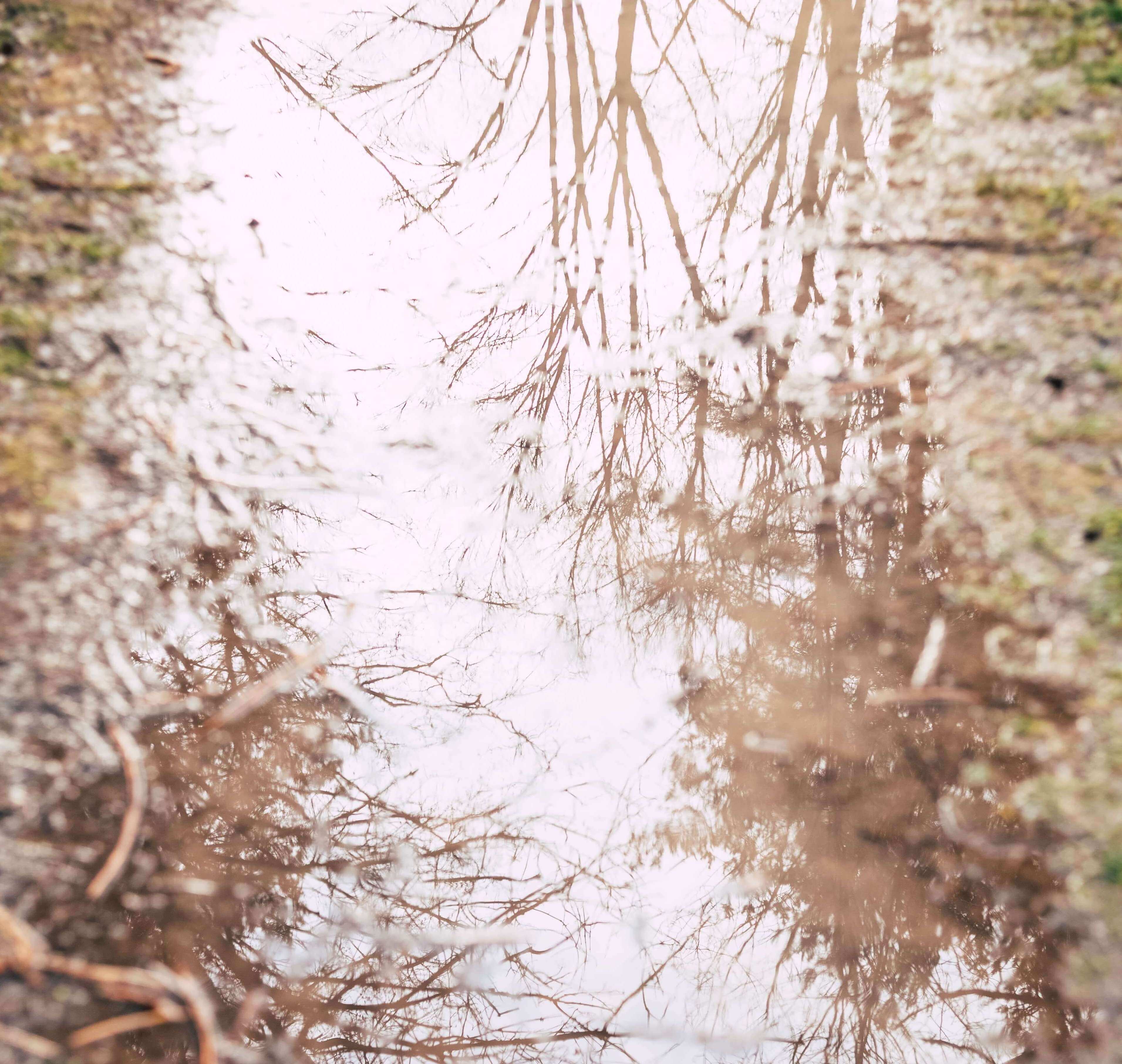
Reflection of trees on a puddle of water - Markus Spiske on Unsplash

I write quite a lot of non-fiction. Stuff that’s based on people I meet, places I visit, personal experiences and opinions, and such. So often, I also use my own life incidents to fuel my fiction pieces. 

After all, it’s easy to write a story calling upon your own emotions. There’s even a word for it in literature: ethos. 

Not only do such pieces flow easily, but they’re also genuine and factual. They need minimal research—just a Wikipedia entry to cross-verify dates or an opinion blog to confirm that you’re indeed talking about what you think you’re talking about.

Except, there’s a problem with using too much ethos. 

It’s a strange thought, but it hit me when I was in the bus one day. I found myself thinking about a topic to write about and realised I’ve written about almost everything that I ever thought mattered in my life. About moving to Australia, being an insecure teenager, exams and stress, growing up in India, and even about my absolute disregard for the useless education system I had the misfortune to follow.

I’ve written about my family’s challenges as well—about all the stories I grew up listening to when my mother didn’t know how else shut me up.

Now, it’s as if extracted so much from myself and incorporated into my writing that I’m short of life experiences to write about. It’s ironic too, because I still have a lot of time (hopefully!) to accumulate memories, thoughts, and opinions. There’s still so much of the world that I haven’t seen, and I want to. There’s so much left for me to do, and yet I can’t write about any of those until after I’ve done them all.

That’s the problem with using reality as a reference. You can also run out of reality.

Good challenge for imagination, though.


Image credit: Markus Spike on Unsplash.

Groups matter

One of the first things I did when I moved to Canberra was joining a writing group. I’d been writing for almost ten years, and I’d never had a peer group to read my work aloud to and hear feedback from. I didn’t even think I needed a support group until I had one.

Not only did they coerce me to share some of my work, but they were also accommodating and friendly in their suggestions. For the first time, I felt as if people read my work, not just to tell me they’ve read it, but to actually help me improve it.

It felt amazing. We bonded, sent over our short stories and poems to see what others thought of them, and even met up outside our allocated meeting times to write together.

Within myself, triumph blossomed. From being the written counterpart of a bathroom singer, I went on to become a voice they thought was worthy of their time.

Not long after I joined the group, we all went on a retreat. Thirteen in all, to an ancient manor set in the heart of small Victorian town Goulburn. It was a two-day getaway in the dead of winter. Beautiful Goulburn is perched a little north of Canberra and a little more south of Sydney.

Victorian mansion in Goulburn

With my minimalist backpack and a well-equipped laptop in my friend’s car, we drove up to this strange town I’d never heard of, to spend the weekend in a stranger’s house with a few people who were strangers until a couple of months ago.

I couldn’t have been more excited. I was looking forward for two days of writing, sharing, and revising. 

What I didn’t anticipate, however, was that a roaring fireplace, wine and whiskey, and impeccable homemade food on a Friday night don’t always add up to a night of relentless writing. The frost hugging our windows didn’t help much either. 

None of us wrote anything that night.

We drank and talked. Someone told about his experiences with ghosts. Many of us laughed. 

Except—unlike drunk college students, waking up with guilt stretching over their faces, the next day we woke up full of fervour for the art of writing—and a little light headed, of course. 

We spent the day in silent rumination, writing. Some continued perfecting works-in-progress, while some others picked their brains, chipping away at creating new ones.

That night, we shared, laughed, drank, and danced again. As the weekend wound, and the sun shone on our faces on Sunday morning, we packed up our recyclable bottles and editable writing and drove back home to Canberra.

Looking back now—a month away from our next retreat—I realise that weekend wasn’t about drinking. It wasn’t about escaping from family and responsibilities. It wasn’t even all about writing. 

That retreat was about presence. It was about sharing our personal selves with others like us, telling family stories, ranting, and reassuring each other. It was about sitting by someone as they struggled to get words onto their screen, silently motivating, never judging, and being there when they needed to talk to about the best way to end a murder mystery.

Everyone needs a group like that they can run away with.

Writing is living

I was attending a panel discussion about poetry when someone mentioned how research is a great way to accumulate ideas, facts, and anecdotes, and how during the process of writing a poem, you learn to strip out the unnecessary details and keep only what makes your piece worth reading. 

That got me thinking. Planning for a story, a poem, or a novel is all about collecting random information in one place. It’s essential prep work. And only when you have that massive pile of overwhelming information can you condense it and identify key elements that add value to your work.

Unless we go through that rigorous cutting of the bulk in our work, the piece itself will sag under the weight of too much information. What we once deemed good becomes its downfall. 

Life is like that too. 

We all spend so much time and money acquiring things—books, furniture, clothes, jewellery, bags, shoes, and so much more that take up and over our lives. We don’t realise these things are baggages that can hold us back.

Just as in writing, the solution is to get rid of what we don’t need. 

To live minimally, so we reduce our impact on our surroundings, and be aware of ourselves. Makes for a quick getaway too. To do all that, we need to get rid of the possessions we so lovingly accumulate. It isn’t easy, and to paraphrase Faulkner, it’s like killing your darlings. But if we want the result to be worthy at all, it has to be done.