Shadows of the past

I’ve never cared much for translated novels. They never quite work for me, because I don’t know whom to credit when I want to quote from the novel. Should I appreciate the original author of the thought or the translator who managed to convey a foreign concept in a language I understood, and in a way I appreciated? Well, that’s why I often conclude it’s better to avoid translated pieces altogether. Although I know by doing so I’d let go of a vast pool of literature, I’d still choose an English novel over the English version of an unknown original. And I held fast to these beliefs until a few weeks ago.

A few weeks ago, I borrowed a hefty book from my friend. Slapped across the cover in bold words was the title of the book: The Shadow of the Wind.

Interesting, I thought as I flipped through the pages without reading any of it. I hadn’t read much in a while, and was desperate to take home the first book I saw. And this book, in fact, seemed like a promising one, too. It wasn’t until after I had got home and gulped down half of my coffee did I realise the book was a translation.

I groaned a little, but read on. The plot unravelled fast enough, and so I want to give up midway.

I’m thankful for that over-caffeinated decision.

Soon after I realised that the story was a translation, my keenness had dropped a few notches. Although the first few pages retained my attention, once I entered the seventh chapter or so, things slowed down a little. In hindsight, this change of pace isn’t out of the ordinary. Many books linger on a slower pace, and the slowest part of this book was still much faster compared to most others. As a reader, I soon left the lag behind and the story picked up its momentum. And from that point forward, until I turned to the last page, I remained hooked—for the lack of a better word.

Not only did the book turn out exciting, but the narrative flowed with such ease that I didn’t even feel like closing the book. It was the first time in a long time that I had wanted to keep on reading, inspite of my initial aversion.

Set in Barcelona, this is the story of a young boy, who finds a book, and finds that its author had a mysterious past. He sets out to solve the mystery, and along the way, discovers how his life entwines with the unknown author’s by total coincidence.

From the book—

“Julian had once told me that a story is a letter the author writes to himself, to tell himself things that he would be unable to discover otherwise.”

That was the most captivating part of this story. Halfway through the book, I could see the young boy walking the same steps as the person he’s trying to uncover. As a reader, I experienced history repeating itself, and watched in wonderment as two people unrelated and unknown to each other in every imaginable way converged in the same place for the same cause.

To make an otherwise serious narrative light-hearted, the author instigates humour through a vital character. In the way he’s portrayed, the character of Férmin breathes life into our dull protagonist. Every now and then, he amuses the reader with quirky love advice, strewing his speech with abundant wit and nerve. The pair undergoes many adventures, scanning the streets for clues, encountering blows from an evil policeman, and sometimes strolling through alleyways in disguise.

You can’t help but fall in love with the author’s attention to detail. Whether it’s Daniel’s (the hero) father saving up to buy a pen for his son, or a publisher’s employee spending her fortune on the same pen for the man she adored, every character is well-formed and deserving of awe. Each scene is meticulous, and each dialogue reveals the inner most emotions of the character.

In five-hundred pages, the author takes us round and round similar incidents and similar people, but each time, there’s something different and magnetic enough to pull the reader. That’s why I enjoyed every moment of this book, and so would you.

From the book —

“What the flower vendor interpreted as ‘pretty nasty’ was only the intensity that comes to those who, better late than never, have found a purpose in life and are pursuing it to make up for lost time.”

Having said all of that, though, I still don’t know if I like Carlos Ruiz Zofón’s writing or Lucia Graves’s translating. That’s an internal turmoil I’d never disentangle.

Even if you’re not a history buff, a fan of fantasy, or a thrill seeker, you’d still amaze with this book. The Shadow of the Wind is a tale of an avid reader, but it’s also a tale of a novelist, a tale of a book seller, and a tale of a publisher all mingled in one. If you’re a book lover in any form, this one should be on your list next.


Afterthought: This book has so much to talk about that it deserves a part two, too. Coming soon.

An extreme society, narrated

It’s not the first time that I’ve felt this way. It’s not the first time that a book has taken over my entire soul, twisted it, wrung it, and then left me on the counter struggling to unravel myself. But The Handmaid’s Tale did that a lot harder than the other books I’ve read so far.

The Handmaid's Tale

A few days ago, I wrote about a book that confused me, that left me with so many unidentifiable feelings. I was referring to this one. And now that I’ve finished reading it, I can assert that I’m still lost in an ocean of emotion.

A colleague asked me what this book was about, and it took me more than a few moments of staring behind his ears and then some more into his expecting eyes to reply I didn’t know how to explain it. I don’t.

But what I do know is what I felt reading The Handmaid’s Tale. A close friend recommended the book and I obliged. So even as I flipped the cover I knew I’d like the book. I read through the first few pages, and grew confused with every paragraph I read. Who’s this woman, trapped against her will? And why has she accepted her fate without rebellion? Those were the two questions that popped into my head right at the onset. And they remained unanswered throughout the forty-six chapters of the book.

The story is set in a time and place that I didn’t recognize. It wasn’t historic and most characters seemed aware of modern social niceties. Which was good, except for the fact that there was this woman—the protagonist, the narrator—who lived in a closed room much like a prison cell. She had a red uniform and a constant veil over her eyes and head preventing her from looking at others or others from looking at her. She didn’t choose this life, but she didn’t protest against it either. It was her home, and she was a handmaid to a Commander. Her sole duty was to bear children for the Commander, and she had three years to do it. If she failed, she’d be cast aside to a worse fate. A mistress, she says she would’ve been in olden times.

She went to a school where she had to learn to live as a handmaid. She had classmates — other handmaids in training — and yet none of them were young women. They were all middle aged-women, I later learnt, who had led different lives before.

Every page I turned told me something new about this unfamilar world I was venturing into. And the confusion kept me going until all the pieces of the puzzle unravelled before my eyes, leading me to the final few pages — historical notes.

Part of it reminded me of Inception, the movie. A reality and a woman pining for the past. Her past, her life and society of the past is now the reality for me the reader. And so, it felt as if I was reading the life of a woman in the future. But it wasn’t too far into the future because they still had normal television sets and simple cars. It seemed so much to me like the present. Although it was also an alternate reality—no one in their right mind would stifle a woman as a mere container to bear children, at least not in this century.

The further I read, the more I understood what had happened. And that terrified me to the bone. An ordinary woman snatched away from her husband and child, stripped from her ability to live as an independent, and thrust into becoming a utility. And the reasoning: men and women were too busy with their own lives that they didn’t want children anymore. Ha, I mused before my recognition gave way to more terror. That’s what’s happening in our world right now. In the story, birth rates plummeted. In our world, it soon might. In the story, their solution is to force women to give birth. In our world—?

At that moment, I realised that The Handmaid’s Tale could one day become my own. We could walk into a future like that. After all, it’s not unheard of—we’ve seen polygamy in history, maybe that’s the future as well. Maybe, like in the story, we’ll have a bunch of gun-held ruffians walking into a workplace threatening to shoot down the manager unless he dismisses all his women staff. Maybe one day these ruffians would incorporate new laws and bring The Republic of Gilead into existence.

It does seem far-fetched, and even neurotic to an extent, but then again, so’s everything in the news every day.

“Superlative exercise in science,”

Angela Carter calls this book.

It is. In every sense. But it’s also an enjoyable read. I don’t believe that Gilead would one day become a reality, but I do believe that Ms. Atwood has covered the essential mentality of our flippant society. This book will make every woman’s eyes roll in wonder, it’ll inflame her ego and dignity. But it’ll also leave every reader a little scared. It’ll haunt me for the rest of my life, but it’s also one of the best books I’ve read. No regrets.

Reading now

reading

Books never cease to amaze. I’m reading such a book at the moment—one that came with trusted recommendation. I’ve been reading it far longer than my usual pace, but I attribute that to work and insufficient leisure. Nevertheless, it’s the first time that reading a book for a prolonged period hasn’t bothered me. Other times it happened, I got bored and lost my involvement soon enough. This one, however, keeps me coming back every evening, even if it’s only for a couple of pages.

Somedays I don’t even have the time to read through and appreciate an entire chapter. Even then, the narrative is captivating enough to grip my curiosity. It’s not a detective story—there’s no Sherlock-like whiz running around in handsome overcoats solving crimes and annoying cops all over the place. It’s not a romantic comedy with a bride to be, a confused groom to become, and fidgety bridesmaids arguing over nail colours. It’s not even adult fiction with the heroine trying to battle her adolescent pangs and a drug addled mother. All those story lines are common—I’ve seen them in movies, I’ve heard about them from friends who’ve been to the movies, and I’ve read them myself or reviews of such books.

The one I’m reading now, however—which shall remain unnamed until I finish it—is about a woman and how she’s accepted what’s become of her reality. And each page leaves me a terrified. So much so that I turn the page by instinct to find out what happens next. I relate to the main character, but it’s the last thing I want to do. I don’t want a life like hers and yet I can feel her terror, her disgust, and her mindset carrying over to my own. When she squirms, I do too. When she glows for the tiniest of victories, so do I. As she turns away from the people who command her, as do I. I feel her and know her as if she’s me. And in the fleeting second in between turning the page, I wonder—in terror—she could well be me. And that’s what keeps me going, wanting to get to the end of the story.

Despite my eagerness to know what happens at the end of the story, the build up so far also has me apprehensive. What if it doesn’t end well? I won’t want to read through, to live through, this woman’s life only to figure out that she ends up with what she endured: disappointment. And so a part of me wishes this story would go on, that the weirdness would continue—ironic though it seems.

Stay tuned for more detailed observations.

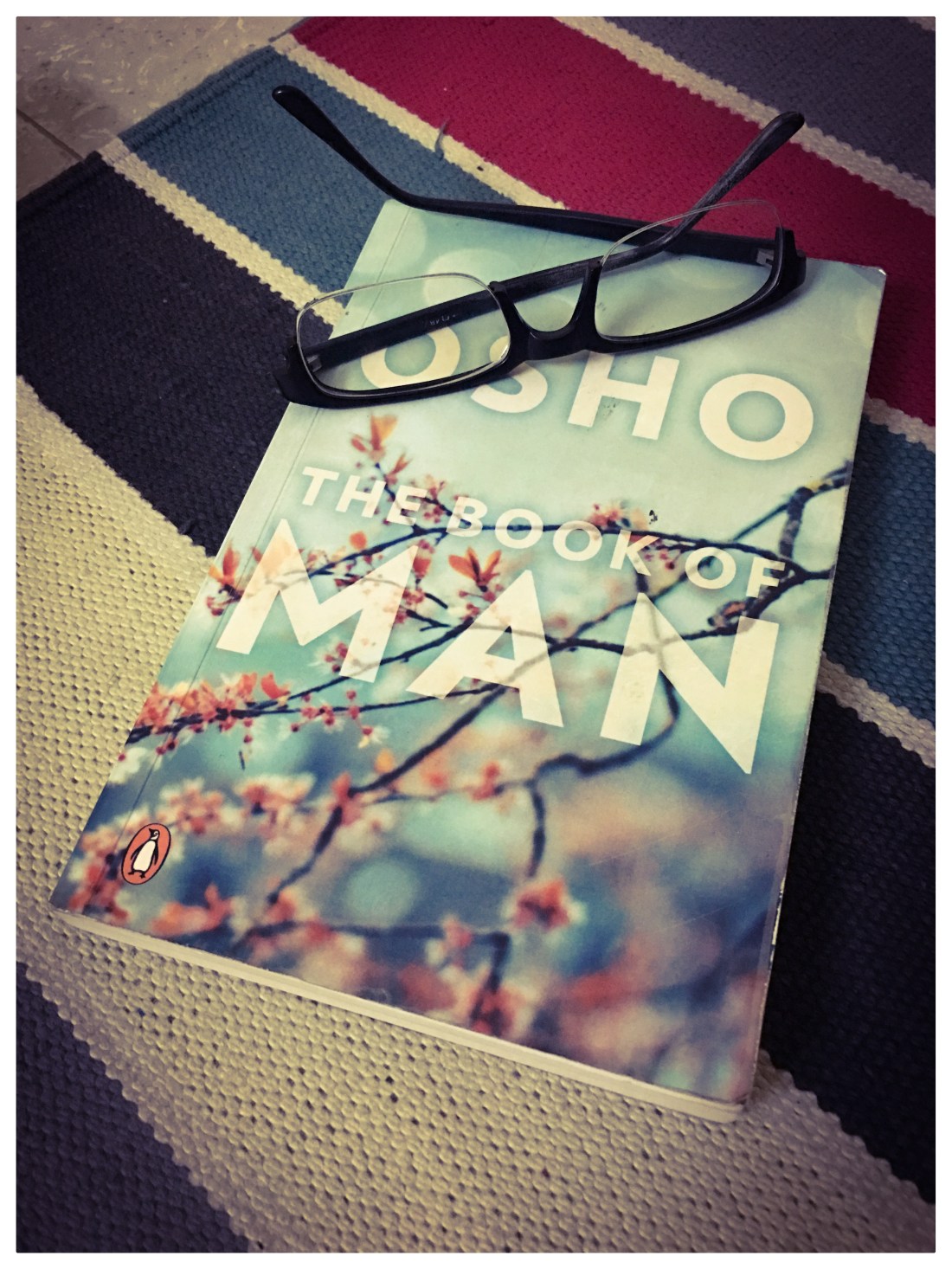
Osho’s Book of Man

I never imagined I’d find a book that I liked and disliked in equal measure. But then I read “The Book of Man” by Osho. He’s a famous Indian godman, and until a few moments ago, I didn’t know he was also a dead man.

I had read quotes of Osho before, and so the idea of reading a book meant for men excited me. But I also wondered how preachy the book would be. I knew that Osho was a Zen master and his disciples were abundant, so I was a little apprehensive I’d find something on the lines of the “do this in life and you’ll have everything you need” dogma.

The first thing that stood out to me in the book is its Contents page. Before I read any book, I go through the chapter names. I try to extract the essence of a book just by looking at the way the writer names their chapters. In this book, Osho addresses various issues from a man’s perspective; from facing the mother to serving the wife, from marital affairs to soulful meditation — every chapter is a name of the various roles a man has in life. Some of the names are, The Zorba, The Macho, The Playboy, The Politician… you get the idea.

It’s a lot similar Shakespeare’s “Seven Ages of Man” except Osho takes a more detailed view of things. Just the few pages amazed me. Simple narrative, great advice, amusing anecdotes brimmed throughout. It was an easy read, also because of its good print and fine paper. And even though I wasn’t the “intended” audience, I enjoyed the book nevertheless.

Reading through these chapters, I realised not just the truth in Osho’s words but also that I agreed with his points of view. To me they seemed obvious, something I already knew deep within my mind. And it made it all the enjoyable to turn page after page.

For example, the idea of raising a child terrifies me. Children are perceptive, they observe so much and learn all they know from what they see and hear. One wrong move by the parent and a child has a wrong idea rooted in its mind for life. And that’s why I try to stay away from kids, even when colleagues bring their kids to work. What if I’m having a bad day, and blurt out something I the kid shouldn’t hear? Of course, it could be just me being me. Not many of my friends think the same way — they love kids, they play with kids, and they never over think it as much as I do. That’s why I almost yelled out in agreement when I read passages like this:

“Children are very vulnerable because they are born as a tabula rasa — nothing is written on them, their minds are pure. You can write anything you want on the child.”

To me, Osho said all the right things, and my first impression of the book and the man soared through the skies.

Commenting about fasting, he says that there’s no point in it. He goes on to say how the world reeks in poverty and starving people while we have all the food and still fast — just for the attention it brings us. Here Osho picks on Mahatma Gandhi.

“Mahatma Ghandi had everything available to him, although he lived like a poor man. One of his intimate followers, a very intelligent woman, Sarojini Naidu — has a statement on record that to keep Mahatma Gandhi poor, they had to spend treasures on him. It was not simple poverty, it was a managed show. He would not drink milk from a buffalo because it is rich, rich in Vitamin A and other vitamins. He would not drink the milk of a cow because that too is rich, and poor people cannot afford it. He would drink only the milk of a goat because that is the cheapest animal and poor people can afford it. But you will be surprised; his goat was being washed twice a day with Lux toilet soap!”

Wikipedia says Osho was an outright critic of Gandhi so I understand the hatred. But this is a powerful moment; a lot of people revere Gandhi and try to live like he did. The writer has scattered the whole book with truths like this, truths that makes the reader cringe.

Excited, I read on. About sixty pages into the book, I stopped. Something had changed, and it was a change too jarring to ignore. His tone became more opinionated, losing sight of reason. Not a god-loving person, he attacks religion and social customs. I do it, too, so that’s not weird. But what was weird, though, is that he lashes out against Christianity and the holy trinity. And to make it a more distributed criticism, he names a few Hindu beliefs silly, too.

As he goes on, some of the claims become narrow and even absurd.

Speaking about homosexuality,

“Homosexuality is a necessary phase in the growth of a man or woman[…] So drop any attitude about homosexuality; that is nothing but the propaganda of the ages. Nothing is wrong in it, it is not a sin. And if you can accept it. And if you can accept it, then naturally you will grow out of it and you will start being interested in women, but you have to pass through it.”

That was painful speed-breaker moment. I read on, though, because I wanted to see where he went with these claims. Turns out, no where.

The quote had a disclaimer about Osho’s four stages of sexual growth: auto-sexuality in a child, homosexuality which precedes heterosexuality, and then the last phase of going beyond phase — brahmacharya.

By that time, I had lost interest in Osho. I had thought his observations were relatable, yet revolutionary in a way. But it turned out that I don’t have the maturity to accept all his teachings. My perspective had changed, and I grew disappointed.

In hindsight, I don’t regret reading the book. Well, there were moments I wished I hadn’t, but there were also moments I cherish. In short, this book sparked such conflicting emotions in me. I wouldn’t recommend this book to anyone, because most of it is too subjective. Also, the writing is almost terrible. As a reader, it turned me off. I began wondering why Osho made the same point in three different sentences. As a web copy writer, I twisted in my seat at the repetition in the book — it was far from thoughtful. If I had edited the manuscript, I would’ve cut out at least 70–80 pages.

Oh, and Osho also wrote a book for women, titled The Book of Woman. And yes, of course, it’s pink.

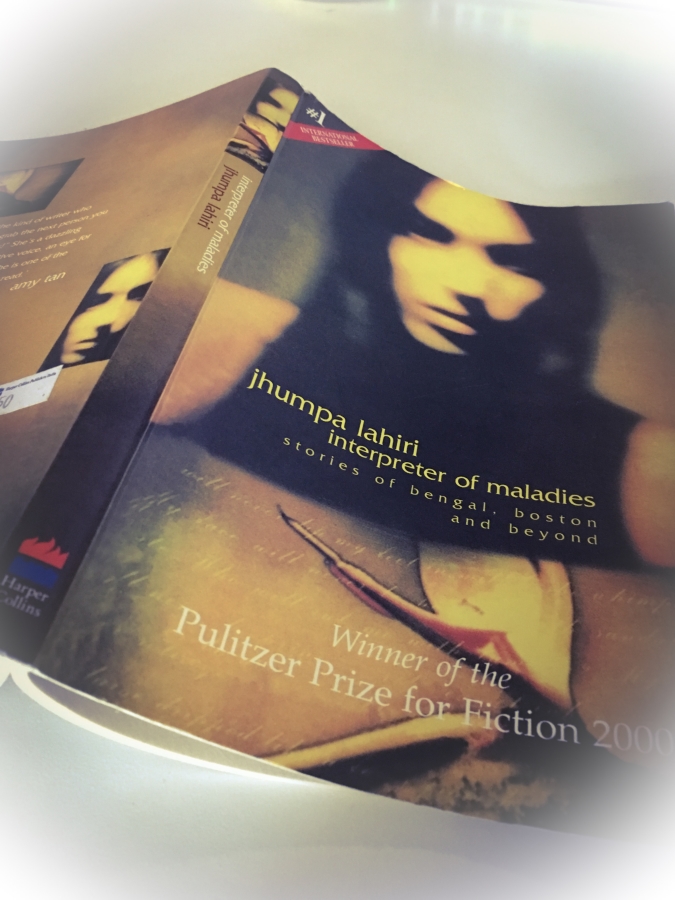
Interpreting maladies, and stories

I’ve always been a little doubtful of authors with Indian names. A little racist, I know, but having read a few Indian authors whose regard for English was far less than decent, I didn’t feel too guilty about myself either. However, I also know there were some exceptional Indian authors. I’m making a list and a recent entrant is Jhumpa Lahiri.

I have to say, I love her name. I love the way in rings in my ears, and rolls off my tongue. He family must’ve had a great sense of rhythm and respect for the listener. Perhaps that’s why Jhumpa Lahiri’s writing is also so aware of the reader’s mind and how her words would echo in their heads.

“Unsavoury sorts murmured indelicacies at cutlet stands”

Interpreter of maladies is a collection of short stories, some of them based in Bengal, some in Boston. What’s weird about this book is that though relatable in so many ways, Lahiri’s settings and her characters are yet un-relatable in many ways, too.

For example, she narrates the story of a young Indian-American couple. Their tour guide in India muses about their clothing, their relationship with each other and their children, their attitude towards natural beauty and photographed memories. And all the while, he makes judgements, often accurate, about how unhappy the couple are in their marriage — he observes like an old woman does with her hunched shoulders and ever-munching betal-stained mouth. The guide in the story is relatable because he’s a bit like an old woman, but he’s also un-relatable in many ways because he’s attracted to the young American woman he’s hosting. He contemplates his own unhappy marriage and compares himself to the young woman and her husband. He knows she’d go back to America in a week, and still he imagines — of writing letters to her, of nurturing a friendship with her, of explaining his job of interpreting maladies. All these qualities in a tour guide, who himself grew up wanting to be a scholar in five European languages, is a little unconventional, a surprising edge to a typical Indian character. And that’s what Lahiri does so well in her stories. She’s singled out some of the most common characteristics in Indian culture, spicing them up with unexpected behavioural patters to weave characters that refuse to leave the reader.

As a reader, you can’t help but appreciate Lahiri’s subtleties. In another story, Lahiri narrates the life of a young Bengali woman suffering from an unknown disease. Her neighbours talk about her behind her back and spread gossip, yet some offer to help. Referring to the women’s chattering, Lahiri paints a vivid picture so familiar to every Indian: “News spread between our window bars, across our clothes lines, and over the pigeon droppings that plastered the parapets of our rooftops.” That’s the India I grew up in, and yet, when reading Lahiri’s description, I can see the women gossiping along, drying their clothes under the burning mid day sun.

Another great aspect of this book is that the author herself has experienced both the worlds she describes. And I think that’s what makes some of the stories in this book, the stories that take place both in America as well as in India, so vivid and unforgettable. Some even outline regrettable, cringe-worthy incidents. What appears common in America in the late 60s is still taboo in some parts of India. This is an exchange between a mother and a daughter:

“It is improper for a lady and gentleman who are not married to one another to hold a private conversation without a chaperone!”

“For your information, Mother, it’s 1969. What would you do if you actually left the house one day and saw a girl in a miniskirt?”

Mrs. Croft sniffed. “I’d have her arrested.”

Mrs. Croft is a 103 year-old woman who cannot accept a man and woman speaking in private. And for that, her daughter mocks her — in 1969 America. The saddest thing, though, it’s 2017 and some Indians still cling to the same belief. The regrettable reality is that some parts of the world are yet to catch up to the sensibilities of equality and modern civilisation.

It’s things like these that make Jhumpa Lahiri’s collection of short stories a precious read. As an Indian, I loved reading narratives that I could relate to and smile as I recognised behaviours. As a person familiar with some ways of American life, I could sympathise with the feelings and emotions that the foreign characters portrayed. In sum, none of Lahiri’s creations are over-the-top unimaginable — they’re simple people living simple lives, who invite readers to share a few days in their lives. Interpreter of maladies is a wonderful read.