Looking Within

I’ve been reading the Zen and the Art of Motorcycle Maintenance for a while (from November, to be specific), and though I have mixed feelings, I love certain concepts the author mentions.

Like how irrelevant grades and degrees are, for instance.

“This surprising result supported a hunch he had had for a long time: that the brighter, more serious students were the least desirous of grades, possibly because they were more interested in the subject matter of the course, whereas the dull or lazy students were the most desirous of grades, possibly because grades told them if they were getting by.”

And it’s true. We’re always looking for something to point us to the right direction. We want someone to acknowledge us and tell us we’re doing the right thing. We want an authoritative figure to assure us we’re getting by.

But do we need that? Perhaps we should look further than other people to judge our abilities. Perhaps we should look at ourselves, and define ourselves, by ourselves.

“He had wanted his students to become creative by deciding for themselves what was good writing instead of asking him all the time. The real purpose of withholding the grades was to force them to look within themselves, the only place they would ever get a really right answer.”

It’s OK to be average at something. But unless we look within and accept how much we can grow, we may never understand how we’re getting by.

I enjoy reading this book. Even if it does make a good pillow.

Twice Born

I just read Twice Born, a novel by Vijay Raghavan. After having read three books of Paulo Coelho’s, I needed a break. And so, I turned to some Indian writing.

I hate it that sometimes Indian writers try too hard. They try hard to sound as close as they can to a native English writer. Which is fine, except, none of the British and American writers I read seem to write books with a thesaurus in hand.

And when I read this book, I thought of Joey and big hearts.

Maybe it’s just me, with my measly vocabulary, but to me, if a writer can’t convey her thoughts in a simple way, she can’t convey her thoughts at all.

After all, I heard it was Einstein who preached that if you can’t explain it to a six year-old, you don’t know it yourself.

But I digress.

This is a story of an English professor, also the narrator. One fine day, he realizes he’s schizophrenic, and two characters pop out from his head to help in his “conquest of happiness.” A doctorate in English, he names these characters Dr Heckyll and Mr Jyde. Throughout the rest of the story, these characters talk to him, advise him–even insult him at times–and at last, lead him to answer his own questions.

Even for someone who hates having to open the dictionary every few paragraphs, I enjoyed this story more than I hoped to. Maybe it was the effect of too much Coelho, but the plot of Twice Born ran fast and captivating. It was a peek into the life of a man torn between the Indian and the Western world. The narrative was honest in most places, a little philosophical at times, but overall — detached. I didn’t feel emotions seeping out of any of the characters; they all seemed logical, straightforward and calculative.

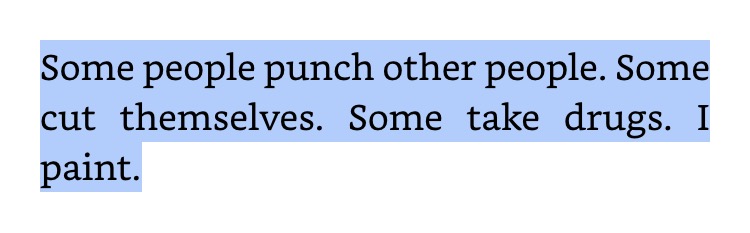
Nevertheless, I had my moments with this book. Moments like this.

twice born - excerpt

The Devil and Paulo Coelho

paulo coelho
Credits: Google

I’ve begun to lose interest in Paulo Coelho. And trust me, I don’t want to.

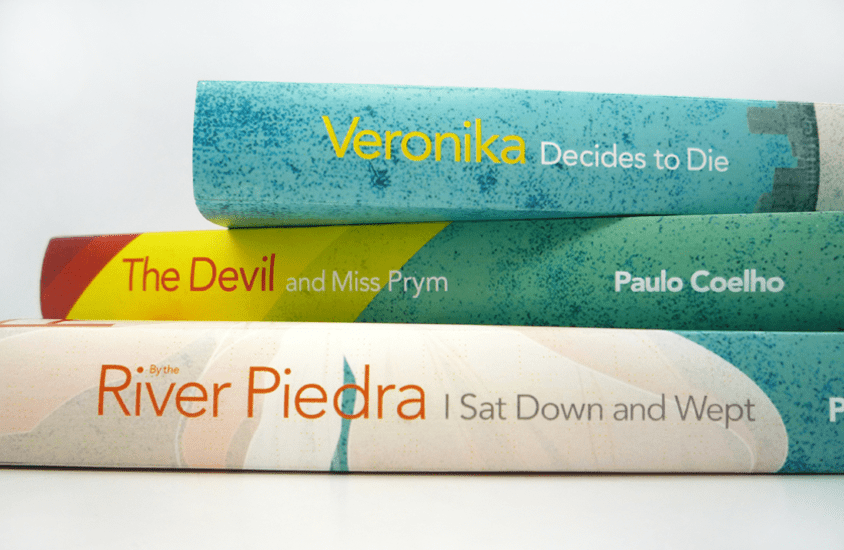
Every time I open one of his books, I look for that something I found in The Witch of Portobello. I loved that book, and in comparison, both books I read afterward (By the River Piedra I sat Down and Wept and The Devil and Miss Prym) ended up disappointing me.

The thing with The Devil and Miss Prym is that I got lost plenty of times while reading the book. I admit, I was sleep deprived, but even so, the book was a painful read. Plus, I had a bus journey of about 6 hours to look forward to, and the book was my sole companion.

I almost forced myself to finish reading this book. It’s one of those stupid things they call closure. Unless I finish reading a book, it keeps popping up in my head, bugging me, torturing me, and making me feel all kinds of guilty.

So I leaned back in my seat and, stifling my yawn to avoid my neighbour from judging me, opened the lovely-coloured cover. And every five minutes, I had to tear my eyes off the view of the street and get back into the book. That’s how slow it went.

But with all respect, the book wasn’t all a loser. It was nice, and parts of it were great. With a simple narrative, a solid story, and some good characterisation, it was a decent read.

It just wasn’t my type.

Perhaps it’s just me, but I’ve started to think Paulo Coelho is trying too hard to be philosophical and spiritual. All this talk about what’s right and what’s not, the co-existence of devils and angels, evil and good, the question of conscience, and the unmistakable victory of all things good — and here I am wondering what’s new. It’s the “same ol’ same ol’” story.

But I don’ want to give up yet. One, because I still hope Paulo Coelho had written something as captivating as Athena’s story. And two, because I had already bought a boxed set of his books that I don’t want to leave unread. Oh, and the covers — they’re beautiful with luring fresh print, and my mind seeks closure.

Part of me wants to give up on Paulo Coelho — at least for the time being, but the bigger part of me wants to read the other books too — just in case. I don’t want to miss a great book, just because I didn’t like a couple.

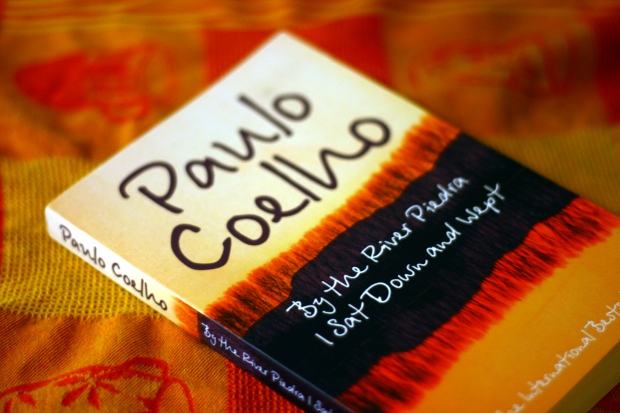
By the River Piedra

by the river piedra

I’ve been having a bad last year, not finishing the books I started. So this time, I promised to get in a lot of reading as possible.

I had bought a boxed set of Paulo Coelho’s books, and after The Alchemist and The Witch of Portobello (which I loved), I opened this one with the same interest.

I was a bit disappointed. People had warned me about the author’s excessive reference to religion, but not having experienced it much in other books I had read, I went into this one innocent.

I won’t deny, there were some great parts where I could relate to the story and to the spiritual message. But by the time I finished the book, I was left only with the author’s strong religious beliefs. I even had the feeling he had tried to force his belief into the book.

Nevertheless, it was an easy read, and I liked the way the author differentiated the love for god and the love for people.

Overall, I’m not sure if I liked the book enough to recommend it to anyone. Would I read it again? I don’t think so.


I reviewed this book on Goodreads.

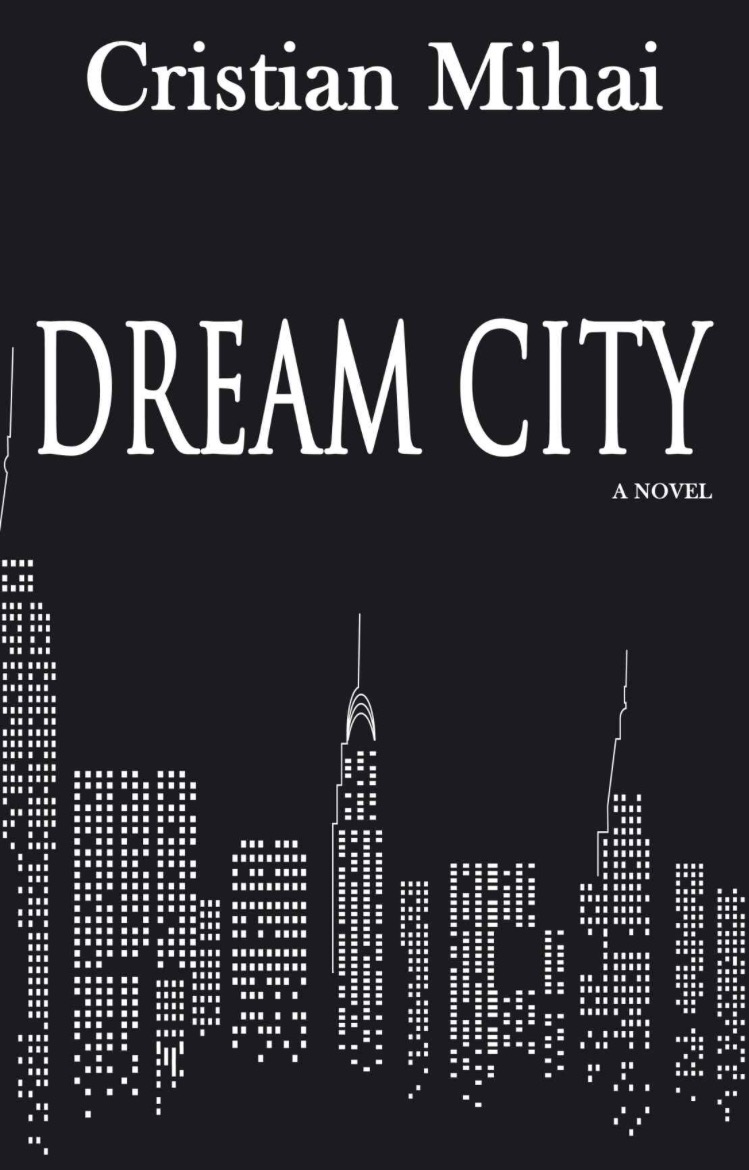
Crafting A Dream City

Cristian

I’ve been following Cristian’s blog for a while and I feel guilty each time I read one of his posts. Because though I’ve had his book on my kindle for a long time, I’ve never read it.

I should have read it sooner.

The one constant in the story is Cristian’s voice. He kept seeping through the words. There were either sentences he often uses in his posts or thoughts that every writer could relate to. The story itself is about artists, art and the consequences of choosing art.

I loved the story. And the main reason: simple words ringing hard in your ears. This book lingers.

“But the truth is, what doesn’t kill you makes you wish it did.” – Cristian Mihai, Dream City

This is Cristian. Every syllable of that line screams Cristian. And it’s more; it’s every artist. And it was gripping that in many places, I felt the protagonist and Cristian interchange. Not just him, I felt myself intermingle with the protagonist too. Because the characters speak to you, and you suddenly realize their life is your life.

The author knows the pain of being an artist, and he translates the emotion with so much art.

Dream City

That’s it. The essence of everything we do.