Knowing Thyself

Sylvia - water

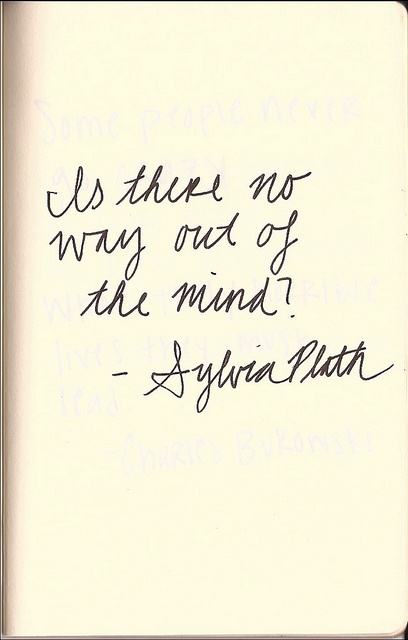
I came across this quote on Pinterest. I’ve said this before, and I’ll say it again: I’m a Sylvia fan. I even have a separate board on Pinterest on her quotes.

I saw this a few days ago, and the simplicity of it hit me harder than anything else.

How are you supposed to know anyone else, when you don’t know yourself? We’ve all had that feeling — that sense of being lost in our own hollow self — and Sylvia has put it into words like no other.

Last night, I watched Sylvia, the 2003 movie starring Gwyneth Paltrow and Daniel Craig. And there’s only one way to describe it: haunting. If you’re a lover of words, I recommend you watch this movie. You will not regret it.


National Blog Posting Month – Day 29

So Says Shakespeare

I read Hamlet a while ago, and though I hated Claudius–as he’s meant to be–I admire his way with words. It is quite an irony that such a vile character is also capable of such profound thoughts.

Claudius quote


National Blog Posting Month – Day 22.

I’ll resume my novel with chapter 20 tomorrow.

The Man

For the past few weeks, I’ve been reading Shakespeare’s Hamlet. The original play in full. And it’s given me moments of solitary pleasure and bliss like none other.

A long time ago, I read a simplified version of the play, and I thought it was just too cinematical. It felt like watching an old movie with a plot that’s been beaten to boredom.

But when I read the play now, I realize how wrong I had been. The story isn’t new, yes, except that everything about it feels new. Shakespeare’s use of words, his insults, his puns and vivid descriptions make Hamlet such an interesting read.

And no one makes imaginary characters utter advice and words of wisdom like Shakespeare does. I’ve found a new respect towards the man. He’s The Man.

And here’s a little titbit.

“Conceit in weakest bodies strongest works”

Pure genius, huh? I know!

Enchanting Much, Is the Order of Words

English insanely makes sense. No matter how you rephrase a sentence, there’s always meaning.

  • Desire is the pendulum never content.
  • The pendulum that desire is, is never content.
  • Never content is desire, the pendulum.
  • Never content desire — is the pendulum.
  • Never content — desire is the pendulum.
  • The pendulum of desire is never content.
  • Never content — the pendulum of desire.
  • Pendulum — desire, never content.
  • Never content pendulum is desire.

I read in Zinsser’s On Writing Well about rephrasing words for a better effect, and being ever so curious, I tried it. I cooked up a random sentence and rephrased it in many ways, and it still made sense.

Ho English!