Tell me a story

“Oh, I thought you’d forgotten!”

“How can I, mom? I just got 20 per cent off of bread on Mother’s Day sale.”

My mother thought I’d forgotten about Mother’s Day because I didn’t wish her on Sunday. It came up when I mentioned it, with the flyaway tone it deserves, in a conversation two days later.

Every street corner has a flyer or a billboard reminding us about this celebratory day. Everywhere I look, there’re roses and pinkish red ribbons cajoling people to splurge, guilting them into buying things their mothers may never even enjoy.

But that’s just the tradition of Mother’s Day. Each year during this time, storefronts and in-stores promote maternity, maternal thankfulness, love, and forever gratitude.

What a story, huh?

Storytelling is now an unmistakeable chapter in marketing books. Almost every marketer I know understands its value, speaks about it, and in public forums vouches for it. But this “trend” came about only in the last three to five years. Before that, no one spoke as much about the great tactic that’s storytelling and its role in marketing and sales.

And yet, for years, we’ve been falling prey to some of the most wonderful storytelling the retail industry has ever divulged.

Yes, I’m saying Mother’s Day is a story. And a well-said one too.

In most of Asia, children live with their parents until they get married or go off to work in a different city. However, in most of the western world, children move out of their parents’ far sooner—sometimes as early as fifteen years. That is an excellent market for the Mother’s Day story. You know how it goes: the child takes one day off from their personal life to meet with their mother, praise her, thank her, and show her how much they love her. It’s the perfect story—with the right blend of care- and guilt-inducing narrative, the story can survive generations, as we see it has. The best part? As the Asian culture adapted to westernisation, more Asian children experience it too.

In a sense, the grand narrative of being there for your mother, at least one day of the year, has become such a relatable matter for so many of us that we give in to without second thoughts.

With today’s tech growth, we don’t need one day of the year to bond with our mother. Heck, I moved to Australia a month ago, and I still call my mom twice every day. I don’t always want to—when you’re talking to your mom that often, you run out of things to talk about much sooner than you’d imagine—but I still make time to call her. She would freak out otherwise, but it’s also a nice way to acknowledge her and what she means to me.

I’m not the only one either. A lot of people I know have regular interactions with their parents. But even they follow Mother’s Day ritual because it’s just so baked into our minds, and—gosh what would people think about them if they don’t?

That’s how compelling this story is. It’s so haunting that you can’t get away from it without going through with it. And like a vicious cycle, as people fuelled the tradition every year, we’ve ended up with a generation of mothers who’re accustomed to expecting the $100 wine bottle (which they know was on sale for $89.95) as proof of their children’s love.

As a marketer, I appreciate the mastery of the storytelling. But as a child, it just makes me a monster who’s so obsessed with work that she couldn’t even send her mother a card on Mother’s Day.

Oh, well.
For the first time

When was the last time you did something for the first time?

Not long ago, this question popped up all over the internet. People woke up to realise how meaningless their everyday routines are. And all of a sudden, they were talking about making significant lifestyle changes that you would associate with the madness of new year’s resolutions.

People quit their jobs. They took to hiking, to jogging, to exercising, and some even considered bungee jumping for crying out loud.

Despite the varying degree of madness, everyone who’d boarded the bandwagon had one thing in common: they wanted to come out of their comfort zone.

That’s commendable.

It’s just too easy to snuggle up in a comfortable place, listening to comforting words and eating mac and cheese—even more so when Winter’s just around the corner.

It was one of those days—cold and cloudy, not a ray of sunshine to dry out the dewy grasses. I woke up to 7 degrees Celsius (44 Fahrenheit), and for the first time in my life, it didn’t go over 9 degrees Celsius all day. Taken by surprise and shaking with shock, I sat in the corner of my room with my blanket wrapped around my shoulders like my mother’s arms. Though I’d closed the window and the wind whistled way out of my reach, I still sensed the biting cold just waiting for me beyond the comfort of my room.

I didn’t want to go out. It was a Wednesday afternoon, and all I wanted to do was lock myself in my room until winter past.

In my defence, I relocated to Australia only a month ago. It’s my first experience with Autumn and the fast-approaching Winter. But after sitting in my corner all morning, and watching the final episode of House of Cards, I realised I was a coward. I work from home, which is convenient, but that also means I could use it as an excuse for not stepping out.

Within five minutes, before I could change my mind, I was in the shower. I would go out for a walk and face the falling temperatures. So what if it’s cold, I told myself—let’s get used to it.

And so I went.

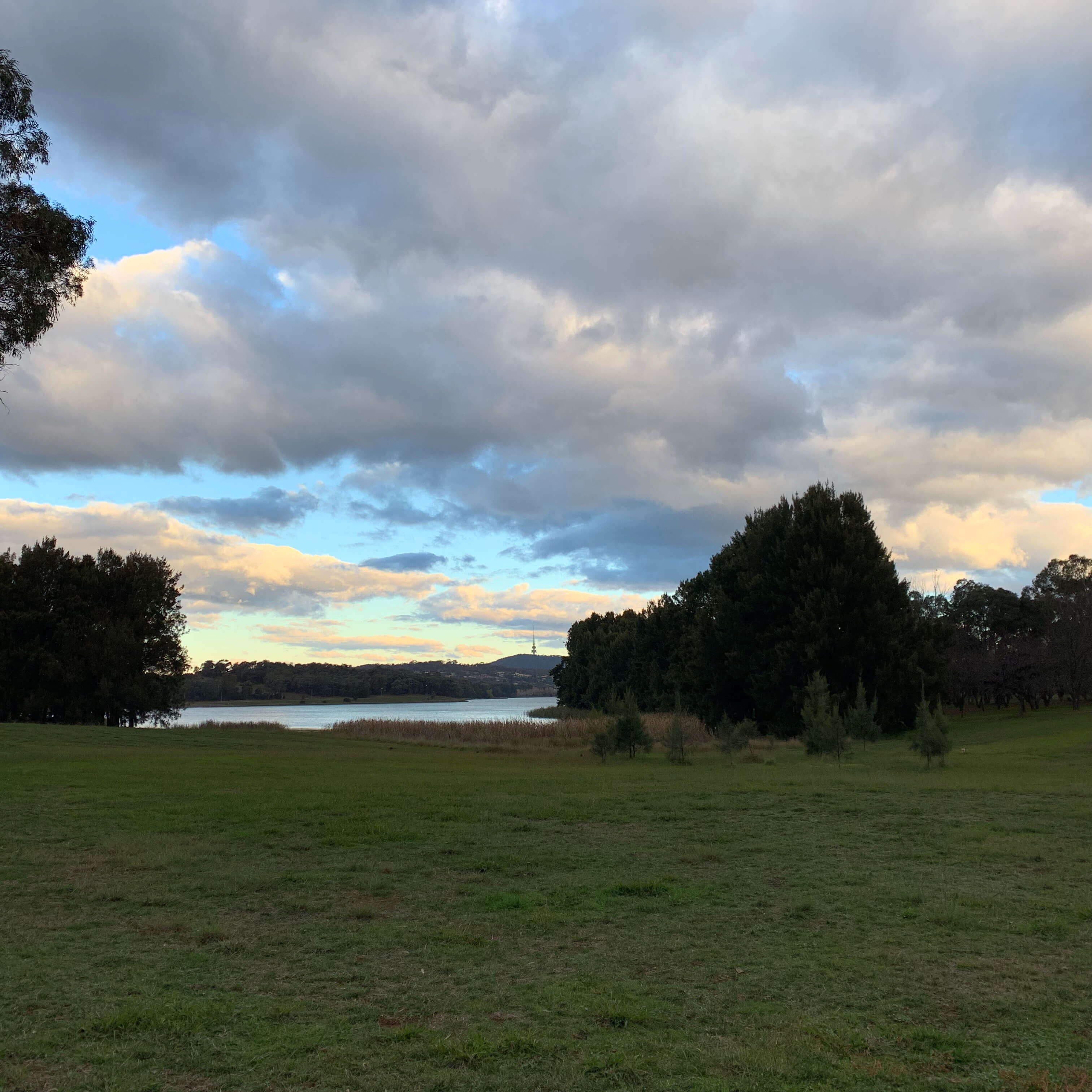
Walking along Lake Ginninderra in Canberra, Australia

I was a little cautious—wearing my beanie to prevent the cold from whispering in my ear or coming down on my forehead. But from the moment I decided to get out, I felt the temperature within me change—from feeling cold and scared, I felt a warmth spread through me that had nothing to do with the weather outside. And as I walked down the street, flanked by trees in their Fall prime, I felt the breeze kissing my face. It stung a bit, yes. But after a while, I started enjoying it. It didn’t hurt anymore, but felt rather welcoming. My nose was running—I was breathing fresh air like never before. The leaves rustled all around me, the cockatoos sang in approval as I strode past their homes, and even a couple of other people crazy enough to wander the same path smiled as we crossed each other.

By the time I returned, I felt so alive. And cold, yes. I did make myself some hot tea before curling under the blanket, but it was still an achievement in my book.

Doing something for the first time doesn’t have to be a drastic and dramatic adventure. It could be a simple everyday situation where we explore the uncomfortable. And for me, it was challenging myself not to fear this beautiful time of the year.

Parliament day

Australian politics and history have evaded us for a long time. I realised this as I walked past portrait after portrait of the Australian prime ministers. Most of Canberra’s suburbs have names of these Prime Ministers, but aside from that I hadn’t heard of even one of them before. What a shame. Though I grew up in Asia, I knew leaders of Britain, the US, and Canada from an early age—they were always in our history books or the ugly political discussions at awkward family dinners.

Wondering about the weirdness of it all, I wandered the old parliament house in Canberra.

Although it was built as a temporary parliament in the 1920s, the provisional parliament building ended up serving as the actual parliament for over fifty years. Today, though, it’s a storehouse of exhibitions and historical monuments.

Apart from the primary attractions like the House of Representatives Chamber, the Senate Chamber, the Prime Minister’s office, the Cabinet, and the Opposition Party Room, the parliament building is also home to plenty of smaller, yet significant exhibitions.

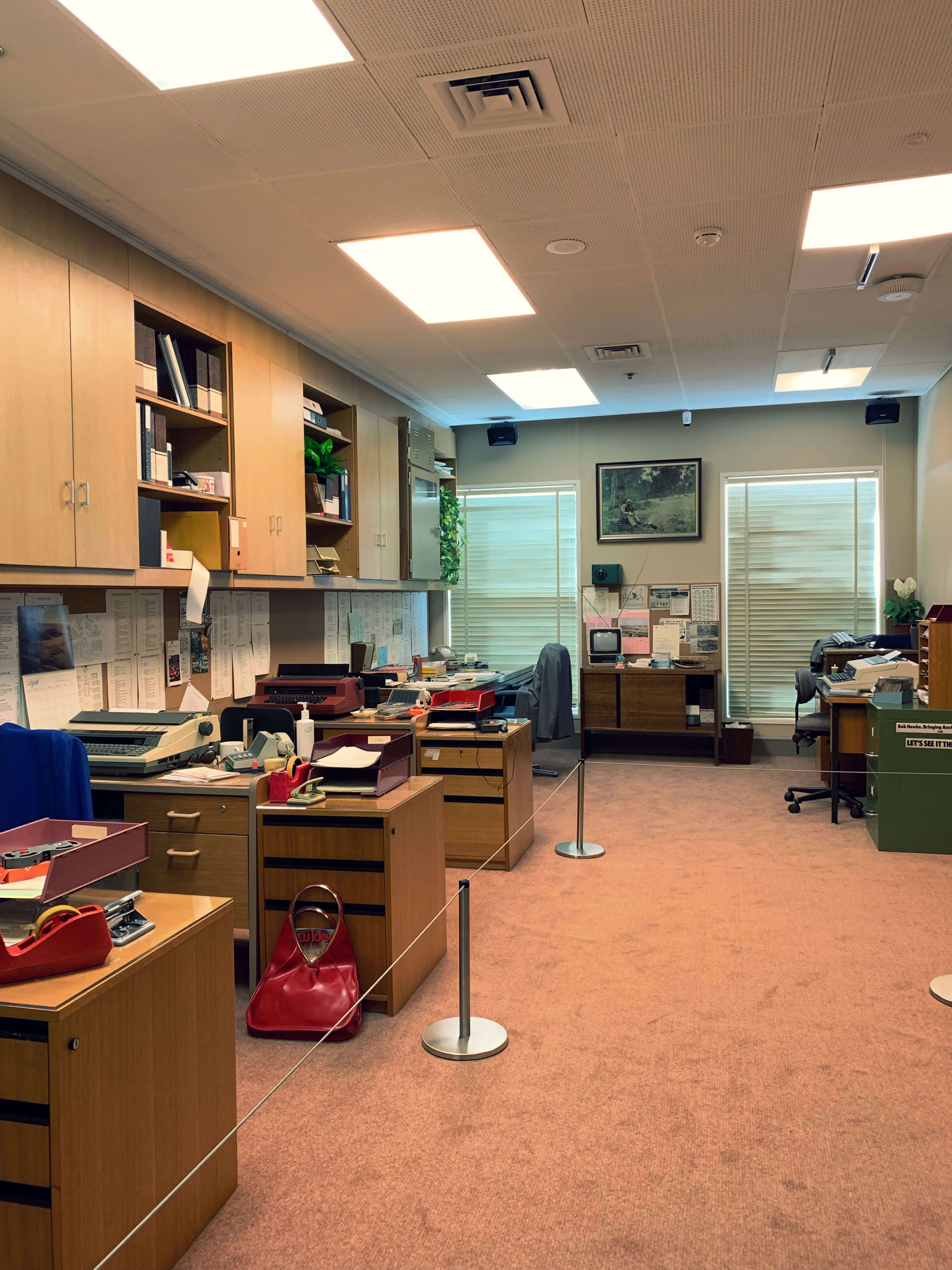
  • Prime Minister's staff offices
  • Prime Minister's office
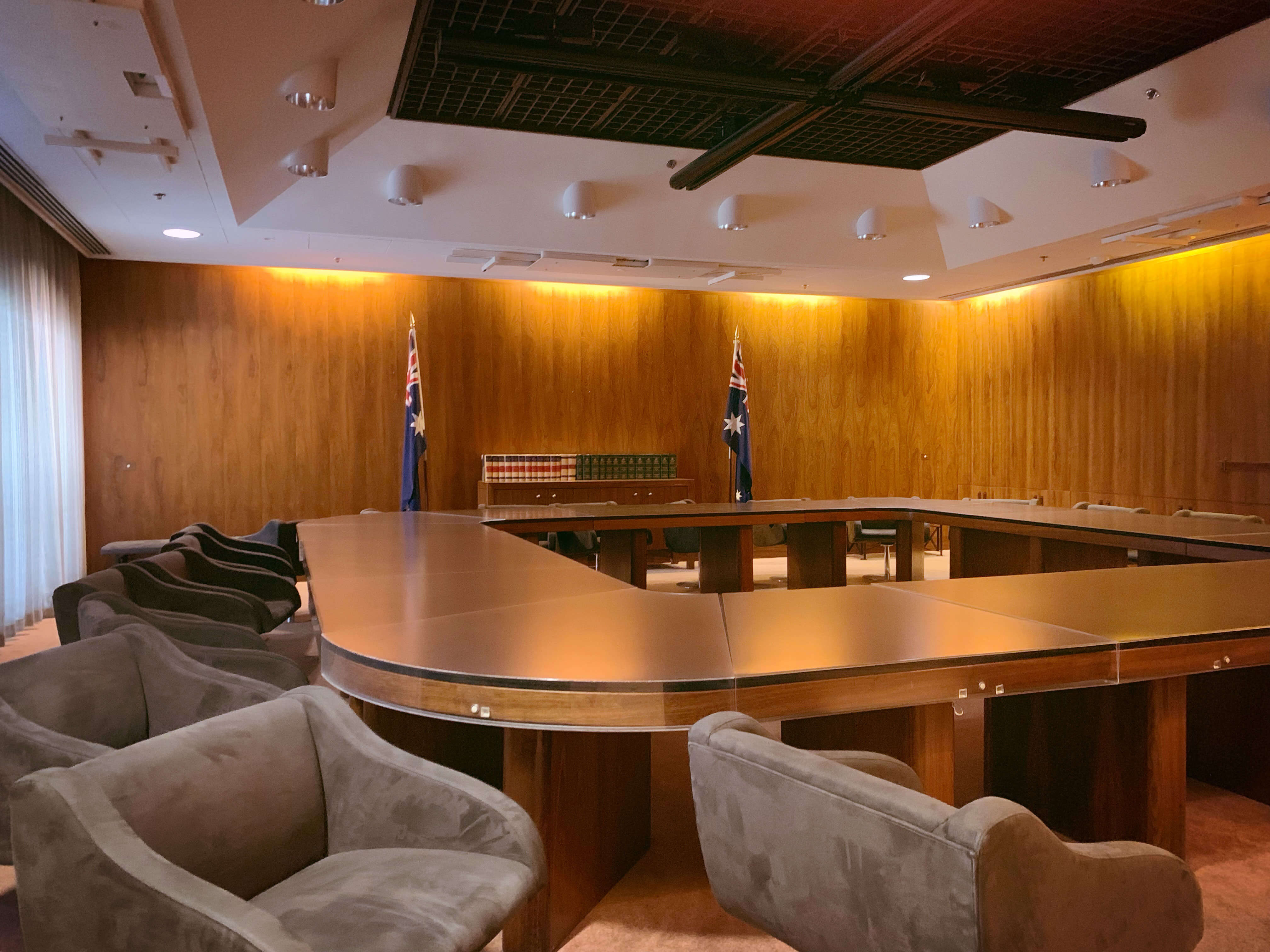
  • Cabinet
  • Vintage computer - office of the parliament speaker

When I walked in, I had no idea what to expect. Equipped with a though floor plan of the entire building, I wandered through the corridors looking into each exhibition.

Finders keepers
My first stop, this exhibition showcases the different types of collectables famous Australian figures collected—like the telephone collection of a former telecommunications officer, the tie collection of a former minister, the t-shirts and badges owned by a social activist, and the porcelain collection of a parliamentarian. Each of these collections ties into the larger story that museums themselves are collectors.

Neil Baker's telephone collection
From Neil Baker’s telephone collection

OnetoEight
Moving along, I paused at a large room dedicated to remembering the Prime Ministers of Australia. Apart from photographs and descriptions of their work, you can also hear recorded versions of some speeches they delivered throughout their reign.

Wives of the Prime Ministers
Inspiring and eye-opening, though they were, more striking was the portrait exhibition of the wives of prime ministers. A surprise, it was—although every museum I’ve been to celebrates public leaders and their achievements, none of them mentions the families that supported the great menfolk of our time. This exhibition, albeit small, casts a vital spotlight on the womenfolk of the nation.

Whenever I visit historical sites, I don’t set time limits to myself. I don’t like rushing through exhibits to move on to the next attraction on my list. That’s such a touristy thing to do. Instead, I take my time to explore, read inscriptions, watch the videos, and linger. As a result, I spent $2 (entrance fee) and over 4 hours inside the parliament building.

I have no regrets, though. If I hadn’t stayed on, I would’ve missed the witty and thought-provoking political cartoons on display. Couriser and couriouser, huh?

I would’ve missed the #UDHRquilt project. UDHR stands for Universal Declaration of Human Rights, and this project was the work of craftivists (craft+activist), Tal Fitzpatrick and Stephanie Dunlap. They made four quilts, embroidered with the articles mentioned in UDHR. I’m no activist. I have mixed feelings about how human rights are so subjective at times. But I still enjoy a good piece of art.

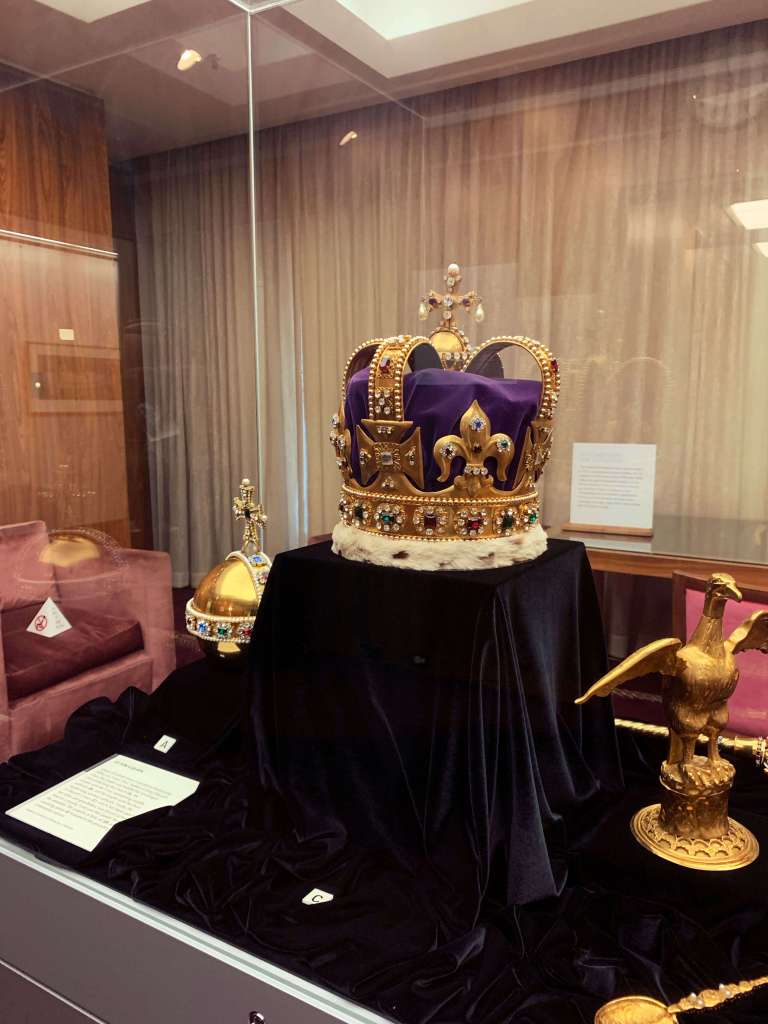
Oh, and I would’ve missed the crown jewels. Not the real ones, though, of course. When Queen Victoria visited Australia, they made a separate area in the parliament to accommodate the Queen and her party. And as I stepped into her living space, I couldn’t believe how simple everything was. The dining table was just a basic wooden structure, the bathrooms, the kitchens, the sitting area, though impeccable, were more functional than fancy. It reflected that the royalty and the highest members of the government were still so human, so vain.

Replica of the Crown Jewels

Had I left any sooner, I’d have missed the most exciting exhibit of them all—the Press Gallery. It’s hard to fathom that the small, even stuffy, rooms above the house of representatives were the life of the government. Everything that the world knew and heard of about the rule makers came from the press—every printed phrase and every uttered word makes a world of difference. And as I stood where so many print and radio journalists had stood in the past, I felt proud to appreciate the power of the written word and its influence in the world.

Writing on the wall - Press Gallery
Writing on the wall – Press Gallery

Other highlights in the museum:

  • Prime Ministers’ office
  • Opposition party room
  • Opposition party whip’s room and the television that let him observe the proceedings at the house of representatives without being there
  • Dress Code of the Empire: A look at Edmund Barton’s (first prime minister of Australia) costume
  • Copies of the Australian Constitution, Declaration of Independence signed by the Queen, Australia Act, and its modifications
  • Various signs and slogans of Australian politicians – then and now
  • A brief history of democracy in Australia

In the end, it was like any other trip to the museum—so satisfying, so full of lessons, and so overwhelming. And still so worthwhile. By the time I left, I didn’t have time to go elsewhere because most of the museums and historical sites in Canberra close at 5 pm. Remember that when you visit—and do visit.

I protest

Nowadays, it’s ever so common to see crowds gathering in front of government houses, with upheld banners and raised voices, protesting. It doesn’t matter what for—policies, opinions, misspoken words, misspellings on social media—why, some people even oppose the existence of other people. Regardless of the “why” of these protests, almost every rally I’ve seen and heard of has a similar streak: violence. In its core, whenever anyone disagrees or rebels, they use harsh and violent behaviour to make themselves seen and heard.

Of course, in recent years, silent, un-violent, and fasting protests are becoming more desirable. But even today, all the marches and show of disagreement contain angry outbursts, name-calling, and plain spite. What’s sad, though, is that just as a self-fulfilling prophecy, these violent protests get more attention than the others. Even though our generation understands and even professes the effectiveness of the pen over the sword, the influence of weapons in conflicting opinions is far too significant to ignore.

That’s why it feels amazing to come across a different form of protest. Both in movies and real life, we’ve seen governments cutting off funds to public welfare systems like health care programmes, transport services, and university courses. Each time it happens, the government—factual or fictional—faces large mobs of angry citizens, swearing through megaphones and wasting fuel on stick figures and flags.

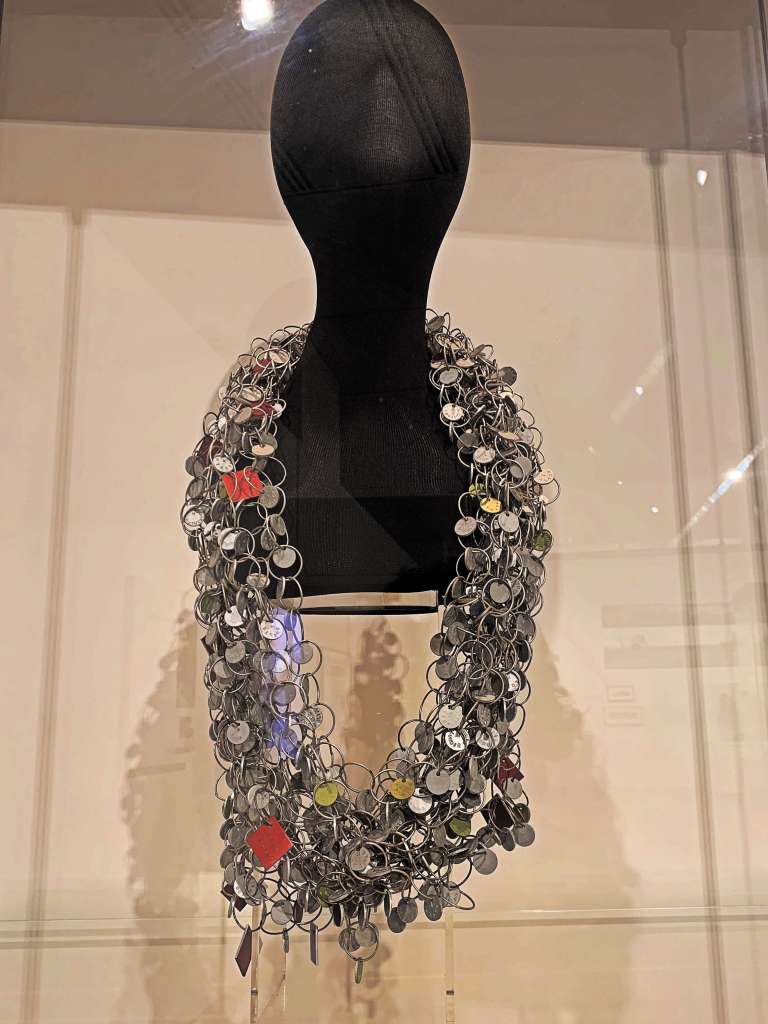
But then I saw this:

Canberra Museum and Gallery - 1

It’s a necklace. It’s also a sign of protest. When the state government of Canberra (Australian Capital Territory) cut off funds to the National Institute of Arts, teachers and Canberra sponsors together presented this necklace to the Chief Minister at the time, Kate Carnell, as a sign of their protest. What’s unique about it though is that each metal link in the necklace has a tag with the name of a sponsor. So each piece resembles a protestor, and together it makes a neckband for the chief minister of the then ACT.

No hate speech, no blood, an no fasting to death. What a daring rebellion! And what a beautiful necklace it is too—when you take away the historical value, that is one marvellous piece of accessory, won’t you say?

Canberra Museum and Gallery - 2

It made me stop and think about how much has changed in the way we fight for our convictions. Of course, we should stand up for what we believe in, but when our fight costs innocent people their peace, patience, or worse, life, then what good does our conviction do?

The necklace is on display at the Canberra Museum and Gallery. If you’re in the area, stop by and pay a visit—it sure is worth looking at.

Counting dollars

Ever travelled to a foreign country and found yourself converting the local currency to your own? And have you ever had this face when you realised how much everything costs in your own money?

What the hell?!
What the hell?!

It’s the bitter reality for most of us. Although you tell yourself you’re on holiday and it’s ok to splurge once a while, you still can’t fathom the marvel that is currency conversion. But your inner mind is right—it is only once a while, and you should splurge on yourself.

Can’t say the same about me, however. One of the scariest things about moving to Australia—a country well known for its venomous snakes and its well-established economy—is that everything is so damn expensive. And the locals often don’t realise it because, well, they earn well.

The average earning capacity for an Australian is high enough for an average Australian lifestyle.

For me, though, it seemed bollocks. I had fair warning, yes. Expat forums and online resources informed me page after page how pricey life is. But I didn’t understand the real weight of it until I saw that a simple fruit-and-nut bar costs 4 to 5 dollars. A decent meal at a so-so restaurant will cost at least $15—not including drinks. It’s not uncommon to spend $25 on a meal.

What’s funny though, is that I found a good, sturdy pair of shoes for the same price. It wasn’t Nike or Sketchers or any if those high-profile brands, but it was a functional pair of shoes.

And I see that across all products—the pricing structure is so illogical. Coles and Woolworths are two of the largest supermarket brands in Australia. Both have their own branded products for almost everything (like Trader Joe’s). Salt, pepper, detergent, prepackaged meals, chocolate, biscuits, chocolate biscuits—you name it, and chances are they’ll have it. They’re super cheap too—a 2-litre bottle of laundry liquid cost me less than $2. But unlike Trader Joe’s, these supermarkets also carry other local and imported brands which are four to six times expensive. Just for comparison, other detergents range between $7 to $10. And people still buy them.

Most people I’ve seen use a clever combination—they buy home brands for a lot of stuff, but they also spend extra on some other fancier brands. It all depends on the product. I’m still trying to discern how they reason it out, but after spending weeks comparing prices between brands and also between supermarkets, I’ve also started making some calculated purchasing choices.

The most important thing to know, if you’re visiting Australia, is that how items are priced makes no sense whatsoever. Whether you’re travelling from the US, Asia, or Europe, don’t expect logic. Come, explore, have fun and splurge. Don’t try and make sense of the Aussie way because you’ll only depress yourself by doing so. I speak from experience.