The feeling of home

It’s been just over two months since I moved to Canberra, and I’ve at last started to feel like a local.

It’s nice too—I can now walk to the shop nearby without having to look at a map ten times along the way. I like knowing how many signals I need to cross before reaching the mall, and which entrances are be open later in the night. I find myself analysing the various walkways to my destination and choosing the closest or the most scenic depending on my mood.

It’s empowering in a way that I don’t have to rely on someone or a some technology to help me navigate, to help me get through every day.

That’s the life of a local—knowing the right bus stops and the frequent routes, not because you’ve memorised them but because they’ve become part of your routine. I even shrug off the little things that a someone new in town might roll their eyes at; well, that’s Canberra for ya, mate.

But it also means that I no longer feel the city the same way as a traveller does. And I felt that way for quite a while. Everywhere, I saw something worthy of a jaw drop, a closer look, a lingering moment. Everything fascinated me, and I’d willingly walk an extra kilometre to read the street names and stare at the buildings.

I don’t do that as much nowadays. Sure, I still walk four kilometres everyday around the lake just because I want to experience the many wonderful trees and birds and noises—they’re so enchantingly different every time.

However, I also see the other side. And resonate with it.

I see the things, the little annoyances, jitters, that a common person sees. I understand more about why some people don’t appreciate the new bus routes. I loved them when I arrived—extra buses, free services for a month, what’s not to love, I wondered.

Now I know how it’s affected some people’s lives. How a small change in their schedule has toppled regular commuters who find it difficult to adjust to the new system. I’d never have understood that a couple of months ago. Now, though, I can sympathise with them. And now when the old lady sitting at the bus stop tells me that the previous bus never showed up for some reason, I realise what it means to her. And the best of all, I’m now local enough to agree with her and tell her about the time I sat waiting and the bus never showed.

It’s the little things like that that make home feel homey. My lifestyle has melded into the ways of other Canberrans, so much so that I’m now a regular spectator at a local Morris dancing practice. The dancers identify me so that if we run into each other someplace else, we’d exchange a warm hello. I have events and things to do every week—people to meet, shanties to sing, writing clubs to be accountable to—things I look forward to. Things that make living in a society enjoyable and worthwhile.

That’s what it means to be local.

Backpacker in Bondi

“Is Bondi Beach worth visiting?”

“Not if you’re not a surfer or a couple.”

So, yes.

I was in Sydney for work, and stayed in the central business district. Bondi was a good 50 minutes away by public transport. It was my last day in the city and I had a flight back home at 5 pm.

Piece of cake, you’d think. True. If you take an Uber, spend about an hour lounging in the beach, and take a cab back.

But what’s the fun in that?

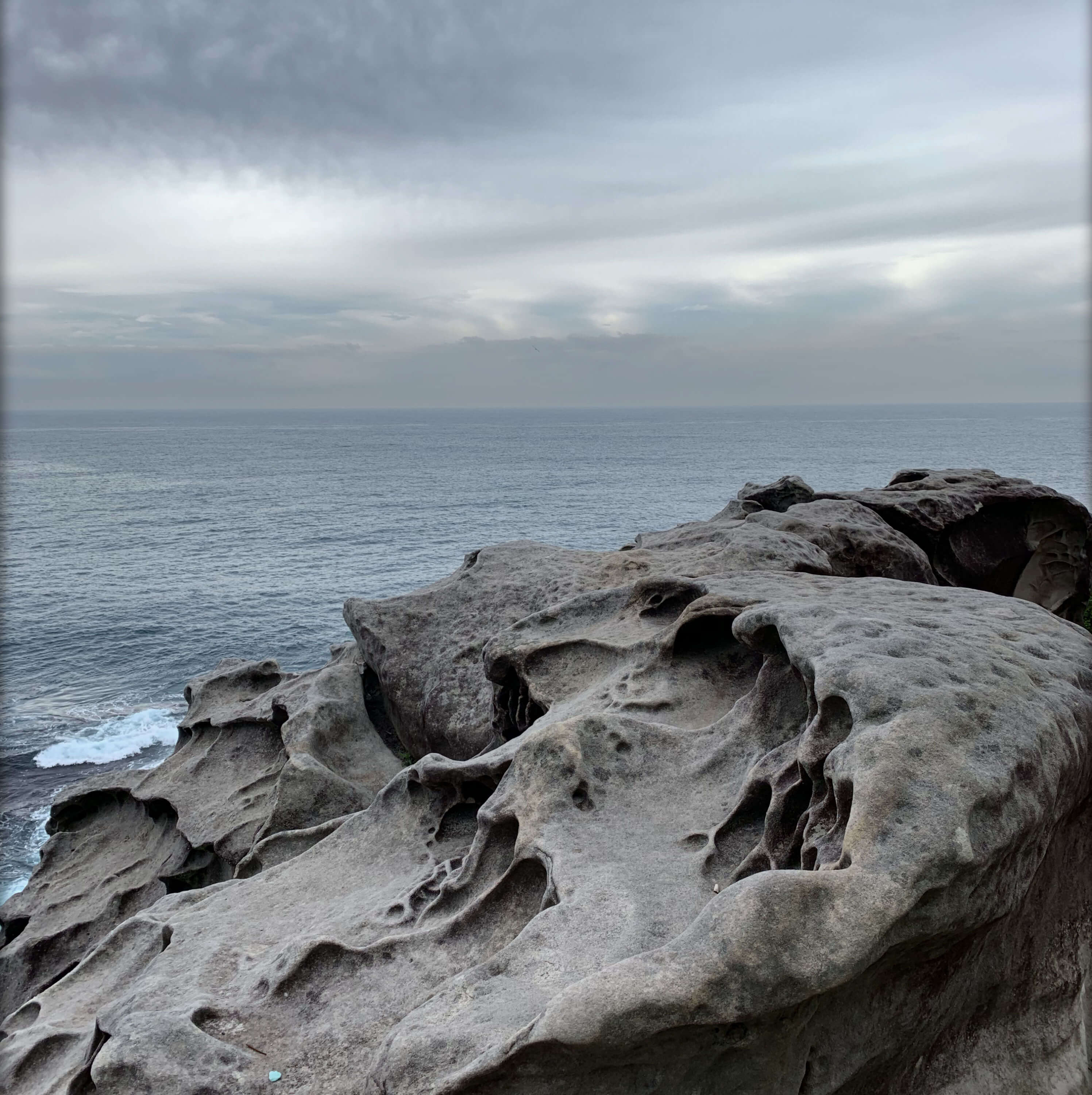
The real fun lies in taking the train halfway, walking crazy distances, gaping at the ocean waves crash against the rocks, and resting on a cliff just for the thrill of it. The real fun is in hunting great food hidden in the nooks of intersections, wolfing down a pie uncaring about appearing a barbarian—and buying more pie to go. The real fun in travelling, is cherishing every moment of it.

And that’s exactly what I did.

When I left my hotel at 9 am, it was foggy. It was about 15 degrees Celsius, but towering buildings were shrouded in a mist unlike any I’d seen in Canberra. Not at that hour, at least.

Bondi junction on a foggy morning

But the best thing about living in Canberra is that my body has adapted to cold. I was the only person walking around jacket less (or in a light jacket at times), and appearing like a complete jackass to the locals. I didn’t care, though.

When I exited the train at Bondi junction, I knew I had a long way still to go. Buses run from the junction all the way to the beach. I stood in the queue for about three minutes before realising I’d rather hike all the way. It was only a 30-minute walk, after all. I love when my mind makes spontaneous choices like that. Bonus—because I left the station, I got hot chocolate to go with my walk. Sweet.

And so I walked sipping my drink. What’s better than having smooth, extra dark hot chocolate for breakfast? The beach only made my day better.

Bondi Beach

When I arrived at last, the mist still hung around. So were enthusiastic surfers and beach goers. Everywhere I turned, eager tourists captured photographic memories while kids in shorts ran amok into the water. Volleyballers spiked at each other and laughter echoed with the waves.

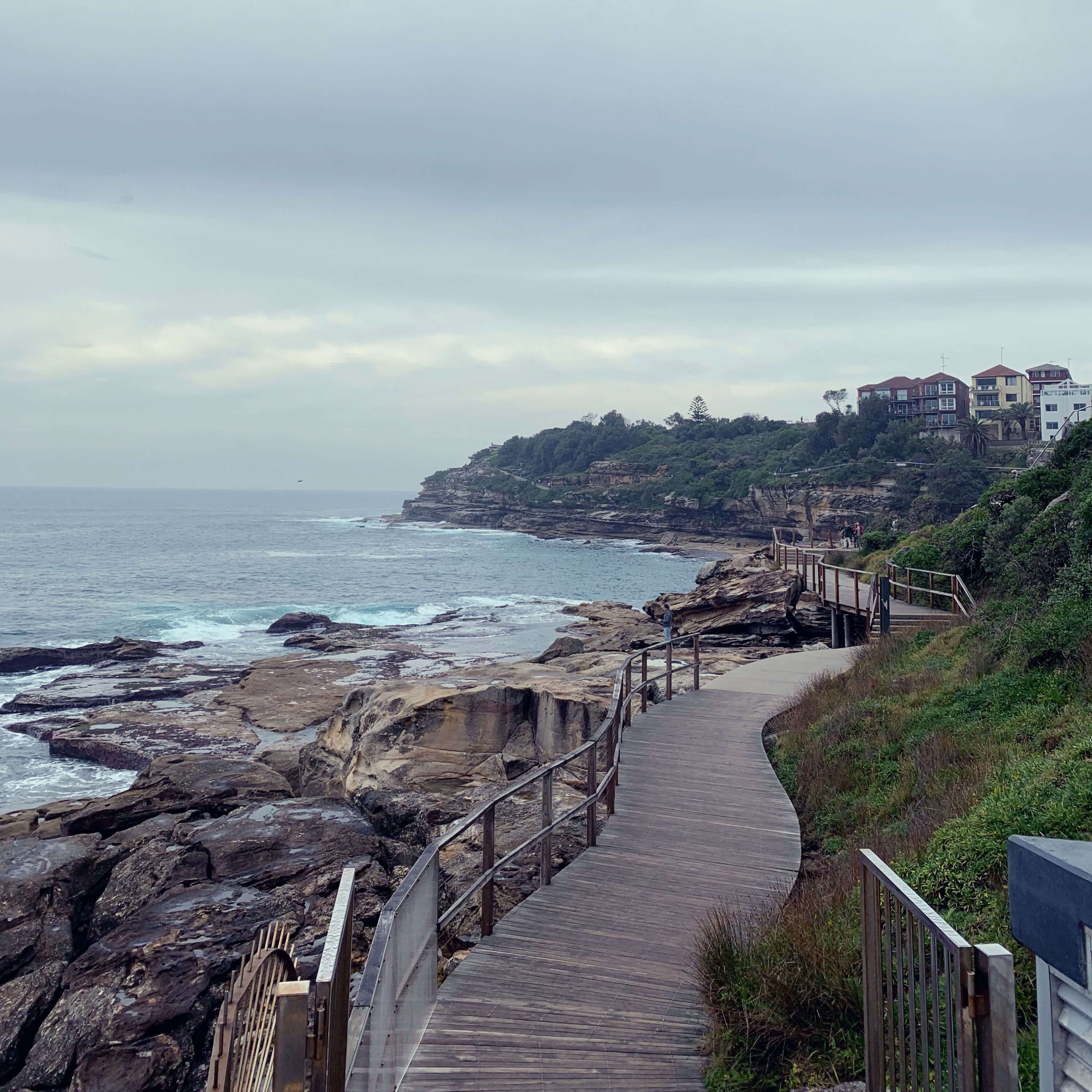
My heart soared. The last time I was at a beach was during a brief, half-day, team trip with my colleagues, and I don’t even recall the time before that. I’d forgotten how much I enjoyed watching the sea spray at my face. Then I turned around to the walkway along the coast—the next thirty-minutes featured sensational views, active runners, dog wakers, couples, sightseers, and me.

It’s amazing how much energy you have when you enjoy what you do. I walked about 15 kilometres that day and I although my feet killed me two days later, I didn’t feel a thing while I scaled the Bondi path. Excitement and expectation masked pain and hunger. It wasn’t the first time, and it won’t be the last.

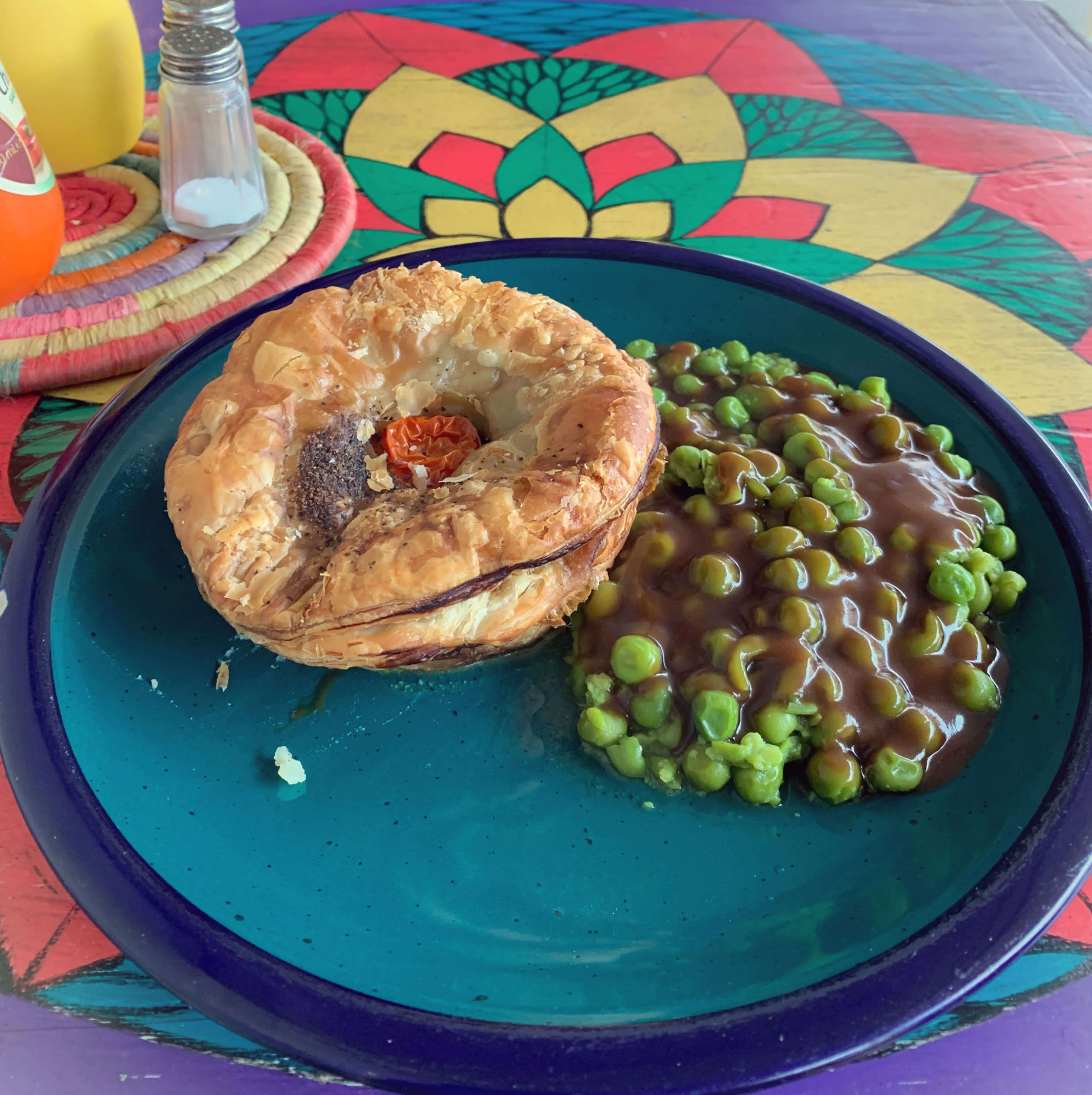
From the beach, I walked over to a famous pie shop. Funky Pies is renowned for making (and distributing across Australia!) delicious vegan pies for unreasonably reasonable prices. I had to stuff my face. And so I did.

Funky Pies

But not before I spent a good ten minutes deciding which pie to order. The variety is insane. When I did order, it arrived at my table steaming with peas and gravy on the side. I skipped the mash. Not long after I started eating, I knew I could’t stop with one. So I got one to go as well. It’s an understatement to say it was good.

When I finished, it was just past midday. Though the airport was a long way off, I ended up walking all the way back to the junction to get on the train from there.

Sydney has pretty good footpaths. Yes, it’s annoying to wait for the signals to turn green because they take much longer than they do in Canberra—thanks to the sheer amount of vehicles on the streets. Despite that though, walking was fun. It was nice to look around at the various little stores selling thousands of trinkets I’d never splurge on. Row after row were sign boards advertising cuisines from all over the world, broadcasting the incredible number of cultures that reside in Sydney.

You’ll never experience all of that on an Uber. Or a private vehicle. You’ll never enjoy a city’s true nature when you’re busy trotting along in groups, chatting away in mindless abandon. The only way to understand a city, a locality, to feel its pulse, is to take it by foot.

Sydney scenes

When I exited the aircraft, I was so excited to be visiting Sydney for the first time. After a month there, my brother mentioned it was starting to grow on him.

We both hated the idea of living in Sydney. Even before we’d even seen the city. Now, though, he seemed to have second thoughts, and I was eager to find out how I felt.

Long story short—I still don’t like the idea of living in Sydney.

I did like Sydney, however. Contradictory, I know. But as soon as I reached my hotel on Harbour Street, in the heart of the city (CBD), I texted my colleague to see if we could catch up. After all, I wasn’t touring Sydney—I was there to attend a conference, to stay locked up inside the infamous International Convention Centre from 8 am to 5 pm on a Thursday and Friday. I met my team mates at around 5 pm, and after a not-so-great coffee, I left to explore.

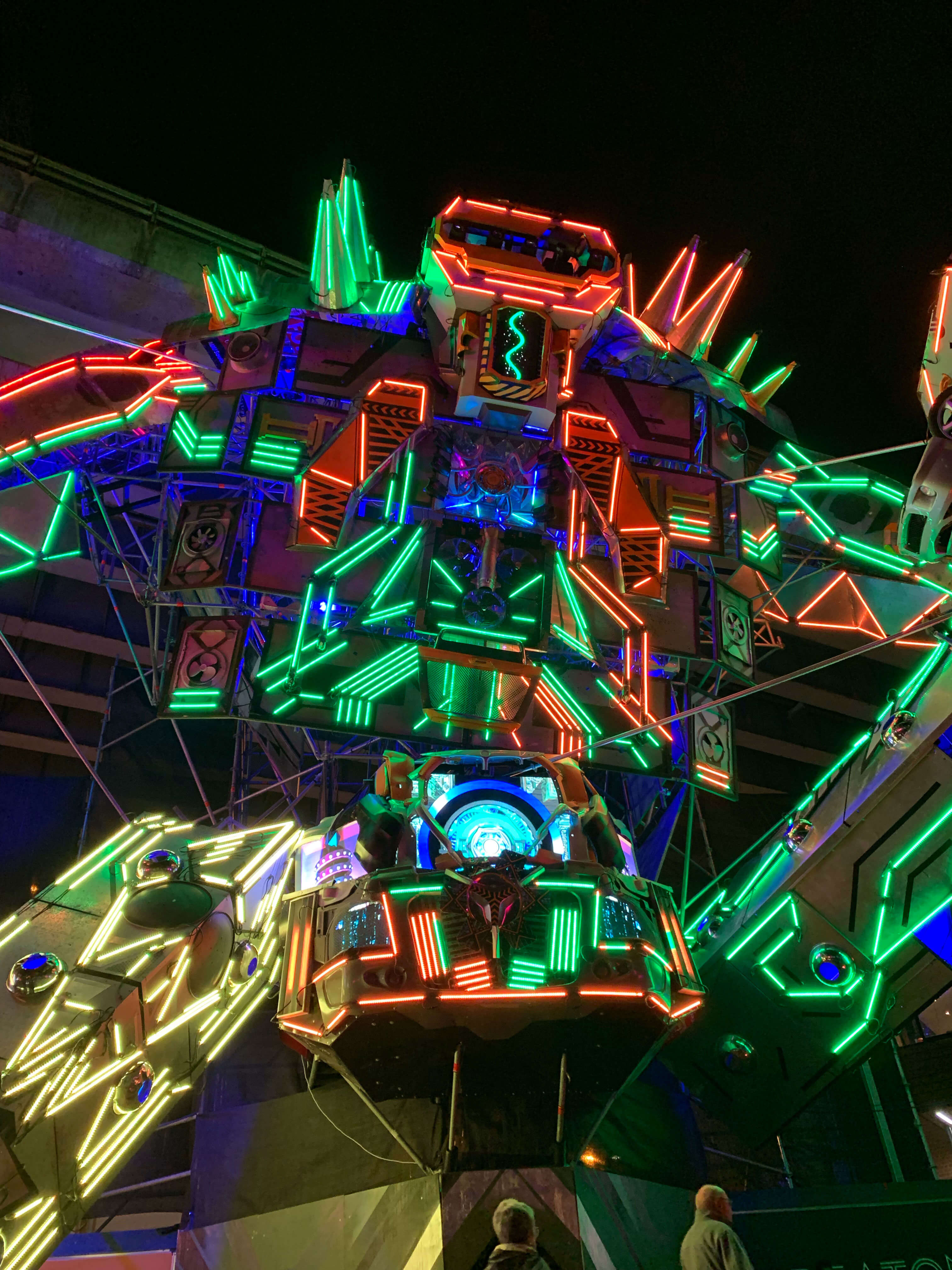
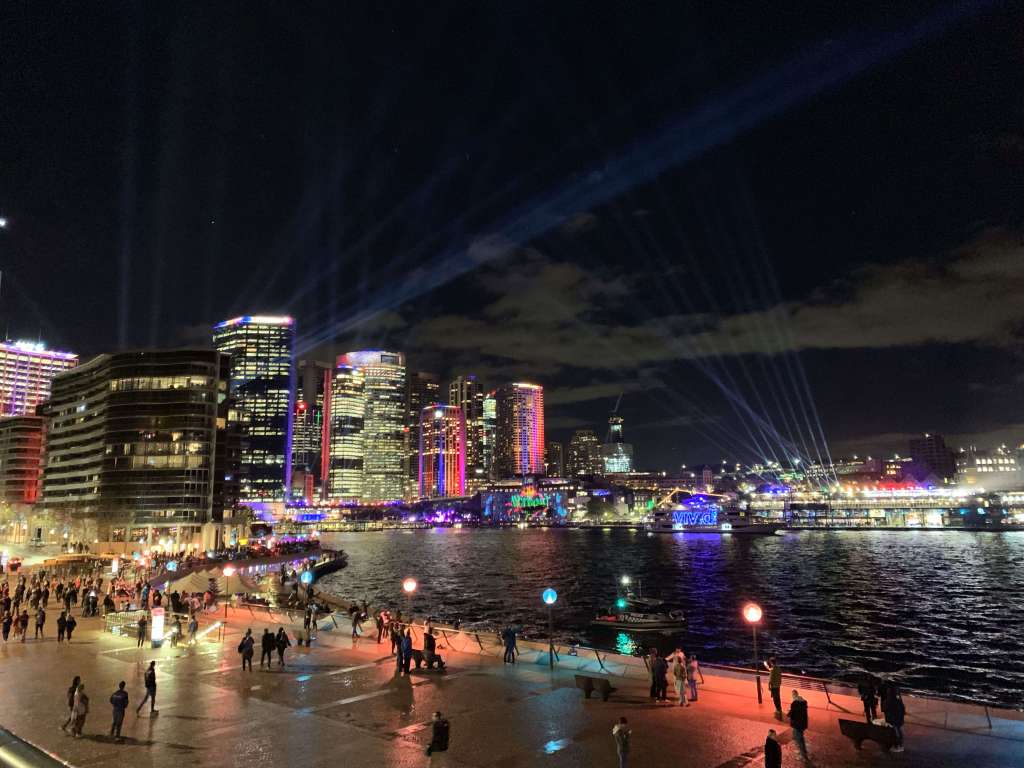
Vivid Sydney display

Not one to linger these wintry days, the sun had set off at around 5. But Sydney city is the Down Under version of the city that never sleeps. Lights glared from every corner, and instead of listening to my colleagues ranting (reasonably, albeit boringly) about office politics, I preferred to wander the streets.

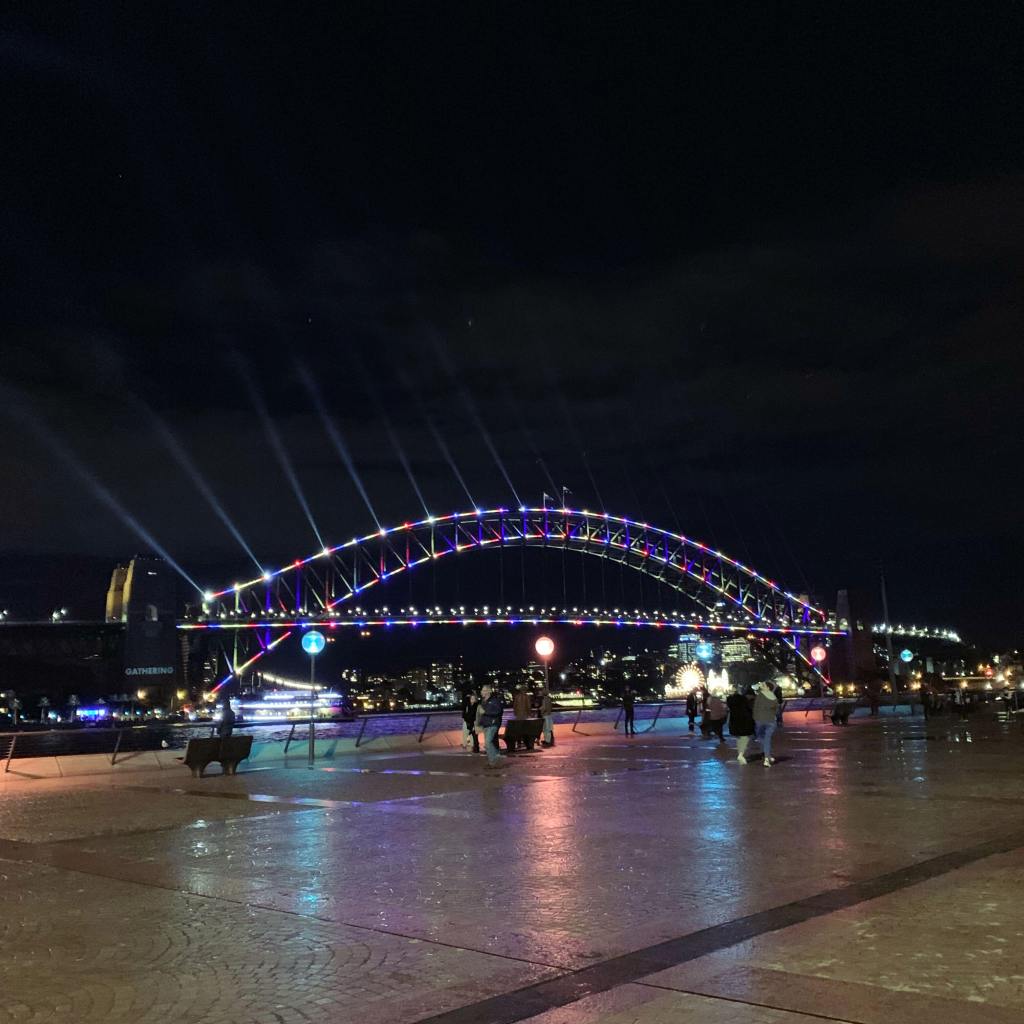
Sydney Harbour during Vivid Sydney

That’s when I realised the sheer volume of people who called Sydney home. I wasn’t far from Chinatown and Koreatown so I ran into thousands of all flavours of Asians. And I don’t mean ran into in a figurative sense either. So many people wandered just as I did, except they were looking at their phones letting their well-practised feet and conditioned subconsciousness guide them through navigating the street signs.

Almost everyone followed street signs. And that made me so happy. But it was also frustrating when a lot of couples clung to each other while walking down the footpath. Dawdling behind them, I had a hard time overtaking them without bumping into another arm-locked couple.

And I won’t even start about the low-burning cigarette butts every other person clung to. It wasn’t that cold. At least not for me—not after Canberra anyway.

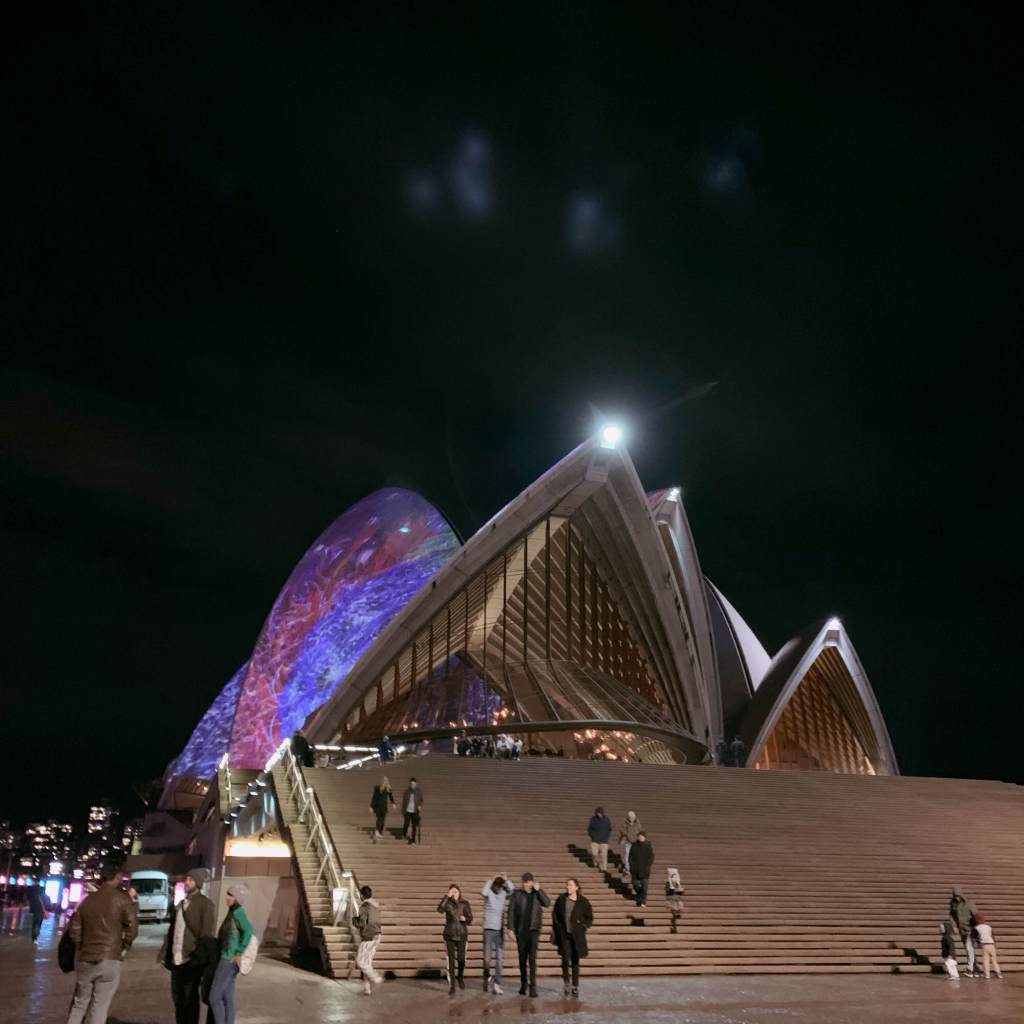
But it was all great fun. I stopped by for a hot chocolate and walked over to the Opera House. May-June is a great time to visit this studded bay area because Vivid Sydney is on show. The whole locality lights up, laser shows beam about, special over-priced cruise tours dig gold, and along with the many significant buildings in the neighbourhood, the Opera House takes on a stunning veil of animated display.

The closer I got to the building, the faster I seemed to walk. It happens to me all the time. Excitement and eagerness make me trot without a regard for my knees or my not-good-for-walking Converse. But what the hell, I thought to myself. You don’t always get to see the Opera House for the first time. There’ll always be reasons no to do something—rain, cold, wind, stiff shoes, bad hair days, tired feet, or work night. But nothing beats the sense of accomplishment that comes with pushing through nevertheless. That keeps the spark alive for a traveller.

Nestling in that spark, I returned to my room, ready for work the following day.

Next day—

Work was average, and I wasn’t happy with my contribution. But the spark still triggered me to take a ferry unto Manly. And I saw the Opera House again from a whole different perspective. After all, what’s the point of life if you let work interfere with it?

A walk in the forest

During the one month that I’ve lived in Canberra, and for many before I moved, I’ve watched—with growing envy—the city’s locals share glorious pictures of the National Arboretum.

On photos it seemed such a vast area of green nothingness brimming with so much liveliness. Trees smothered brown and yellow during sunsets, mist hanging over unknown mountains, sneaky sunrises playing games of colour in the sky—every picture piqued my curiosity and intensified my urge to be there, live it, and relive it.

Except, I found out soon, the National Arboretum is unreachable by public transport. Although, somewhere in my subconsciousness, I knew I couldn’t just take the bus up there—the many jaw-drop moments I’d seen in photos revealed towering altitudes. Still, it came as a disappointment.

But rejection only makes us want something even more. And when we do get it, at last, we’ll savour it for the rest of our lives.

I will, the Arboretum.

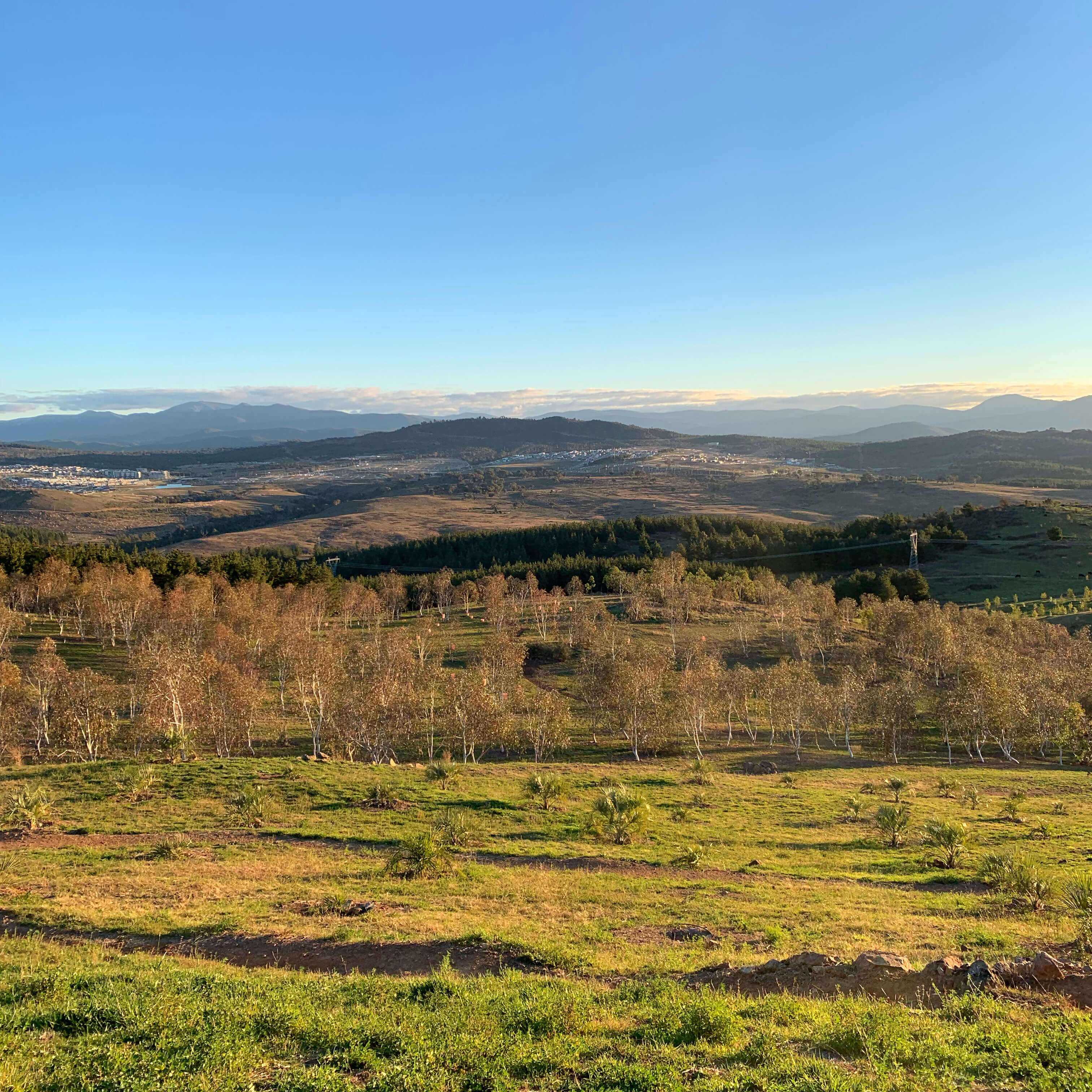
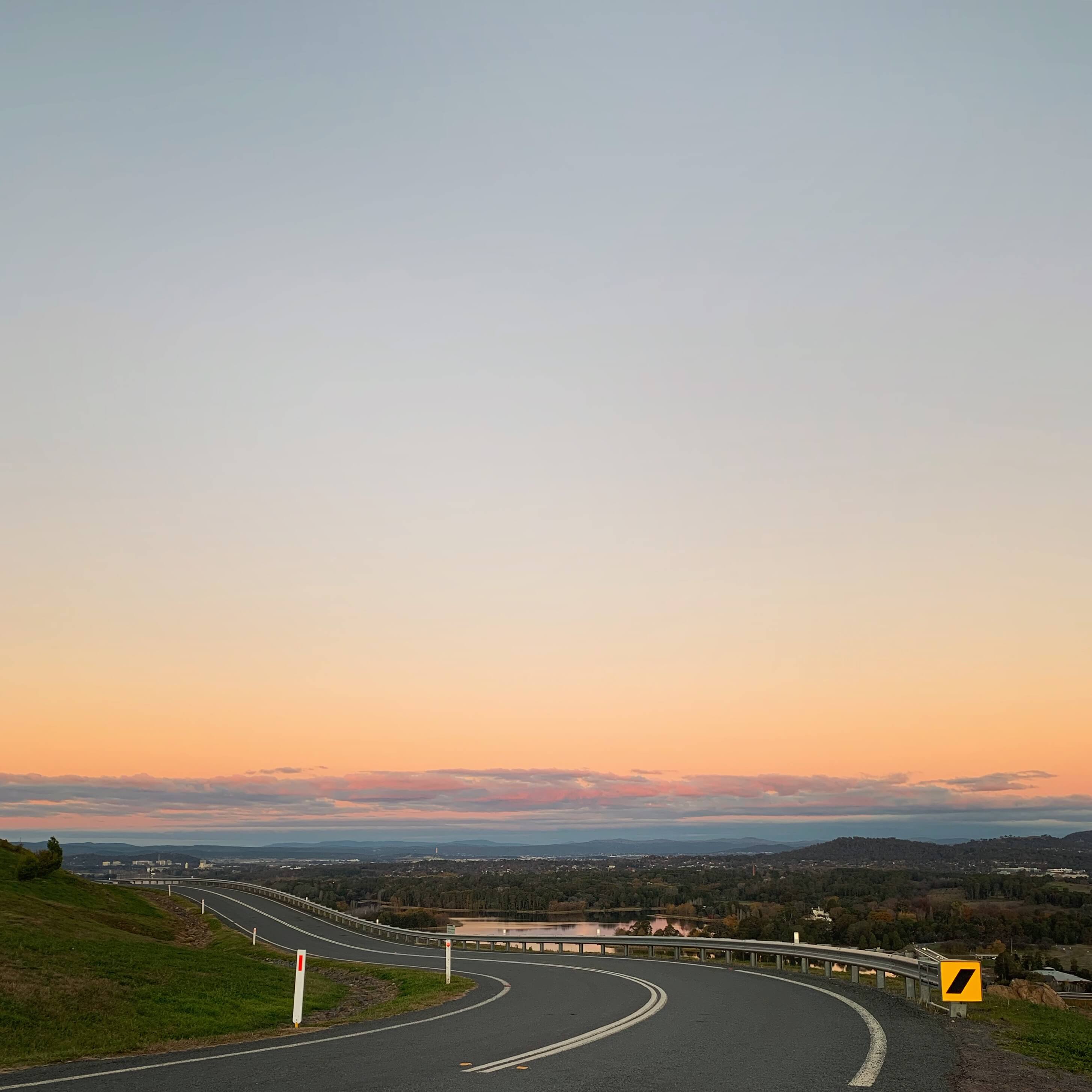
View from the National Arboretum, Canberra

Thanks to a bored brother and a good friend’s decent car, we cruised uphill with my eyes open bright and soul screaming wide. As we went higher and higher, I felt lighter. Trees have that impact on me.

When we stopped and stepped out, I grabbed my jacket to shield myself from the icy breeze. It was the first day of winter and though the sun shone bright, coldness pressed against my skin, tingling my t-shirt, and teasing my boldness to go thermal-less. It wasn’t nail biting, but just enough for me to appreciate the weather without developing a raging hatred towards winter. Nature knows how much to offer and when.

National Arboretum, Canberra

While the cold remained subtle, the views were more pronounced. As far as my eye could reach, I saw nothing but trees—steps upon steps of luscious greenery that refuse to die even in winter. From way above, I was looking down at massive branches appearing to be nothing more than bushes. Ah, Bush Capital indeed.

Amidst the sea of wood, I spotted, like deer in a jungle, benches and footpaths inviting humans to stray away from their handphones and into the amassing wilderness ahead. It wasn’t just a remedy for screen eyes, but rather an invitation to experience the vision of this great green city. With neat guidelines, pathways, and dedicated clearings to enjoy the view from, the Arboretum is the ideal environment for people to take a moment alone with nature without contaminating it with their innate humaneness.

Pine forest at the National Arboretum, Canberra

As we walked down the path—a path—we came by a large row of pine trees extending to a forest behind them. While the sun prepared to step back for the day, a faint glow erupted from within and beyond the forest, emitting a clarion call for the crazy.

We heard it and heeded it. It’s enchanting to walk into a forest that’s both dense and airy at the same time. It was light enough to see through the trees, but also mysterious and unmoving. The deeper we went, the further we wanted to go. Pine trees always give each other enough space to grow and expand. Like the best of friends. And although they’re upright on a slope, they’re so well rooted that they don’t sway in threatening ways. We could walk quite far into the pine forest and still glimpse the last of the sunset through the branches.

Sunset over the National Arboretum, Canberra

Sitting idle at home two days later, I realised the Arboretum is more than a collection of trees in natural habitat. It’s a trove of magical views, mystic thoughts, and ground breaking moments—a much endearing, must visit.

The Bush Capital

“I […] picked up the notebook and pen and, after a minute’s thought, wrote, “Canberra awfully boring place. Beer cold, though.” Then I thought for a bit more and wrote, “Buy socks.”

[…]

Then I decided to come up with a new slogan for Canberra. First I wrote, “Canberra—There’s Nothing to It!” and then “Canberra—Why Wait for Death?” Then I thought some more and wrote, “Canberra—Gateway to Everywhere Else!,” which I believe I liked best of all.”

Excerpt from In a Sunburned Country, Bill Bryson.

I read that piece of prose about a month before I moved to Canberra. A good friend, American, suggested that I read Bill Bryson’s In a Sunburned Country as a way of getting into the moving mood. Of course, my friend meant well—though he couldn’t recall Bryson’s exact feelings about Canberra, he did mention that Bryson covers the whole of Australia from an American comedian’s perspective. And that’s just what the book does.

I’d done some research on my own and everything I learnt hinted at a great place to live—a quiet small town with lots of greenery and large lakes, stunning autumnal sunsets, and frostbiting winters. And so it surprised me to read the author had suffered great boredom in Canberra. In the book, Bryson moves on to Sydney, Melbourne, and Brisbane, narrating his observations along the way. And sure enough, in comparison to those metro cities, Canberra is rather subdued and humble.

Estimated population of Canberra in 2035

But Canberra is far from a boring place. I’ve been exploring the area and town life every day since I moved here a month ago. And there’s not a single thing that didn’t amaze me. Aside from the old parliamentary building and the old law-making systems, the national war memorial that brings to life each war Australians suffered, and the museum of modern history that plays host to thousands of years’ history, the city by itself has a story to tell.

The National Capital Exhibition is a smaller building than the other tourist attractions. However, it hosts hundreds of interesting titbits about the city that’d make any Canberran swell with pride.

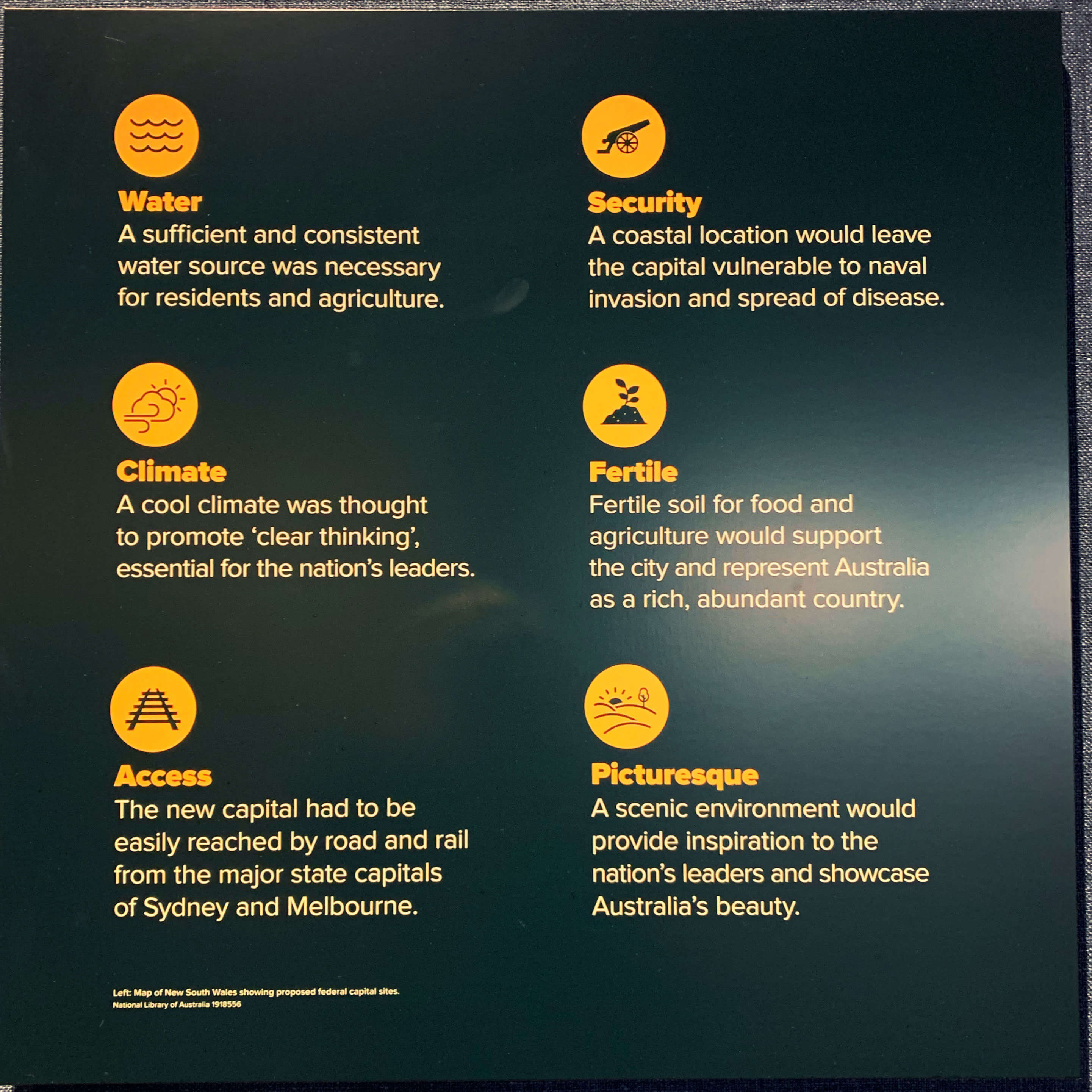
Canberra is a planned city. When the government decided that neither Sydney nor Melbourne can serve the purpose, they weighed various criteria to choose the capital city. With sufficient resources for agriculture and cultivation, natural scenery that’d attract visitors and locals alike, a secure landmass away from the coast and naval invasions, and an accessible location from all over the country, Canberra became the ideal capital. As I read through each point in favour of Canberra, I found myself nodding in agreement. This is a great place. And the best part—not many people have discovered it yet, giving it an excellent population balance.

Selection criteria for Australia's capital city
Selection criteria for Australia’s capital city

In the exhibition is a large 3D model of Canberra’s layout, lit up, and highlighting the geometrical marvel that the city is built upon. The parliament building is on top of a hill. Looking right across from the top is the national war memorial serving as a constant reminder of the consequences of any decision made inside the parliament. Branching away from the centre are the main roadways—the spines for the many suburbs woven around them. From above, Canberra looks like a spider’s web. It’s well spread out and yet interwoven to make sure you can drive from one corner of the city to another in 30 minutes or less.

And then there’re the lakes. Although artificial, Canberra’s primary lakes, Burley Griffin and Ginninderra, complement the many natural forests around the city. Footpaths go around the lakes and the bridges over. It’s as if no humans can ever disrupt the calmness of the lake or disturb the babbling ducks in it. Looking at the Lake Burley Griffin through a window, I wondered how much the city’s designers (Walter Burley Griffin and his wife Marion) would’ve appreciated and yearned for nature that they decided to plot such big lake right in the middle of the city.

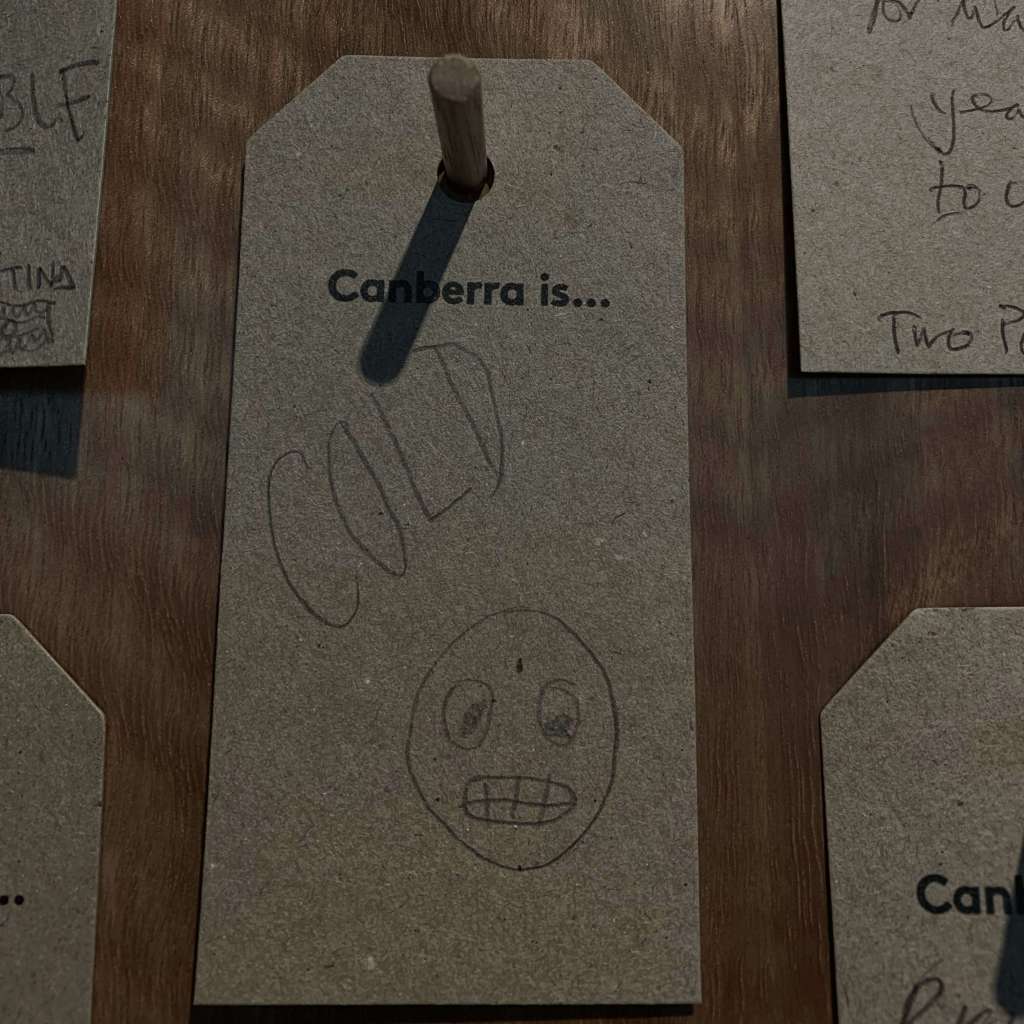
  • What is Canberra to you?
  • What is Canberra to you?
  • What is Canberra to you?
  • What is Canberra to you?

Sure, Bryson was right in a few aspects—the shops close at 5 and the night scene is still quite bleak, but this is the bush capital. If you like yourself some greenery, Canberra won’t disappoint.

Parting thoughts: Never judge a place based on a few authors’ descriptions. Everything is subjective.