The Bush Capital

“I […] picked up the notebook and pen and, after a minute’s thought, wrote, “Canberra awfully boring place. Beer cold, though.” Then I thought for a bit more and wrote, “Buy socks.”

[…]

Then I decided to come up with a new slogan for Canberra. First I wrote, “Canberra—There’s Nothing to It!” and then “Canberra—Why Wait for Death?” Then I thought some more and wrote, “Canberra—Gateway to Everywhere Else!,” which I believe I liked best of all.”

Excerpt from In a Sunburned Country, Bill Bryson.

I read that piece of prose about a month before I moved to Canberra. A good friend, American, suggested that I read Bill Bryson’s In a Sunburned Country as a way of getting into the moving mood. Of course, my friend meant well—though he couldn’t recall Bryson’s exact feelings about Canberra, he did mention that Bryson covers the whole of Australia from an American comedian’s perspective. And that’s just what the book does.

I’d done some research on my own and everything I learnt hinted at a great place to live—a quiet small town with lots of greenery and large lakes, stunning autumnal sunsets, and frostbiting winters. And so it surprised me to read the author had suffered great boredom in Canberra. In the book, Bryson moves on to Sydney, Melbourne, and Brisbane, narrating his observations along the way. And sure enough, in comparison to those metro cities, Canberra is rather subdued and humble.

Estimated population of Canberra in 2035

But Canberra is far from a boring place. I’ve been exploring the area and town life every day since I moved here a month ago. And there’s not a single thing that didn’t amaze me. Aside from the old parliamentary building and the old law-making systems, the national war memorial that brings to life each war Australians suffered, and the museum of modern history that plays host to thousands of years’ history, the city by itself has a story to tell.

The National Capital Exhibition is a smaller building than the other tourist attractions. However, it hosts hundreds of interesting titbits about the city that’d make any Canberran swell with pride.

Canberra is a planned city. When the government decided that neither Sydney nor Melbourne can serve the purpose, they weighed various criteria to choose the capital city. With sufficient resources for agriculture and cultivation, natural scenery that’d attract visitors and locals alike, a secure landmass away from the coast and naval invasions, and an accessible location from all over the country, Canberra became the ideal capital. As I read through each point in favour of Canberra, I found myself nodding in agreement. This is a great place. And the best part—not many people have discovered it yet, giving it an excellent population balance.
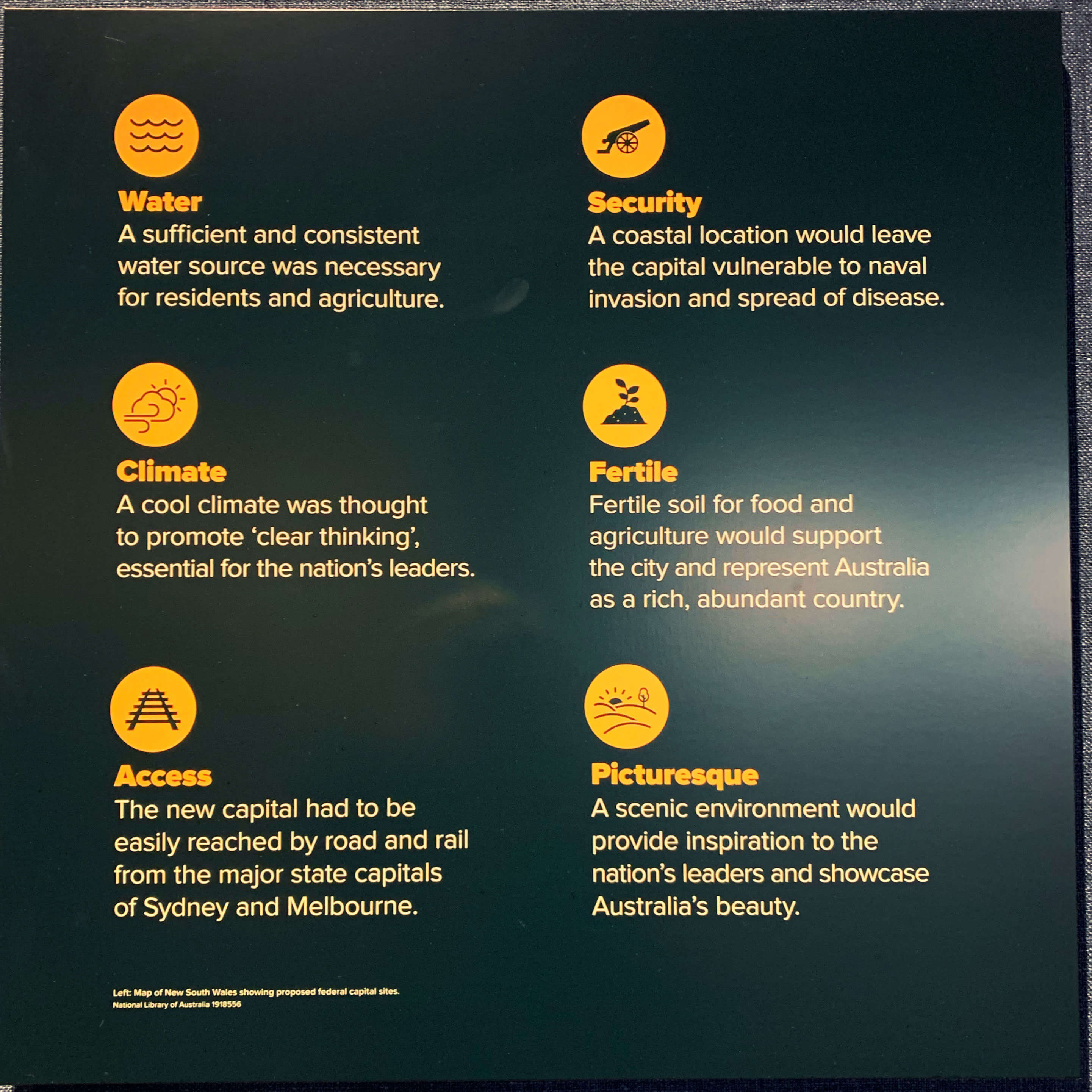
Selection criteria for Australia's capital city
Selection criteria for Australia’s capital city

In the exhibition is a large 3D model of Canberra’s layout, lit up, and highlighting the geometrical marvel that the city is built upon. The parliament building is on top of a hill. Looking right across from the top is the national war memorial serving as a constant reminder of the consequences of any decision made inside the parliament. Branching away from the centre are the main roadways—the spines for the many suburbs woven around them. From above, Canberra looks like a spider’s web. It’s well spread out and yet interwoven to make sure you can drive from one corner of the city to another in 30 minutes or less.

And then there’re the lakes. Although artificial, Canberra’s primary lakes, Burley Griffin and Ginninderra, complement the many natural forests around the city. Footpaths go around the lakes and the bridges over. It’s as if no humans can ever disrupt the calmness of the lake or disturb the babbling ducks in it. Looking at the Lake Burley Griffin through a window, I wondered how much the city’s designers (Walter Burley Griffin and his wife Marion) would’ve appreciated and yearned for nature that they decided to plot such big lake right in the middle of the city.
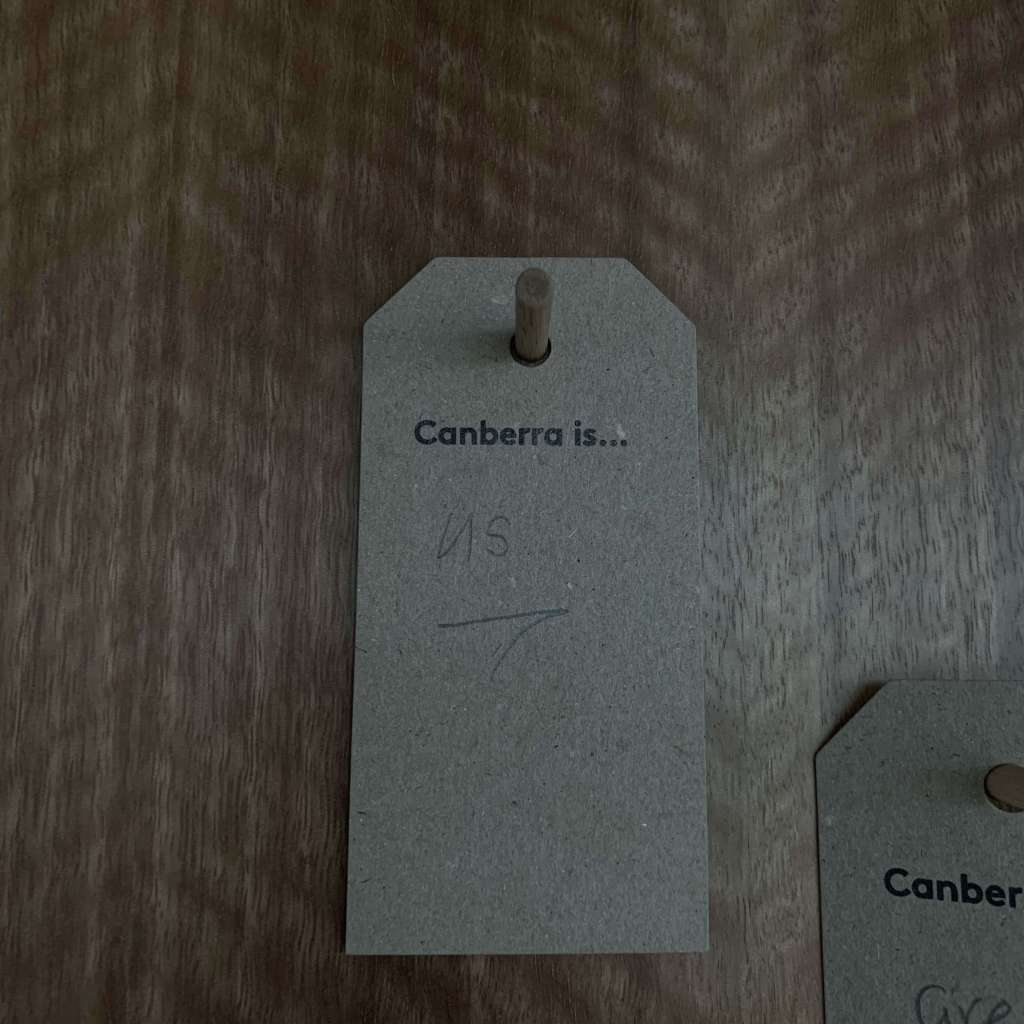
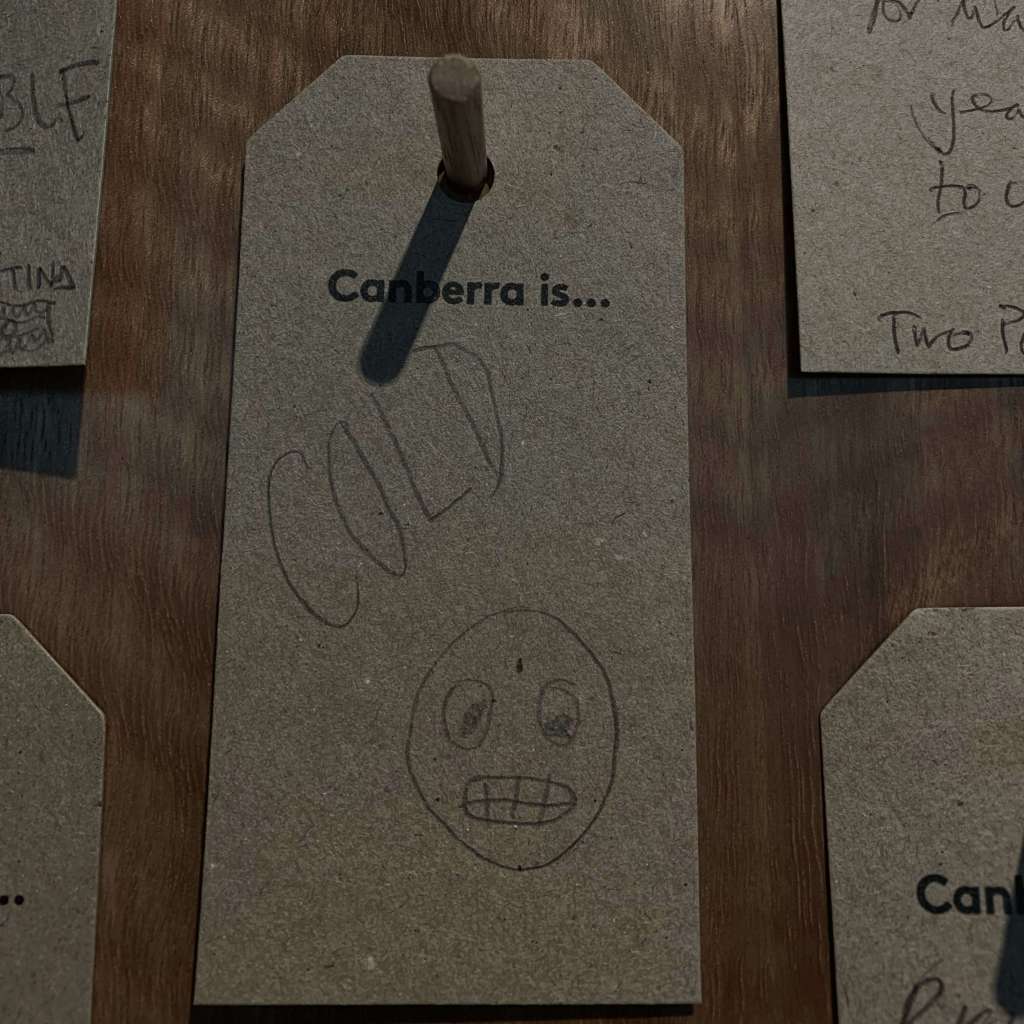
  • What is Canberra to you?
  • What is Canberra to you?
  • What is Canberra to you?
  • What is Canberra to you?

Sure, Bryson was right in a few aspects—the shops close at 5 and the night scene is still quite bleak, but this is the bush capital. If you like yourself some greenery, Canberra won’t disappoint.

Parting thoughts: Never judge a place based on a few authors’ descriptions. Everything is subjective.
Parliament day

Australian politics and history have evaded us for a long time. I realised this as I walked past portrait after portrait of the Australian prime ministers. Most of Canberra’s suburbs have names of these Prime Ministers, but aside from that I hadn’t heard of even one of them before. What a shame. Though I grew up in Asia, I knew leaders of Britain, the US, and Canada from an early age—they were always in our history books or the ugly political discussions at awkward family dinners.

Wondering about the weirdness of it all, I wandered the old parliament house in Canberra.

Although it was built as a temporary parliament in the 1920s, the provisional parliament building ended up serving as the actual parliament for over fifty years. Today, though, it’s a storehouse of exhibitions and historical monuments.

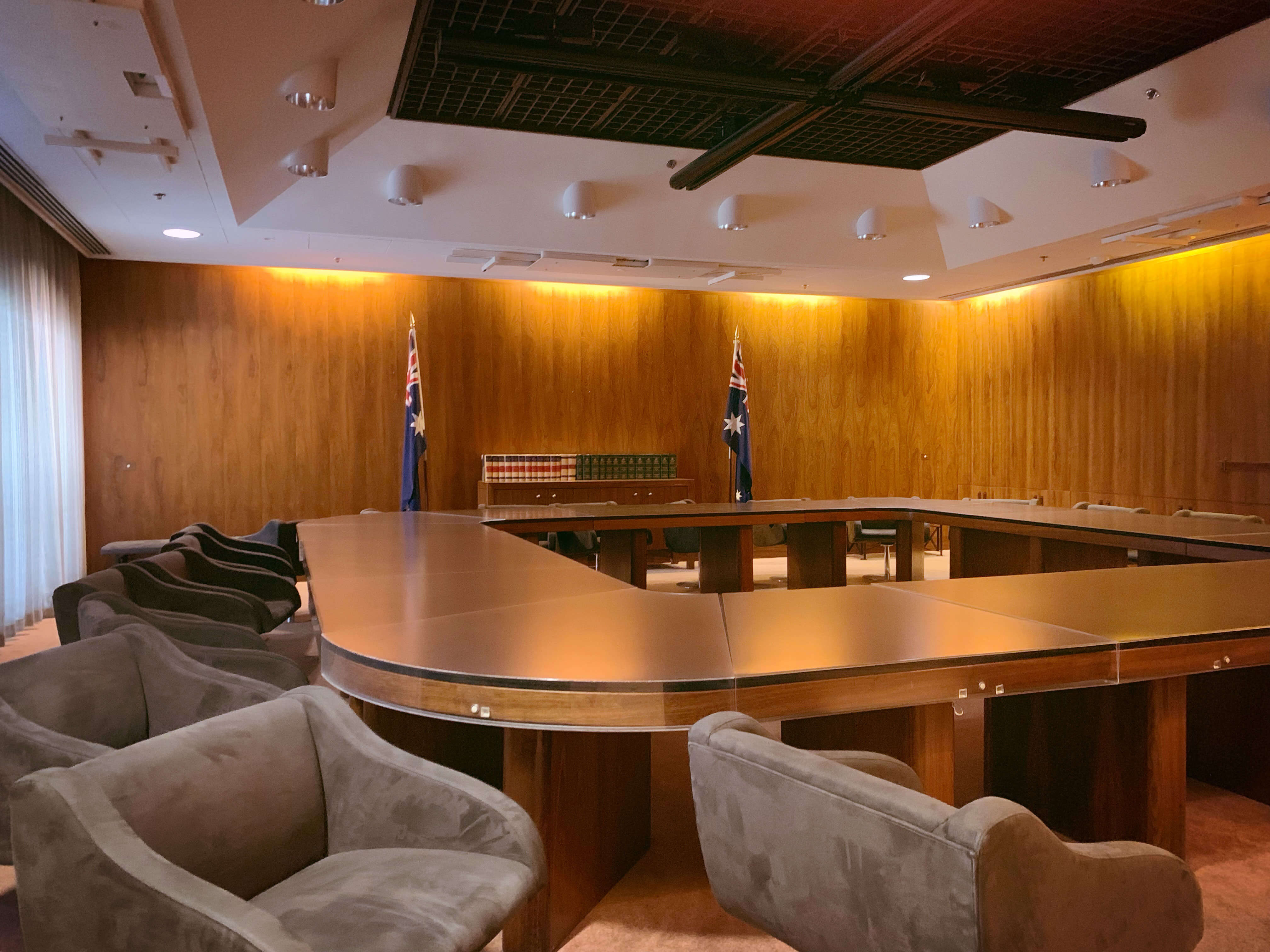
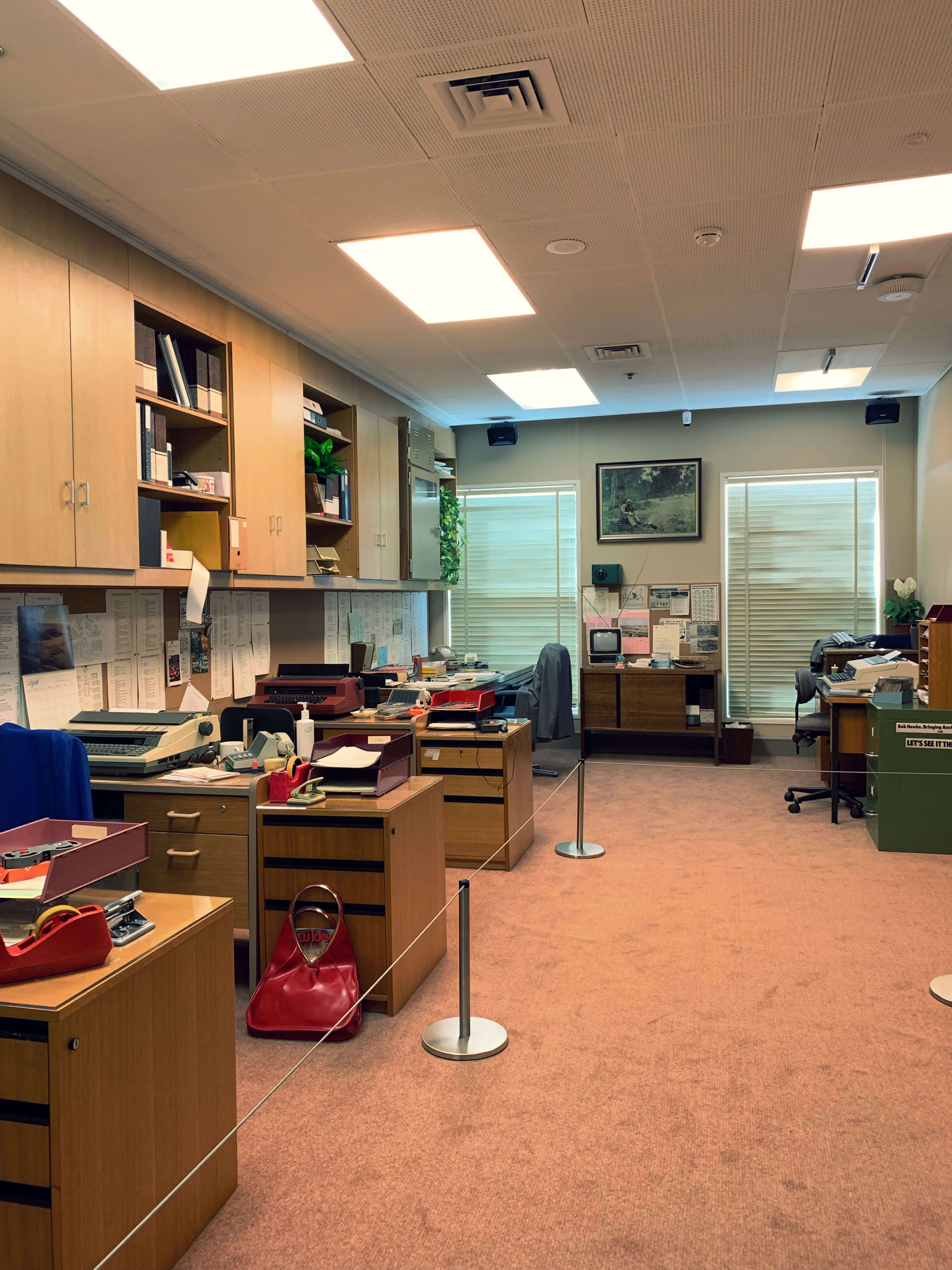
Apart from the primary attractions like the House of Representatives Chamber, the Senate Chamber, the Prime Minister’s office, the Cabinet, and the Opposition Party Room, the parliament building is also home to plenty of smaller, yet significant exhibitions.

  • Prime Minister's staff offices
  • Prime Minister's office
  • Cabinet
  • Vintage computer - office of the parliament speaker

When I walked in, I had no idea what to expect. Equipped with a though floor plan of the entire building, I wandered through the corridors looking into each exhibition.

Finders keepers
My first stop, this exhibition showcases the different types of collectables famous Australian figures collected—like the telephone collection of a former telecommunications officer, the tie collection of a former minister, the t-shirts and badges owned by a social activist, and the porcelain collection of a parliamentarian. Each of these collections ties into the larger story that museums themselves are collectors.

Neil Baker's telephone collection
From Neil Baker’s telephone collection

OnetoEight
Moving along, I paused at a large room dedicated to remembering the Prime Ministers of Australia. Apart from photographs and descriptions of their work, you can also hear recorded versions of some speeches they delivered throughout their reign.

Wives of the Prime Ministers
Inspiring and eye-opening, though they were, more striking was the portrait exhibition of the wives of prime ministers. A surprise, it was—although every museum I’ve been to celebrates public leaders and their achievements, none of them mentions the families that supported the great menfolk of our time. This exhibition, albeit small, casts a vital spotlight on the womenfolk of the nation.

Whenever I visit historical sites, I don’t set time limits to myself. I don’t like rushing through exhibits to move on to the next attraction on my list. That’s such a touristy thing to do. Instead, I take my time to explore, read inscriptions, watch the videos, and linger. As a result, I spent $2 (entrance fee) and over 4 hours inside the parliament building.

I have no regrets, though. If I hadn’t stayed on, I would’ve missed the witty and thought-provoking political cartoons on display. Couriser and couriouser, huh?

I would’ve missed the #UDHRquilt project. UDHR stands for Universal Declaration of Human Rights, and this project was the work of craftivists (craft+activist), Tal Fitzpatrick and Stephanie Dunlap. They made four quilts, embroidered with the articles mentioned in UDHR. I’m no activist. I have mixed feelings about how human rights are so subjective at times. But I still enjoy a good piece of art.

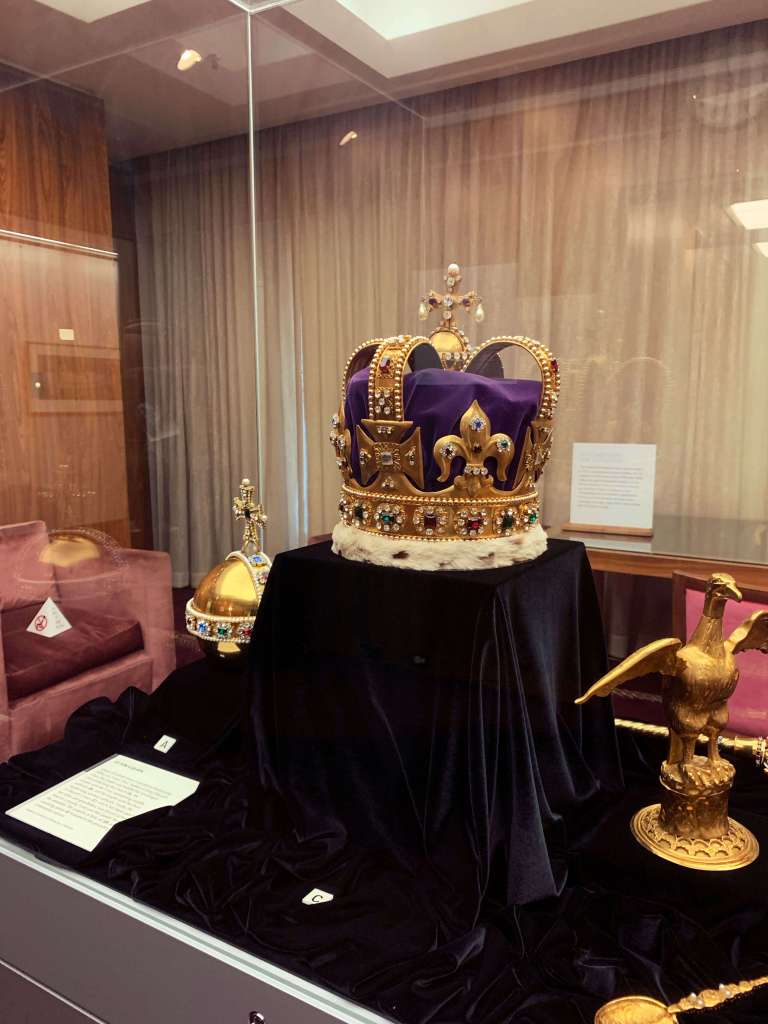
Oh, and I would’ve missed the crown jewels. Not the real ones, though, of course. When Queen Victoria visited Australia, they made a separate area in the parliament to accommodate the Queen and her party. And as I stepped into her living space, I couldn’t believe how simple everything was. The dining table was just a basic wooden structure, the bathrooms, the kitchens, the sitting area, though impeccable, were more functional than fancy. It reflected that the royalty and the highest members of the government were still so human, so vain.

Replica of the Crown Jewels

Had I left any sooner, I’d have missed the most exciting exhibit of them all—the Press Gallery. It’s hard to fathom that the small, even stuffy, rooms above the house of representatives were the life of the government. Everything that the world knew and heard of about the rule makers came from the press—every printed phrase and every uttered word makes a world of difference. And as I stood where so many print and radio journalists had stood in the past, I felt proud to appreciate the power of the written word and its influence in the world.

Writing on the wall - Press Gallery
Writing on the wall – Press Gallery

Other highlights in the museum:

  • Prime Ministers’ office
  • Opposition party room
  • Opposition party whip’s room and the television that let him observe the proceedings at the house of representatives without being there
  • Dress Code of the Empire: A look at Edmund Barton’s (first prime minister of Australia) costume
  • Copies of the Australian Constitution, Declaration of Independence signed by the Queen, Australia Act, and its modifications
  • Various signs and slogans of Australian politicians – then and now
  • A brief history of democracy in Australia

In the end, it was like any other trip to the museum—so satisfying, so full of lessons, and so overwhelming. And still so worthwhile. By the time I left, I didn’t have time to go elsewhere because most of the museums and historical sites in Canberra close at 5 pm. Remember that when you visit—and do visit.

I protest

Nowadays, it’s ever so common to see crowds gathering in front of government houses, with upheld banners and raised voices, protesting. It doesn’t matter what for—policies, opinions, misspoken words, misspellings on social media—why, some people even oppose the existence of other people. Regardless of the “why” of these protests, almost every rally I’ve seen and heard of has a similar streak: violence. In its core, whenever anyone disagrees or rebels, they use harsh and violent behaviour to make themselves seen and heard.

Of course, in recent years, silent, un-violent, and fasting protests are becoming more desirable. But even today, all the marches and show of disagreement contain angry outbursts, name-calling, and plain spite. What’s sad, though, is that just as a self-fulfilling prophecy, these violent protests get more attention than the others. Even though our generation understands and even professes the effectiveness of the pen over the sword, the influence of weapons in conflicting opinions is far too significant to ignore.

That’s why it feels amazing to come across a different form of protest. Both in movies and real life, we’ve seen governments cutting off funds to public welfare systems like health care programmes, transport services, and university courses. Each time it happens, the government—factual or fictional—faces large mobs of angry citizens, swearing through megaphones and wasting fuel on stick figures and flags.

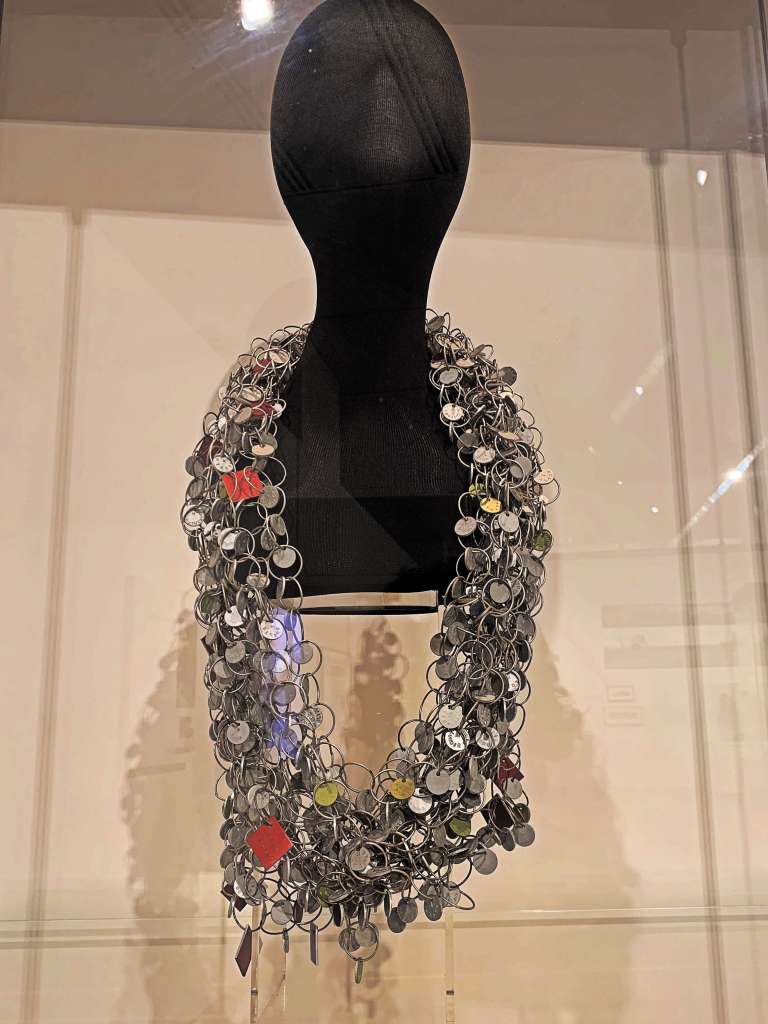
But then I saw this:

Canberra Museum and Gallery - 1

It’s a necklace. It’s also a sign of protest. When the state government of Canberra (Australian Capital Territory) cut off funds to the National Institute of Arts, teachers and Canberra sponsors together presented this necklace to the Chief Minister at the time, Kate Carnell, as a sign of their protest. What’s unique about it though is that each metal link in the necklace has a tag with the name of a sponsor. So each piece resembles a protestor, and together it makes a neckband for the chief minister of the then ACT.

No hate speech, no blood, an no fasting to death. What a daring rebellion! And what a beautiful necklace it is too—when you take away the historical value, that is one marvellous piece of accessory, won’t you say?

Canberra Museum and Gallery - 2

It made me stop and think about how much has changed in the way we fight for our convictions. Of course, we should stand up for what we believe in, but when our fight costs innocent people their peace, patience, or worse, life, then what good does our conviction do?

The necklace is on display at the Canberra Museum and Gallery. If you’re in the area, stop by and pay a visit—it sure is worth looking at.

Counting dollars

Ever travelled to a foreign country and found yourself converting the local currency to your own? And have you ever had this face when you realised how much everything costs in your own money?

What the hell?!
What the hell?!

It’s the bitter reality for most of us. Although you tell yourself you’re on holiday and it’s ok to splurge once a while, you still can’t fathom the marvel that is currency conversion. But your inner mind is right—it is only once a while, and you should splurge on yourself.

Can’t say the same about me, however. One of the scariest things about moving to Australia—a country well known for its venomous snakes and its well-established economy—is that everything is so damn expensive. And the locals often don’t realise it because, well, they earn well.

The average earning capacity for an Australian is high enough for an average Australian lifestyle.

For me, though, it seemed bollocks. I had fair warning, yes. Expat forums and online resources informed me page after page how pricey life is. But I didn’t understand the real weight of it until I saw that a simple fruit-and-nut bar costs 4 to 5 dollars. A decent meal at a so-so restaurant will cost at least $15—not including drinks. It’s not uncommon to spend $25 on a meal.

What’s funny though, is that I found a good, sturdy pair of shoes for the same price. It wasn’t Nike or Sketchers or any if those high-profile brands, but it was a functional pair of shoes.

And I see that across all products—the pricing structure is so illogical. Coles and Woolworths are two of the largest supermarket brands in Australia. Both have their own branded products for almost everything (like Trader Joe’s). Salt, pepper, detergent, prepackaged meals, chocolate, biscuits, chocolate biscuits—you name it, and chances are they’ll have it. They’re super cheap too—a 2-litre bottle of laundry liquid cost me less than $2. But unlike Trader Joe’s, these supermarkets also carry other local and imported brands which are four to six times expensive. Just for comparison, other detergents range between $7 to $10. And people still buy them.

Most people I’ve seen use a clever combination—they buy home brands for a lot of stuff, but they also spend extra on some other fancier brands. It all depends on the product. I’m still trying to discern how they reason it out, but after spending weeks comparing prices between brands and also between supermarkets, I’ve also started making some calculated purchasing choices.

The most important thing to know, if you’re visiting Australia, is that how items are priced makes no sense whatsoever. Whether you’re travelling from the US, Asia, or Europe, don’t expect logic. Come, explore, have fun and splurge. Don’t try and make sense of the Aussie way because you’ll only depress yourself by doing so. I speak from experience.

The National Botanical Gardens of Australia

I’ve been to quite a few botanical gardens in the past, and it was with that arrogance that I went into the Australian National Botanical Gardens. After all, it’s just a garden, I thought. What could be new?

Australian National Botanical Gardens - gift shop
Australian National Botanical Gardens – gift shop

It turns out that the Australian Botanical Gardens pay more attention to aspects of Australian geography and heritage. As I walked into the gardens, I first passed the gift shop, which—like any other gift shop—carried extensive and expensive trinkets for the tourist soul. Even though I didn’t purchase anything, I spend a good 15 minutes walking around, admiring local handicrafts. I had no idea how much the indigenous people’s artwork and culture permeated the Australian lifestyle. Despite battling discriminatory issues, Australia as a country makes conscious effort to recognise and even promote its indigenous roots.

After shuffling through coasters, notebooks, and bookmarks engraved with local birds and wildlife, I was ready to see the actual gardens.

National Botanical Gardens

Unlike the other gardens I visited, the Australian National Botanical Gardens appeared smaller by area. Looking at the map, I realised there’s a single main trail that went through the whole garden—ideal for people who just wanted to walk. For the others, the plant seekers, plenty of subordinate trails led from and across the main path. It was great because I could follow any trail to the smaller lawns and picnic areas, and still get on the main trail to continue through the garden. Here and there, leading from the main path were smaller and more concentrated enclosures—like the rock garden, the rainforest gully, the eucalyptus lawn, and the red centre garden.

Each of these gardens had one common aspect. The rainforest gully, for instance, showcases plants and creepers from Tasmania, the coldest and greenest state of the country. Even as I walked through the plants that spread their branches over my head, I could feel the temperates falling and the chilly breeze kissing my cheeks.

When I stopped at the rock garden, looking around trying to find my way back onto the trail, I got lost amidst rocky plants. Weird enough, however, despite seeing nothing but identical rocks, I felt a serene calmness overcome me. I was lost, but happy about it too. My heart skipped with joy looking at the odd plants that clung to the rocks—their life depends on them. Humans are the same. Even though we don’t realise or acknowledge it, we hold on to nature because our lives so depend on their survival.

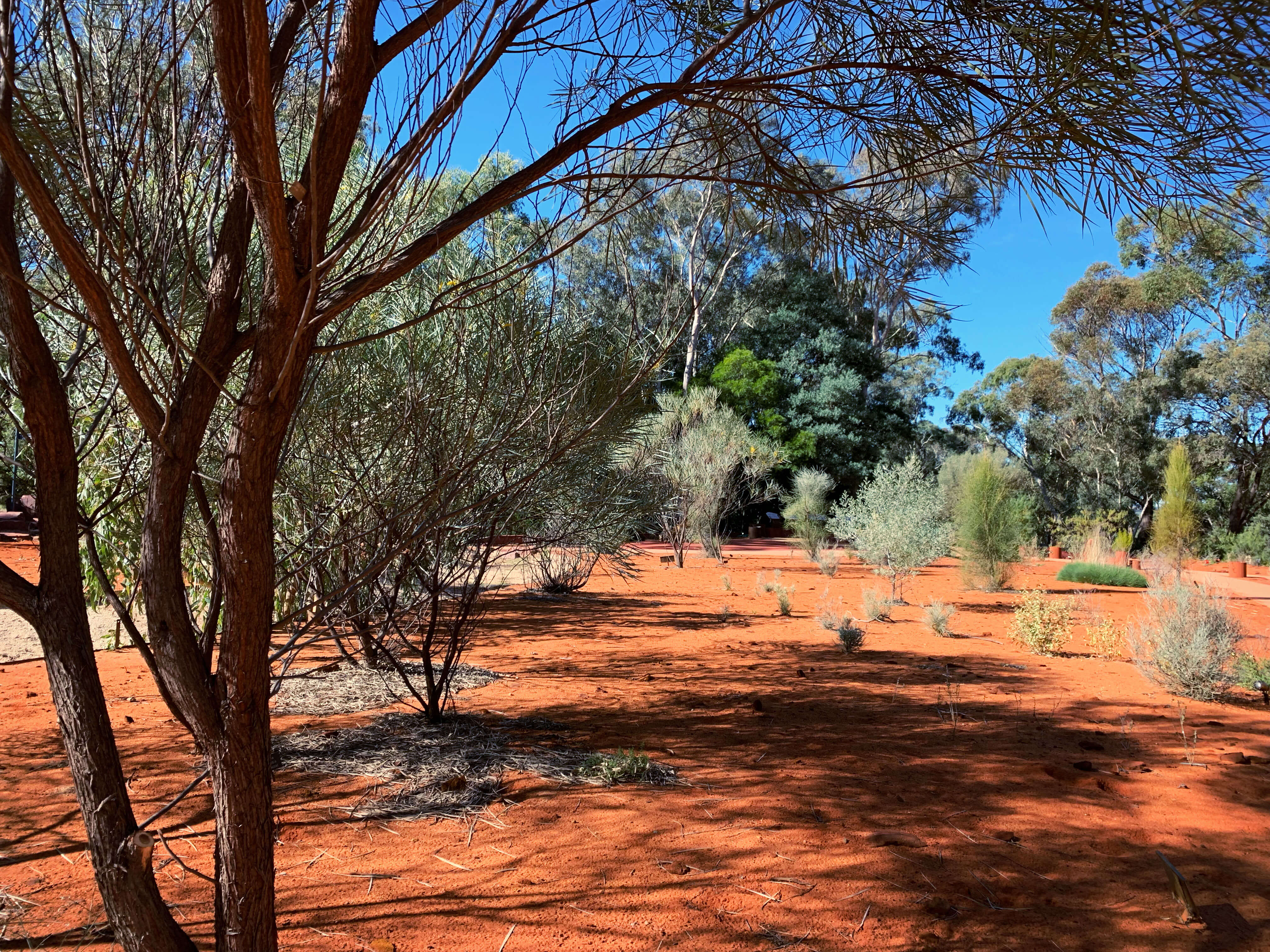
That thought became even more profound when I arrived at the red centre garden. A massive landscape spread in front of me, its red sand, dry plants, and searing radiance almost blinding my eyes. It wasn’t a hot day—it was the ideal temperature for a day out. However, the moment I saw those desert plants and their habitat, I saw a tiny sample of the real heat that the Outback gets throughout the year. Everywhere I turned redness stared back, reflecting the emptiness of the landscape. To my surprise, though, the garden also featured a massive structure of a lizard native to the deserts. Here and there were also busts of smaller animals that call the desert home. Walking around the garden, I realised that even a lot of Australian children don’t see or experience the Outback—which makes up for almost one-fifth of the entire country.

As I headed back to the main trail, I couldn’t help but wonder at the marvel that is Australia. In a single garden, I managed to observe the various temperatures, plant life, and lifestyles that this country contains. I enjoyed the afternoon exploring the gardens. And each moment will remain in my mind just as pleasant as the herbs and eucalyptus plants, just as incredible as the rancid cacti, and just as beautiful as the chilling rainforests.