Of making art

โ€œDo art and do it for the rest of your lives. Draw a funny or nice picture of Ms. Lockwood, and give it to her. Dance home after school, and sing in the shower and on and on. Make a face in your mashed potatoes. Pretend you’re Count Dracula.โ€

Kurt Vonnegut

I stumbled on this quote when I was least expecting to. But it made me stop and lean back in my cold, stone chair. It made me look out into the void, thinking, mind wandering, wondering about the undeniable necessity of art.

Remember when art was hobby? Singing, dancing, writing, painting, craftingโ€”all of those were categorised as activities to do during your leisure. Stuff you do to de-stress, to clear the mind after a long day of work. Thatโ€™s the mentality I grew up around. My family and teachers looked at art and creativity as an add-on to normal lifeโ€”not life itself.

Kurt challenges that ideology. Creative thinking shouldnโ€™t be allocated or limited to a specific time. Instead of looking at art as an activity for an appropriate time and place, we should think of it as part of our everyday lives.

Art is everywhere. From a puddle in the street and the graffiti on the toilet walls to an activist’s speech and signs on a protest. Everyone has it within them. And we should consciously choose to bring it forth and declare it as part of our personalityโ€”our identity.

Except, we donโ€™t.

Think about it: what would people say if you skip home from school one evening? When and where I grew up, people would label me as crazy, undisciplined, and out of control. Theyโ€™d blame my parents. A child dancing on the street is unruly.

In reality, though, itโ€™s self-expression. Children will be children. And they shouldnโ€™t be penalised for it. Our society has become so adept in suppressing the artistic and creative outlets of our younger generation that weโ€™ve ended up with a group of people whoโ€™re too busy to have time for art in their lives. And thus, art is now luxury.

As Australia burns…

โ€œWe think most of the animals were incinerated – itโ€™s like a cremation, [โ€ฆ] They have been burnt to ashes in the trees.โ€

Sue Ashton, President, Koala Conservation Australia.
Source

That line jumped out at me as I scrolled through today’s news. For a while now, most of New South Wales, Australia, has been burning. As of early morning today, a million hectares of land has burnt down, a number greater than the previous three years of bushfires combined. And itโ€™s only spring. Bushfire season is only beginning in this part of the world, and even before its proper entrance, greedy fires are lapping their way into peopleโ€™s homes and lives.

Yet, somehow as I read multiple articles mentioning three deaths and over a 150 destroyed homes so far, it didnโ€™t hit me as hard as the incinerated koala bears. Though I havenโ€™t lived through many global disasters, I have seen and heard of enough violence and terrorism to develop a mild numbness to human deaths. To me, it always felt like one group of humankind is always paying for the mindless blunders of another. 

This time, however, it wasnโ€™t just the humans. This time, for the first time in a long time, vulnerable nature is suffering from its own wrath. That article put it well too. The precise choice of words got me unawares, gripping my throat, crushing, pulling the air out of it in such a slow motion that I wished it would hurry up and get it over with. The casualness of that word threw me off balance. It made me breathe in so sharply that my eyes teared up from the pressure and the pain that shot all the way through my body. 

Words are powerful. Saying that over 300 harmless, helpless, animals were crisped while they clung to their homes, paints a picture so vivid that readers would relive the moment again and again. It was strong, writing. As a writer of things myself, I admire the gallantry of whoever wrote that speech.

As a reader, listener, it triggered me. Itโ€™s made me abhor the world we live in. Although my mind accepts the direness thatโ€™s become the new normal in the state, my heart still clenches to think that at this rate, koala bears could be extinct in 30 years. 

Itโ€™s scary to imagine a species that Iโ€™ve admired, photographed, and smiled at, would die out right in front of my eyes, and I wouldnโ€™t be able to do anything about it.

The state government has declared emergency for the first time since 2013. According to meteorological forecasts, tomorrow (Tuesday) will cause more damage than weโ€™ve seen so far. Greater Sydney, NSW, and parts of Queensland are expecting extreme bushfiresโ€”in addition to the 60 thatโ€™re still uncontained. Over 500 schools will be closed. Millions are evacuating to safer areas. High temperatures, low humidity, ghastly winds, and catastrophe await the state as it spends another sleepless night.

And someone said the climateโ€™s fine.

Making sense of Mint

When I awoke this morning with nothing to do, I mused at the rarity of it. I always have something to occupy myself with over the weekends. After rummaging Facebook for a while, I concluded that I could either go to a street market, where I knew a few of my friends would be, or take a solo trip to the Royal Australian Mintโ€”something I’d been putting off for a long time because it was just too far away.

The food market sounded fun, but considering I’d probably buy nothing and wander around aimless, I decided to do the wandering at the Mint instead.

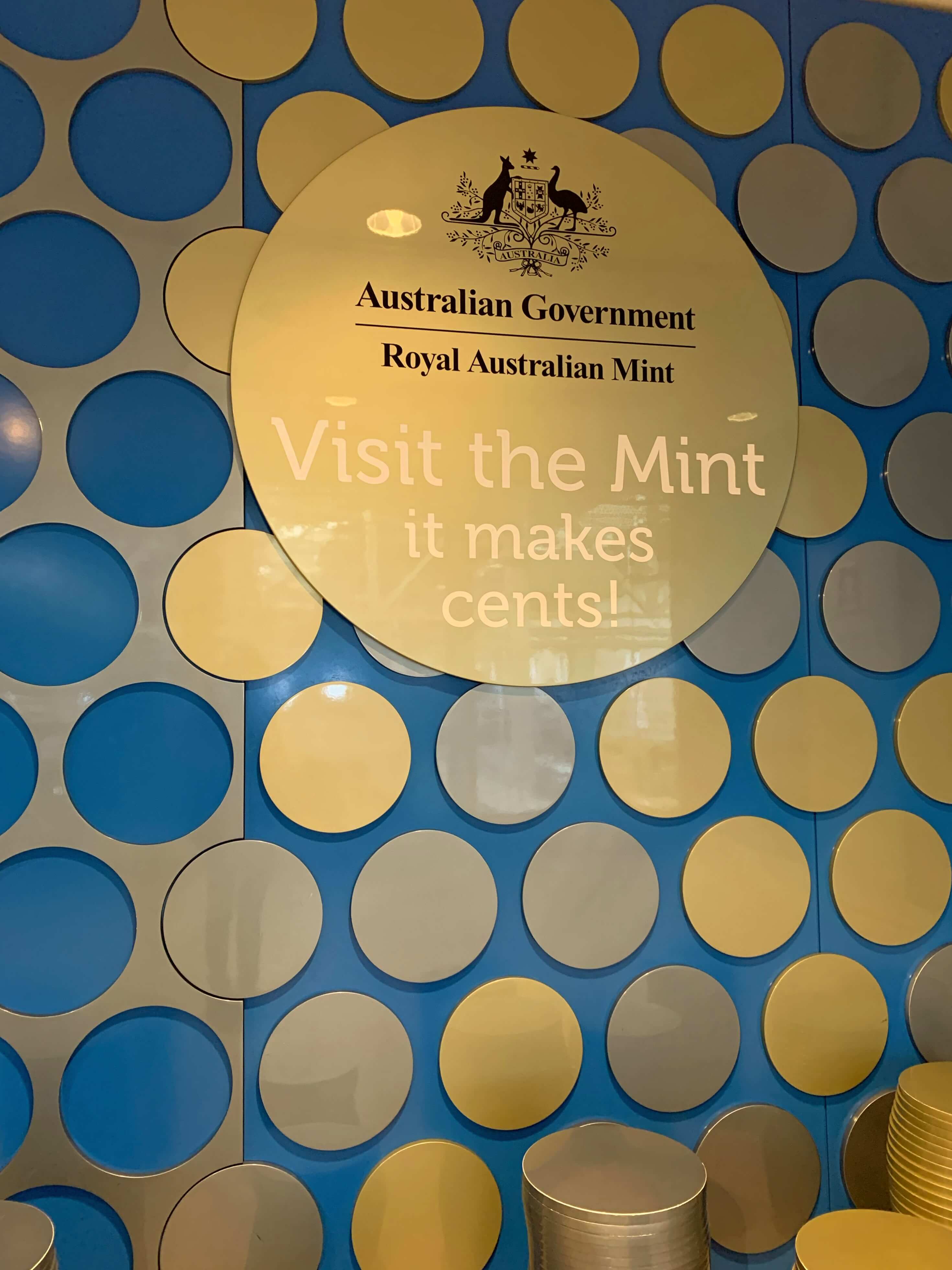
After two buses and about 45 minutes, I entered the building that runs Australia’s coin system. A big pot of gold coins greeted me. Next to it, a staircase led to the upper level and the main exhibition. Stepping upwards, I couldn’t miss the thousands of coins studded into the stairs.

On the upper level, famous Australian bushrangers greeted me in large cutouts. From time to time, the Royal Australian Mint makes comparative coins marking important events and people. This year, they’ve made a unique set of coins to acknowledge and appreciate the contribution of bushrangers to Australian cultures and stories. It was an excellent way to remember history’s villains, most of whom died in captivity.

Moving on, I entered a corridor full of stunning displays. Hundreds of coins marked the timeline of Australia’s currency system, dating way back to the first foreign coins found in shipwrecks. Since some of the first outsiders to arrive in Australia were prisoners and war slaves, most of their currency became the initial seedling for Australia’s current monetary system. These coins gradually replaced the natives’ barter system.

Walking my way down the timeline, I learnt how, from using coins of unknown lands, the country progressed to establishing a proper way to assess the value of these random coins. From there, they moved on to adopting the shilling-and-penny system that Britain was using. As a country, Australia was under the British reign for a long time, and it only made sense to use the same coins.ย 

Then came the decimal period. From farthings and halfpennies, Australia went to cents and dollars. Displays showed how designers formulate the images and engravings that mark a coin. Looking at the detailing of each drawing, I was amazed to see how most of the coins in current use incorporate unique Australian fauna. There’s more to this country than kangaroos and possums. And sometimes, even though we handle and pass on these coins countless times every day, we don’t often pause to observe.ย 

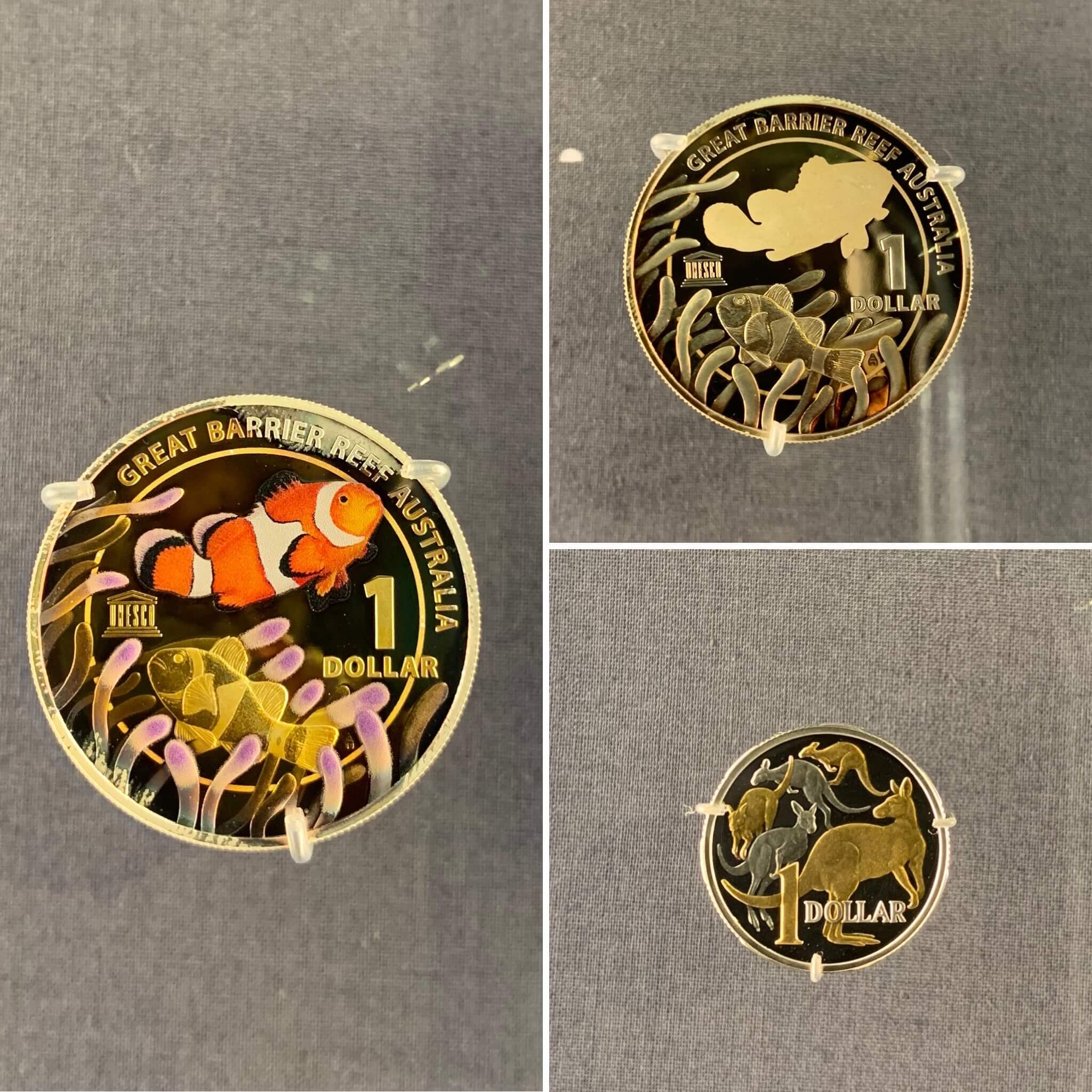
Apart from these coins, the Mint also had displays of other collectible coins and medals that it’s made over the years. There were 1kg coins in both gold ($3000) and silver ($30) marking the Mint’s partnership in the 2016 Olympic games. There were gold, silver, and bronze medals offered to winners at the 2000 Olympic Games in Sydney. Also on display were the medals presented at the 2019 INAS Global Games. And my favourite, three special coins celebrating the Great Barrier Reef.

Great Barrier Reef - collector coins - Royal Australian Mint

It took me about an hour and a half to look and read through all the displays. From the various metal combinations tested for a single coin and the different designs they considered, to the actual robot that helps with heavy lifting and transporting during the minting process, the Royal Australian Mint has so much awe to offer. I’m glad I skipped the markets for this.

St. John’s Wort, a review

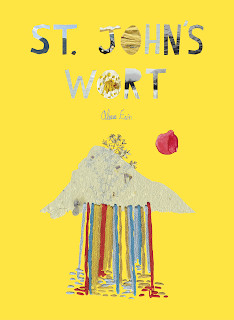
St. John's Wort, a poetry collection written by Alexus Erin. Published by Animal Heart Press.

It’s hard to say what Alexus imagined when she titled this book, St. John’s Wort. It’s the name of a European medicinal shrub known for treating depression. Like most of the world, if you consider the book at face value, you’ll think it’s therapeutic, that it calms and elevates your experiences.ย 

It does. 

However, as you read through the poems, over and over again, to make sure you don’t miss a beat or the depth of meaning folded neatly in between lines and stanzas, you’ll realise that Mayo Clinic was perhaps right. As one of the top possible side effects of St. John’s wort (the shrub), it lists agitation. Which is what you feel when you’ve read these poems.

Alexus doesn’t look at the world around her and burst into flowery language. Instead, her poems are deliberate. Each line, each syllable rings with meaning, and whether or not you directly relate to it, you feel what she sees, and you see what she feels.

Imagery is for the ear as much as it is for the eye, you learn as she describes in Laughter,

โ€œI know God laughed
when night bathed tabletop-
tabletop cradled the New York Times, a pound cake. I sang carols over the brushed, high-hat hiss of a Vanilla Coke can.โ€

Alexus’s poetry isn’t simple. Layers upon layers of complexity lie in each poem, and she makes you work to reap the sweet benefits of the sadness lingering in those hard words. 

โ€œWhen I learned my father had an aneurysm, I thought about the day his brother had the aneurysm.
I thought about Plath, then Hughes
then about how suddenly I needed to buy pudding
from the grocery store.โ€

When referencing a father dying of aneurysm, not everyone draws a parallel with Sylvia Plath’s “Daddy“, where she confesses struggling to forgive her father’s involvement in the Holocaust and his lack of self-care that resulted in a gradual demise. Alexus cleverly matches the Plath reference with the seemingly related Hughes, while instead, with a subtle streak, alluding to pulmonary artery aneurysms, a rare autoimmune disease first described by British physicians Hughes and Stovin.

Good poetry resounds though your being, leaving blotches of reality, like ink on paper, marking you for life. This collection of poems takes it furtherโ€”you have to marvel at Alexus’s wordliness, the way she’s melded poetry with dark reality, and the way she’s dejargoned medicine, revealing it in bits, like droplets on whiskey, just enough to hit you with a boldness that momentarily disarms you.

It’s not, however, a book you need to pair with a high-edition dictionaryโ€”although a nice Riesling surely complements. Scattered throughout the book, in snippets that speak the truth as it is, are poems so simple and so pristine that you can’t help but pause to inhale the beauty of words.

โ€œWhat among us wonโ€™t, one day,
Be turned inside out?โ€

She asks in such tepidity that it strikes you, slices through your pretence, as intense as hot knife through cold butter.

Alexus ends that poem, Year of the Rabbit Hole, hinting at self-help, while artfully voiding her voice of the unworthiness that comes with such books.

This collection is a chain, flaunting a range of topics, all bound by the string of tragedy. Every poem is an ode to an incident in lifeโ€”sometimes personal, often notโ€”leaving you with a shudder, questioning you, and enticing you to question the world you see.


Musings from reading St. John’s Wort, a poetry collection written by Alexus Erin and published by Animal Heart Press.

The thing about routine

November is National Novel Writing Month. That means, aspiring novelists, and even established ones, spend an entire month feverishly writing a full-length novel of at least 50000 words. NaNoWriMo (short for National Novel Writing Month) is also a non-profit organisation that mentors participants, keeps them motivated with pep talks, and organises group meet-ups across the world for people to write together and make the most out their time this month.

November is also National Blog Posting Month (NaBloPoMo). For the less motivated and less ambitious than the NaNoWriMo participants, this month is all about posting at least one blog post a day. 

About five years ago, I tried NaNoWriMo and finished writing my first full-length novel. I was thrilled. Over the moon, to put it in figurative terms. The following year, I took up NaBloPoMo. And to my utter surprise, I managed to succeed in that as well.

Since then, though, I havenโ€™t officially participated in NaBloPoMo or NaNoWriMo. I did challenge myself to finish a shorter novel (of 30000 words) during Camp NaNoWriMo in July, and I did. However, I have lost interest in joining others as they declared their big goals for November, of writing at least a little everyday so they can meet their goal. I have my goals too, but I no longer feel the need to broadcast them. And the reason for that, I think, is that ever since I did the one blog post a day challenge, Iโ€™ve been posting at least once a day. For over two years now, Iโ€™ve had a blog post go live every day at the same time. To do this, Iโ€™ve had to often force myself to write something every day. Some days it flowed easily, but some days it didnโ€™t. Some days, while travelling in particular, Iโ€™d schedule a bunch of haikus to go live even if I couldnโ€™t publish them myself.

Therefore, for the last three or four years, Iโ€™ve written and published every day. Some days I donโ€™t do too well, but some other days, I impress even myself.

During this practice, Iโ€™ve learnt that writing something, anything, every day is a great way to keep the brain muscles oiled and nourished. Iโ€™ve now developed a certain itching in my mind whenever I donโ€™t write. Itโ€™s become part of my routine to sit down for a while every afternoon, regardless of how busy I am, and write a few words about whatever strikes my fancy.ย 

You never know what such habits will lead you to. For me, it got me hooked into the art of telling a story in 14 syllables. I started writing a lot of haikus. I found stories in people I observed and translated them into short stories and 100-word flash fiction pieces. After all this time, these random pieces of work have become my life. Now, Iโ€™m making conscious efforts to submit my work to online magazines. Itโ€™s been a great journey so far, and I can only see it improving.

Routine life can be tiresome, yes. But sometimes, it can also be rewarding.