Tea or coffee?

“Er—”

As a lover of both, it’s one of the biggest dilemmas I face in a gathering. Most people are either tea drinkers or coffee fanatics. I understand that. However, I come from a long history of tea estate owners and workers who used to wake up to the decadent smell of dewy tea leaves outside their windows, and who washed down their morning carbohydrates with a steaming pot of black tea. To say I’m a tea lover is like saying the Joker is eccentric. It’s moot.

That said, I also partly come from a society that relies on the laxative power of coffee to kickstart their day and metabolism. A hot cup of flutter coffee infused with sugar and milk is the stable beverage of a typical south Indian household.

And so when choosing one, I struggle like a mother being forced to choose between husband and child. While the former leads to the discovery of the other, the other only increases her passion for the first.

I like tea. I like coffee. And I always struggle to choose between the two.

So for a long time, I made a compromise in such a way that I give both of them equal importance in my life. Instant black coffee served as the first dregs of fuel for my engine, kicking off the day, whereas a cup of tea became my standard breakfast. Afternoons were dedicated to either lemon tea or black filtered coffee, depending on the weather, while the other one became my regular dinnertime beverage. Some days lemon tea went with lunch and some days with dinner. Either way, I was sure to get enough of both in a day.

Then I went to Melbourne for the first time, the coffee capital of Australia. It offered me some of the best-tasting coffees I’ve had in my life. Not to mention affordable, even in the central business district (CBD). However, that wasn’t the most noteworthy thing about Melbourne. Aside from the impeccable coffee, I discovered a strange thing called dirty chai.
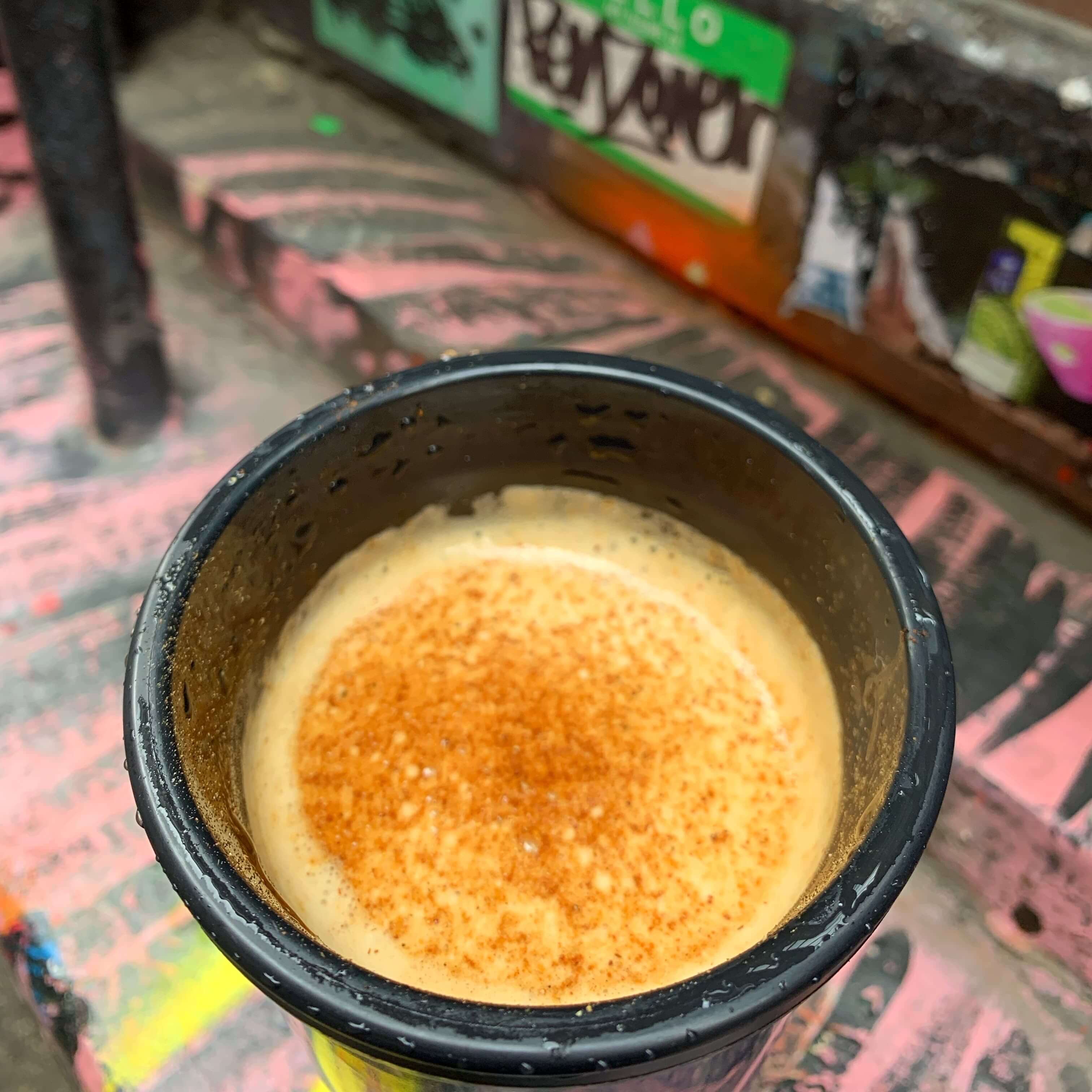
Dirty chai with cinnamon topping - Melbourne

One of my American colleagues (who was visiting Australia) introduced me to the miracle that is the dirty chai. I had no idea that you could mix tea and coffee and end up with a concoction so addictive and mesmerising that it’s unbelievable it’s not more prevalent.

Yet, there it was—a simple brew of stewed tea leaves and a shot of espresso, melded to create a beverage that not only thrills the tastebuds but also satisfies, satiates, the penduluming soul of the tea-coffee lover.

It’s one of the many reasons to love Melbourne. It has such good coffee that it transforms a plain chai into a dirty chai that you’d love to cuddle between your palms, taking in one of the world’s best fusion creations.
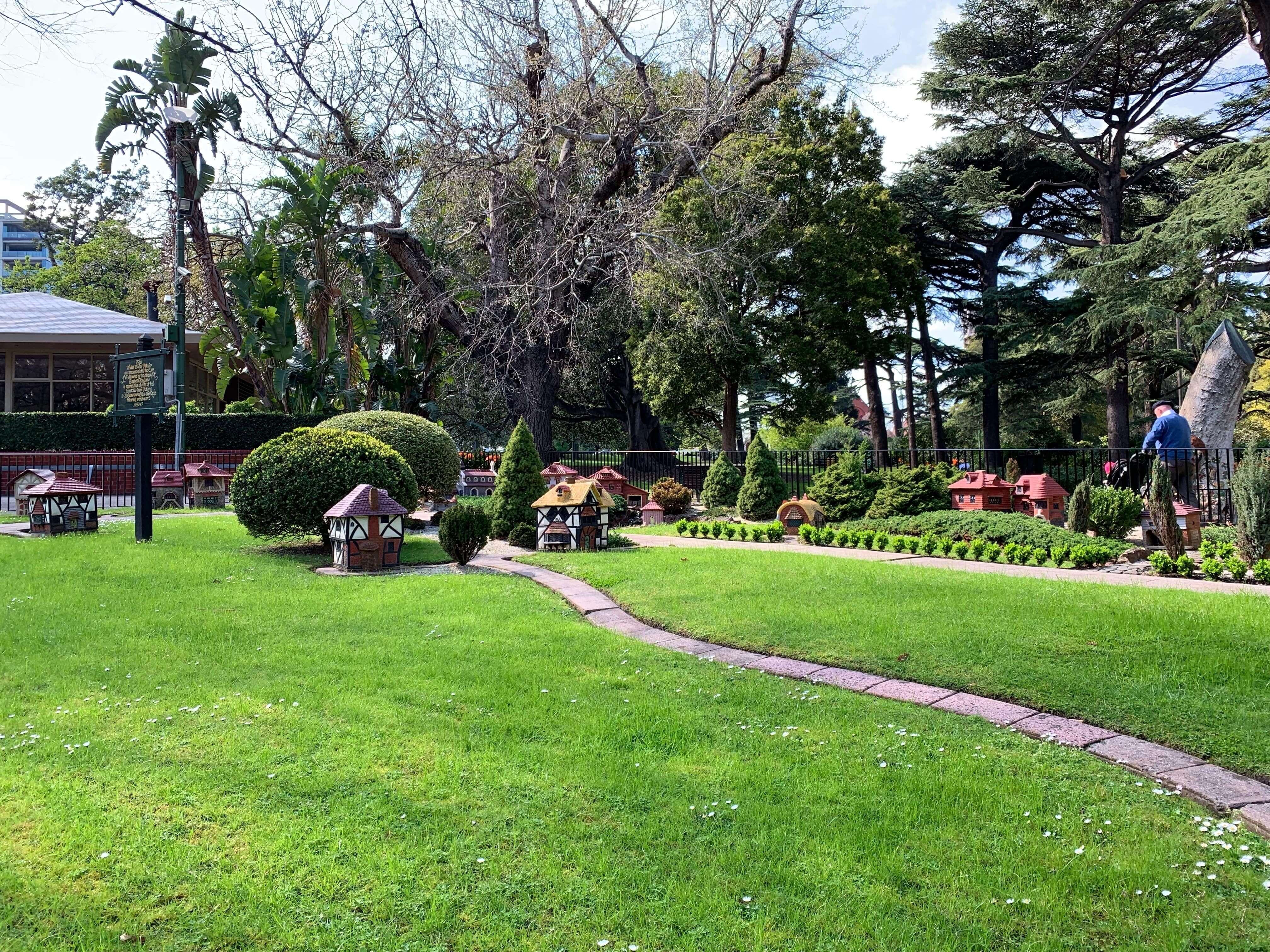
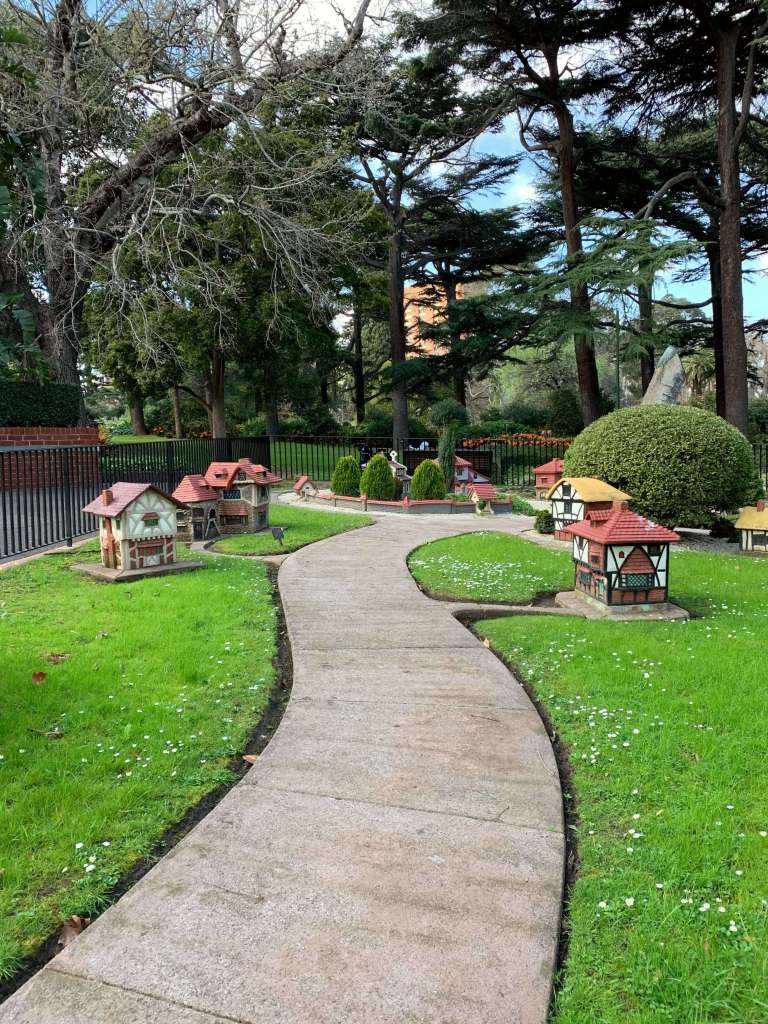
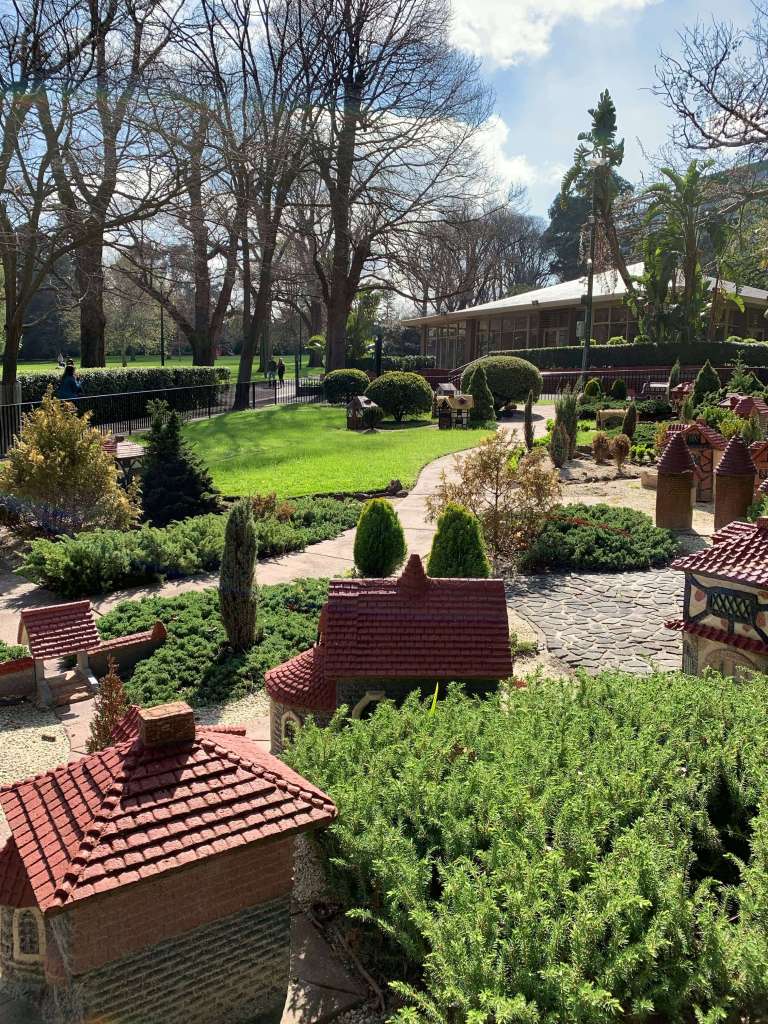
The small Tudor village

Art finds countless ways to make history. When in Melbourne, attending a work conference, I managed to wander into the Fitzroy Gardens. It’s a massive nature haven with a 150+ year history. What’s more, it’s in the heart of the city, making the city far more prone to desirable infection from beautiful greenery, flora, and thousands of chirping birds.

Part of Melbourne’s charm, aside from its century-old Victorian architecture and artisan coffee, is that everything has a history worth remembering—or trying to remember.

To appreciate how deeply history and art are embedded in Melbourne’s lifestyle, I had to see the Tudor Village.

Tudor Village in Fizroy Gardens, Melbourne

Among the many historical elements in the Fitzroy Gardens, The Tudor Village is a piece of art and a gift from a British artist. Mr. Edgar Wilson was 77 and lived in Norwood, London when he made villages as a hobby. Modelled in cement, the Tudor Village is one of his three works and is a miniature replica of an English village during the Tudor period.

It took me a while to notice them, but the village comprises of thatched cottages, a church, school, hotel, a barn, and all the public buildings you’d expect in a self-sufficient small town. Even the architectural elements were precise to that period.

The Tudor Village, however, isn’t just any gift. It was a symbol of gratitude to the city of Melbourne for sending food to Britain during the Second World War.

It’s such a great icon in the gardens. There I was in Victorian Melbourne, dropping my jaw at an ancient Tudor-period village.

If you visit Melbourne, stop by the gardens. There’s plenty more to see as well.

Seeing nothing

Art is seeing things no one else does. From nothingness comes beauty and a stream of endless creativity.

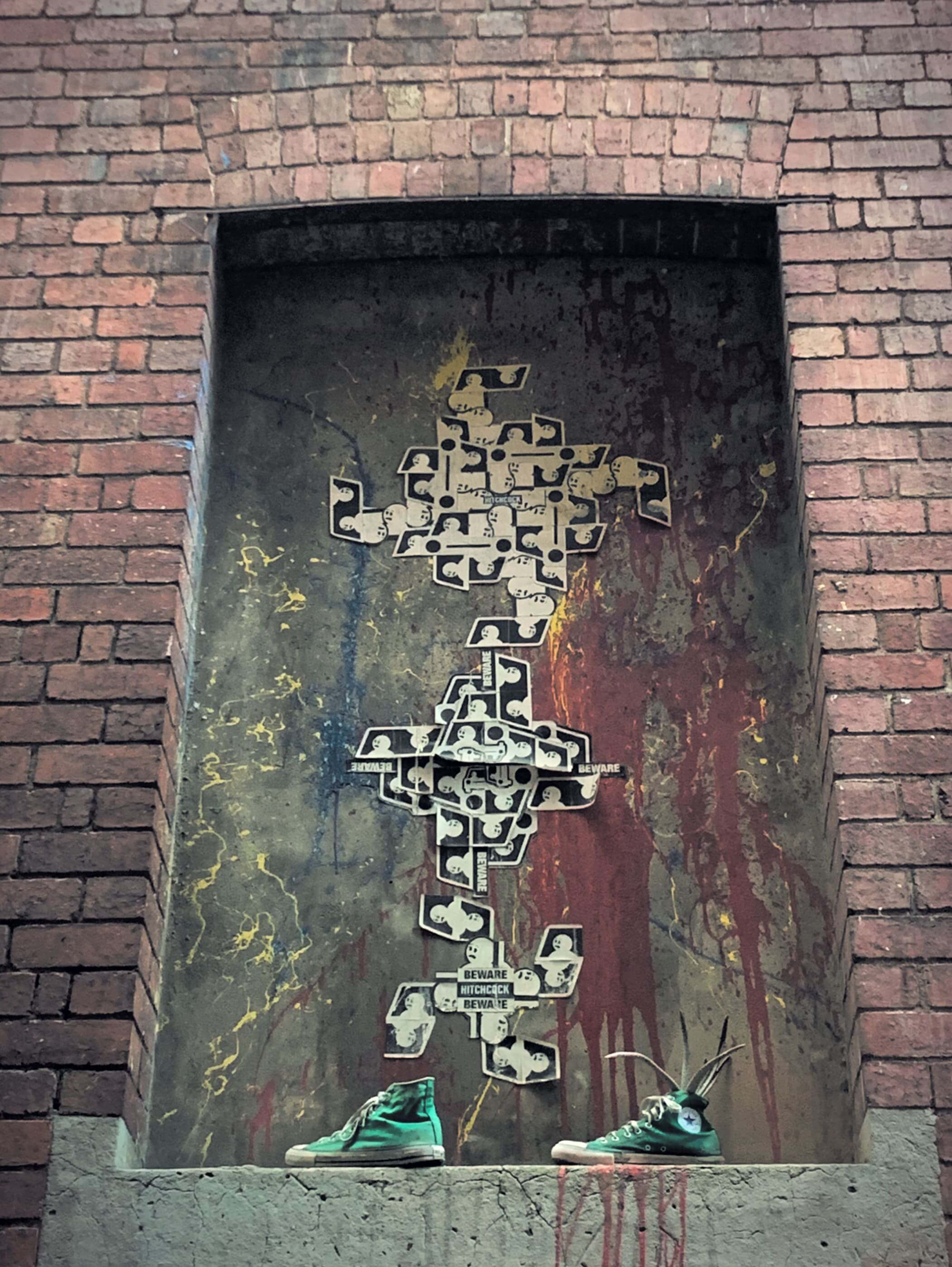
Street art in Melbourne

I came across this piece of work in one of the many alleyways in Melbourne. Like most of the graffiti there, it was insightful and stunningly beautiful. But it was more than just eye candy. It made me stop and stare. Even after browsing through countless alleys and numerous shades of black and brown and everything else in between, after taking photos from all angles that my camera could twist into without losing its stamina, this art stopped me in my tracks.

It was powerful because, unlike most art you see on a daily basis, it stood out in a different way. It requires the viewer to look at it from a certain point of view. From close by, the art is nothing but a bunch of oddly stuck pieces of paper with strange ink marks. From close by, it’s easy to assume it a worthless waste of space. You have to be far enough looking into the art to see it for what it is. You have to have a mind and eye open enough to entertain the possibility of blending a physical product with a patchwork figurine. 

And that’s what good art does to you. It makes you consider aspects you’ve never considered before, see visions you’ve never envisioned before, and feel emotions you’ve never thought you were possible of feeling.

Art forces you to become aware of what’s around you, in such a way that you start sensing the wetness of the dense air that hangs right above your shoulders, like a ghost’s arm, invisible but so clearly present.

The undeniable cycle of writing

I’m a marketer. Even though I have no formal degree in marketing, over the last six years, my work experience has taught me many things. One of those, which is also regarded as the most important, is knowing your audience.

I write marketing copy for the web. And that means I need to know my audience. I need to identify who exactly I’m talking to and speak to them in their language. My tone, choice of words, and even the length of my sentences depend on the capacity of my audience. Absolute precision in words and messaging is necessary. No compromises. Every piece I write begins with an audience analysis.

But then, I also write poetry. And poetry doesn’t have an audience.

Curious contrast, eh?

I attended at a poetry festival recently, and while discussing about who they write for and why, a group of panelists unanimously agreed that they write for themselves. At least at first. And that’s the underlying truth for all forms of art. No one starts creating art because they have an audience waiting for it They start because they can’t keep it in themselves any longer. 

I write short stories, poems, and random ramblings (like this one) because I have to get them out somehow. Creative writing is an outlet, a necessary drain to flush down the overflowing ideas and thoughts that’d otherwise clog my brain and leave me a walking pile of stink.

Therefore when I write, I write for myself. I write to make myself feel better, to clear my chest, and to put my mind at ease. And through that inane need to pop the bulging bubble in my head, I end up creating an audience that relates to whatever I put on paper.

Still, even though I write these poems and stories to satisfy my own needs, they also need a platform. Sometimes I’m happy to tuck my work away from the rest of the world, but more often than not, I want to share my work with others, to thrill them just as my favourite writers thrill me.

As long as I only want to write stuff and don’t care if anyone reads them at all, I don’t have to worry about marketing. But the moment I let my ambition get the better of me, the moment I crave acknowledgement and recognition even, I need to start thinking about audience and how to say what I want to say in a way that makes them want my work. Therefore comes marketing.

My point: Marketing is everywhere. And we all have to market ourselves at some point. Can’t say I like the idea, but can’t deny it either.

Adjusting to a new place

People often exaggerate when talking about the difficulties of migrating to a new country. 

Of course, you don’t have any friends, and it’s painful to understand not only the ways of life, but also the regulations, policies, and many common practices that you’ve never even heard of before.

It’s been seven months since I moved to Australia, and I still have trouble understanding what the various organisations I often come across do. I can’t figure out the confusing superannuation (the employee retirement scheme), the expensive tax deductions, fluctuating supermarket prices, or the various insurances including health, dental, and ambulance. You can even get insurance exclusively to cover the cost of transporting you from home to the hospital in an ambulance. Holy sphinx, huh?

Yes—moving to a new place comes with the burden of understanding its culture and lifestyle. And it can take much longer than you anticipate.

However, aside from these significant issues that gnaw at your brain now and then, everyday life is pretty easy to adopt. For instance, I live on a day-by-day basis—I wake up, work, cook, eat, shop, walk, and sleep. That’s my standard day, with moderate modifications like meeting a friend, attending an event, or just wandering the parks because it’s a beautiful day. That’s how I’ve been living and haven’t had much difficulty adjusting to life in Australia.

It didn’t take long for everything around me to seem natural, and there’re only a few surprises that stun or destabilise me. I was in the bus a couple of days ago, and as the vehicle turned left in an intersection, I suddenly noticed how broad the streets are, compared to where I grew up. Then it hit me—I’m now so accustomed to these streets, the style of shops, and people’s mannerisms, that they’re no longer shocking as they were in my first week. At that moment, in the bus, I couldn’t believe I was living in Australia. It felt like a dream. And yet I’d lived through all these months comfortably adjusting and fitting into this lifestyle. 

It doesn’t take long for a new person to incorporate themselves into a society. We think it does because not everyone feels at home in a new place. And that’s a whole other thing.