Unlikeable Reading

I’m reading “Tribes, We need you to lead us,” by Seth Godin. And I’m impressed with the way he’s written his text. It’s easy to read, full of matter, and so much inspiration.

And yet, there’s no excitement. At least not for me.

I’m surprised I didn’t realise this sooner, but every book I read for pleasure has a unique style and writing sense. And every book I read for knowledge lacks that element in every syllable.

Seth Godin’s book is great. I breezed through page after page without ever having to stop for a moment to appreciate the beatuty of his weaving — because there was none. His book is worth quoting, sure, but only for what he says; not for how he says it.

Then I understood why text books never get the appreciation they deserve. Who’d read a book that’s full of facts void of facets? But every school teacher insists on reading those textbooks, and likewise, every manager insists on reading “how-to-best-do” books.
The former will help get more marks and the latter, more strategies, and therefore, more money.

And yet neither of these make us skip a heartbeat, keeping us in mild excitement throughout the length of the book. These are more like medicines; a necessary evil. They communicate, but they don’t make us appreciate the art of communication. They convince because the name on the cover is already an established authority. No one questions it, no one contradicts it.

A lot of people I know who don’t like reading say so because they’ve never read anything apart from their school textbooks. No wonder they hate reading. If I had to read only titles that read “Ways to leverage your writing potential,” but have zero writing potential in them, I’d hate reading too.

But when reading for pleasure, everyone contradicts the author. Every reader, novice or expert, has an opinion to cast at the story. And that’s why writers adopt the more proven way of persuading readers. They makes us fall in love with what they have to say. Every sentence, every word choice is so deliberate that it sparks a myriad of emotions in us.

This brings me back to textbooks. If knowledge-intensive, preach-oriented books are interesting enough, perhaps more of us would enjoy reading. Perhaps then, we’d be happy to learn from what we read.

What do you think? Have you read instruction pieces with enjoyable narratives?

When Nature Calls

He had ten seconds to enter the correct combination of letters, numbers, and special characters. He bore the responsibility of an entire world. He was the only chance of saving all those people. If he failed to get back in the field, he’d lose all his hard word. He didn’t mind starting over, but it would be devastating to those who depended on his success.

And yet, he had been careless. He had rushed back, but the system had already locked him out. Frantic, he typed. The text box jiggled, indicating a mistyped password.

Video games seldom considered bathroom breaks.

Tis a Sin

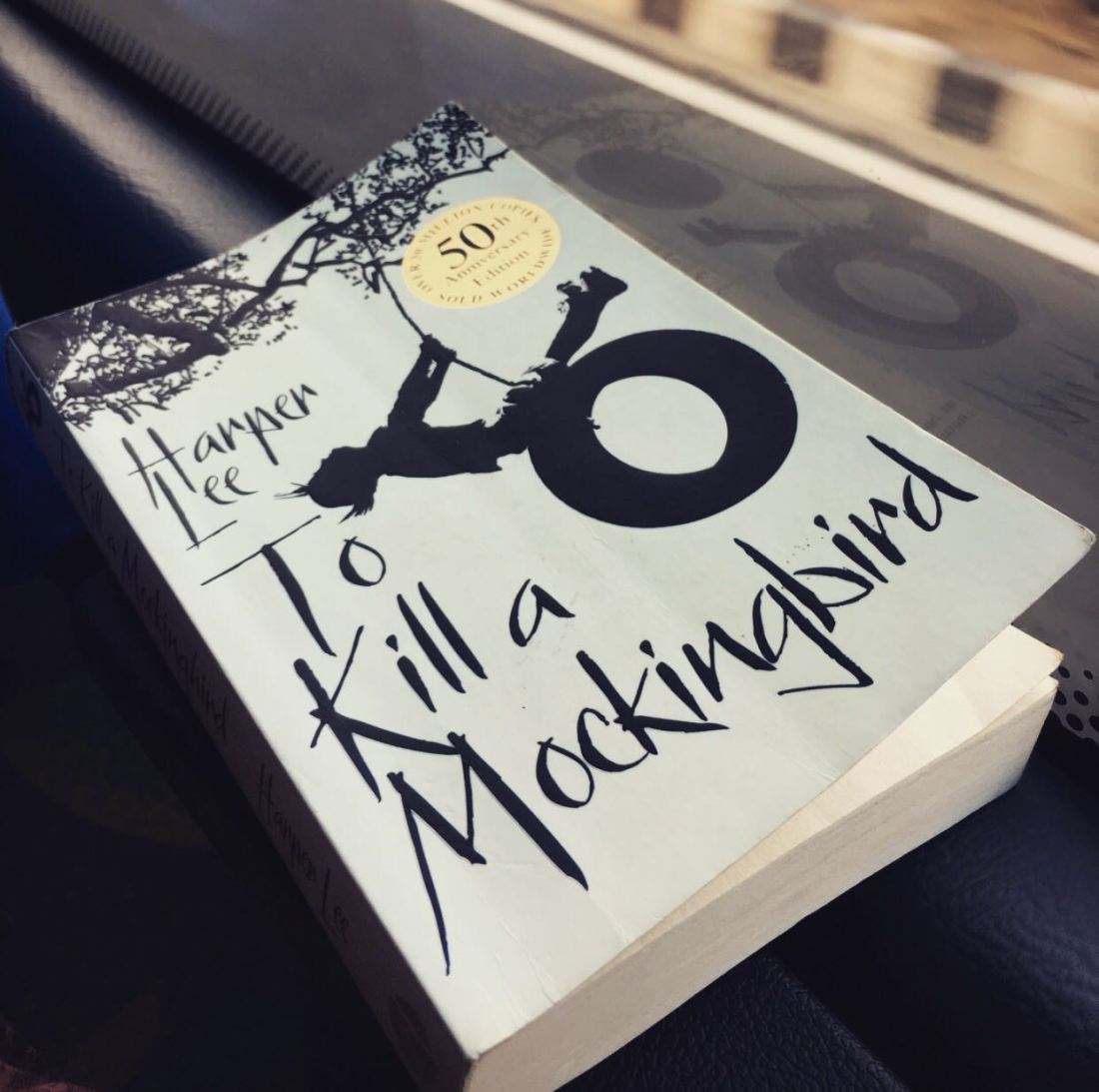
I’ve just finished reading a classic novel that I should’ve read ages ago. However, like so many other books, I took my time to get my hands on To Kill a Mockingbird. Needless to say, I regretted not reading it sooner. But there was also something different about this book than the others I’ve been reading.

To Kill a Mockingbird is a simple story. It has a complex plot that’s worth talking about for years together, but the story line was simple enough. Harper Lee had chosen a not-so-uncommon incident, and worked out a narrative around it. I didn’t realise it until after I finished reading it, but the entire plot wove around a single strand, one strong piece of gossamer that shone bright enough to attract and magnetic enough to keep me attracted through to the last page.

I can’t remember the last time I read a book so captivating, so relatable, and so enchanting. I loved the brother and sister. I loved how the brother would nag the sister saying she was becoming too much like a “girl.” Brothers do that, and not many books illustrate it as well as this one does. Throughout the story, the relationship between the brother and sister blossomed from childhood trebles, evolving into an everlasting bond of friendship and reliability. That’s how real brother-sister relationships mature, and I was amazed when I realised that no other book I’ve read (so far) ever mentioned anything like it.

Every character was a an entity in itself. Scout was an atom of energy, reminding me of my younger days when I frowned at pink flower frocks, picking, instead, a pair of comfortable overalls. Jem was a natural, a protective brother who watches out for his sister, loveable yet condescending at times — just like mine. As for Dill, he’s the kind of person we’d come across in life who has it all — or so it would see —  and yet, has nothing worth having.

Calpurnia, the beacon that lit up the Finch household, was the ever-smiling help at home that makes every child learn while they yearn for her cookies.

And Atticus, dear Atticus, what a father he made. Standing by the suppressed, jovial and just Atticus was the perfect protagonist. When he’s a typical father who doubts his parenting skills, when he demands the truth without raising a tone, when he caresses his daughter’s hair, when he embraces Jem’s adolescence — Atticus’s every action makes the reader love him even more.

How could anyone be unaware of such vivid writing and vivacious narrating? If it’s a sin to kill a mockingbird, tis a greater sin to let great works go unappreciated. At least now I can cherish it, late though it is.