The Gandhi Zone

I didn’t realise for a long time how much we, as an Indian community, use Gandhi’s name on everything. It’s become so common that from being a credibility-booster, it’s become a marketing ploy. Like some low ball technique we use to get our way in the world. Or as an excuse to take pride in our stupidities.

“In the land of Gandhi!” they say. Or proclaim, in fact. In the land of Gandhi, we did this, and that, and all other things we didn’t do.

Which is fine with me, except that we’ve exhausted the name now. In futile attempts to show how much we adore the man, we even named streets after him. And in more cases than one, M.G.Road is a city’s official shopping zone.

There was one in Darjeeling too.
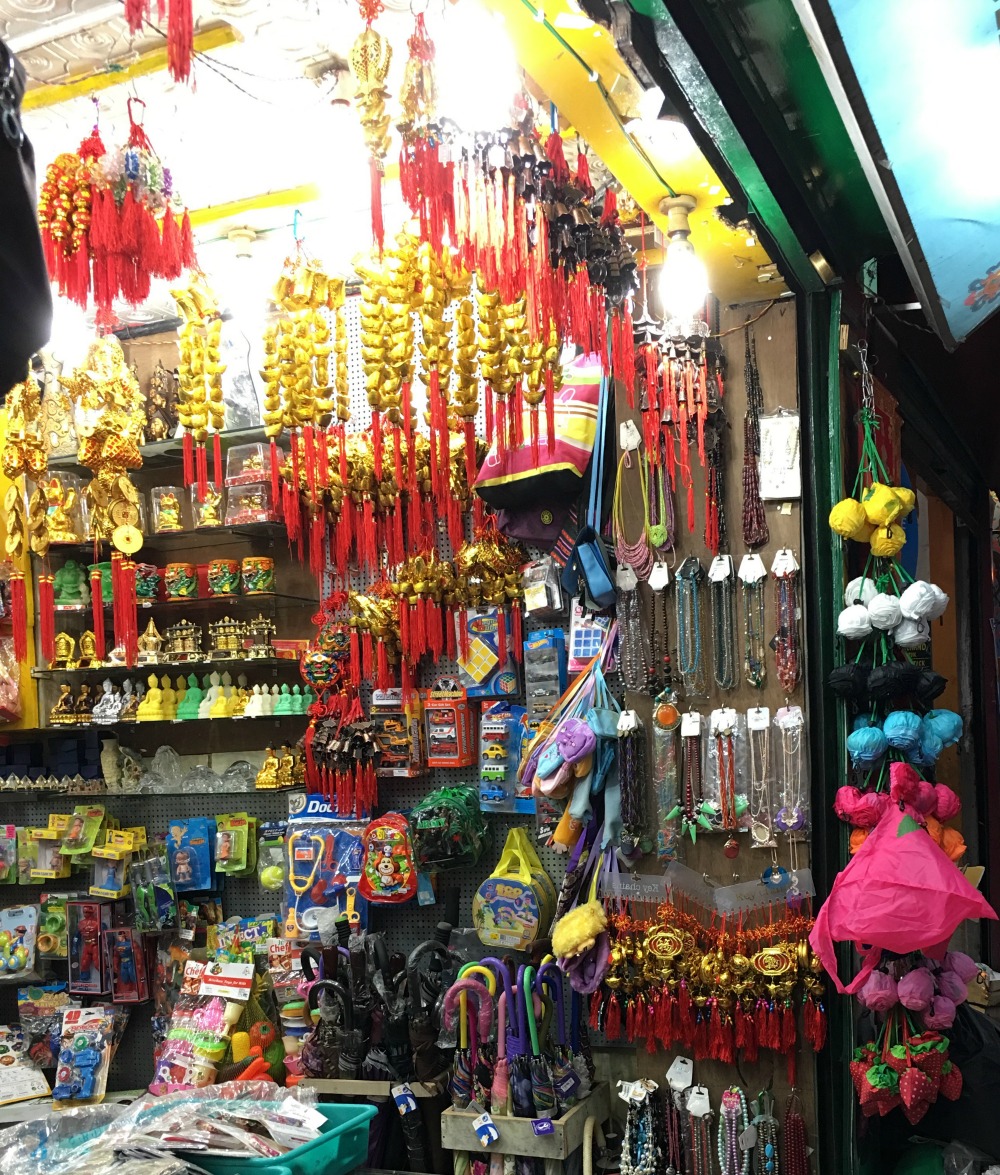
MGRoad 1

It’s amazing how the name “Mahatma Gandhi Road” is a shoppers’ stop when the man himself advocated ultimate simplicity. Guess it’s just another of our inherent paradoxes.

As I walked along M.G.Road, I saw all the things Gandhi stood against, while he himself stood next to a fountain, as erect as a guard.

Watching him watch the tourists, I remembered studying in an old school book that he preached simple attire. Whereas in M.G.Road, people ogled at woollen sweaters, silken scarves, and sleeveless dresses studded with little stones that mirrored the chandeliers.

There were bakeries stuffed with all things self-raising, and salty, buttery goodness. And sweet shops showcasing the pride of West Bengal. While stacks of shops sold home-made foods, there were cafes and snack stalls too. Some places sold tea, some coffee, and some places just disgraced the emotions of tea and coffee.

MGRoad 2

And of course, countless liquor stores luring in the fancy folk who preferred things stronger than a simple cuppa. Oh, and tobacco too.

In the middle of all these, stood Gandhi’s figure, deep in observation. Not that he could do anything, of course.

And then — the flowers. So may flowers. So many colours, so many shades, so many tiny petals bearing tiny leftover droplets from the rain of just moments before.
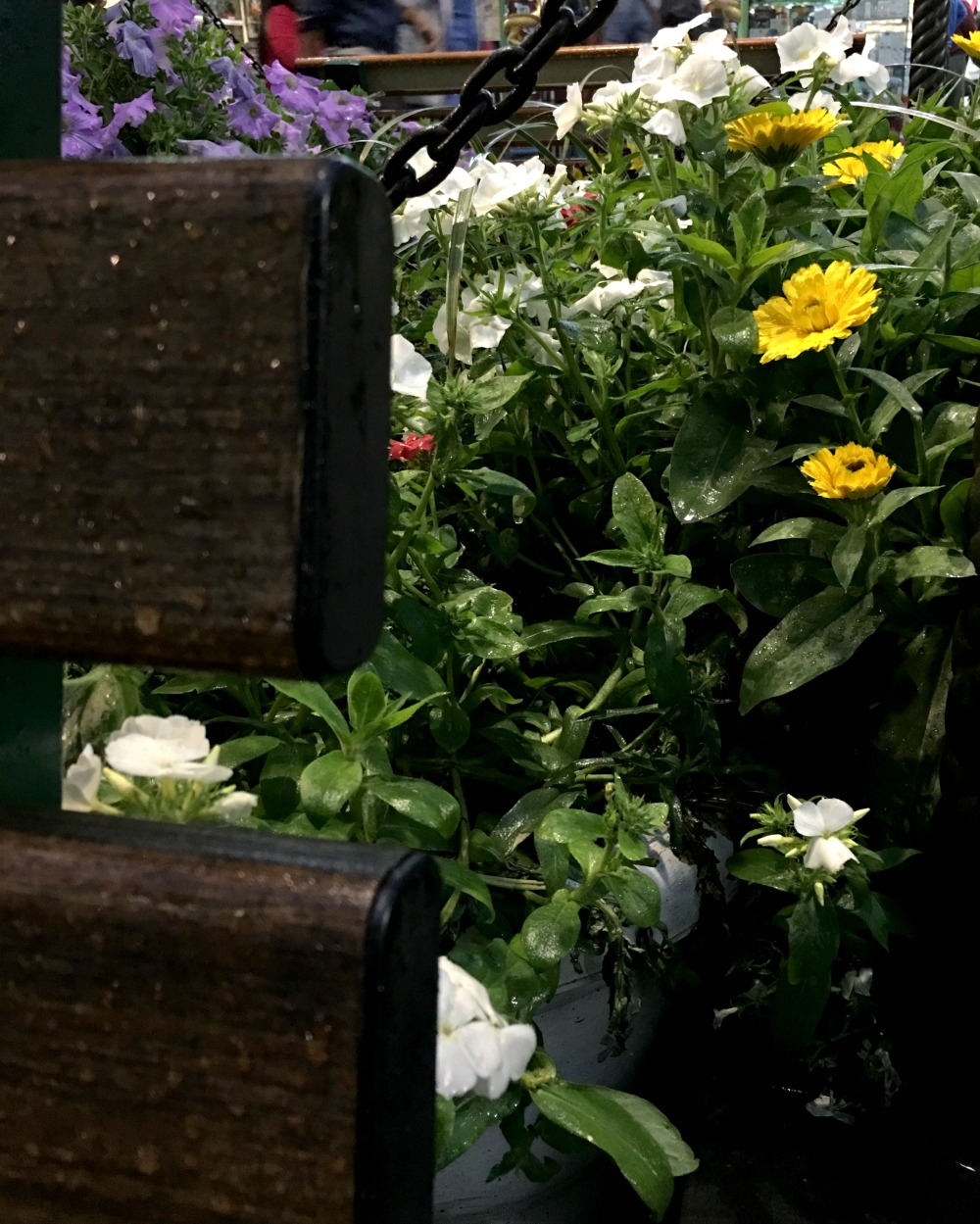
MGRoad 3

It was a magnificent sight. Even for me who hated shopping in every sense of the traditional word. I loved walking through that street. And the best part of it all: The street is always closed to vehicles from late in the day to later on in the evening. That made it all the more welcoming. With the rain adding a dash of chilliness to the cold breeze, the smell of someone’s strong cigar wafting through the air, the steaming cup of tea in my hands, and the bunch of friends ready to laugh at a good joke — what more could I have asked for?
The Time Factor

“No one can see the future,” some say.

But what if you could?

We’ve all have that fantasy: To know the future. How we’d be fifteen years from now. Where we’d live. Whether Trump would become president, whether ISIS would conquer Europe, or whether J.K.Rowling would write a part nine of Harry Potter. On a warm night, when you’re gazing at the dark sky studded with stars, you can’t help but wonder…

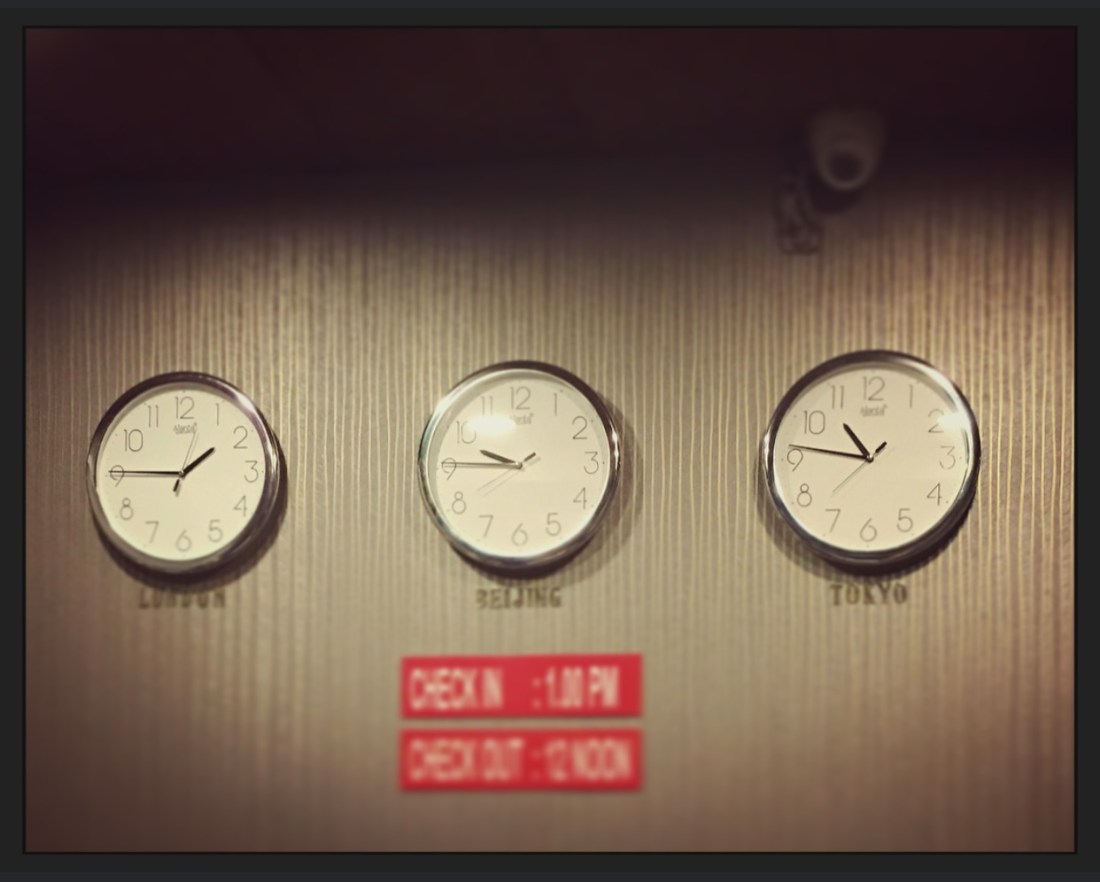
But then, sometimes you don’t need a summer night and glittery stars. Sometimes, just the clocks would do.

clocks


Editing Hurts

As someone who’s spent the most of her free time writing crap and reading about how to write, I can claim, with certain authority, that editing hurts. Not internal editing, mind. That’s an undeniable part of every writer. I mean the external editing. The proofreading. The extra pair of eyeballs that eye your writing. And it does not help that the extra eyeballs are so focussed on putting you off.

Because editing hurts.

It hurts to write a 200-word piece where you think and rethink each word, each phrase, every pause, and punctuation, just so that someone else (who knows nothing about the effort you’ve put in) comes up and sweeps away all your work down the drain.

Editing hurts.

I’ve spent my whole life fantasising. I want to publish my own novels. I want to write, and write what’s right for me. And for me, writing is personal. It’s my democracy. For me, by me. But not everyone thinks so. As long as I wrote pieces beginning with “Dear diary,” I could write anything without anyone’s interference. But once I moved out into the light, once I started craving the appreciation that good writing deserves, I came under the spotlight of editing. I had more balls than ever, eyeing my work. I had more colours in my page than I liked. My blogs started looking like an ethnic clothing brand, and my sentences had less of me and more of others.

My writing had improved like never before. But, editing hurts.

It hurts the writer in me who spent sleepless nights scrolling through quotes on Twitter that egged on writers with promises of isolation and unlimited caffeine. Writers are an elite, I learnt. And the internet became an endless stream of encouragement: “Writing is a lonely job,” “Writers write about depression, because they’re depressed themselves,” “Writers write it better than saying it.” It was a glimpse of a life we, as writers, should grow to expect. And I expected that. Until I was proven wrong.

Editing hurts.

So much so because editing is collaboration. Which contradicted everything the internet had fed me. It puts me in an awkward position where I had to “collaborate across borders,” come up with “out-of-the-box” phrases, and share documents “on-the-go.” I used to be a part of a group that revelled in veiling itself. And then, all of a sudden, I had to come out into the open and volunteer to vulnerability. Because — the greater good.

And that’s why editing hurts. It improves me, it improves my writing, and it gives me a clearer view of what I say. But it kills the elite. It destroys the isolation that I’m so used to.

And what does that mean to me, a self-writer? I publish refined content, which —like fast food— feels good, but is stripped of natural goodness.

But what does that mean to me? It makes me doubt my writing. I get lost without my editors. What if I make a mistake, or use the wrong punctuation? What if there’s an easier way to say something?

What if I get so scared of publishing bad writing, that I stop writing altogether? Just like in food, too much of refining makes you sick.

And that’s why I still rely on this blog to keep me sane.


It’s Not for All

To write is —

to trick yourself,

into believing you can.

to show weakness,

and persist inspite of it.

to welcome shame,

with wide arms and smiles.

to string words,

that end up stringing you.

An Undeniable Obsession

I have a problem. Rising or setting, I can’t get enough of the sun. I wake up at 5, just to catch the sun rise. And, sure enough, more than once my colleagues have caught me peeping through the window at the sun retreating behind dusky clouds.

I don’t understand why I care so much. After all, the sun rises and sets every day. And it will continue to do so for at least the next few million years, I think I read somewhere.

But I still feel weird when I miss the sun in all its glory. From the pink  morn streak to the golden glaze at mid day, all the way to the fiery orange later in the day—I wonder why people aren’t as excited about the hundred shades of the sun as they are about just half of Grey.

During a trip, we had to get ready at 3.30 in the morning to see a special sunrise. And guess who became the human-alarm to make sure everyone got ready on time?

I was all set — at 3.15 — eager to see the sun again. People were skeptical though. It’s just the sunrise, they said. Nothing they couldn’t see back home, in photos, and HD movies. What’s so special about the sunrise in Sikkim that we had to wake up even before dawn cracked?

I didn’t care. If it’s the sunrise, I can even stay up all night if I have to. In hindsight, every tired blink was worth it, even though my eyes puffed up in redness.

We weren’t used to that temperature. We wanted nothing more than to curl up in everything thermal we could find. But we stood, waiting for the sun to show his face.

sunrise 1

It was a special place:  Kanchenjunga, the third highest mountain in the world, stands in the border of India’s Sikkim and Nepal. And we stood somewhere in between the Kanchenjunga and the Himalayan range. I got goosebumps just knowing that, let alone the cold.

The sunrise point lay about 30 minutes’ drive from our hotel, and when we got there, an old woman came toward us from what looked like the outline of an old shack. Trudging along, she clutched a flask of hot coffee and cups the size that disgraced a coffee-fanatic. Nevertheless, we welcomed the drink with more than open arms; it was too cold to whine.

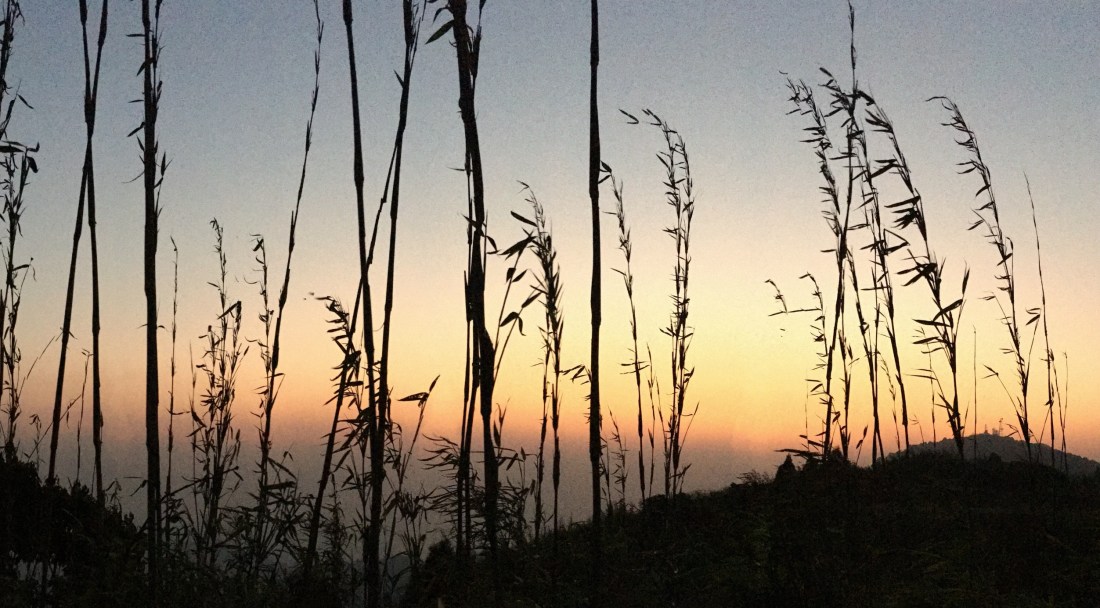
Within the next 15 to 20 minutes, the place flooded with light, and tourists with unmanageable cameras. We stood as close as the bamboo plants along the mountain’s perimeter let us. The old coffee lady came back for another round, and though the sun hadn’t yet shown up,  we could see that the shack we saw earlier, was, in fact, a shop selling woollen clothes. It seemed like the old woman and her family had taken responsibility of ushering us annoying tourists.

And so we waited. I wore two pairs of socks — a woollen and a thermal. My woollen cap and hooded sweater, kept my ears warm enough. But my gloves wasn’t wool enough to endure icy streaks that pricked at my skin. When I realised I couldn’t take photos with them on, I decided that had to come off.

For about 2 hours straight , I clicked at will. From the mildest purple, to the half-faded pink behind bamboos. My fingers had become so numb that the touch-screen wouldn’t even work. It was one of those days I hated myself for loving the technology. It took me more than a few jabs to get more photos.

sunrise 2

And then at about 5.30, the sun started to rise. And that’s when we realized many young tourists had headed towards a cliff-like part of the mountain for a closer view. We weren’t cowards. We ran. We climbed those tiny mountains, and walked towards the sun that was now on level with our eyes.

It was a beauty.

All the gold in the world wouldn’t make up to even one ray of that golden-orange.

I felt fulfilled. I stood there, basking, while my friends took selfies with the sun. I had gone beyond photos. I stood in the moment and, for a moment, that’s all that mattered.

Two weeks later, as we sat reminiscing, one of my friends revealed the blunder we had made that day. The sun wasn’t the specialty of the region at all. It was the way the sun’s rays reflected off the mountain on the opposite side. Our driver had ridiculed us (yet another reason to learn the local language), musing why we had to come all the way to see the sunrise we could see at home. It was all about looking in the opposite direction. And we didn’t know.

But no matter what you do, nature gets the final word. Because that day, for some weird reason, the special reflection that drew scores of tourists, didn’t happen. Even for those who knew where to look, it was just another day where they had their backs turned as the sun rose. At least we faced it.