Boating in Cochin

I once visited Cochin during school. It was a hazy three-day trip of which I only recall hot days and cold nights.

Oh, and the boat ride.

Like most tourists in Kerala, we took a boat ride too. And the best part of it is that we had to walk through numerous boats to get to the one we’d ride in. We stepped onto the first boat in the lake, and from there onto another, and another, and then another. After walking through about 6 or 7 boats, our teacher called out saying we had found our boat at last.

It was the largest mass of wood I had seen that floated on water. And on it was a hood-like structure that kept the rain and sun away. As soon as we embarked the boat, it began to rain. We filed into the “hood,” and saw our jaws drop. There were about 50 chairs placed around the interior of the boat, with glass windows to make us feel like an island.

A little adventurous, I stepped out of the hood and onto the dock. There were some wooden poles to hold on to, and the cold monsoon breeze kissed my face. I peered down from the boat, to see clear water in some places, and muddy patches in some other places. Little islands of seaweed flowed here and there, breaking the vast, rippling water.

And as our boat thrust forward, concentrated salt water gushed from the boat’s edges like swimmers racing in opposite directions.

I leaned in with my camera to get a better shot at the flowing water when another, much smaller boat made its way toward us. Two men stood on that boat, one of them handling the sail while the other blew his shrill whistle signalling to our guide.

They seemed to me like challengers daring us to race them. And I was all game before I saw the print on the boat: Coast Guard.

Huh?

We heard it later: According to government rules, every passenger on the boat should have a life jacket, and none of us adhered. We were just a bunch of over-excited school kids being kids. Besides, what’s the point of taking “security measures” when you’re at the mercy of nature?

Understanding Zen

I just finished reading, Zen and the Art of Motorcycle Maintenance. It’s an achievement, believe me. It took me almost 9 months to finish that book.

zen

And it wasn’t because I read many other books at the same time. No, while I read this book, I read no other. And it still took me 9 months. I should say, though, I was also studying for my exams and, for about three to four months, I didn’t even touch Zen.

Still, it’s a long time to read a five hundred+ page book. An international best seller, at that.

I read slow, but even I’m not that slow. After all, Harry Potter, the Inheritance series, and Chronicles of Narnia are all about the same size and I’ve sat through all night glued to those books. Why then did this book take so long?

It’s the writing for the most part. It was complex, it was all over the place, with two different narratives that just kept throwing me off the original message.

But there were so many good parts in the book that just jumped out at me. The best thing that came out of spending 9 months on one book is that it seemed like a lifetime. And the book is about a man’s discoveries over a lifetime. In hindsight, it feels like I’ve learnt so many different things, at different stages of my own life.

The book transcends from Pirsig’s life, into my own; my learnings, and my own understanding of how the world works.

Disclaimer, though: I don’t mean to sound all enlightened and zen-like. There are so many parts of the book that I read without taking in a thing.

But these blank parts of the book that I read three months ago, make sense to me now. What I though I understood while reading a paragraph is so different from when I understand after finishing the book.

And I’m counting on the same thing happening with other complex topics in the book.

And I’m sure when I read it the second time, I’ll see more things I didn’t see this time. Or, maybe, when I’m in the shower worrying about my hair fall, I’ll realise I should let the future be.

future

A Hunting I Will Go

It’s wrong, I know.

I shouldn’t be so addicted to one food in particular.

I mean momos.

I’ve been a fan ever since a friend shared her homemade momos with me. She’s from Tibet, the home of the momo. And she mentioned once that that was her favourite dish.

What’s so great about that, I had asked. My friend must’ve noticed my dismissive tone, for a few days later, she came back with fresh, crunchy-on-the-outside-soft-on-the-inside momos. In three varieties: beef, chicken, and vegetable.

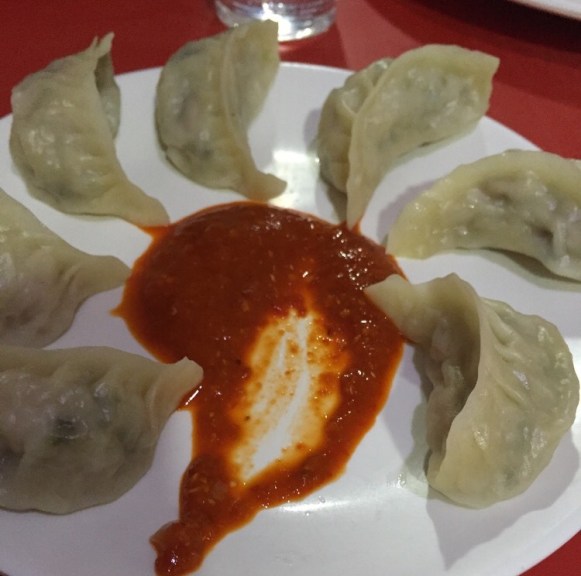
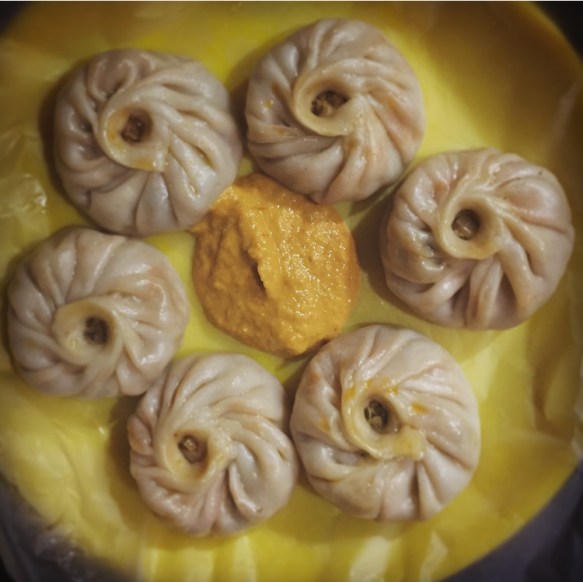
After that day, everywhere I went, I began to hunt for momos. We went on a trip to Sikkim, where I found steamed momos. And unlike the fried ones my friend gave me, these had patterns in them. Frail and smooth curves hemmed the dumpling, sealing it to keep the stuffing stuffed.

View this post on Instagram

Loading up on local #momos. #traveldiaries

A post shared by Narmadhaa (@narmadhaa_s) on

They looked and squished like a familiar South Indian sweet, but inside the mouth, if felt nothing like that. It was soft, springy, and doughy. Something Joey would love.

I bit into a momo, and steam smacked my lips as sautéed onions and vegetables filled into my mouth.

I was hooked.

Even after I returned, I longed to hold another momo between my fingers. Lucky for me, I live near a big university, home to plenty of north Indian students. And it was easy to find hundreds of little authentic food shops in the area. I’ve made it a mission to find the best momo shop I could find.

One shop I went to with my team had a different pattern in their momos. These flaunted a less curvy sealing, but the taste lived up to my expectation. And when I bit into one of these momos, fresh chicken and cabbage surprised me.

chicken momos

As for the vegetarian momos, they had a different shape altogether. These were like little fish, with a more fold-like hemming than curves; they were smaller than the non-veg ones too.

A street vendor once gave me “twisted” momos. It seemed like he had shaped the dough around a stick to form its circular shape. But the onions and vegetables were the same, and as good as ever.

vegetable momos 2

After looking at so many varieties, I’m confused as to what’s the right way to shape a momo. Or if there’s even one right way to do it.

I guess the only way to find out is to eat them all. One thing I know for sure, though, is that no matter the size or the shape, nothing beats momos.

And no, that’s not addiction. Momos are too beautiful to resist. Call it appreciation, instead.


our-growing-edge-badge


I’m sharing this post on Our Growing Edge, a blogging event that connects food bloggers and inspires us to try new things. This month’s host is Sophie from Cooking TripsThanks for the invite, Genie.


Right Place, Right Time

Have I ever mentioned June’s a great month? Because that’s when the weather makes you crave hot chocolate and a warm book.

But July isn’t that far away, and that’s a great month too. More so if you’re holidaying in a wooden cottage in a place like Thekkady.

I just can’t get the picture out of my mind: A small wooden hut, surrounded by trees, shrubs, and flowers I’ll never remember the names of.

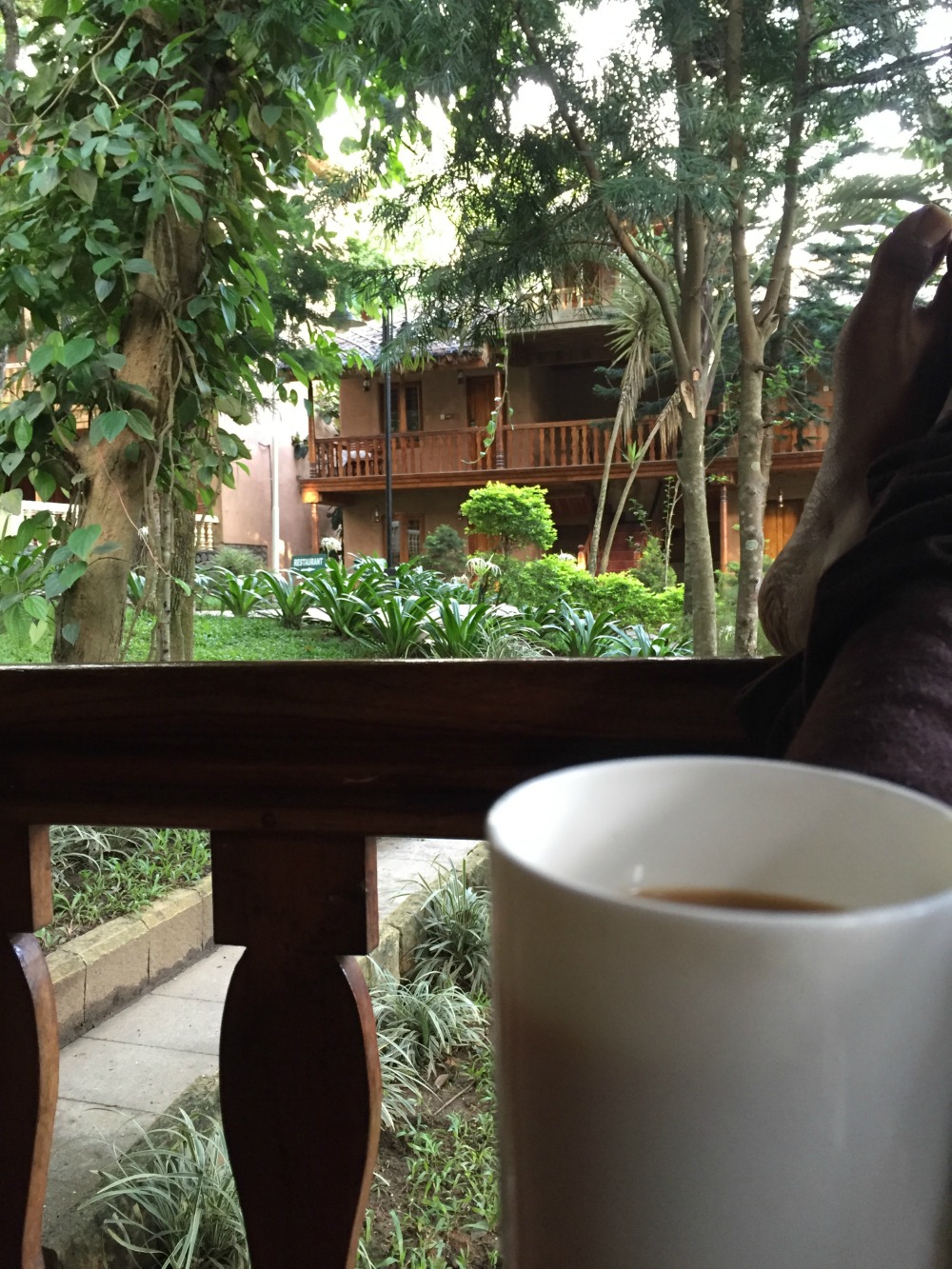
Little insects scurrying about, alarming people heading for a warm dinner at the restaurant, waking up to a chilly sunrise, with my legs perched on top of the railing, blowing the steam from my cup of tea, and smiling at dew on the leaves from the previous night’s rain.

sterling resorts thekkady

That’s how our holiday was in Sterling resorts. It’s a beautiful place to spend time alone — or with close friends or family. Thekkady itself brings you closer to nature. And a comfortable resort only brings you closer to your family.

But it’s not all fancy goodness, love, and affection.

It’s annoying to wake up to the morning chore of scooping up and letting out, a worm or two that had found solace inside your cottage.

It’s annoying when you’re generous enough to make tea for everyone and someone ends up complaining about too much milk or too less sugar.

It’s annoying when you want to gorge on the local favourite puttu (steamed rice flour meal)  with kadala (chic peas gravy) but you don’t get the gravy when you have puttu, and no puttu when you have gravy.

But when you step out of the cottage and look up at the pale-grey sky, every annoying thing would disappear. The sky would seem to have a hard time deciding whether to clear its way for the sun to shine or to hold its stance. It’s such bliss to be in such a place at such a time that nothing else would matter.

One Morning at the Beach

I’ve said it way too many times already: I can’t resist the sunrise.

So much so that I left my hotel room at 6 am to watch the sun rise into the sky.

This happened in Pondicherry, the go-to city for cheap alcohol. The city’s got that vibe — like Vegas. You go there  just to get wasted.

I went looking for the high too.

Except, my definition of “high,” is different. My high is in nature, and the most I have to do to get it is either wake up early or stay up all night.

So I strolled down Beach Road. The government of Pondicherry bans all motor vehicles into the road from 5 pm to 7 am. It was the safest place for an over-enthusiastic nature lover and amateur photographer.

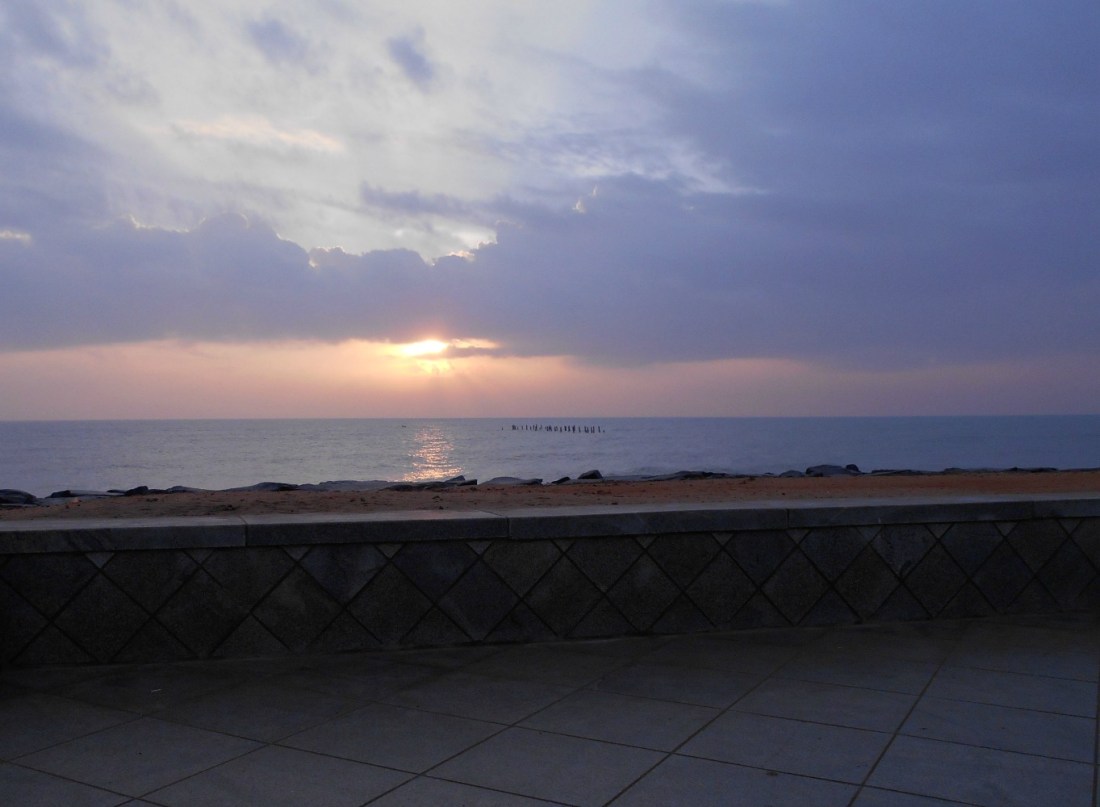
Sunrise at the Pondicherry beach

I stepped on to the road, and a chilly, salty breeze brushed my hair on to my face. I started walking and went right past the Gandhi statue. Because  a few more yards away was the only thing I cared for: The Le Cafe.

It’s the most beautiful and well-maintained 24-hour, governmnet-run cafe. The staff welcomed me with warm smiles, and smiled wider when I told them I was just looking for photos. They saved the bitterness for the coffee. (We went for the coffee afterward.)

le cafe

When I left the cafe, the sun had risen, but without heart. It was still half into the clouds when I pointed my camera at it, and it remained so for about an hour. I did too. And all the while, my hair danced in tune to the waves, and sea spray clouded my glasses.

Unlike the city I’m used to, there  were too many people out basking in the sunrise. They were tourists staying in hotels nearby. And they went about their routine of morning yoga, slow walking, some of them jogging, and even a few kids on a sprint.

Despite the crowd, it didn’t feel crowded at all. In fact, it didn’t even seem like an Indian city to me. Everything was so alien, so neat, and so peaceful. No one bothered about what the others were up to. No one gawked at each other, making judgements. For once, everyone minded their business.

It was one of my most productive mornings.