
About a year and a half ago, I moved to New Zealand. The company I work for had been looking to expand into the country, and I asked if there’s an opportunity for me to move and build up the business here. They said yes.
I had no idea what I was getting into. Turns out, they didn’t either.
Because even though I arrived as a marketing person, we needed more than a marketer. We needed someone who people can go to for… anything. It started a “here’s your local point of contact” that soon ballooned into a constant barrage of emails and calls from partners and customers and prospects asking questions, escalating issues, validating ideas, pitching events, and so much more. Plus, I was actively building my network—attending events, talking to people, trying to build partnerships, understanding how businesses operate… it’s fair to say I had a lot going on.
More than once, I’d be typing away in my home office at 3:45pm and remember I’d run out of food or toothpaste or shampoo or toilet paper. Or I’d walk into my living room and realise I hadn’t vacuumed or taken the recycling out for weeks. I’d laugh about it with colleagues after, while secretly wondering why I was so active, energetic, focussed on work but so careless and lazy about my home.
I enjoy 70 percent of my work. It involves meeting lots of new people, learning about their life and work, and trying to identify how we might work together.
The other 30 percent is gruelling. That involves working closely with my colleagues overseas. So lots of late nights, trying to get my brain to think straight even after it’d been running on work mode for 12 hours straight. Then I’d go to bed with my mind racing and refusing to shut down for another two hours. I never really stopped to think how crazy it was that that was week after week and month after month, rather than just a one-time thing.
Plenty of times I told myself it was just for this one project or one event, and things would become a lot less hectic after that. But after a year of it, I had to admit it wasn’t going to slow down. Don’t get me wrong, I had lots of “slow” days that I cherished. But those slow days were about 8-9 hours of work without any late meetings, events, or otherwise large stressors. In reality, that’s not a “slow” day, that’s the definition of a normal day.
I have a fairly high tolerance for stress. However, I’m also aware of what chronic stress can do to the body, inside and out, even if it doesn’t show straightaway. Sidenote—if you haven’t yet, I highly recommend reading Why Zebras Don’t get Ulcers by Robert Sapolsky.
So even though I knew I could keep pushing, I also knew that I shouldn’t. When you do weight training, they say you should do as many reps as you can until the point of failure. That’s how I’ve always thought about work stress as well—keep pushing until you can’t. One of my good friends once said that she’ll quit her job when she has her first heart attack. Not if but when. She’d been in that job for about 18 years, and she knew the stress would probably cause her to break. Work isn’t weight training. Yes, I want to get better and stronger and more accomplished in my work, but I don’t want to do that at the cost of getting sick.
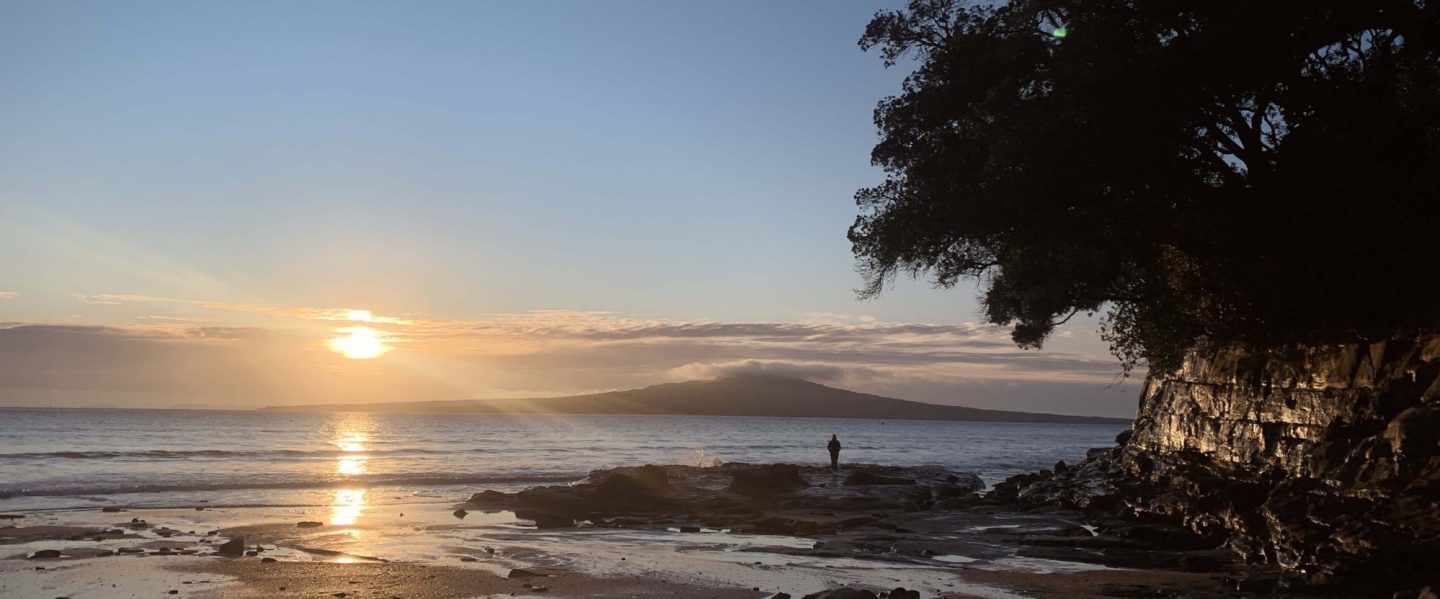
So I decided to take a walk to clear my head.
I’d been wanting to walk Te Araroa for years now. It’s a tramping trail that runs the entire length of New Zealand. It’s always been one of those, “Oh, I’ll do it someday” kind of things. So in December last year, I sat down to think through what it’d really take to do this walk. There’s a lot—food, accomodation, trail logistics, gear, safety, hygiene, loneliness, weather, and so many things that we take for granted on a daily basis.
So I started planning. I watched a lot of videos on YouTube, followed all the Facebook groups, looked through the trail inch by inch (got tired mid-way through the North Island), started collecting hundreds of links of potential gear, and created high-density, high calorie food recipes.
It was a glorious three weeks of intense work. Then the Christmas/New Year break ended and we went back to work. The full force of my daily routine returned, and this time it hit harder. We’d built momentum the previous year so now it was about accelerating—about doing more things, bigger things, and doing them faster. I love this stuff, remember. So I dove headfirst. I said yes to all the things, forgetting—every time—that I was also saying yes to more late night meetings. As much fun as it was, it was also utterly exhausting. Every chance I got, I went back to my Te Araroa Trello board and looked through my research, adding a few more links. As March and May rolled around, I was in the thick of work with no brain power left even to write my daily haiku. For the first time in over five years, I stopped writing haiku every day. I had no energy left to give to my creativity. But I knew I still wanted to walk TA this year.
So in June this year, I rolled up my metaphorical sleeves and started narrowing down my gear options. By July I had most of my gear, and a lot of uncertainty about how many layers I’d need. I also spoke to my boss about taking time off. He took a couple of days to think it over and told me he couldn’t let me take time off. It was too much disruption for the business to lose the only marketing person in the country.
So I spent the next three weeks trying to convince myself to do the walk next year, instead. To keep pushing for another year because I know it’ll be fine.
But I couldn’t do it. The idea of doing it all for another year without a break scared me. Even if others don’t see it that way, I saw it as a health and safety issue. I didn’t want to end up in hospital for me to wake up and give myself a break.
I went back to boss and explained that I’m totally spent, and I need this time off. He understood, of course. He always did. But when you work for a big company, things like this need to be run up the food chain to be formally approved.
Now we wait.
I also just ordered a couple of water bladders and a backcountry bidet for the trip.