Appreciation

Australia is famous for many things. One of which is the largest living organism in the worldโ€”The Great Barrier Reefโ€”that sprawls across a large part of eastern Australia. And then there’s Ayers Rock or UluruAyers Rock in the north, Port Arthur way down in Tasmania, the Opera House, the Old Melbourne Gaol, and countless other convict houses that framed the history of this great country that remains a wondrous mystery to the rest of the world.

There’re so many cultural and monumental buildings and memories in this country that global history texts celebrate. And yet, there’re also so many iconic elements that go entirely unnoticedโ€”even by Australians themselves. People talk more about the gorgeous wine regions* than about the more noteworthy things they ought to talk about. 

Here’s an example.

I was chatting with some friends, who come from various parts of the country and have travelled and lived much around the world, and I learnt that the world’s oldest living thing is right here in Australia, an unknown fact to most people.

It’s not the Reef. That’s the largest. 

The oldest is a natural phenomenon called stromatolite or stromatolith. My enthusiasm for geology makes up for my beyond pathetic knowledge of the science. Stromatolites are rock formations. They’re layers of sheet-like sediments of silt, limestone, and a single-celled microbe called cyanobacteria. The word’s root comes from Greek and translates to “stratum” or more loosely to “stony cushion.”ย 

Stromatolites in Shark Bay, Western Australia - Photo source: Wikipedia
Stromatolites in Shark Bay, Western Australia.

Stromatolites are common and occur in many places. However, in Western Australia’s North Pole (apparently, WA has a North Pole of its own. Who knew?), you’ll find stromatolites as old as 3.5 billion years. They’re officially the oldest in the record.

The most extensive collection of stromatolites is in a Hamlin Pool in Shark Bay, also in Western Australia. These are about 4500 years old. And you can just as easily walk up to them as you would to a tree in your back garden.

We seldom appreciate the greatness within our reach. As in a game of hide and seek, we seek the special all around us, sometimes even going far off in the wrong direction, only to have equally uninformed guides misguiding us under the false impression of finding the right spot. And we think we’ve found it tooโ€”until we see it for real, and realise, that it’s been sitting in silence right under our noses.


*Don’t get me wrongโ€”Australia is home to some of the world’s best wine regions. And it’s critical to showcase them too. I only call for a more balanced distribution of paparazzi.
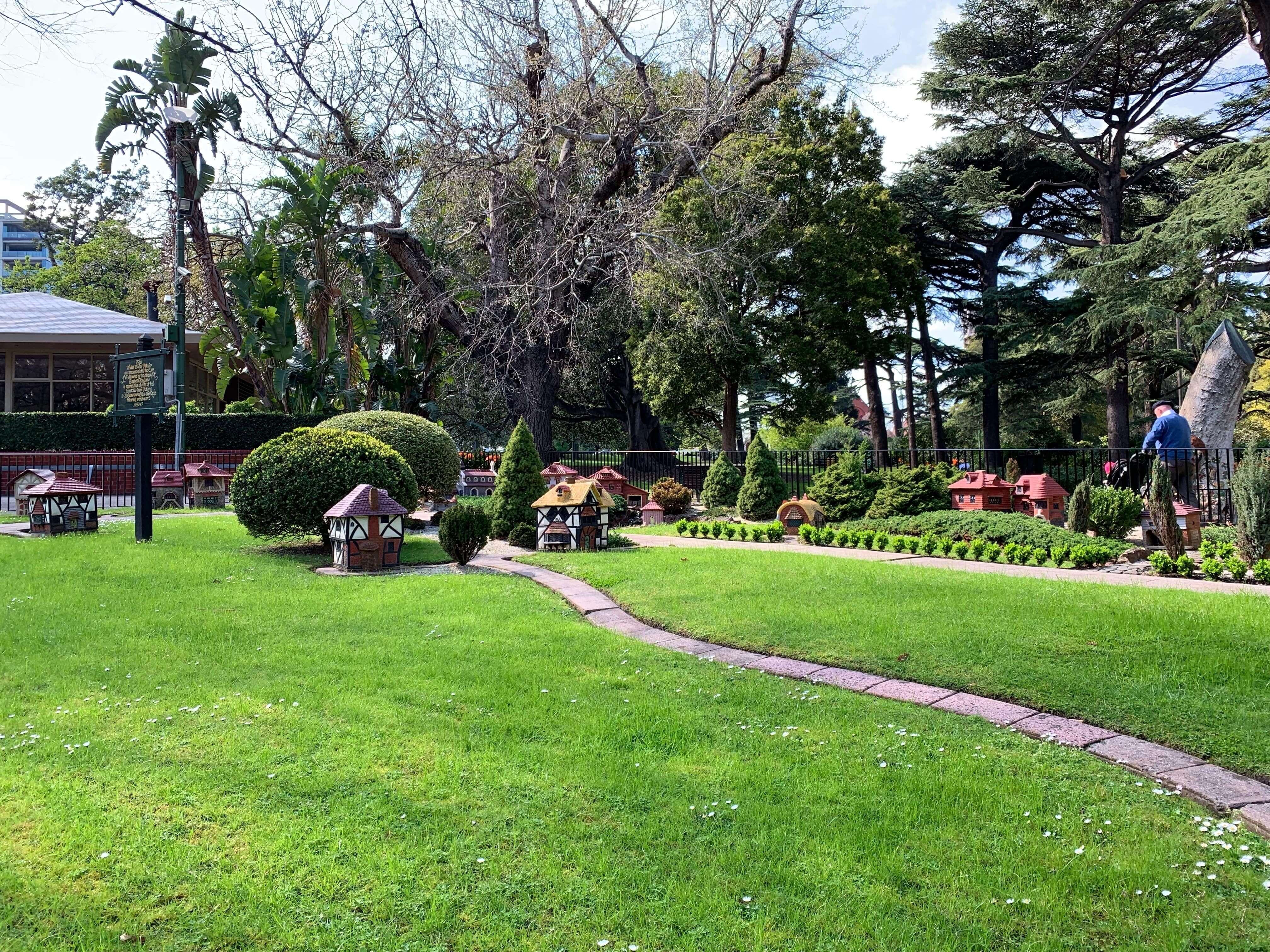
Photo source: Wikipedia. By Paul Harrison.

As Australia burns…

โ€œWe think most of the animals were incinerated – itโ€™s like a cremation, [โ€ฆ] They have been burnt to ashes in the trees.โ€

Sue Ashton, President, Koala Conservation Australia.
Source

That line jumped out at me as I scrolled through today’s news. For a while now, most of New South Wales, Australia, has been burning. As of early morning today, a million hectares of land has burnt down, a number greater than the previous three years of bushfires combined. And itโ€™s only spring. Bushfire season is only beginning in this part of the world, and even before its proper entrance, greedy fires are lapping their way into peopleโ€™s homes and lives.

Yet, somehow as I read multiple articles mentioning three deaths and over a 150 destroyed homes so far, it didnโ€™t hit me as hard as the incinerated koala bears. Though I havenโ€™t lived through many global disasters, I have seen and heard of enough violence and terrorism to develop a mild numbness to human deaths. To me, it always felt like one group of humankind is always paying for the mindless blunders of another. 

This time, however, it wasnโ€™t just the humans. This time, for the first time in a long time, vulnerable nature is suffering from its own wrath. That article put it well too. The precise choice of words got me unawares, gripping my throat, crushing, pulling the air out of it in such a slow motion that I wished it would hurry up and get it over with. The casualness of that word threw me off balance. It made me breathe in so sharply that my eyes teared up from the pressure and the pain that shot all the way through my body. 

Words are powerful. Saying that over 300 harmless, helpless, animals were crisped while they clung to their homes, paints a picture so vivid that readers would relive the moment again and again. It was strong, writing. As a writer of things myself, I admire the gallantry of whoever wrote that speech.

As a reader, listener, it triggered me. Itโ€™s made me abhor the world we live in. Although my mind accepts the direness thatโ€™s become the new normal in the state, my heart still clenches to think that at this rate, koala bears could be extinct in 30 years. 

Itโ€™s scary to imagine a species that Iโ€™ve admired, photographed, and smiled at, would die out right in front of my eyes, and I wouldnโ€™t be able to do anything about it.

The state government has declared emergency for the first time since 2013. According to meteorological forecasts, tomorrow (Tuesday) will cause more damage than weโ€™ve seen so far. Greater Sydney, NSW, and parts of Queensland are expecting extreme bushfiresโ€”in addition to the 60 thatโ€™re still uncontained. Over 500 schools will be closed. Millions are evacuating to safer areas. High temperatures, low humidity, ghastly winds, and catastrophe await the state as it spends another sleepless night.

And someone said the climateโ€™s fine.

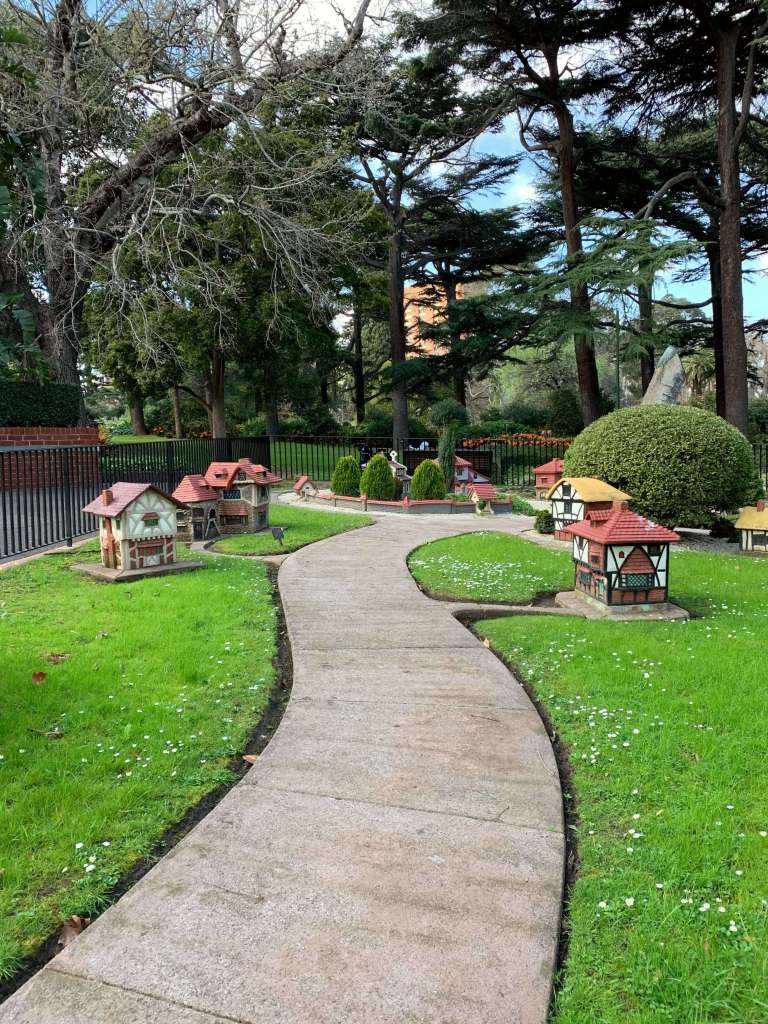
The small Tudor village

Art finds countless ways to make history. When in Melbourne, attending a work conference, I managed to wander into the Fitzroy Gardens. Itโ€™s a massive nature haven with a 150+ year history. Whatโ€™s more, itโ€™s in the heart of the city, making the city far more prone to desirable infection from beautiful greenery, flora, and thousands of chirping birds.

Part of Melbourneโ€™s charm, aside from its century-old Victorian architecture and artisan coffee, is that everything has a history worth rememberingโ€”or trying to remember.

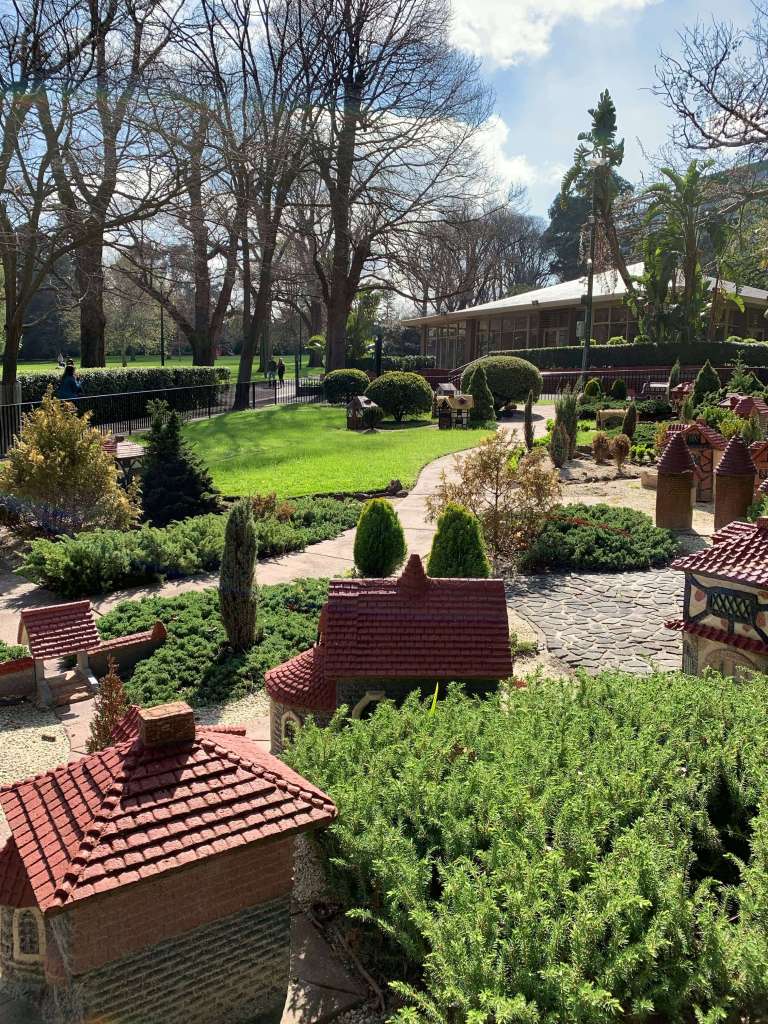
To appreciate how deeply history and art are embedded in Melbourneโ€™s lifestyle, I had to see the Tudor Village.

Tudor Village in Fizroy Gardens, Melbourne

Among the many historical elements in the Fitzroy Gardens, The Tudor Village is a piece of art and a gift from a British artist. Mr. Edgar Wilson was 77 and lived in Norwood, London when he made villages as a hobby. Modelled in cement, the Tudor Village is one of his three works and is a miniature replica of an English village during the Tudor period.

It took me a while to notice them, but the village comprises of thatched cottages, a church, school, hotel, a barn, and all the public buildings youโ€™d expect in a self-sufficient small town. Even the architectural elements were precise to that period.

The Tudor Village, however, isnโ€™t just any gift. It was a symbol of gratitude to the city of Melbourne for sending food to Britain during the Second World War.

Itโ€™s such a great icon in the gardens. There I was in Victorian Melbourne, dropping my jaw at an ancient Tudor-period village.

If you visit Melbourne, stop by the gardens. Thereโ€™s plenty more to see as well.

Floriade in Canberra

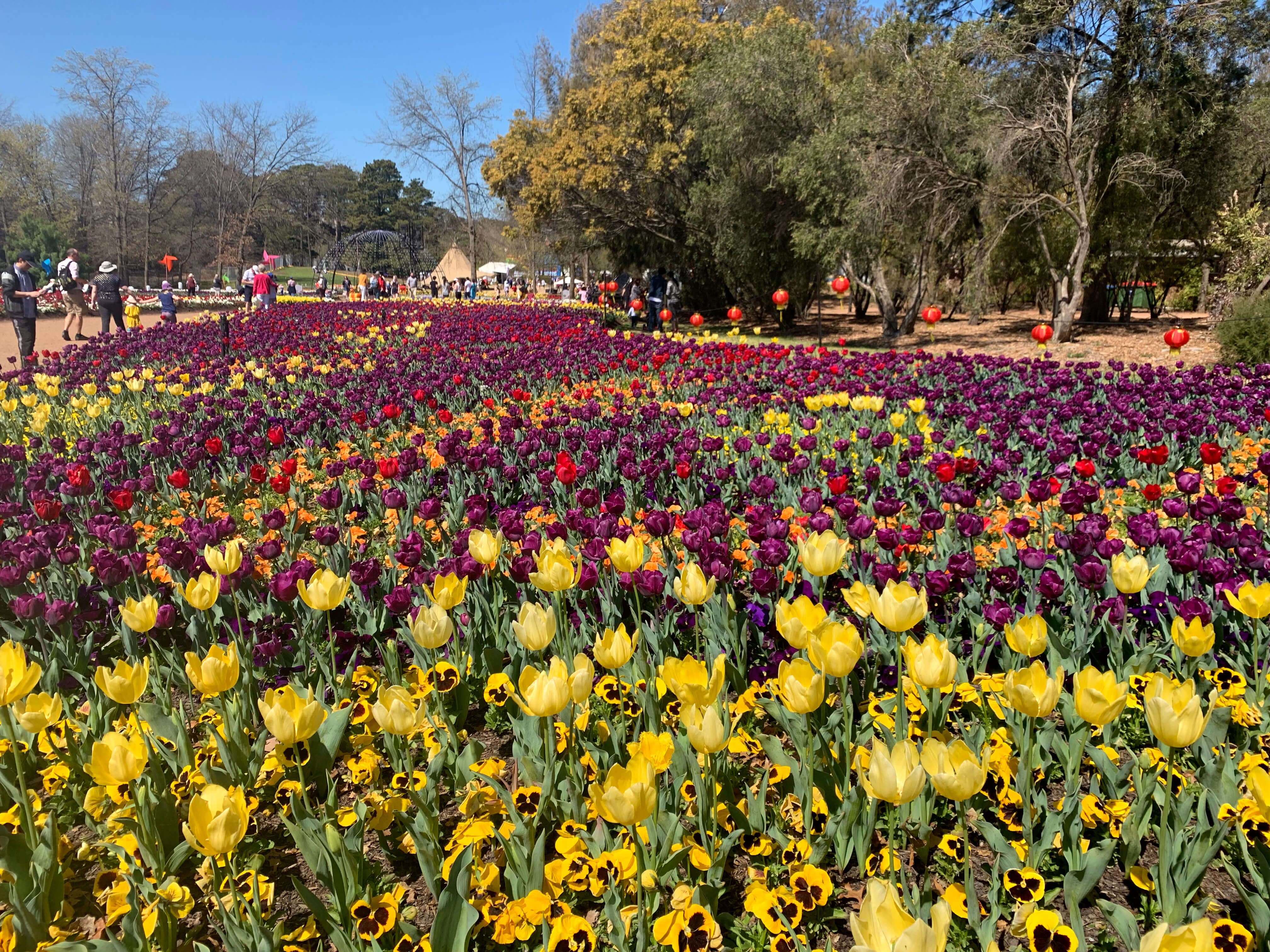
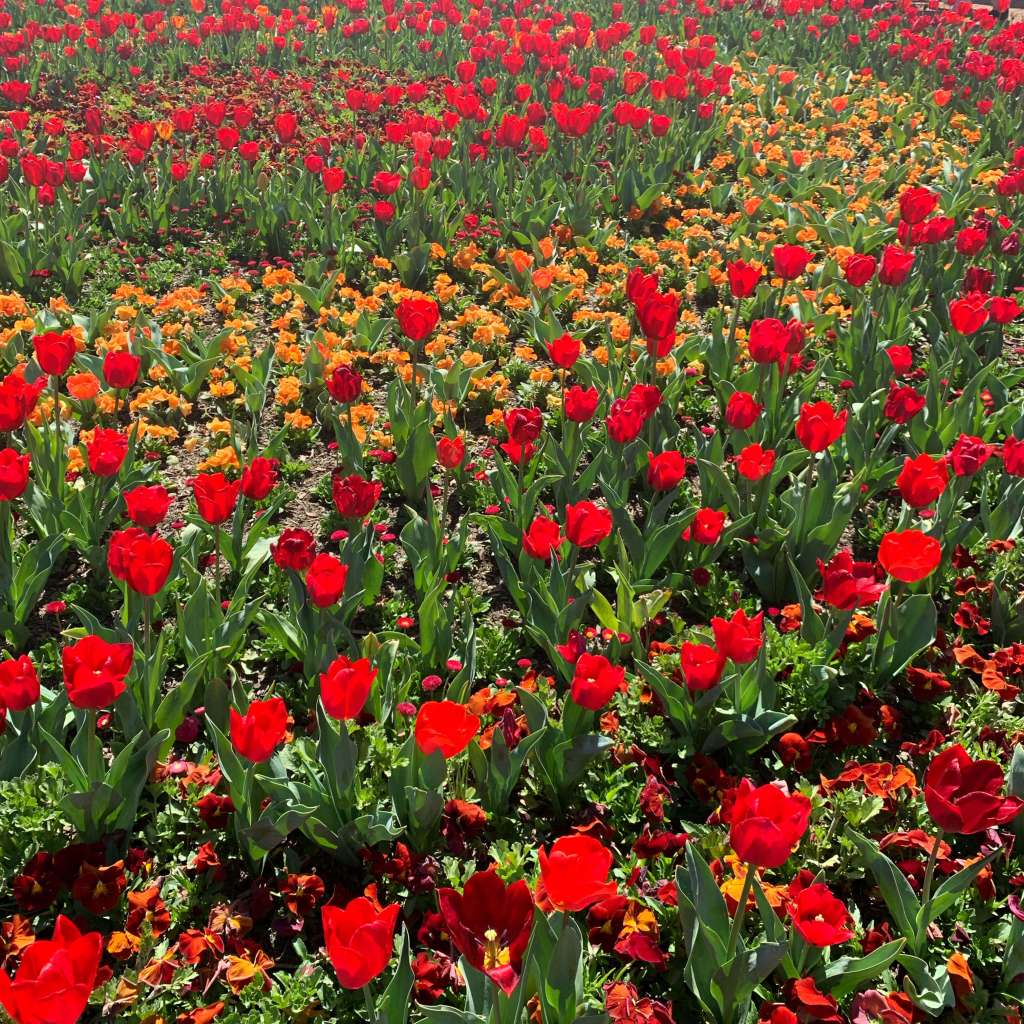
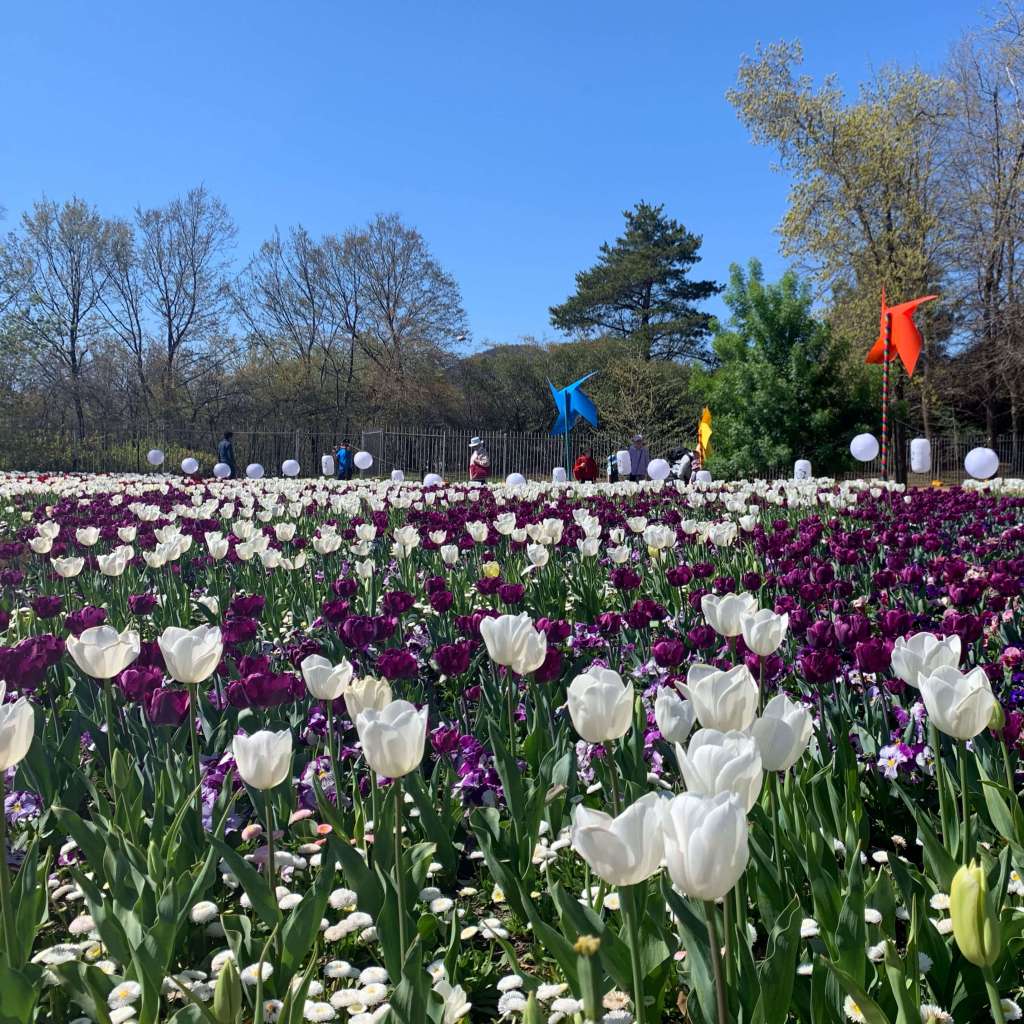
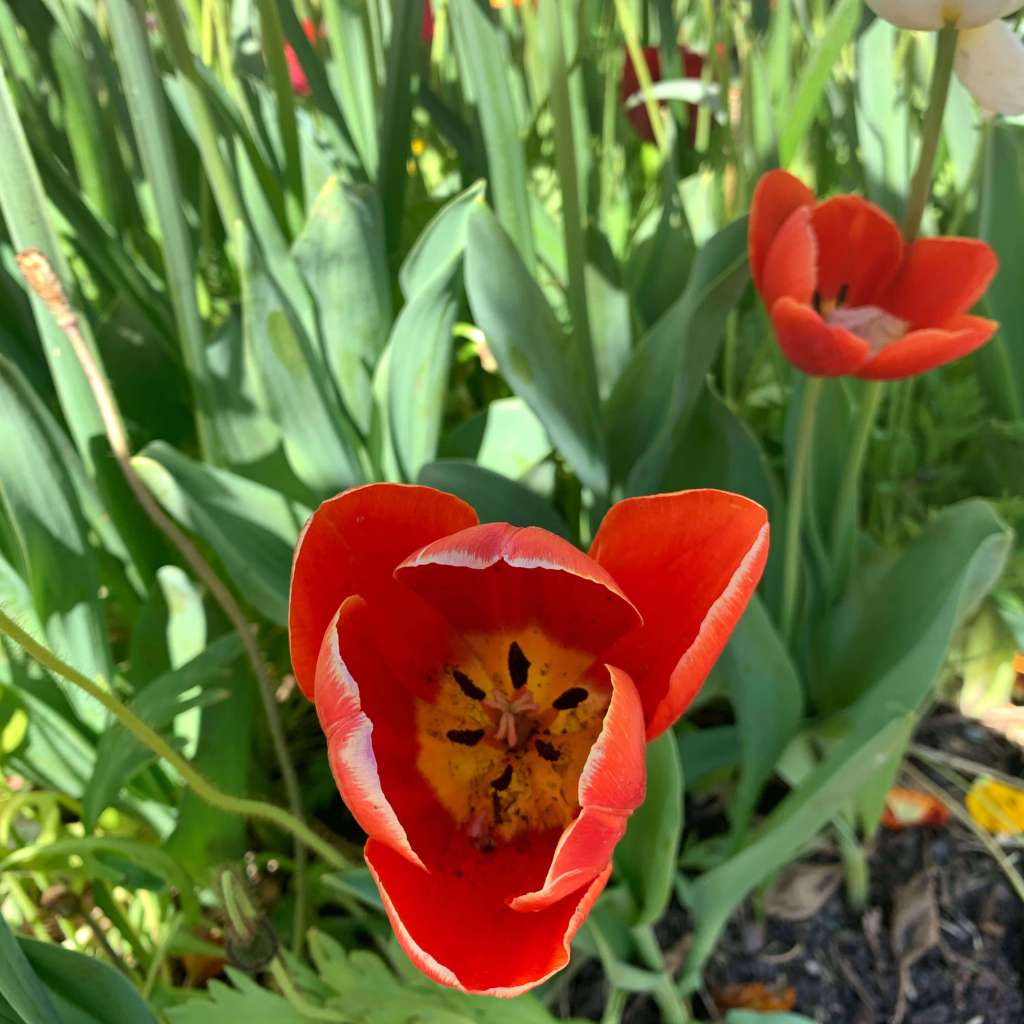
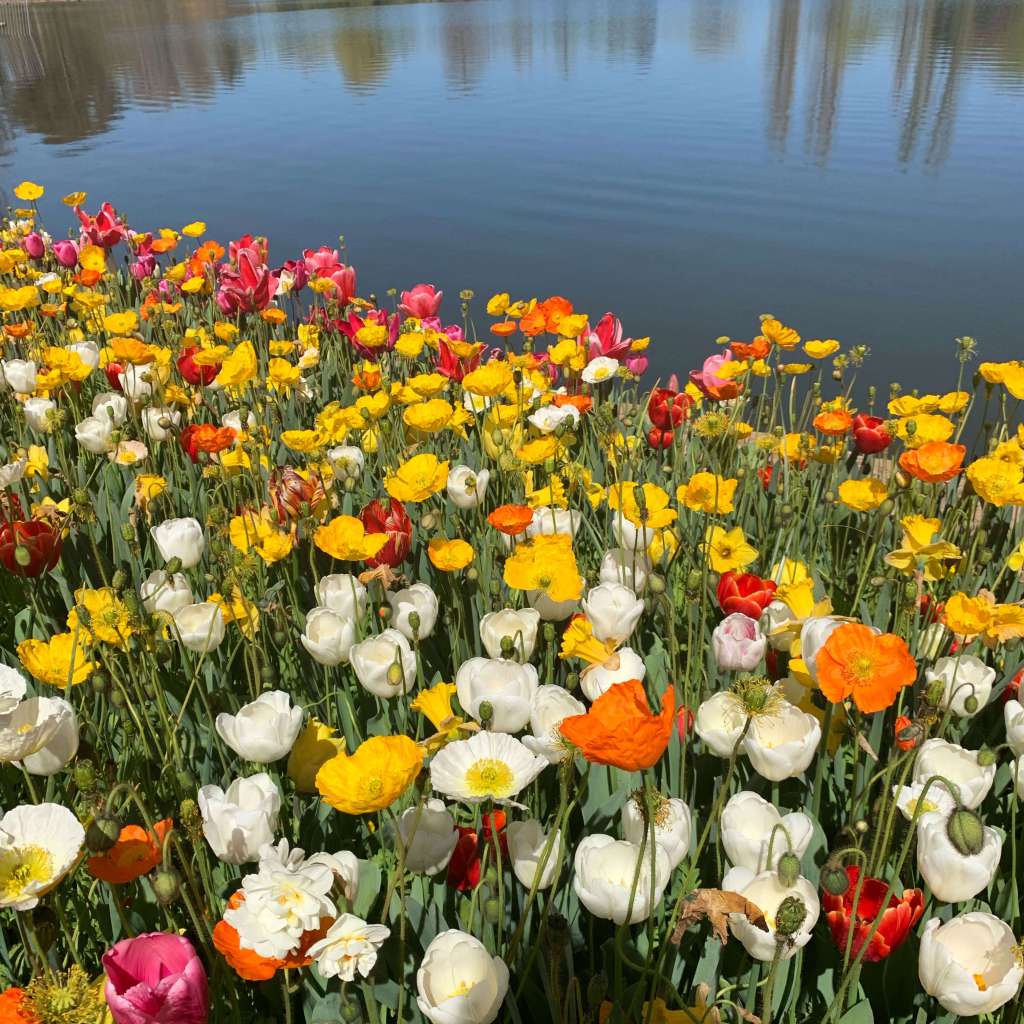
For 32 years, Australia has welcomed spring with tulips. This means, at this time every year, the government assembles millions of flowers in a grand public park in Canberra, and invites people from all over the country to visit and experience nature.

Floriade 2019 in Canberra - 5

In all its gloryโ€”
Floriade,
human vanity.

The festival is called Floriade. And this yearโ€™s theme was World in Bloom. For an entire month, these flowers sit in their designated spots, laughing in the sun, opening its petals, attracting birds, selfie sticks, and macro lenses of all sizes.

To call it glorious is an understatement.

With flowers, the lake, herons, and falling buds in the backdrop, people flocked to photograph themselves and the free pricelessness.

To call it beautiful is injustice.

Floriade hosts people from all over the country. Not just various shades and accents of white, but also hundreds of shades of brown and black. The air echoed with varieties of Australian, American, Asian, and European.

As I sat on a bench, flower gazing and people watching, flashes of colour showered not only from the blossoms and the sunshine they reflect, but also from the rainbow of whirlwind coming from spring dresses, khaki trousers, yoga pants, singlets, hats, and caps, mingled with heaving sighs and perfumed sweat.

What a great celebration of spring.