Magnificence

Chicago’s one uncanny aspect excited me as much as the Riverwalk did. It was the Mag Mile. Of course, this excitement came about while I was still at home zooming in on the city’s streets.

However, the idea of an entire stretch of the bustling city street filled with vanity stores made me—the least expectant shopper—wait with bated breath. What was so magnificent about the Mag Mile? I craved to find out.
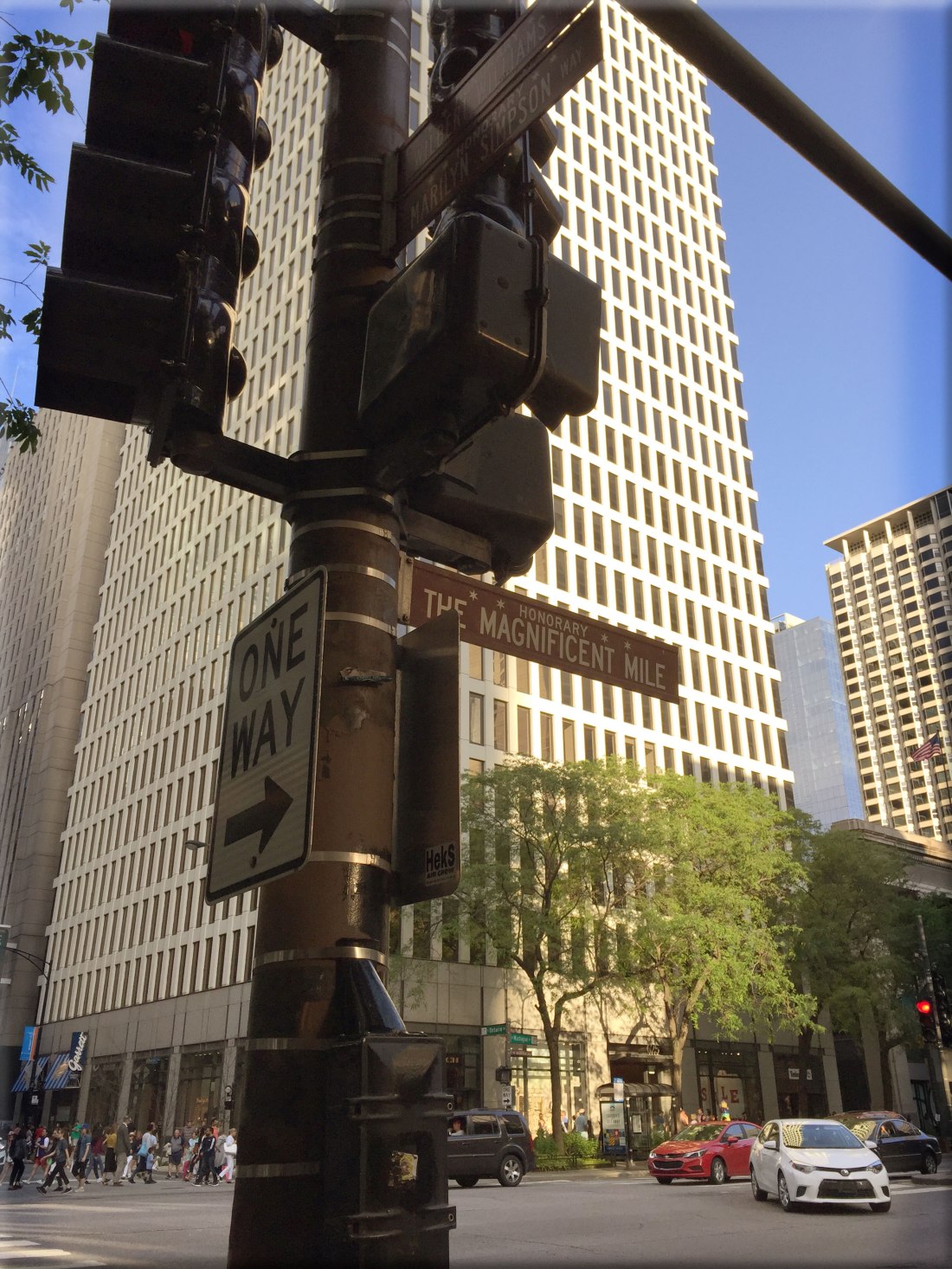
Mag Mile, Chicago 1

My spine tingling with unfamiliar curiosity and eagerness, I found myself walking towards the infamous street. The sheer number of people hit my eye right away. Although I’ve lived my entire adult life in a city of 4 million people, that was still a sore sight. All around, buyers flocked to the streets, shuffling in and out of stores, sipping soda, scraping ice cream off a pint tub, biting into a burrito, and chit-chatting all the while.

Overcome by the overwhelming sight, I had to take a few minutes to regain my composure. Once I’d gotten accustomed to the sluggish crowd that wouldn’t go away anytime soon, I began noticing other elements in the street.

This slideshow requires JavaScript.

Every few feet, for instance, was a five-feet tall a lighthouse. They were aplenty and on both sides of the street. Each had on it a graffiti, a painting, or a remarkable event etched in ink. Passers by passed by without so much as a third glance, while I lingered, going round and round trying to discern their significance. I couldn’t. But I did enjoy spotting the lighthouses amidst the sea of unstopping shoppers.

A little further down the road, I found Ghirardelli. Imagining my teammates’ glares, I entered, only to exit 30 minutes later feeling proud of myself. I’d stuffed a box full of the most chocolates anyone else had done that day. It wasn’t an official record, of course, but I gleaned that from the sales people’s faces. And how thrilled they seemed that I took so many chocolates for only a fraction of its price. Nevertheless, I’d found happiness in the Mag Mile.

As if to dampen my ego-driven joy, before my eyes flashed the not-so-magnificent part of the Magnificent Mile: the people of Chicago who had neither a roof over their head nor medical insurance over their waning health. Within seconds the balloon within me punctured, jerking back to the harsh reality of the world. The Mag Mile wasn’t just for those who could splurge, but it’s also for those who had no choice but to scavenge. While people purchased additional clothing on one side, on the other side people clothed in rags, writing out holdings, too tired to speak. It wasn’t an unfamiliar sight—both in San Francisco and my city, I’d seen thousands of pitiful scenes and people in dire situations. But that didn’t make Chicago seem any better.

I’d been too distracted to expect what I saw. Of course, it’s obvious. In a million-strong metropolitan city of a capitalist nation, it’d be a surprise not to encounter poverty and homelessness. Although that neither justifies it nor makes it less hard to digest.

Mag Mile, Chicago 5

I walked around more, but everything looked different now. Sure, the magnanimity of Mag Mile remained, and the throng didn’t fade away, but my perspective had. I’d seen the cruel reality of our society, and I cringed at my helplessness. There’s nothing I could do to change the way the world worked, and even if I could, there’s no one right way the world should work. There always will be someone higher and someone lower. That’s the design we are born into. I could stay and complain or I could move on. I decided to move on.

The Mag Mile was magnificent in every sense. My jaw dropped at the grandeur but also, my thoughts popped at the ungraciousness.

Well, it is what it is.


Chicago Riverwalk

Before I travel to a new city, I always scour the internet for activities to do while there. Which, I’m certain, most people do. But I also zoom in and out of the city’s online map trying to find parks and other open areas I can walk around.

And that’s how I found the Riverwalk in Chicago.

I love walking. And the idea of spending a day walking around a river was perfect. After all, the last time I visited the US, I spent a sunny Sunday morning circumnavigating Lake Meritt in Oakland.

Looking forward to a similar—or even better—experience, I added it in my to-do list. To make sure I had enough time for photographs, I also made a mental note to arrive well in advance.

When I came upon the Riverwalk, however, it was by complete chance. I was fumbling my way through the streets of Chicago—the best way explore a city, in my opinion—when on my left was an arch engraved with the word, Riverwalk.

“Hum,” I thought approaching the staircase that led down from the street. Going all the way down, I found myself at the base of the Chicago river. It teemed with people, and right on my face stood a banner listing out points of interest along on the riverwalk. It took me less than five seconds to realise that almost everything on the list was a restaurant or a snack bar.

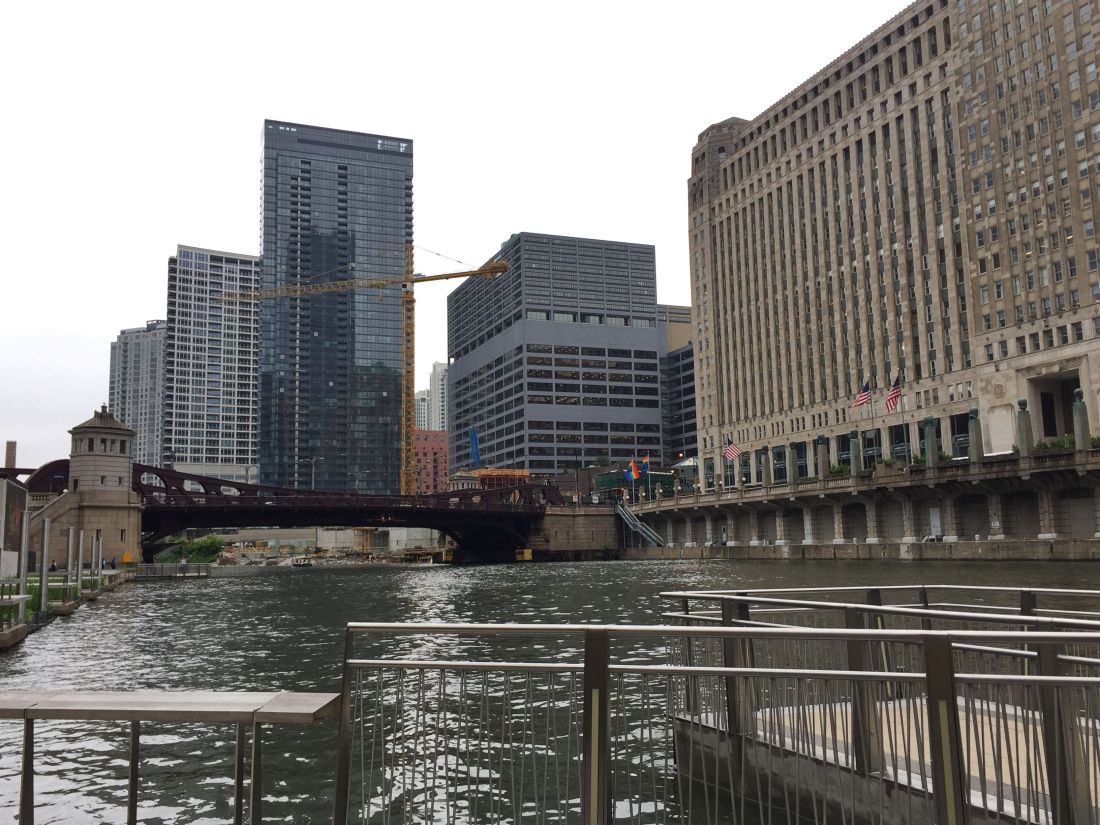
As I turned my back to the board and faced the rest of the walkway, I felt a little dejected. Although it was majestic and charming as all natural waterways, buildings towered over the river on all sides. Instead of an open area, I felt as if I were, along with the thousands of people on the river, enclosed inside a massive balloon.

I didn’t want to let that bring me down, though. A nature lover at heart and soul, I thought the rest of the path would delight me. And delight me it did.

1

Not crying for attention, the river remained calm, bearing, in dignified silence, the many tourist cruise boats and kayaks that sailed on it. As I walked along, sunlight reflected off of the architecture along the river, while the water bed remained dark.

There was no lack for people, however. Much like the Lake Merritt, the Chicago Riverwalk also attracted thousands of onlookers, walkers, and camera enthusiasts. The jarring difference between the two, though, is that while the lake Merritt hosted most locals, the Chicago Riverwalk bore most tourists.

That’s when I understood that the Riverwalk, much like The Bean in The Millennium Park, is an iconic part of Chicago that always makes it to the brochures. That explained the restaurants, the elevated seating areas, and the endless stream of photographs. It was a much shorter walk than Lake Merritt, albeit it covered a handful of streets. I loved gaping up at the bridges that went across the lake, each a different street by itself. Everything seemed so colossal that it left me wandering as if I were inside the Coliseum, watching the metallic hum that echoed all around me

This slideshow requires JavaScript.

It took me a while to digest the idea of Chicago’s Riverwalk being a more visitor-focussed landmark as opposed to the Lake Merrit—more of a local monument. While I enjoyed every moment of my walk by the river, I also felt the unmistakable sense of not belonging there. I felt alien, as a visitor, as someone who will never return. With Lake Merritt, however, I felt more at home. The ducks, the ageing friends, young mothers, active runners, and that one angry teenager yelling at her mom on the phone all made Lake Merrit closer to reality.

6

The Riverwalk, on the other hand, was like a self-guided tour. I had my brochure, I had a list of stuff to do and see near by, and I had lots of sights expecting my camera. Fellow travellers and tourists joined in the walk, “ooh”ing and “ahh”ing, appreciating the city’s infrastructure, applauding the architects’ genius, and monumentalising memories for when they’re old and fragile.

I will say this, though: Despite being a honeycomb to buzzing tourists, the Riverwalk remains as one of the best 45 minutes of my time in Chicago. It’s an experience worth cherishing, and if I’m in the city again, I’ll pay the river a visit, not as a tourist walking along the river, but perhaps as someone more used to the city—perhaps as close to a local as a traveller can get.


The Millennium Park

My first day in Chicago, I decided to visit the bean. Of course, I’d heard from friends who’d visited and from the countless online recommendations that visiting the Millennium Park and The Bean within is a must-do activity while in town.

And so I did. Clutching my umbrella trying to stay dry—on the second day of summer, mind you—I entered the almost empty park. It was a Friday, but the rains had doused minds of potential tourists (I realised on another day).

Unmissable and grand was the Jay Pritzker Pavilion. Facing the Great Lawn, it’s a massive open area fit for concerts and parties for none other than the second-most populous city in the United States.

Jay-Pritzker-Pavilion

It took me a while to comprehend the grandeur of the Pavilion, and even more time to understand how weird the structure is. It’s an architectural marvel, for sure, but to me at first, it looked like a giant spider’s web—but a beautiful one at that, though.

Turning away, I faced the only other thing everyone spoke about—The Bean. I’d never understood what all the hoopla was about it. And I thought perhaps I’d see what’s so great about it when I did indeed see it in real life. I didn’t.

This slideshow requires JavaScript.

Sure, it looked nice. It’s a giant coffee-bean-shaped metal structure that reflects everything in front and underneath it. And because of the unique shape, the reflections are different from one place to another. When I stood outside the bean, my reflection seemed just like on any other mirror, but as I walked underneath, my reflection distorted. It was interesting for a few minutes, but I couldn’t gather why it’s such a huge tourist destination.

At that point I realised: The bean isn’t the only worth-while spot in the city. And I decided to find the other, less known marvels—the places that don’t make it into popular tourism brochures. And I did find some of them, too. (More on them later.)

Expecting something more promising from Chicago, I turned to the Lurie Garden. The raindrops on petals made already enchanting plans even more attractive. It was a beautiful sight. And like any plant-laden area, the scent of wet grass and fresh blossoms cheered me up in an instant.

As I walked around the garden, crouching low to read the name cards of the plants, I realised how towering the buildings of Chicago are. All around me were high-rise constructions—some gawk-worthy, to be honest—looking over puny trees and humans alike. I was in a natural sanctuary in the middle of a concrete jungle.

Exiting the garden, I got lost. The Millennium Park is such a large area that it’s only too easy to lose your way. I didn’t mind, though. I like walking and exploring and I ended up going round and round in circles.

Then I saw something odd. It was a huge pillar, sitting snug in the middle of a big clearing. As I approached it, I saw it wasn’t a pillar but a fountain. A huge structure spitting water in an incessant manner. And it was still raining. When I walked around it, I saw there was another one, and with the face of a child on it. It was a pair of fountains, both flashing human faces that spew copious amounts of water.

This slideshow requires JavaScript.

It was fun to watch, but soon lost it’s thunder. It’s a massive attraction for tourists, and as I saw on a different day, children and parents alike play and drench themselves in the fountain.

Crown-Fountain---twins

For me, though, it’s more interesting to think about the resources and effort it took to construct these architectural wonders of the Millennium Park. During my visit I came across hundreds of such large and grand structures that must’ve taken the best of architectures and the most expensive of materials. It put the wealth of corporate America in a new perspective.

Oh, but the trip was wonderful. And more posts (and photos) follow.


A new city, a new me

It wasn’t my first time experiencing high rise buildings, gluttonous restaurants, or the comforts of a first world country. But it was my first visit to Chicago, and everything about the city mesmerised me (more on that later).

I landed late in the evening, on the first day of summer.

It rained through the night. And when I, with high spirits and a spring in my step, came to the entrance of my hotel the next morning, it was still raining. And I had no umbrella. Who would’ve expected rains in summer?

That first hurdle taught me to get over it. None of the locals seemed to be bothered by the rain. Some of them had umbrellas, most of them didn’t. Some wore rain coats, some water boots. The common streak between them all—none of them frowned at the rain.

Chicago through the train

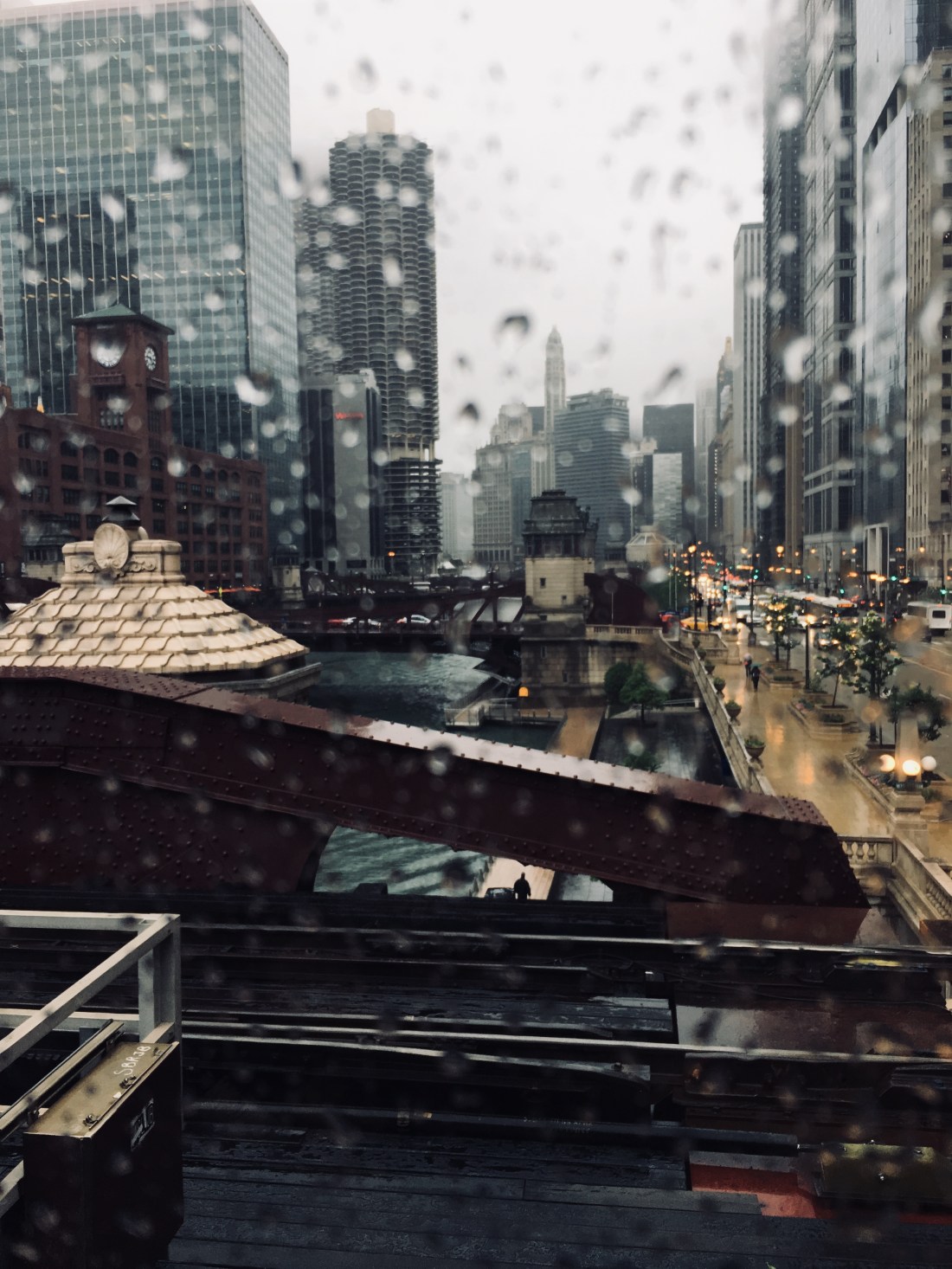
That’s when I realised—if I’m to be like a local, I have to be like a local. I hate typical tourism. Hate the tour buses, group photos, selfies, gawking and pointing at tall buildings. I’d rather walk down the streets in silent rumination. You learn so much about a city just by observing what’s what and the way people behave. And so, I pulled up my hood. Appreciating my sensibility to buy a jacket before the trip, I left the hotel while little drops of rain came down on my hood. It wasn’t so bad.

I kept to the sidewalks and walked about half a mile to the train station. I got myself a Ventra card (the Chicago Transit Authority’s ticketing system) and loaded a seven-day pass, and set off to the Loop—the heart of the city. The rest is history. Although I ended up buying an umbrella, for the next few days, I explored the city like a local. Some days it rained, and some days it shone. But with my backpack and public transportation, it felt good to be lost in the right direction.

I felt grown up.

– – – –

P.S: The Chicago Transit Authority (CTA) is great for a traveller. They offer 1-day, 3-day, and 7-day passes which allow you to travel up and down on any train and bus routes unlimited times. It’s super helpful when you’re new in a city and have more chances of missing a stop or getting down at an earlier stop than making it to your destination on time.


Let’s forget

Forgetfulness gets a bad reputation.

Of course, loss of memory is a bad thing and no one should say otherwise. However, for the last couple of days, I’ve been fiddling with the idea of mindful forgetfulness.

The more I think about it, the more I feel its validity. When we’re conscious of what we want to forget, we forget memories that aren’t worth clinging to anymore. Like a bitter breakup, an embarrassing presentation at work, an ungrateful argument with family… all those incidents that we wish had never happened will fade away when we choose to forget.

But even as I write that, I know it’s not just about forgetting. Humans don’t forget the bad things so soon. In fact, we sometimes may never forget, letting it rot inside our mind, poisoning our being, and making us more miserable than we deserve to be.

That’s why we should forgive.

We should forgive ourselves for the mistakes we’ve made. And forgive others who’ve wronged us. Because once we forgive, it won’t affect us anymore. When we forgive ourselves for messing up the presentation at work, we set ourselves free of the bitter memory. We’ll work harder next time, and not let the failure hang over our heads as a threat.

This way, we are free from harrowing thoughts, and our lives will fill up with positive energy. With the negativity gone, we’ll have more time and willingness to remember what matters most to us and cherish the small things in life.

Perhaps mindful forgetfulness isn’t so bad after all.

– – – – – –

Thanks for the muse, Kumud Ajmani and #SpiritChat.