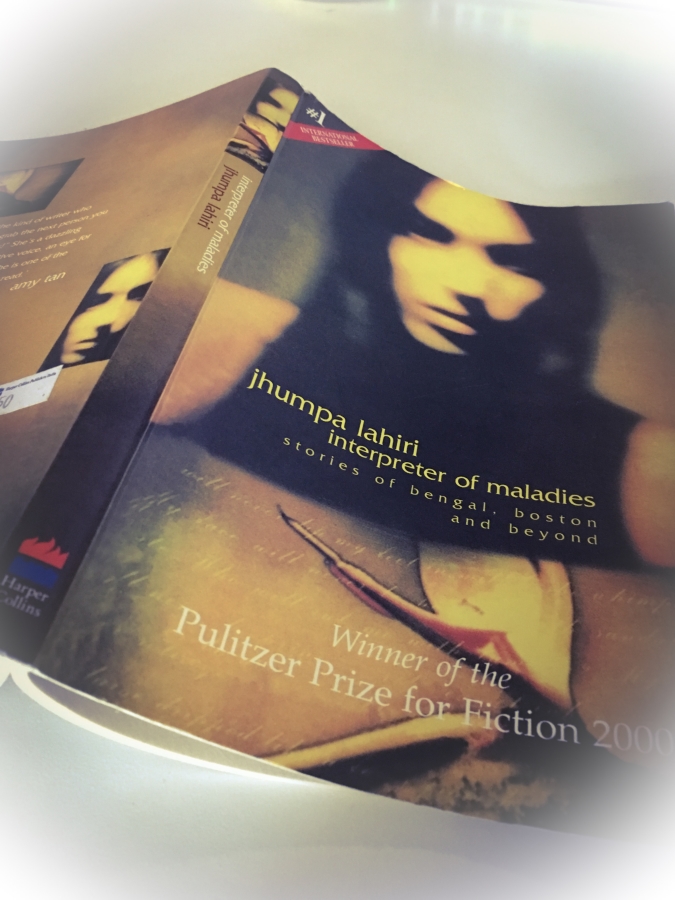
Interpreting maladies, and stories

I’ve always been a little doubtful of authors with Indian names. A little racist, I know, but having read a few Indian authors whose regard for English was far less than decent, I didn’t feel too guilty about myself either. However, I also know there were some exceptional Indian authors. I’m making a list and a recent entrant is Jhumpa Lahiri.

I have to say, I love her name. I love the way in rings in my ears, and rolls off my tongue. He family must’ve had a great sense of rhythm and respect for the listener. Perhaps that’s why Jhumpa Lahiri’s writing is also so aware of the reader’s mind and how her words would echo in their heads.

“Unsavoury sorts murmured indelicacies at cutlet stands”

Interpreter of maladies is a collection of short stories, some of them based in Bengal, some in Boston. What’s weird about this book is that though relatable in so many ways, Lahiri’s settings and her characters are yet un-relatable in many ways, too.

For example, she narrates the story of a young Indian-American couple. Their tour guide in India muses about their clothing, their relationship with each other and their children, their attitude towards natural beauty and photographed memories. And all the while, he makes judgements, often accurate, about how unhappy the couple are in their marriage — he observes like an old woman does with her hunched shoulders and ever-munching betal-stained mouth. The guide in the story is relatable because he’s a bit like an old woman, but he’s also un-relatable in many ways because he’s attracted to the young American woman he’s hosting. He contemplates his own unhappy marriage and compares himself to the young woman and her husband. He knows she’d go back to America in a week, and still he imagines — of writing letters to her, of nurturing a friendship with her, of explaining his job of interpreting maladies. All these qualities in a tour guide, who himself grew up wanting to be a scholar in five European languages, is a little unconventional, a surprising edge to a typical Indian character. And that’s what Lahiri does so well in her stories. She’s singled out some of the most common characteristics in Indian culture, spicing them up with unexpected behavioural patters to weave characters that refuse to leave the reader.

As a reader, you can’t help but appreciate Lahiri’s subtleties. In another story, Lahiri narrates the life of a young Bengali woman suffering from an unknown disease. Her neighbours talk about her behind her back and spread gossip, yet some offer to help. Referring to the women’s chattering, Lahiri paints a vivid picture so familiar to every Indian: “News spread between our window bars, across our clothes lines, and over the pigeon droppings that plastered the parapets of our rooftops.” That’s the India I grew up in, and yet, when reading Lahiri’s description, I can see the women gossiping along, drying their clothes under the burning mid day sun.

Another great aspect of this book is that the author herself has experienced both the worlds she describes. And I think that’s what makes some of the stories in this book, the stories that take place both in America as well as in India, so vivid and unforgettable. Some even outline regrettable, cringe-worthy incidents. What appears common in America in the late 60s is still taboo in some parts of India. This is an exchange between a mother and a daughter:

“It is improper for a lady and gentleman who are not married to one another to hold a private conversation without a chaperone!”

“For your information, Mother, it’s 1969. What would you do if you actually left the house one day and saw a girl in a miniskirt?”

Mrs. Croft sniffed. “I’d have her arrested.”

Mrs. Croft is a 103 year-old woman who cannot accept a man and woman speaking in private. And for that, her daughter mocks her — in 1969 America. The saddest thing, though, it’s 2017 and some Indians still cling to the same belief. The regrettable reality is that some parts of the world are yet to catch up to the sensibilities of equality and modern civilisation.

It’s things like these that make Jhumpa Lahiri’s collection of short stories a precious read. As an Indian, I loved reading narratives that I could relate to and smile as I recognised behaviours. As a person familiar with some ways of American life, I could sympathise with the feelings and emotions that the foreign characters portrayed. In sum, none of Lahiri’s creations are over-the-top unimaginable — they’re simple people living simple lives, who invite readers to share a few days in their lives. Interpreter of maladies is a wonderful read.

Inspiration

“Notorious stab at discrediting our culture…” the editor read aloud. With an impassive look, he cast Darcy’s article on his desk, along with countless papers lined with fine print. He had leafed through them all, but still hadn’t picked his copywriter when he picked up Darcy’s commentary on a teenager’s now-viral YouTube rant.

Darcy gulped. Had she nominalised a verb, perhaps?

Notorious,” he lingered, letting it ring through the otherwise silent room.

‘…mass murderer Sirius Black,’ her mind recalled the day she had learnt the word. But he smiled, “Great work.”

One story had birthed a new generation of storytellers.

Nicely saying

Nicely Said

When you’re a copywriter at a corporate, some things you pick up overtime. But even after being on the job for four years, there are still some things that you’d pick up only from far more experienced teachers. This I realised halfway through reading Nicely Said: Writing for the Web with Style and Purpose by Nicole Fenton and Kate Kiefer Lee.

It’s unlike me to read a book titled as such, because I’ve always nurtured a distrust in “how-to” books. This one, however, was a present. It was a present from a few writer friends I hold in high regard. So I decided to keep my mind open and delve into what Nicole and Kate have to say.

“Whether you’re new to web writing or you’re a professional writer looking to deepen your skills, this book is for you.”

That was the blurb of the book, a simple, typical one-line description for so many guide books that often fall short of their expectations. It seemed far-fetched, as if anyone could tell anyone else how best to write copy for the web when no one—including the web readers—knows what works and what doesn’t.

There’s no one way to write. There’s no right way, perfect way, or a way that makes the most impact. Writing is a variable in every sense. The audience varies, the style does, and so does the purpose. How then, could anyone pinpoint one perfect method?

Many books assert that they’ve figured out the one greatest way of writing. This book doesn’t.

The book doesn’t say what to write, but it says how to go abut thinking about what to write. And that’s where this book stands apart from the rest of the sheep. The authors illustrate the process of writing for the web, using an example throughout the book so that’s easier to follow.

They ask some important questions. Who would write for the web? Possible answers include, bloggers trying to hone their writing, freelancers selling their services, and copywriters employed in business. Though they all have different targets of varying complexity, all categories have one thing in common: the medium they choose to write in. When writing for the web, clarity matters, because no matter who the audience is, they’re always on the verge of closing a tab, impatient to move on to the next tab.
In such a situation, Nicole and Kate say how a writer should focus on delivering their message.

As a copywriter in business, I’ve always followed a similar principle: tell readers who we are, what we do, and how we could help them. Then add a section explaining why they (as buyers) should choose us over our competition. That’s the template—a fool-proof guide to writing About pages and sometimes even landing pages.

But this book made me think further: we tell readers who we are, but we also need to tell them who we are not. That doesn’t come from words, but from tone. For example, we’re professional, but we’re not against good puns. We are consistent, but we don’t spam your inbox with ten emails a day. We’re serious, but we don’t hate contractions. All these come from the way we write our copy, not from what we write in our copy.

Those are the kind of lessons that Nicely Said outlines. The book doesn’t come right out of the dark to illuminate magical truths and best practices, but it narrates the minute things that we often miss when writing for the web. The little things that matter, the finer aspects of helping the reader understand our message a couple of seconds faster, of respecting the reader’s time, of being a good host to website visitors—these are a few of the things that make a good copywriter. And the advice this book contains suits anyone, even those who only write Facebook statuses.

Give this book a shot. Chances are, you’ll cherish it as much as you’d a dictionary. I do.

When arts and science collide

As an arts student in school, I had a hard time mingling with the science kids. For them, I was the one who read literature, making fiction the reality of my life. Whereas they micro-examined every organism, demystifying the nature of life. For them, I was nothing but a flimsy girl who walked around with her head in the clouds. My, they were so arrogant at times.

Most science students had the same egotistic attitude, and I so I began hating the elite that was science. Pity, since I enjoyed drawing sketching the heart, naming its parts, and narrating the story of how during inhalation, oxygenated blood runs through the veins, reaching every organ while deoxygenated blood travels through in the opposite direction. It was fun to create poetry about the body—for which I had to know about both. It wasn’t meant to be, though, because I didn’t want to become a bully as they.

I held on to literature, letting science off.

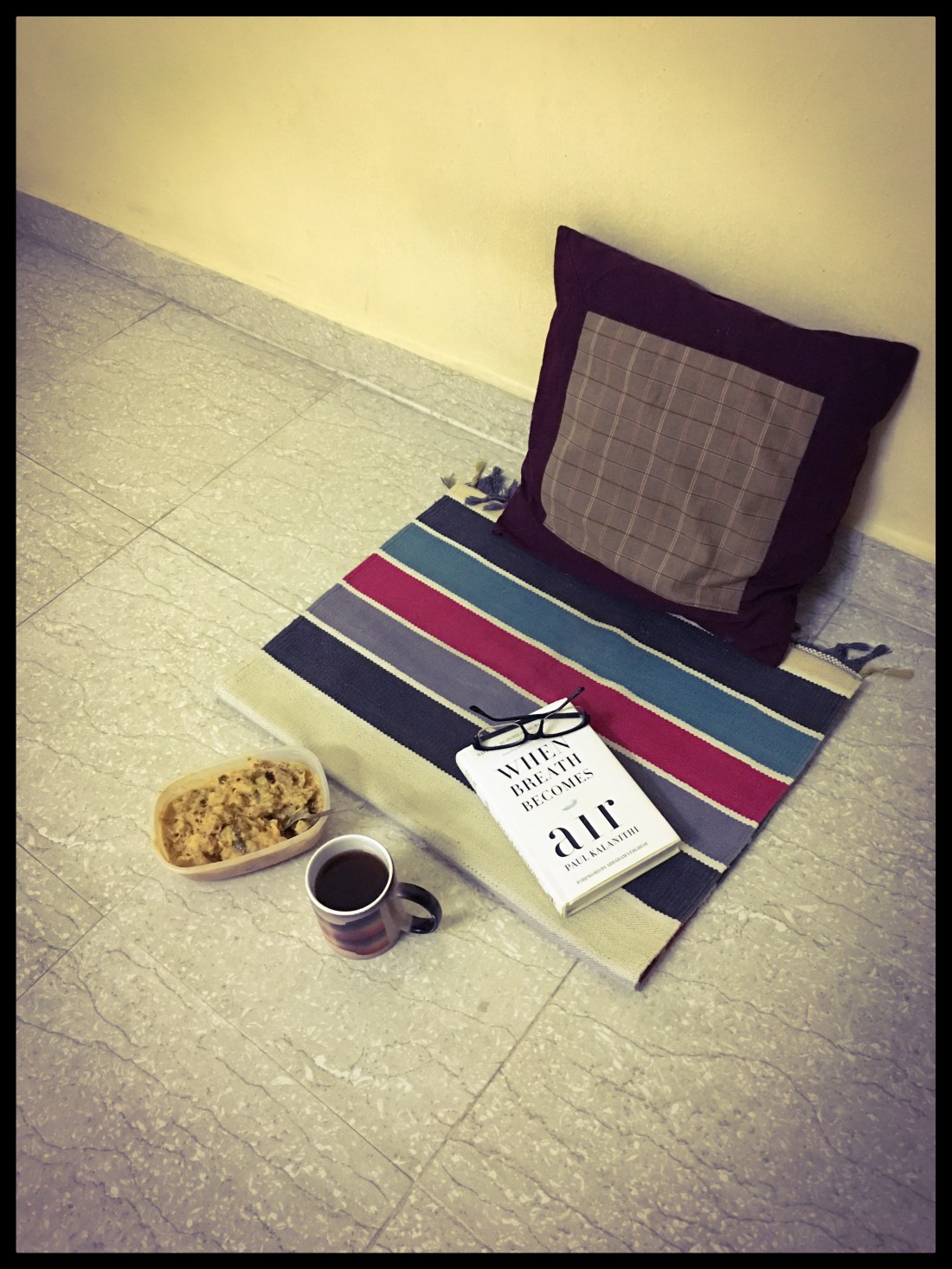
When Breath Becoms Air

And so when a friend recommended a book written by a doctor battling lung cancer, I hesitated. Did I want to read a fantastic, ego-filled book about how medical practice taught this doctor the fleeting nature of life?

My friend insisted, and I decided to give Paul Kalanithi’s When Breath Becomes Air, a try.

Just a few pages into the book, I realised I had been wrong about the author. He wasn’t just a doctor, but a literature major before he ventured into medicine. It was the first time I had heard of a doctor being sympathetic to those dabbling in the fictitious world of literature trying to reveal to the rest of the world that books speak reality, even though they guise as fiction. Paul not only studied literature, but used it as a coping mecanism during his treatment. He was a man of science and facts, but even he needed poetry and prose to survive.

According to the book, Paul loved writing, and reading the book, it’s evident that he did. I breezed through the book taking in all the emotions of a dying man speaking about death and disparity with indifference. In the first half of the book, Kalanithi talks about his journey from a literature student to a medical resident. He narrates his days and nights at the hospital tending to sick, even delusional patients. He writes about his fascination, how he approached anatomy classes, how the blade sliced through the belly of a pregnant woman as his attending doctor performed a C-section, he describes the pounding of a patient’s heart when they had cut through him to operate on the lung, he reminisces an incident when an annoying patient—who had to be conscious while Paul removed a tumor from his brain—swore at the doctors throughout the process urging them to get the stupid thing out of his head. As a reader, I felt myself crooning for most of Paul’s patients, and wishing that last one had died. Paul narrates such powerful stories, that you can’t help but emote along with him.

As a neurosurgeon, Paul speaks of the subtleties of the brain and the care that goes into each surgery. He speaks of the process in such a delicate manner that you, as a reader, can feel the sensitivities involved. As a writer, Paul employs the simplest of language, basic sentence structures, easy vocabulary—all of which makes for a needle sharp impact. The writing is straightforward and factual, the matter he writes about is moving and stiking. As a combination, the book is a joy to the beholder.

The second half of the book is more about Paul himself, about how his life, as a surgeon and as a husband, changed after his diagnosis. He speaks of his waking days and wakeful nights. He speaks of chemo and the pain that pricks at his spine, he speaks of discussing symptoms with fellow doctors, he speaks of his tears, of his fears, of his marriage, and the birth of his daughter.

I’m glad I read this book. It wasn’t life changing, it wasn’t a pool of advice, it wasn’t dramatic, mystic, or any of those things. Instead, it was simple, it was honest, and most of all, humble. And that makes When Breath Becomes Air a worthy read.

The Catcher in the Rye

It’s not often that you’d read a book that changes the way you look at the world and at the way you look at writing as an art. The Catcher in the Rye by JD Salinger did that for me.

Five chapters into the book and I tweeted for the first time a long time illustrating my confusion. I hated the narrative. The writing tired me and slang threw me off. As I read through the first few chapters, I began to wonder what the writer—and the protagonist—of the story tried to tell me. (I later realised it, and even wrote about it, if you’re interested.) The purpose, the intent wasn’t clear. And as someone who enjoys well-crafted sentences and artful wordplay, I found the curt and bland sentences unimpressive. The lack of coherence, lack of respect for grammar, and the obvious disregard for the reader’s patience, all made me way to cast the book aside.

But the cover held me back. Something about the cover told me not to give up just yet. It only had the title and the author’s name. But the font and the background came together in a beautiful union, making me wonder in awe at how great a book should be within. Not every book gets the privilege of being so simple on the outside and still sell like crazy. And so, I wanted to know what was so great about it.

I read on.

One by one, as the chapters progressed I realised what the narrator was saying. The narrator, a 16 year-old boy named Holden, had flunked school and was about to go home for good. He had nothing to look forward to except the disappointment in his mother’s eyes and annoyance in his father’s. Such a boy, a whiner in a sense, lists out all the things that he hates about the world. He hates the two-faced people around him, the “phonies” who say something and do something else altogether.

As I read, I could feel Holden’s emotions; I had been there myself. His anger at people seemed valid in many instances. I was the same when I was 16, but then I grew up up understand the world better, to understand the realities of surviving in a society that’s convoluted and twisted, and always looking to “help” you in ways you don’t want them to.

That way, the book was relatable and close to my heart. It spoke to me unlike other social satires. This wasn’t an obvious satire in itself, but it did point out the evils of our society in a crude manner, through the eyes of a youngster in the brink of adolescence.

Having said all that though, I couldn’t help but realise what a disturbed soul Holden is. Looking at his life and his characteristics from an outside, much older person’s perspective, I think he needs psychological help. When his teacher stokes his head, he panics, anticipating sexual motives. That’s where I felt Holden as a character needs honing. Sure, he says he’s had many people doing weird stuff around him, but we don’t know that. As readers, we don’t hear anything that says he’s had a troubled childhood, no indication that he was abused in the past that justifies his running away from his otherwise most-accommodating teacher. When he notices swear words etched in his old school’s wall, despite wanting to, he’s too scared to erase it worried that someone might think he’d written them. Holden is immature and he’s insecure, but these qualities are also what make him more human and more close to the reader.

That way, Catcher in the Rye is a good read for sure.