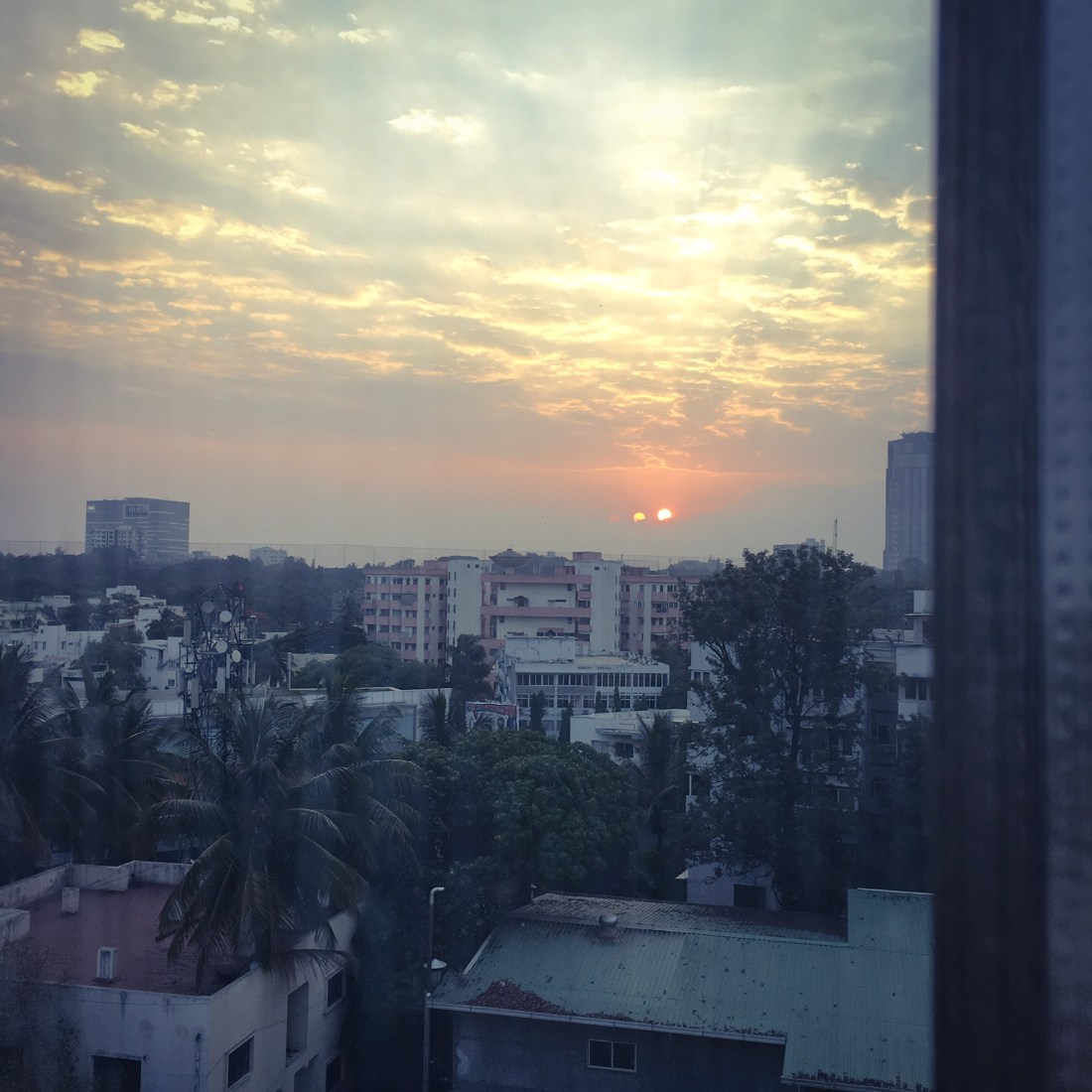
Gone too soon

The funny thing about nature is that although it’s everlasting, most of it’s phenomena aren’t. Take the sun, for instance. It rises each morning and sets each evening, and yet no two sunrises or sunsets are the same. Every day, every moment is all new. If that’s not transient what is?

transient
The sun and its momentary reflections.

Reading now

reading

Books never cease to amaze. I’m reading such a book at the moment—one that came with trusted recommendation. I’ve been reading it far longer than my usual pace, but I attribute that to work and insufficient leisure. Nevertheless, it’s the first time that reading a book for a prolonged period hasn’t bothered me. Other times it happened, I got bored and lost my involvement soon enough. This one, however, keeps me coming back every evening, even if it’s only for a couple of pages.

Somedays I don’t even have the time to read through and appreciate an entire chapter. Even then, the narrative is captivating enough to grip my curiosity. It’s not a detective story—there’s no Sherlock-like whiz running around in handsome overcoats solving crimes and annoying cops all over the place. It’s not a romantic comedy with a bride to be, a confused groom to become, and fidgety bridesmaids arguing over nail colours. It’s not even adult fiction with the heroine trying to battle her adolescent pangs and a drug addled mother. All those story lines are common—I’ve seen them in movies, I’ve heard about them from friends who’ve been to the movies, and I’ve read them myself or reviews of such books.

The one I’m reading now, however—which shall remain unnamed until I finish it—is about a woman and how she’s accepted what’s become of her reality. And each page leaves me a terrified. So much so that I turn the page by instinct to find out what happens next. I relate to the main character, but it’s the last thing I want to do. I don’t want a life like hers and yet I can feel her terror, her disgust, and her mindset carrying over to my own. When she squirms, I do too. When she glows for the tiniest of victories, so do I. As she turns away from the people who command her, as do I. I feel her and know her as if she’s me. And in the fleeting second in between turning the page, I wonder—in terror—she could well be me. And that’s what keeps me going, wanting to get to the end of the story.

Despite my eagerness to know what happens at the end of the story, the build up so far also has me apprehensive. What if it doesn’t end well? I won’t want to read through, to live through, this woman’s life only to figure out that she ends up with what she endured: disappointment. And so a part of me wishes this story would go on, that the weirdness would continue—ironic though it seems.

Stay tuned for more detailed observations.

Realities

realities

Excitement swelled within her as she grasped the paper in her hand. She had worked hard enough, toiled long enough, and spent more than enough of time and money to find a job. Now she had one. Relieved, she slumped on the floor, kicking her bedspread to clear some space.

What a year it’d been. Her education loan piled up faster than she had expected, and the house owner had threatened to raise the rent on the rooftop shack she occupied by the water tank.

She scanned her offer letter for the hundredth time. Undervalued and under appreciated. Yet employed.

Jobseekers

I participated in a job fair a couple of days ago, and learnt so much that I wasn’t prepared to learn. I saw how convoluted our education system is, and how twisted and desperate it’s made our graduates. Also, how difficult it is to find jobs and how the pressure transforms even the respectable into shameless persons.

Let’s take it one at a time. It was my first time attending a job fair as a recruiter, on behalf of my employer. I arrived a little late and the first thing I noticed when I walked in was our stall groaning with a mob clamouring to shove resumes at my colleague. The volume of the crowd stunned me. I had expected a maximum of two hundred people visiting our stall over the course of the day, but in reality, we had two hundred people in the booth at any time during most of the day—from 10 am to 6 pm.

Every person had the same look and the same mentality: to give out their resumes no matter what role we needed. Most of them were fresh graduates, eager (read desperate) to land a job, and it didn’t matter that we needed technical qualifications and experience they don’t possess. Some of the folks I spoke to were blatant and honest: they needed a job, any job they can get. They didn’t mind which city they’d work in, they didn’t mind which role, the compensation we’d offer, the responsibilities they’d undertake, or the amenities they’d receive. I collected over hundred resumes of such fresh graduates. And it amused me—how flexible they are, their eyes screaming a yearning to find a job regardless of all that matters.

That’s when I realised it’s the fate of most graduates in India. We’ve colleges in every other street, with almost every politician chairing a chain of educational institutions. The result is an army of graduates, few qualified but most of them mediocre, unable to find proper jobs that pay what they deserve. And so to make up for lost time and time, these graduates hunt for whatever jobs they can find. From there stems the desperation that reeks through their skins.

It’s sad.

But collecting these resumes, promising them I’d forward them to my team knowing well that I wouldn’t, I could only squirm with disgust. I know I shouldn’t blame them for almost-begging for jobs. I know they have no choice, that they have loads of loans to pay off, and parents who moan at their unworthy degree. This system’s been around far too long to change in a heartbeat. I doubt it’ll ever change. Until each of these graduates realises—before they fall into the pit—how futile it is to take up an expensive, once-prestigious, course in a country that’s made education an unaffordable bounty, and replaced quality with cheap textbooks, and campus buildings in disarray.