
I think I write decent haiku. I take pictures of everything that makes me gawk, and then I twist them, interpreting them in my weird way. Sometimes I even manage to impress myself.
But I never thought of how my haiku sounds to others.
Now I know. Because I’ve read CT Salazar’s book.
The title made me “ooh” and smile as if I understood what it was about. ‘Forty Stitches Sewing a Body against a Ramshackle Night’—hell yeah—this is my jam. I write haiku—I know exactly where this is going. Or did I?
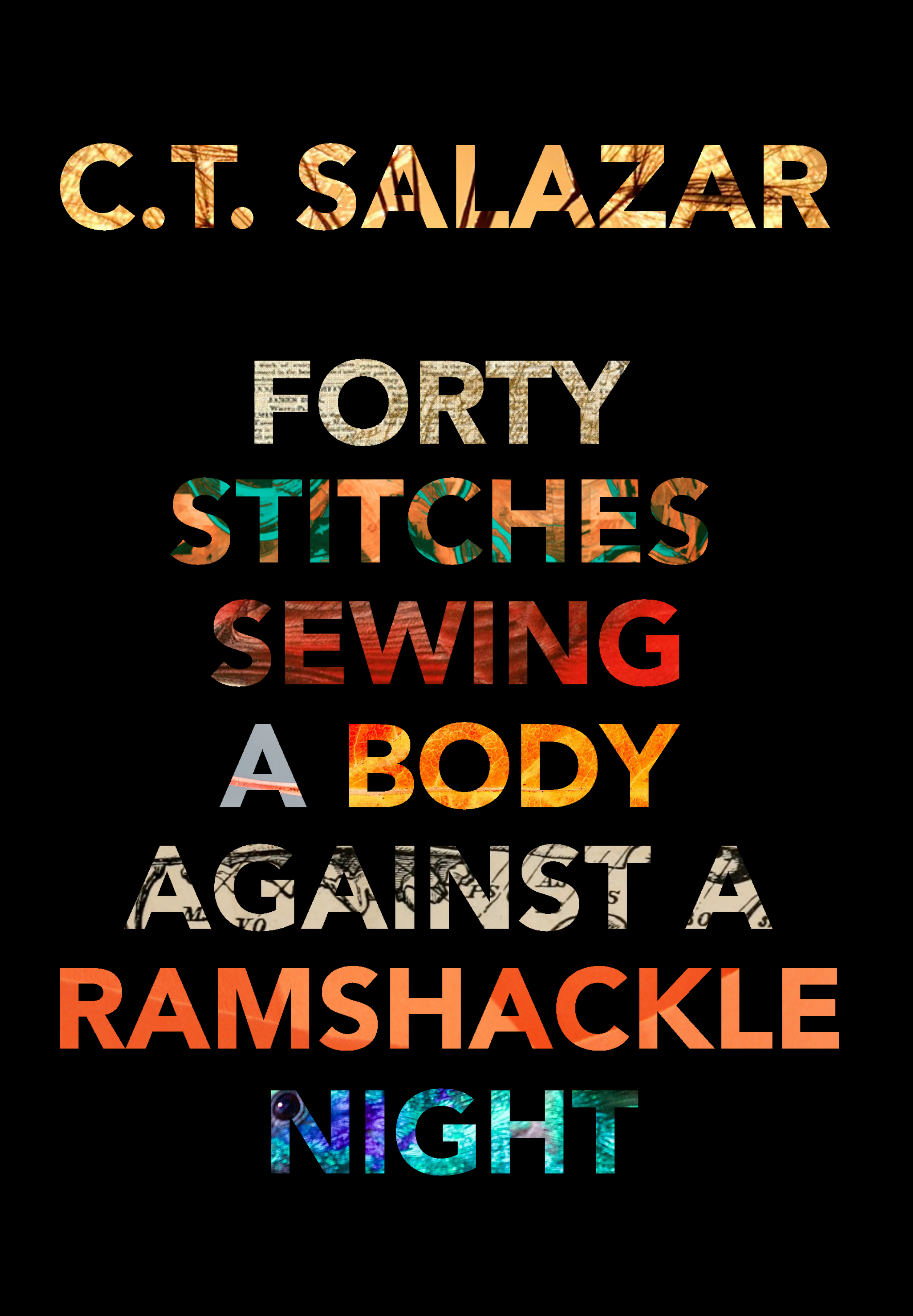
It’s a compilation of forty short poems, a hybrid-haiku form which the poet calls ‘stitches’. See, I didn’t realise that when reading the book. And so when I did, much later, it was as if someone had turned the lights on, laying bare the contents that had been so artfully cocooned within the title.
Ah, the pleasures of decoding poetry!
That title paints a powerful image to hook readers. Just enough, but not at all. That’s the biggest advantage—and the problem—with writing haiku. Everyone knows (or thinks they know) what to expect, but they know nothing of what they’re about to read.
As a writer, you have to satisfy their wants—throw them a bone, if you will—and then when they think they’ve got the hang of what you’re saying, pull the carpet from right under their feet.
That’s what haiku is about. It embodies minimalism. It’s the ultimate form of contraction. Salazar does all of that. And then some more.
Opening the metaphorical pages, I thought I knew what style, tone, and tenor he’ll use.
I assumed.
One should never assume anything about haiku.
trimming your hair
in the bathroom          hundreds
of commas curl
No punctuation, no explanation, no direction for the reader.
Go figure.
But that’s what’s so beautiful about haiku—and Salazar’s haiku, in particular—it makes you see—really see—the small, everyday things in life. The next time I see a strand of hair on my bathroom floor, I’ll think of commas. (And then I’ll moan about losing said hair.) That’s what good poetry does to you—it leaves you with lingering moments.
As I read through the pages, more word treasures jumped out, shaking me completely off balance.
watched a cardinal
               fly through me—sorry
                               through a window
Like most poetry enthusiasts, when I came across e e cummings for the first time, I was fascinated. As an English student, I cringed—no capitalisations and no language order. But I adored his rebel blood. He broke the rules and still made all the sense in the world.
Salazar does too. I mean, look:
river river
we’ve both been
running
See? It’s subtle, it’s delicate, but it punches you in the throat, and as you temporarily recover from gasping for air, it hits you again.
I’ve read and reread this book plenty of times, and I still can’t quite put my finger on what exactly it’s about. Sure, I have five or six story lines running in my head, and every time I read the book, one of them seems to take precedence over the other.
However, as someone who writes a whole lot of haiku (or as I call it), I don’t mind if my readers don’t see what I see. That’s the beauty of any creative endeavour—it should always be open to interpretation. And so with Salazar’s book, even though I still haven’t cracked the code, I’m quite happy to revel in the pristine beauty of his words. After all, it’s not a test I need to clear—poetry is an artistic form of expression and food for the soul. And I will consume it in all greediness, inhaling it in gusts and letting it bloat me with pleasure.

 The Chaos Within