

Every heave matters;
no chariots to heaven—
backpacker pathway.
Every heave matters;
no chariots to heaven—
backpacker pathway.
The proudest moment for anyone who writes is having a third person read and appreciate their work.
I got my moment today.
A friend in my writing group kindly reviewed my first collection of travel haiku.
It’s my first review, and I’m quite pleased—if I may say so myself.
Read the whole review here:
Steps and Stones is available on Amazon.
Waiting patiently,
for life-defining sentence,
those courtroom benches
When I awoke this morning with nothing to do, I mused at the rarity of it. I always have something to occupy myself with over the weekends. After rummaging Facebook for a while, I concluded that I could either go to a street market, where I knew a few of my friends would be, or take a solo trip to the Royal Australian Mint—something I’d been putting off for a long time because it was just too far away.
The food market sounded fun, but considering I’d probably buy nothing and wander around aimless, I decided to do the wandering at the Mint instead.

After two buses and about 45 minutes, I entered the building that runs Australia’s coin system. A big pot of gold coins greeted me. Next to it, a staircase led to the upper level and the main exhibition. Stepping upwards, I couldn’t miss the thousands of coins studded into the stairs.

On the upper level, famous Australian bushrangers greeted me in large cutouts. From time to time, the Royal Australian Mint makes comparative coins marking important events and people. This year, they’ve made a unique set of coins to acknowledge and appreciate the contribution of bushrangers to Australian cultures and stories. It was an excellent way to remember history’s villains, most of whom died in captivity.

Moving on, I entered a corridor full of stunning displays. Hundreds of coins marked the timeline of Australia’s currency system, dating way back to the first foreign coins found in shipwrecks. Since some of the first outsiders to arrive in Australia were prisoners and war slaves, most of their currency became the initial seedling for Australia’s current monetary system. These coins gradually replaced the natives’ barter system.

Walking my way down the timeline, I learnt how, from using coins of unknown lands, the country progressed to establishing a proper way to assess the value of these random coins. From there, they moved on to adopting the shilling-and-penny system that Britain was using. As a country, Australia was under the British reign for a long time, and it only made sense to use the same coins.

Then came the decimal period. From farthings and halfpennies, Australia went to cents and dollars. Displays showed how designers formulate the images and engravings that mark a coin. Looking at the detailing of each drawing, I was amazed to see how most of the coins in current use incorporate unique Australian fauna. There’s more to this country than kangaroos and possums. And sometimes, even though we handle and pass on these coins countless times every day, we don’t often pause to observe.

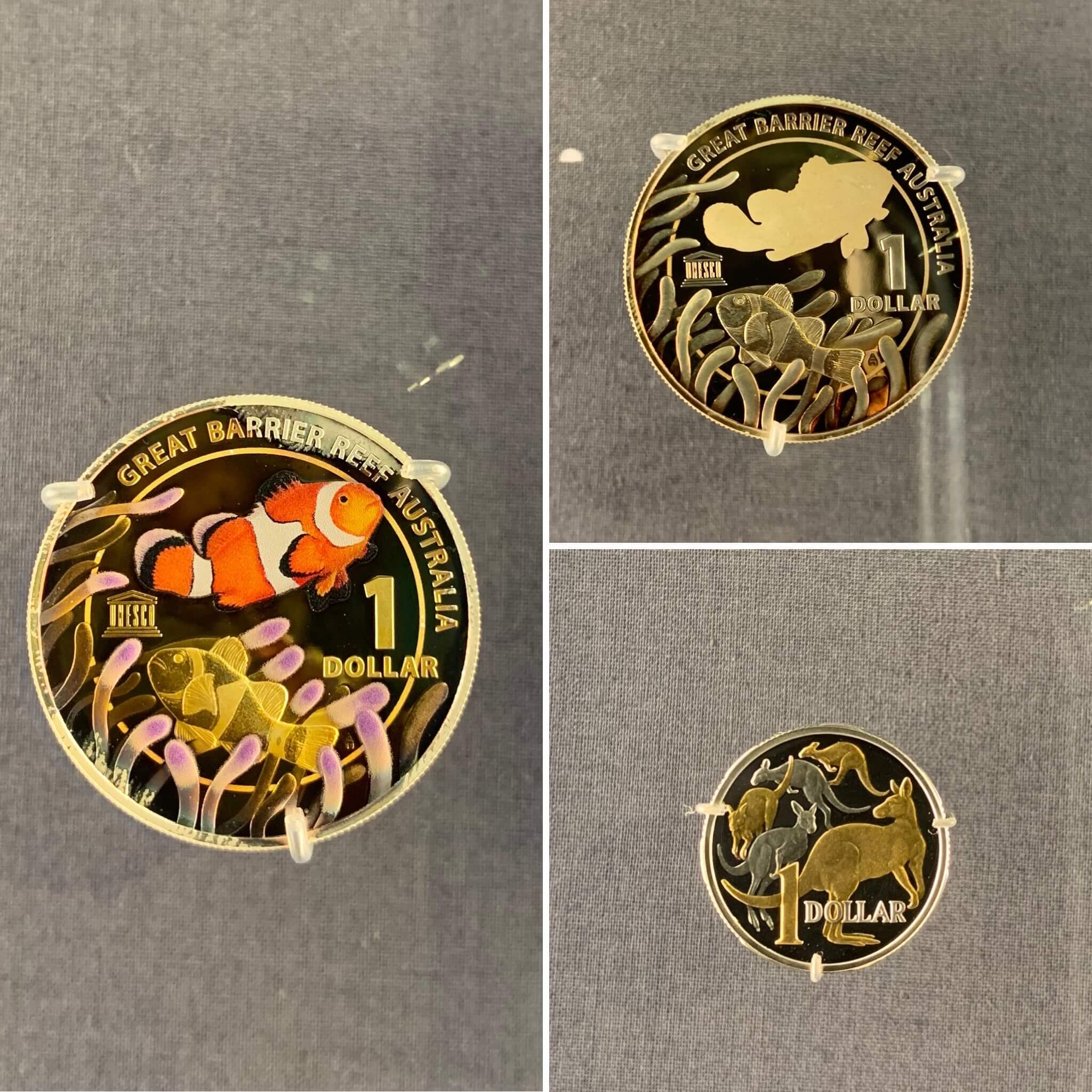
Apart from these coins, the Mint also had displays of other collectible coins and medals that it’s made over the years. There were 1kg coins in both gold ($3000) and silver ($30) marking the Mint’s partnership in the 2016 Olympic games. There were gold, silver, and bronze medals offered to winners at the 2000 Olympic Games in Sydney. Also on display were the medals presented at the 2019 INAS Global Games. And my favourite, three special coins celebrating the Great Barrier Reef.
It took me about an hour and a half to look and read through all the displays. From the various metal combinations tested for a single coin and the different designs they considered, to the actual robot that helps with heavy lifting and transporting during the minting process, the Royal Australian Mint has so much awe to offer. I’m glad I skipped the markets for this.
When I woke up this morning, I didn’t want to be around people. It just wasn’t a socialising day. Within minutes, I decided to get lost in the Australian National Botanical Gardens.
The first time I went there, I was a traveller. A high-energy trekker, equipped with a backpack full stuffed with a jacket, cap, water, and snacks. And I tried to cover the whole area in one day—because that’s what I do when visiting a new city. I crave to see everything, experience everything in one visit. As a result of that over ambition, I lost my way in the gardens, strayed from the main path every time I saw a flower or a streak of sunlight glinting through a puddle, and ended up missing a few parts of the garden.
This time, I knew better. I had a plan, a purpose. I chose a trail—the eucalyptus walk—and decided to stick to it.
Except, I got lost again. It took me longer than it should’ve, but I went around in circles before finding my way back on to the trail.
And you know what? It’s ok. It’s ok that I got distracted by plants, that I gravitated towards weird shaped-branches and odd-named bushes. It’s ok that I didn’t follow the trail exactly as it was mapped. Because at the end of the day, it’s not about seeing them all. It’s about appreciating what you did see.
And I saw a lot.


 The Chaos Within