
The Itch I Can’t Get Rid Of

itch

For a while now, Gmail has been showing me advertisements in my Social, Promotions, and Updates tabs. And though I’ve been dismissing them at will, I can’t help but freak out when I see something so relevant to what I had been searching a while ago.

I know, Google reading my emails and following my browsing history isn’t a new concept. Google has always done that, and despite a lot of people’s outburst against it, it doesn’t seem like big G would stop anytime soon. On another note, part of my work involves writing ads for Google to show our customers when they search for something relevant. So I don’t even think I have the right to be outraged by the ads.

Still, I am.

I don’t like the fact that Google is messing with my search history. It’s messing with my head. I don’t browse for anything vile but I get cautious even when my boss stands behind me. And to think Google is just right there, inside my system, peeking at me, and pecking at every trail I leave is just a little too much to take.

Then there’s the “Tell us why you dismissed the ad” message. That’s got to be the most sarcastic message that Google can send its users. I mean, what do you expect, Google? I dismiss the ads because they’re masquerading as emails while obscuring my actual emails. Not to mention it’s rude to shove ads in the face of someone who’s logging in first thing in the morning.

As if these weren’t enough, there are people out there who don’t care about Google’s meddling. I met a woman who shrugged off the idea as if she couldn’t care less. She was happy, instead, that Google had found her the curling iron she had tried and failed to find online.

Emails, like letters, are personal — even if I’m just writing to a software support team. I don’t appreciate it when a G product lures me into relying on its technology. The world already depends too much on Google. From my search and routes to documents and email, if I log into one app, a single company can see through me like glass.

To put it in plain speak, no matter where I go, big G follows me, watching me like a hawk. Why does it feel like 1984 again
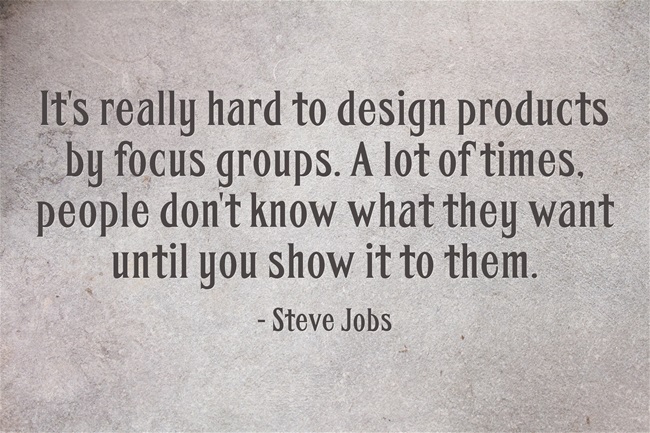

People Don’t Know What They Want

people-dont-know-what-they-want-steve-jobs-quote

Sometimes in life, you just get used to the way certain things work. You take them for granted and, for some reason, you start believing that’s that’s the way things should work. Like personal laptops, for instance. I love Apple, but I couldn’t afford an Apple product until I started working. That’s when I got the office Mac. Despite its hefty price tag, the Mac was breezy. The near-unattainable beauty was darn easy to get used to. I fell for the Mac the moment I touched it and the cool metal sent electric excitement down my spine. It felt sleeker than the “tick-tock” of my previous Windows laptop.

The Mac was a class apart from every piece of technology I had seen before. It wasn’t just its cool exterior; I was in awe of everything that came with it, too. When I tried moving from one window to another for the first time, the Launchpad popped in out of nowhere. I was taken aback before noticing the search bar on top. It was like my Mac knew I was lost and needed to find my way through a mass of apps.

I love Finder’s eagerness to find anything on my system, from the smallest file I’d saved years ago to the last website I opened a while ago. And the first time I shut my Mac off, I spent a good couple of minutes trying to close the Finder, only to realise later — with such thrill — that you can never quit looking for answers.

Then came the shock of the inverted scroll. What was shocking, though, is how natural it felt to scroll against Windows. For too long I’d used Windows without noticing that the other way made more sense. I now I cherish Mac’s re-invented inverted scroll, not to mention the way a document bounces back when you’ve scrolled all the way. It’s the little things that matter the most, and it seemed like Apple had thought of them all.

And then there’s Safari, without a doubt, the best browser I’ve ever used. Not just in terms of beauty and slivers of silveriness, but also the way it sympathises with a user. I always go for full screen, and when I move my mouse pointer towards the top to switch to another tab, it works fine without affecting my experience. What wasn’t fine, though was when I did the same in a more “hip” browser. There, the system menu showed up, hiding my browser tabs for a while. I went back to Safari to check how it handles the situation and found out that it doesn’t hide the tab names in the browser. And that’s where Safari is better than every other browser I’ve used.

Here’s the thing, though, I wouldn’t have noticed the obvious flaw in the other browsers if I had continued to use only those. I would’ve adapted and believed that that hiding the tabs was the only way to handle the case.

But the Mac showed me an alternative — a better version. We’re so used to adapting to what we already have, that only when something better like the Mac comes along do we realise we shouldn’t settle. Perhaps that’s why Steve Jobs was a visionary.

What’s the Point of News?

big-news

It was Wednesday, the middle of a wet, clammy, and death-filled week. The sun had almost set outside my window at work and I was too bored to continue. I opened a new tab and typed, “F” — the first letter that came to my mind. And trusty Safari pre-filled my most-visited website, Facebook. Scrolling through weather forecasts, sneaky confessions, Netflix trailers, and random acts of kindness, I paused at one peculiar post.

A news item about the chief minister of my home state. She died a couple of days ago, and ever since, people talk about nothing else, whether at work or at dinner. This post, an opinion piece judging by its title, suggested a conspiracy against the dead CM. And it had appeared on my feed, courtesy of my cousin. I stopped to read the headline; the author believed that one of the CM’s closest allies—we’ll call her S—had turned against her and taken over the party’s reins.

It’s absurd, I know. But for years, our media celebrated their friendship. The friend, S, was the CM’s trusted advisor and remained so until, one fine day, a news channel reported that S was corrupt.

The party’s tables turned too soon for their liking, and the CM cut all ties with her friend. The media went crazy and people wrote articles about how the CM’s decision favoured her in the next election. It was all about winning the election. The friend never came into the spotlight until at the CM’s funeral, where she redefined the word, “weepy.” Sound like House of Cards? Welcome to its creepy Indian version.

All these details rushed into my head as I looked at the article’s headline.

I remember thinking we’d never know the truth about the CM and S. Their friendship was a mystery to everyone outside their circle. Nevertheless, we had news pieces and opinions about them, we heard from young college girls who wanted to be BFFs like the CM and S. And now, a few years later, we have wild theories and 12 things we never knew about the CM’s death.

I felt repulsed. I understand the media’s uncontrollable urge to print sensational news, and yet, I can’t accept their proof-less allegations. All these newspapers flew around me hoping I’d buy the one that features the most exciting gossip.

And that’s why I couldn’t digest the article my cousin shared. My cousin doesn’t understand political talks. I know she shared it only because it has an exciting new thing to talk about over dinner. And that only strengthened my waning interest in politics.

I don’t care who killed whom or who’s conspiring against whom. Because at the end of the day, who knows what’s true? We all live in a society that thinks it knows the truth but knows only what others think is the truth. We may guess, but we’ll never know. There are more than 20 television channels in my state that political parties own. Whichever party (or individual) owns the channel has all the power to create, warp, or kill a news item.

And I don’t see the point of revelling in other people’s convoluted version of reality.

An Unforgettable Ride. One I’d Rather Forget.

On a normal day, there’s not much to say about a two-hour bus ride. Unless you’re already late and have less than twenty hours to explore a city of French croissant, Italian pasta, soulful coffee, and sinful chocolate.

In that case, a two-hour bus journey is one hell of a ride.

When it comes to planning and preparing an itinerary, everyone’s an expert. We aren’t any different, my friend and I. We’d planned to leave at 7.30 am, and I even chipped in saying we could leave earlier, too, if we could manage to. By the time we reached the bus stop at 8 am, we’d already missed a few buses that would’ve gotten us to our destination on time. When we, at last, boarded the bus towards Pondicherry, we took a deep breath. It seemed like we had crossed one great barrier: waking up early when the chilly December fog still pressed onto our bedroom windows.

And then came the next barrier: The great Indian problem of over-population and the people’s urge to travel. Squishing ourselves in between giant arms and travelling bags, we got tickets to what we knew would be the final stop of the bus. We had a long way to go and the crowds seemed unwilling to thin out. We stood for a while, jumping up and down to the speed breakers on the road, and dancing to and fro as the bus swerved to avoid potholes.

About a half hour into the ride, we found a seat. Being gracious and accommodating, I offered it to my friend, preferring to stand myself. Most people disapprove when I stand and hold on to a seat handle, but I had always felt comfortable standing. After all, when you’re five feet tall and sitting on a seat that’s your eye-level, you get to see a lot of stuff that you’d rather not. I love staring out the windows, but on an aisle seat, all I see is big butts. And I cannot lie that I don’t mind.

And so, I stood, jerking this way and that and looking at the watch whenever I could risk taking my hand away from the pole that I clung to. The first time I checked, it had been only an hour since we had climbed on. We had another hour and a half to look forward to, and I was looking forward to it less and less.

Meanwhile, my friend sat hugging her and my bags, looking as miserable as I felt. As we lumbered on, the crowd in the bus thinned and thickened from time to time. The scenery, however, grew greener; we were riding deep into villages.

But the more paddy fields we saw, the more skeptical my friend became. Perhaps, she doubted, the driver had taken a detour into all the tiny villages, dropping off and picking up villagers, and would take longer than Google’s fastest route. She checked the map, and sure enough, we were headed into a small unknown area that took us further from our destination. Estimated time was over another hour and a half.

She panicked. I was frustrated. So much so, that I couldn’t even bring myself to swear at the driver. I found a vacant seat by the window, grabbed it, and set to finish reading 1984.
My friend stood up from her seat, a valiant look in her eyes. She had decided to talk to the conductor. A minute later, she came back, a weird look on her face. She opened up Google Maps and checked the route again. We were just 20 minutes away. That was much sooner than we had expected in the first place.

She explained: Our driver had taken a route less travelled, a route that didn’t show on Google Maps. Technology still has a long way to go.

All of a sudden, the journey wasn’t tiring anymore. The roads had become smooth, a few grand old buildings whizzed by, a couple on the bus smiled at me, and soon, a woman showed us where to get off.

We had arrived. On time.

To Visit or Not to Visit

I love my parents. Well, who doesn’t? They raised me all these years, taught me what’s good and what’s not good, tried to teach me to make my own bed, and even instilled in me some values of cleanliness. They are the best parents I could’ve ever asked for, and I even considered giving my dad a “World’s best Dad” mug for his sixtieth birthday—which is all so normal and obvious.

That’s what parents are like; sweet, caring, nurturing, and deserving of our affection and compassion. Nothing wrong with any of those things.

All these aside, though, I still have second thoughts about visiting my parents. I can’t stand the thought of them looking up and down at me with crinkled eyebrows, and commenting I’ve lost far too much weight. I cringe to think of spending two days trying to endure their manipulating talks about saving up to build a house, gaining weight so I look my age, and not cutting my hair any shorter. Home for me is just a weekend of torture.

Is it just me, I often wonder.

And I realise it’s not just me. Most of my friends are like me: Dreading visiting parents. But then I spoke to another colleague. She loves to visit her parents. She plans her weekends in advance and allocates time for everyone that matter to her. She’d set up a movie date with her mother, a dinner with her schoolmate, and a tiny lunch party with the entire family. And when she comes back from home, she’d be downcast for a couple of days in the least.

It was a wonder to me.

And then I realised I don’t hate my parents. Despite being reluctant to visit them, I still care for my parents. So much so that I’d call them up to ensure they take their medication on time. I love spending time with them. I love the little chats my mother and I share while we make a mid-day meal. I cherish holding my dad’s hand while we walk to the grocery store. I crave for those moments when I catch up with their stories, smile at their weak attempts at making jokes, and even when I help them navigate the technology I have trouble with myself. I value those little hours we spend for each other. Nevertheless, every time I enter the house, I also look forward to leaving.

People talk so much about parenting, the rules, and best practices of being a good parent. But not enough people realise the challenges of being a daughter, a child. It pains me to yell at my mother who calls me at work because she’s bored at home. How would I tell her to do something for herself, something she’d enjoy doing (other than talking to me)? That is, alas, a question no one can answer. Good “daughtering” is all about finding the sweet spot between spending too much time and too little time with your parents. And I’m still looking for it. Any advice? Please shoot.