

To traverse tireless
mile after mile after mile
to hear the soul speak
To traverse tireless
mile after mile after mile
to hear the soul speak
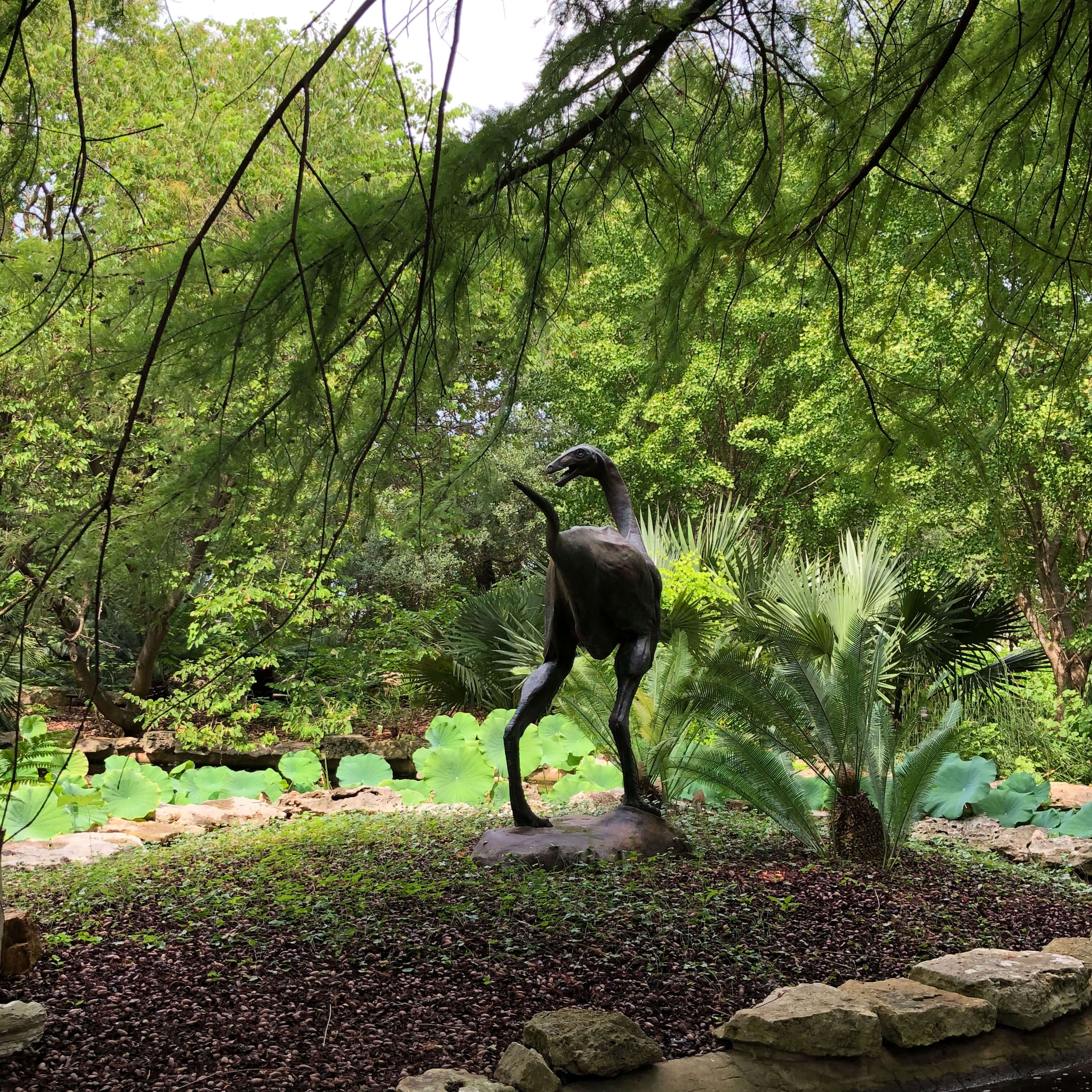
The Zilker Park was only one of the many attractions of Austin. Not too far from there is another garden, a more sculpted yet wild one: the Umlauf Sculpture garden and museum.
Featuring 62 figurines, most of which Charles Umlauf himself sculpted, the garden stands as a testament to the combined beauties of nature and human intricacies. Charles Umlauf was born to French-German immigrant parents in Michigan. He grew up in Chicago and attended the Art Institute there.
When I walked inside, I knew nothing about a sculpture garden. I had no idea that the garden is home to some of the most magnificent sculptures I’d seen. I didn’t know then that I’d spend hours walking round and round taking photos of every sculpture on display, trying to capture its entire glory in multiple angles.
The first thing the caught my attention was a sculpture titled, Refugees. The garden guide I held explained that Umlauf had made it in 1945 as a reminder of the aftermath of the Second World War. As I observed the intricate carvings of the refugee’s drooping eyes and waning rib cage, I felt an immense sense of doom engulfing me. In such a realistic manner, the artist had recreated mite moments of a dying life. It was a stunner. And so were the rest of the exhibits.
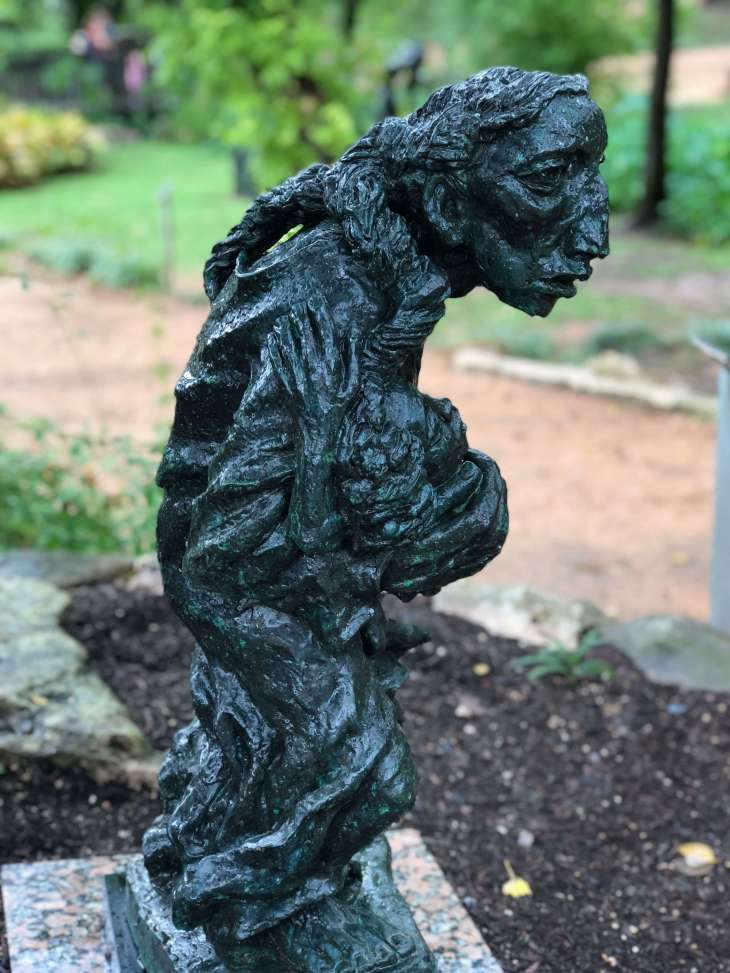
Refugees: Charles Umlauf made many sculptures in the refugee theme. Growing up in Chicago and Michigan, his own family faced a lot of anti-German prejudice. It even led to Americanising their German names. Charles was renamed Karl.

Lazarus: Bronze sculpture, made in 1950. The work os based on a parable about dying. It depicts a sore beggar who “longs to eat what fell from the rich man’s plate.” (Luke 16:21)

Crucifixion: 1946, aluminium. This sculpture was a gift from the McNay Art Museum. It’s a scale model of the 10-inch sculpture of the same name made by Marion Koogler McNay for the Shine of St. Antony de Padua Cemetery in San Antonio.

Poetess: 1956, cast stone. The sculpture pays homage to Charles’ wife, Angeline Allen Umlauf, who was an art student in Chicago before becoming a poetess. Representing poetic inspiration, the sculpture also refers to Angeline who played a part in creating the Sculpture Garden.

Family: 1960, bronze. This is a scale model of the Family sculpture that in the University of Texas campus. The model is 1/3 of the size of the 15-inch version in UT.
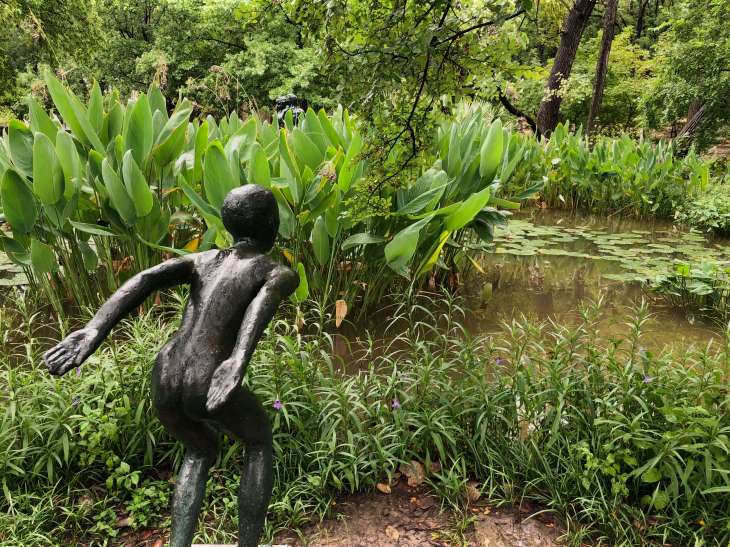
Diver: 1956, bronze. Modelled by Umlauf’s son, this statue is s reminder of the Umlauf children’s childhood. When young, they’d run down the hill from their home, cutting through the “weeds” to swim at Barton Springs. The diver seems to be cutting through the same “weeds” that were transformed into the garden.

Muse 2 – Head: 1963, bronze. Charles made 3 bronze muse statues for the University of Texas. However, he set aside this head of the second muse statue as a separate work.

Spirit of Flight: 1959, bronze. In the 1959 edition of the Dallas Love Field Monument Sculpture Competition, the winner and the runner up were Umlauf’s sculptures. All entires were anonymous. This one is a scale model for the airport’s fountain installation, which stands 17’ on a 22’ plinth, surrounded by 18 oversized birds.
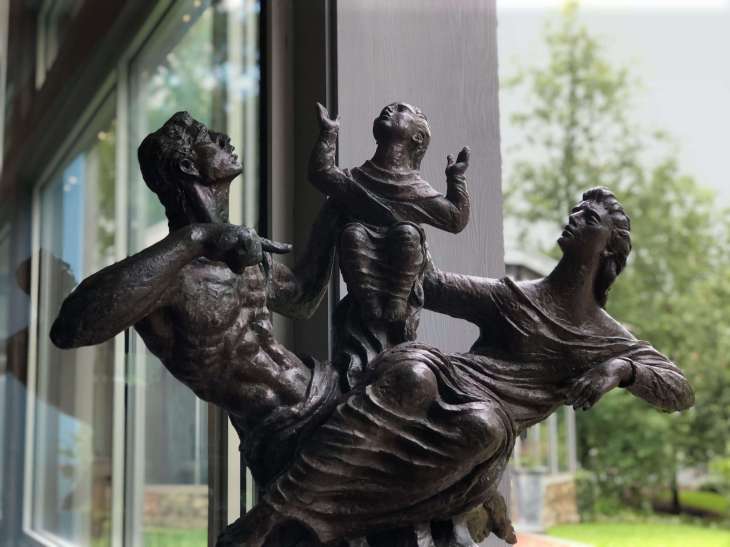
Hope of Humanity: 1971, bronze. This is a scale model of the 12.6’ sculpture commissioned by the Houston Museum of Natural Science. Charles Umlauf, while sculpting this, took photographs to document the whole process for a book titled, The Sculpture and Drawing of Charles Umlauf.
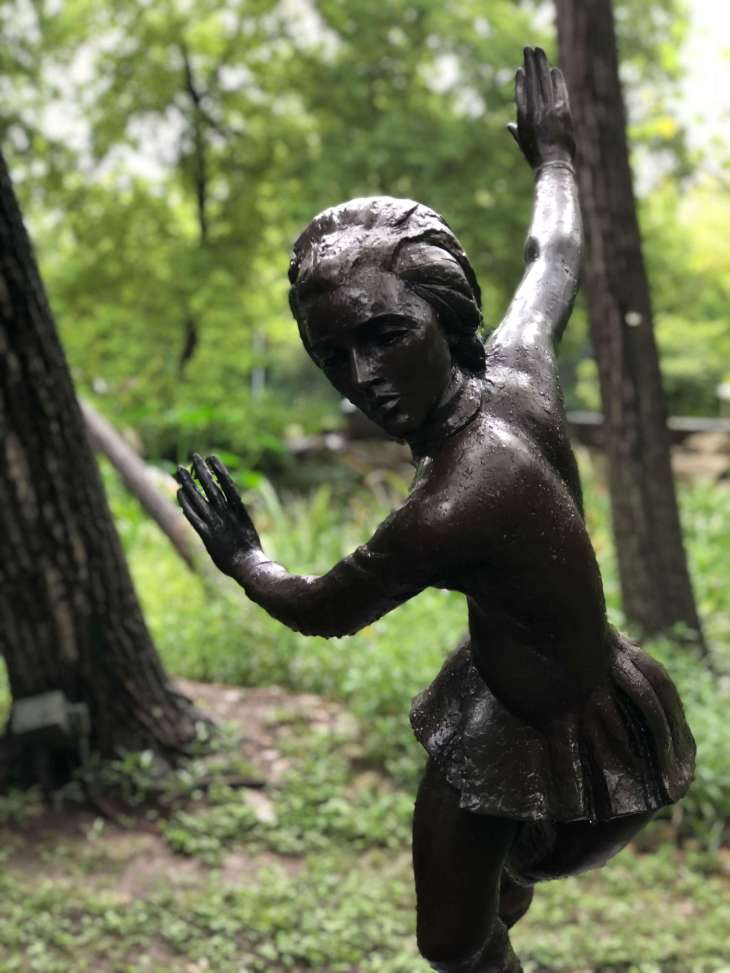
Skater: 1970, bronze. Charles Umlauf’s homage to Peggy Fleming, an American skater in the 1968 Winter Olympics in France. Only 19 years old then, the skater ha down the gold medal for the United States in that tournament.

Icarus: 1965, bronze. According to Greek mythology, Icarus and his father Daedalus, were trapped on a labyrinth in the island of Crete. In an attempt to escape, Daedalus made wings for the boy of them using features and wax. Despite his father’s warnings of not to fly too close to the sun, Icarus did and fell into the sea as his wings melted. The myth symbolises the excessive pride of youth and the failed ambitions of humankind.
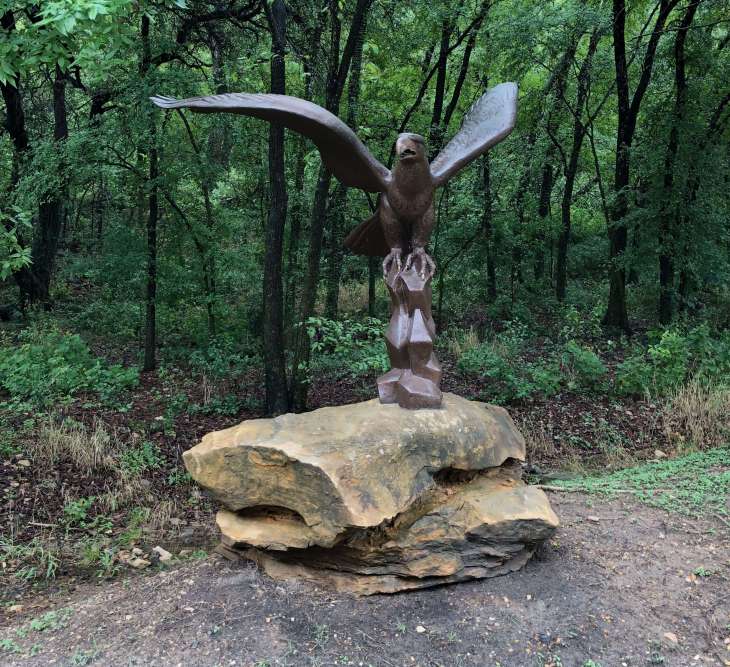
Eagle: 1968, bronze. Commissioned for the Austin headquarters of the First Federal Savings & Loan, this statue stood there for 50 years, before the state loaned it to the garden.
If you ever have a chance to visit the Umlauf Sculpture Garden and Museum in Austin, Texas, please do. It’s so worth your time.

As boats tied to shore
away from reality
tied to dreams are thoughts
I hate stereotyping. As a victim of it myself, I try and always avoid pushing others into pre-built notions of what’s right and what isn’t.
But with Texas, I couldn’t help it.
When I learnt I’d be visiting Austin, Texas for a couple of weeks, I was expecting vast mounds of sand, and cowboy boots on every other street. Yet in the most spectacular way possible, the city proved me wrong. On my first day there, a colleague was gracious to take me along as he ran errands. Aside from being a hot city, Austin, I observed is a rather small town. With the river flowing through the city, it was quite easy for me to figure out what’s where.
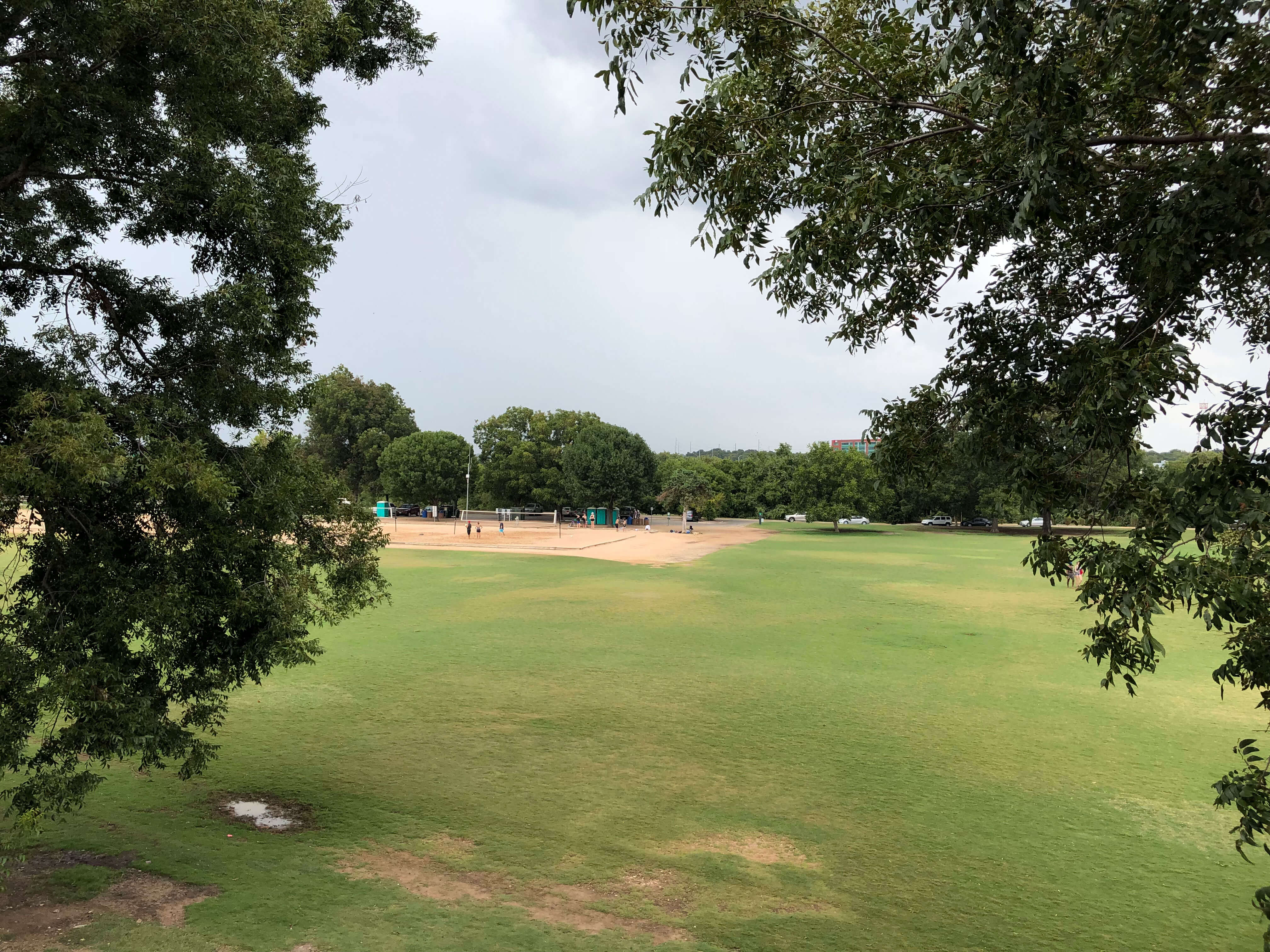
For the love of public transportation, I chose to use the Austin bus service to explore the city. From where I stayed, the bus stop was a ten-minute walk away. Waiting for the bus wasn’t too bad—In no longer than five minutes, a bus trudged my way. Perching myself on a seat by the window, I gawked throughout that short ride at the city that was more green than I’d ever imagined it’d be. Trees and bushes lined the pavements, punctured on occasion by shops and buildings. About 20 minutes of slow riding later, I had to transfer to another route that’d take me to where I’d been wanting to visit first since I first heard about it from colleagues: Zilker Park and Botanical Garden. As soon as they heard I enjoyed parks and open green spaces, many people, from friends and colleagues, to even the passenger next to me in the flight, recommended the Zilker park. I couldn’t pass the opportunity.
And so I waited. With bated breath and mounting excitement, I stood at the bus stop for ten minutes. No sign of a bus. According to my online resources, the bus showed no signs of a delay. I was beginning to get restless when another passenger, travelling on the same route, came along sulking. Within two minutes of conversing with him, I realised the bus schedules are often a mess. Although most of them arrive on time, they aren’t as frequent as you’d like. Having waited for over 20 minutes, I gave up, and so did my co-passenger. It wasn’t a long walk, but it wasn’t a short one either. To make up for the disappointment, however, it was scenic and rather enjoyable.
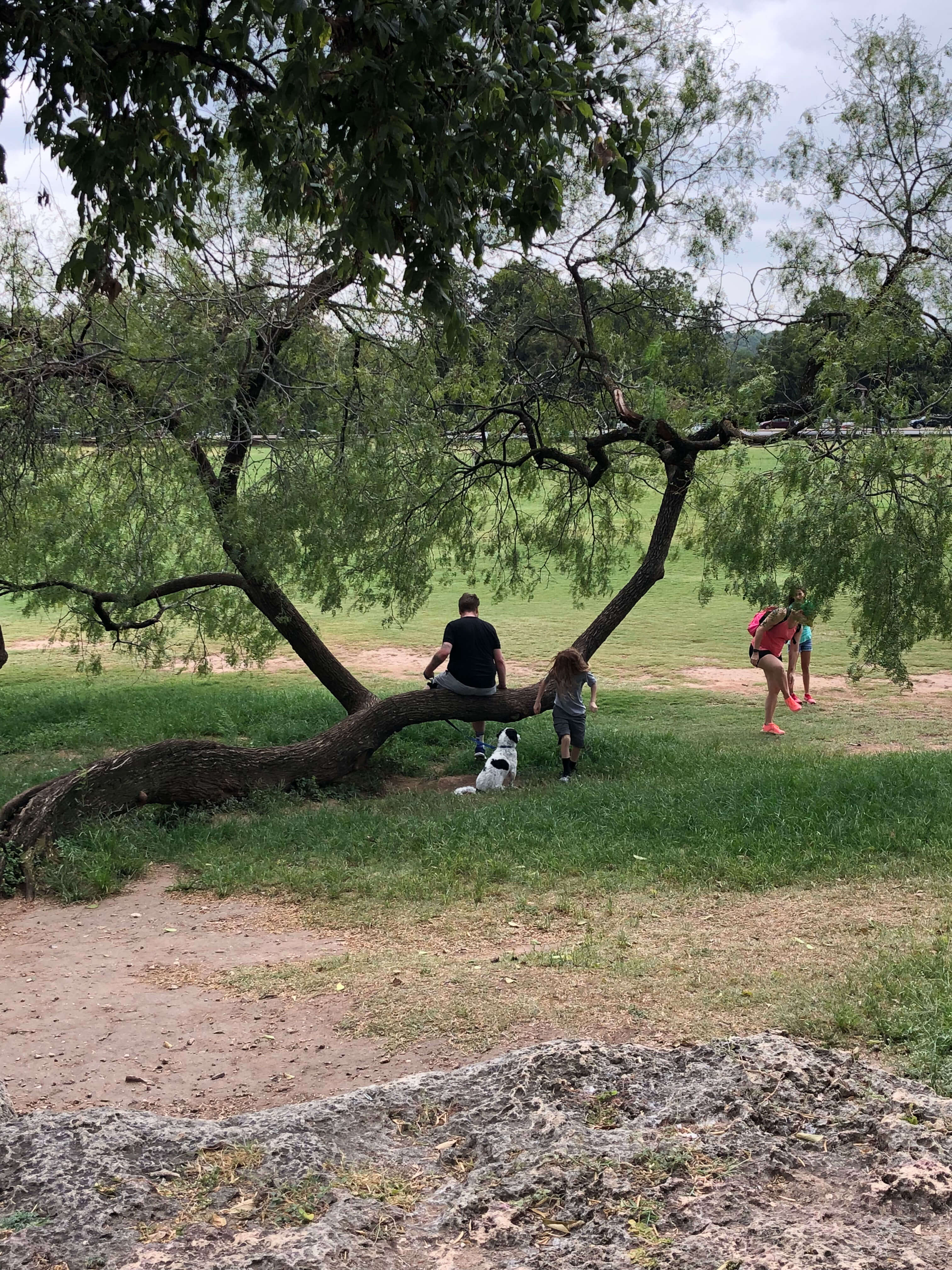
About 40 minutes later, a wave of green valley hit my eyes hard. Zilker Park is a 351-acre expanse of greenery like I’d never seen before. And the people of Austin knew its value, for there were families picnicking, owners change their dogs, young students practising soccer, and some adventurous kids climbing the rocks. II had a little adventure myself as a dog bounded at me with gnawing teeth. Within seconds, though, I knew he meant no harm and I was petting him as his owners walked over to apologise.
It was a Sunday, a day spent well for all them. And as I observed them go about their life, I understood how much they’ve incorporated nature in their livelihood. In their opinion, there couldn’t be a better way to spend a Sunday afternoon, and having seen families spend entire days whiling away on television, I would’t ever contend the Austin way of life.
Turning away from all that was difficult, but something else promised to be a much greater experience.
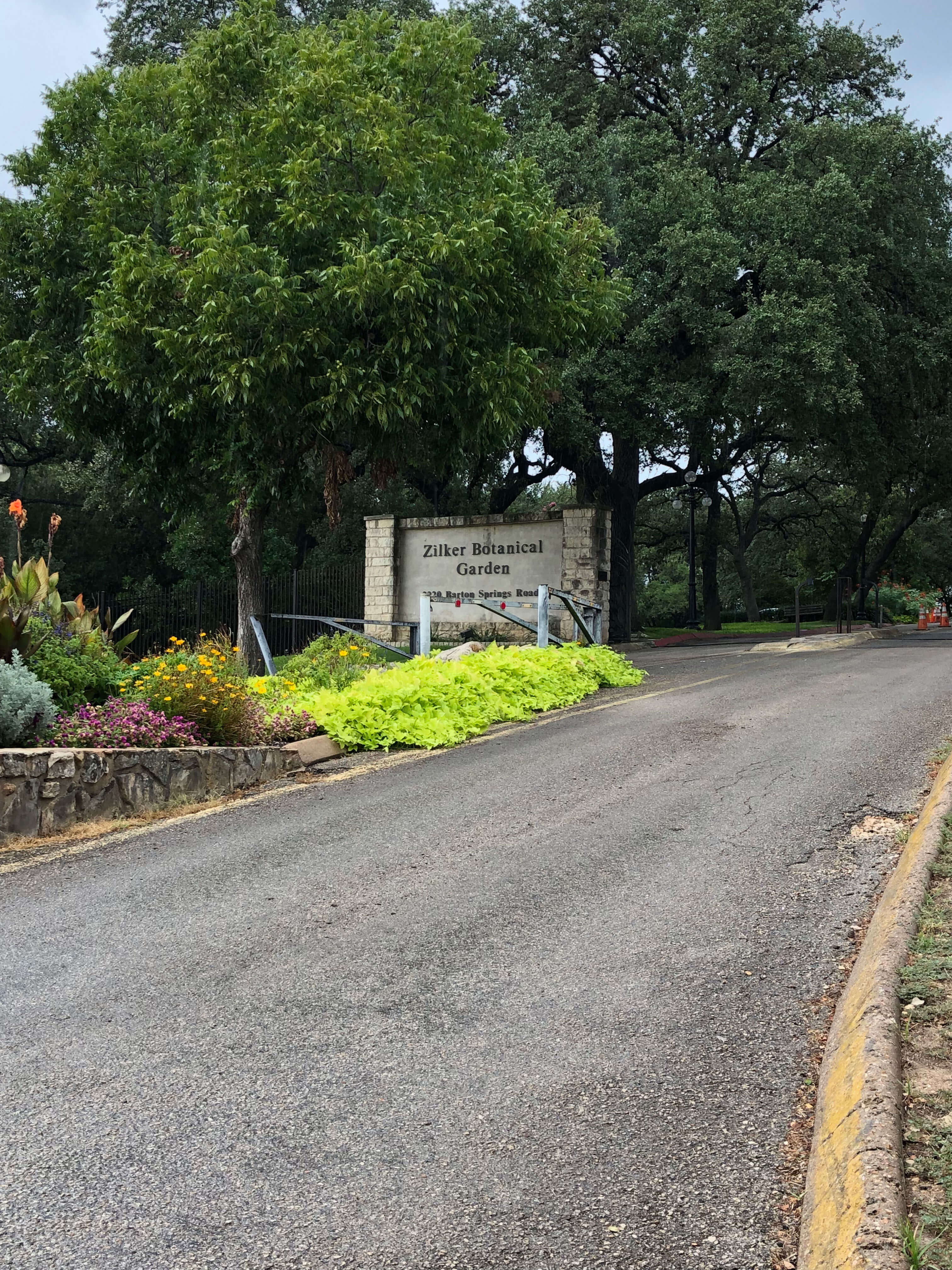
And what an experience that was.
Much like The Washington Park in Portland, this garden contains smaller sects, like a rose garden, Japanese Gardens, desert plants, waterfalls, streams, and a prehistoric garden. Texas Historical Commission has established exhibits too, a model of a classroom, as well as a Swedish log cabin and blacksmith shop to depict the lifestyle of the first Swedes of Texas. There’re also live demonstrations of the recycling process, the workings of solar energy, and a spiral garden.
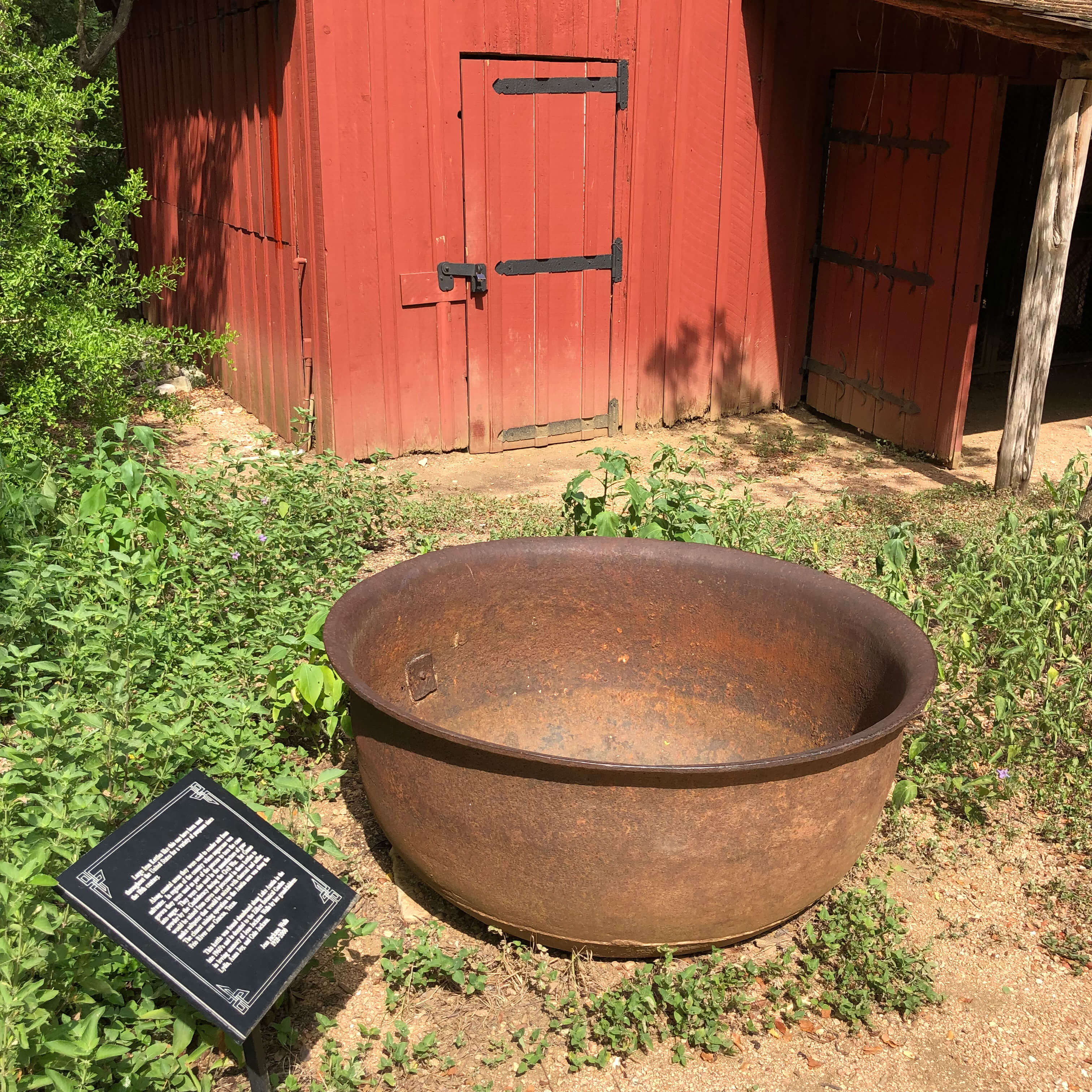
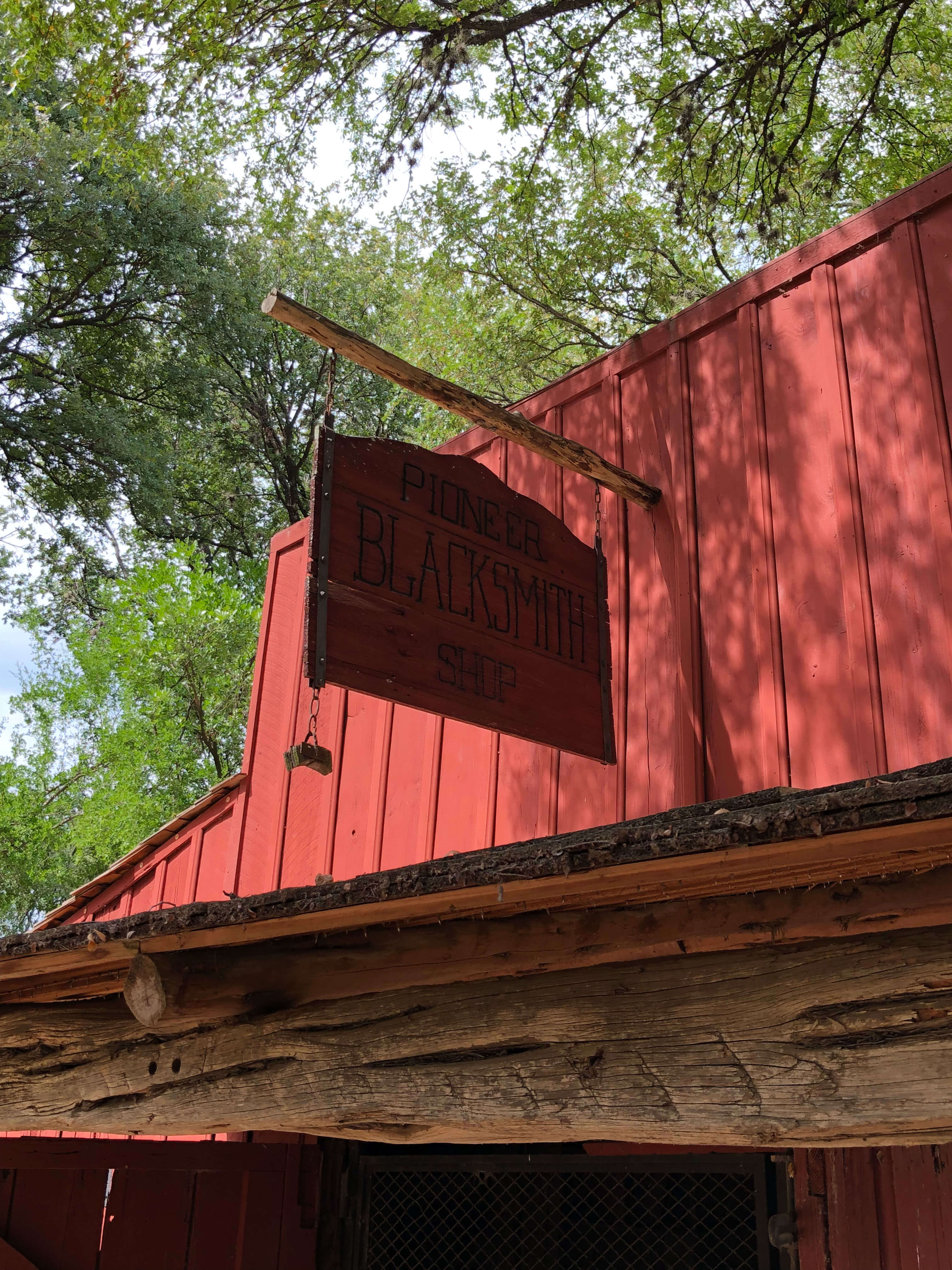
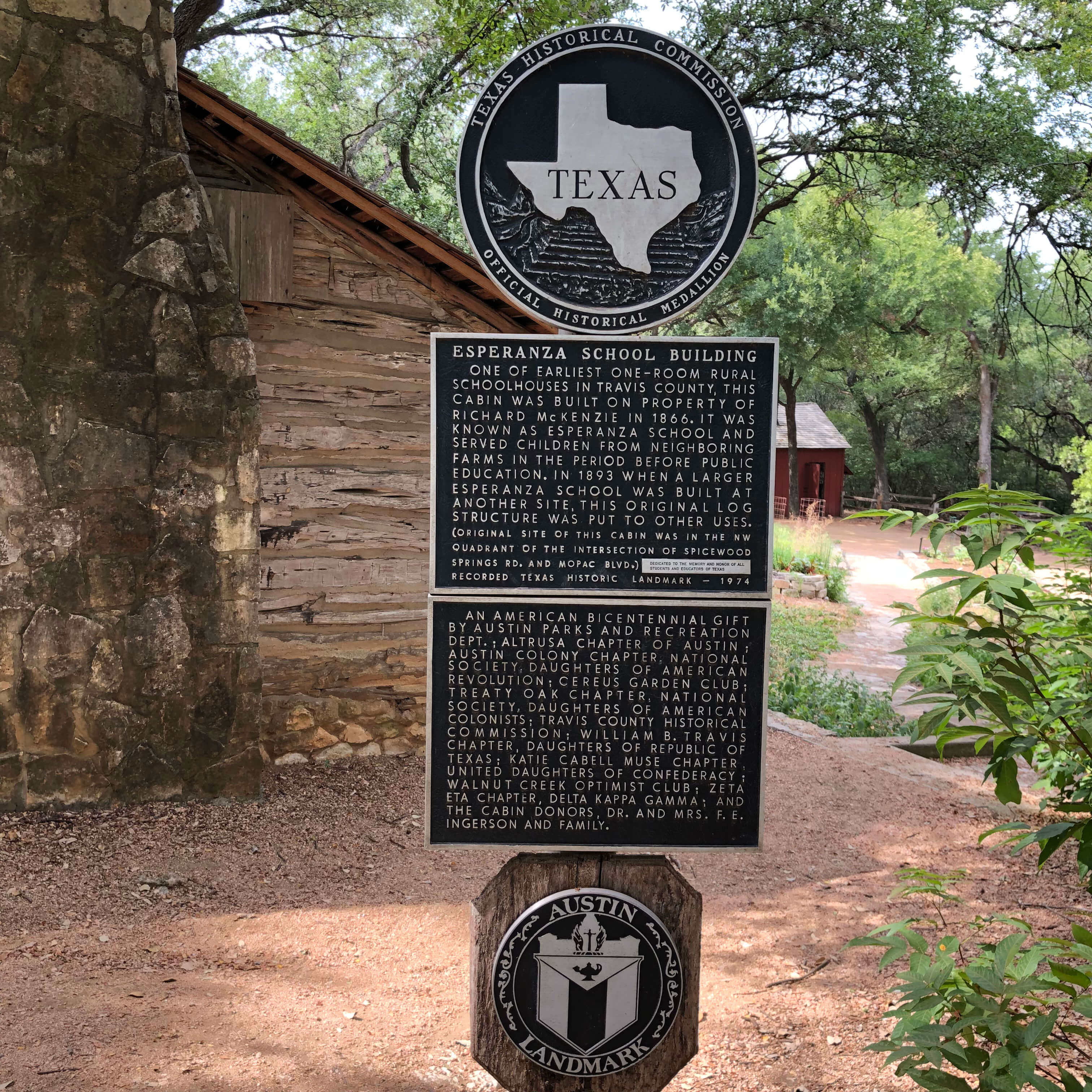
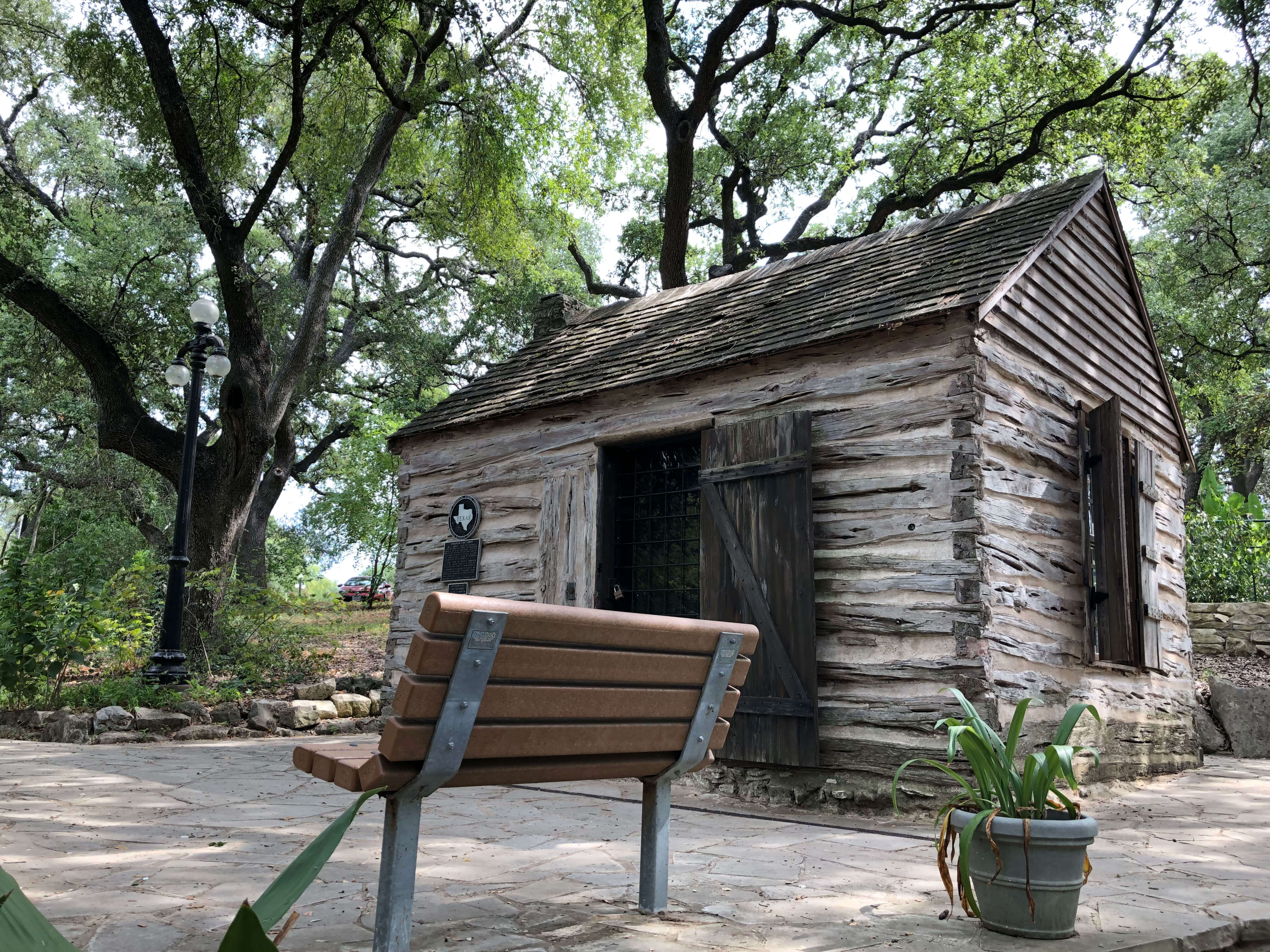

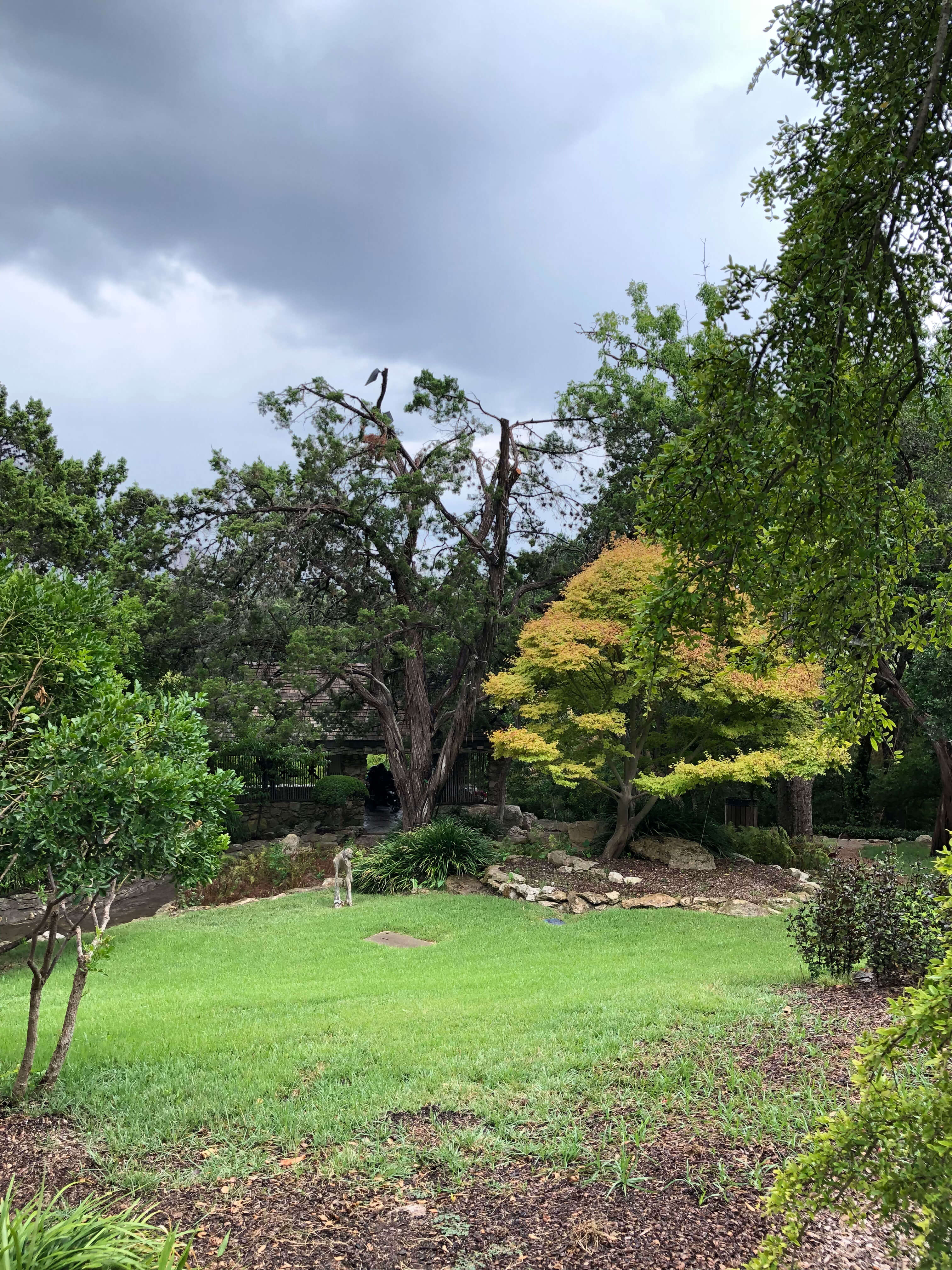
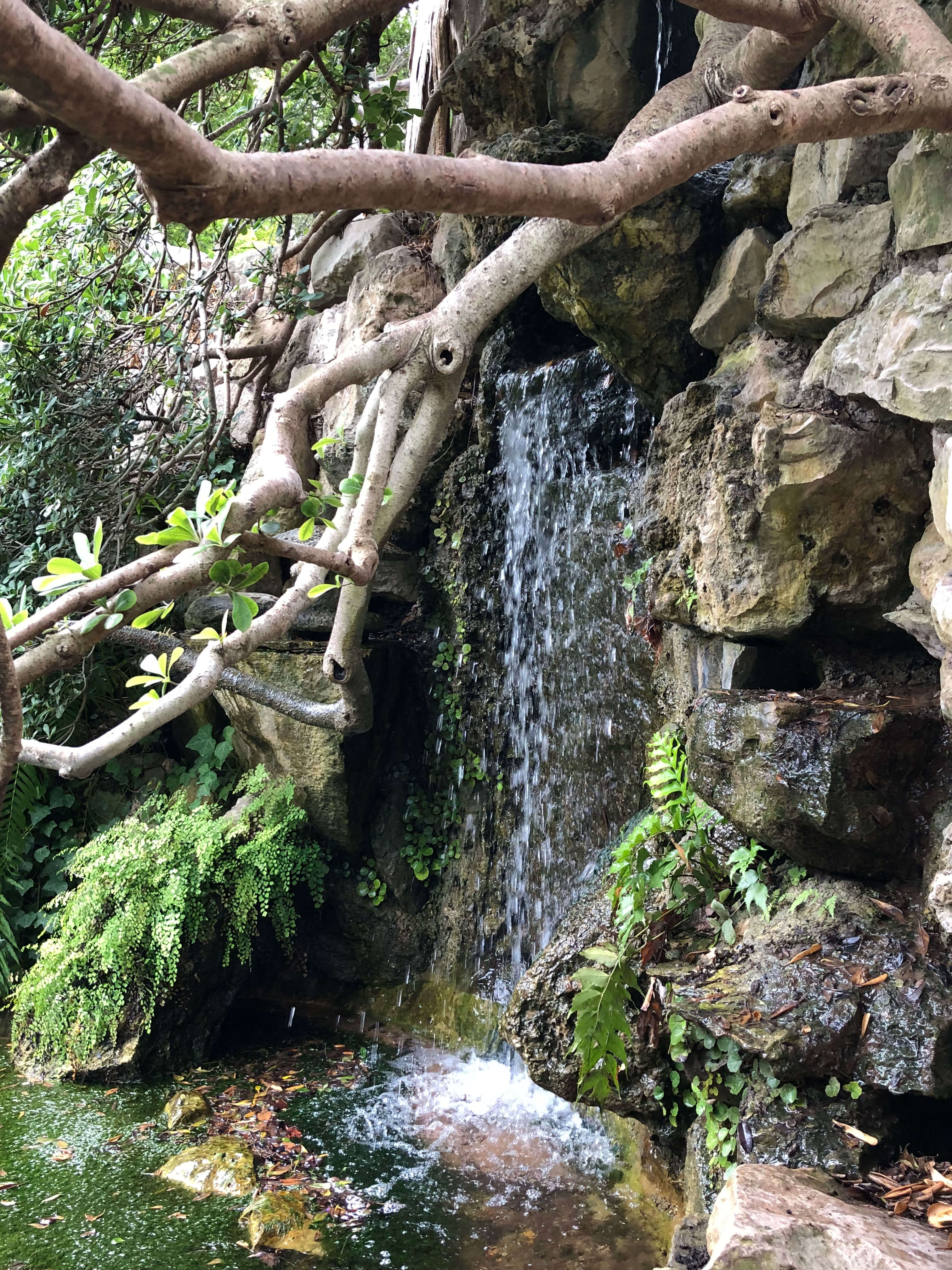
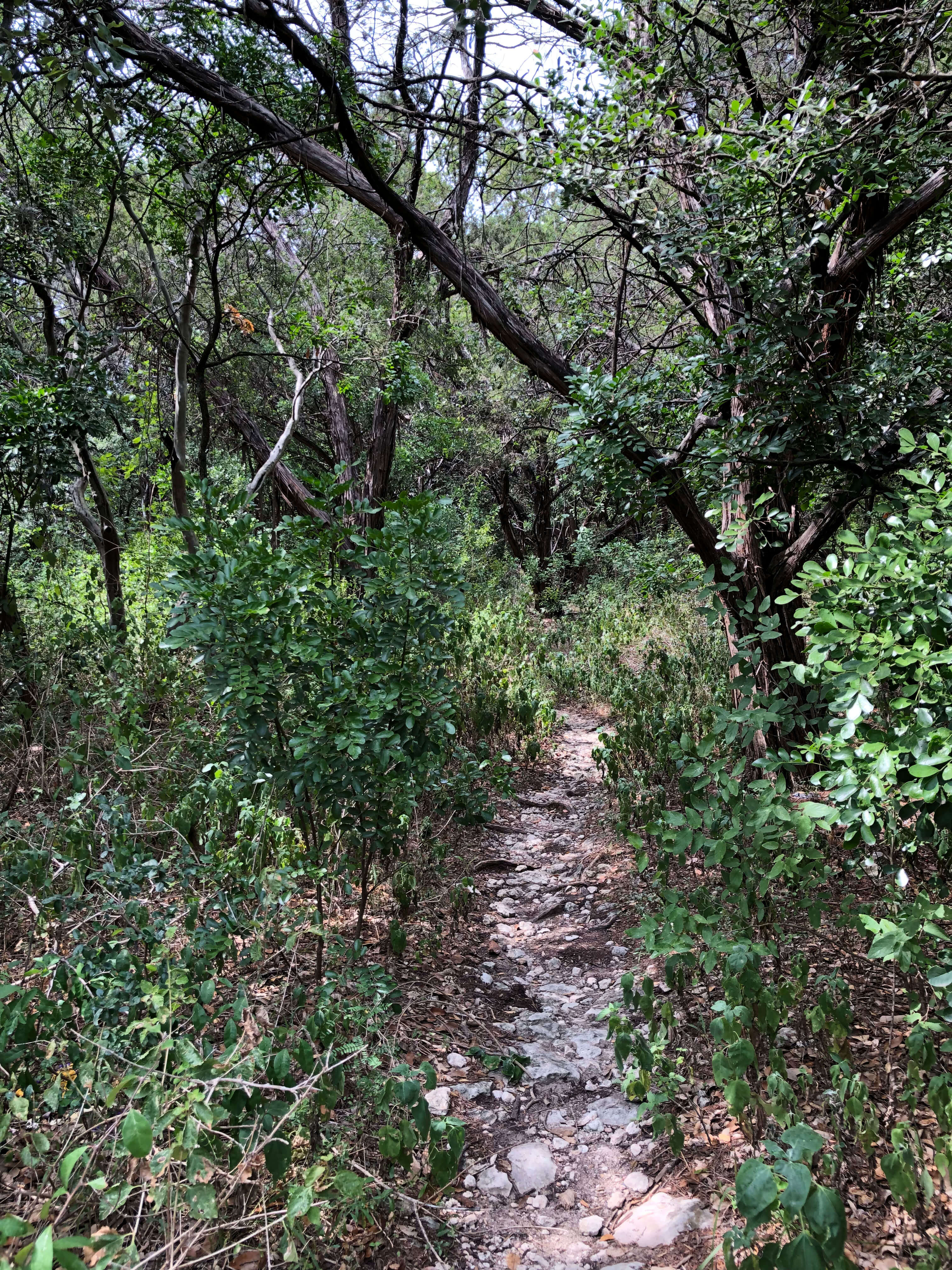

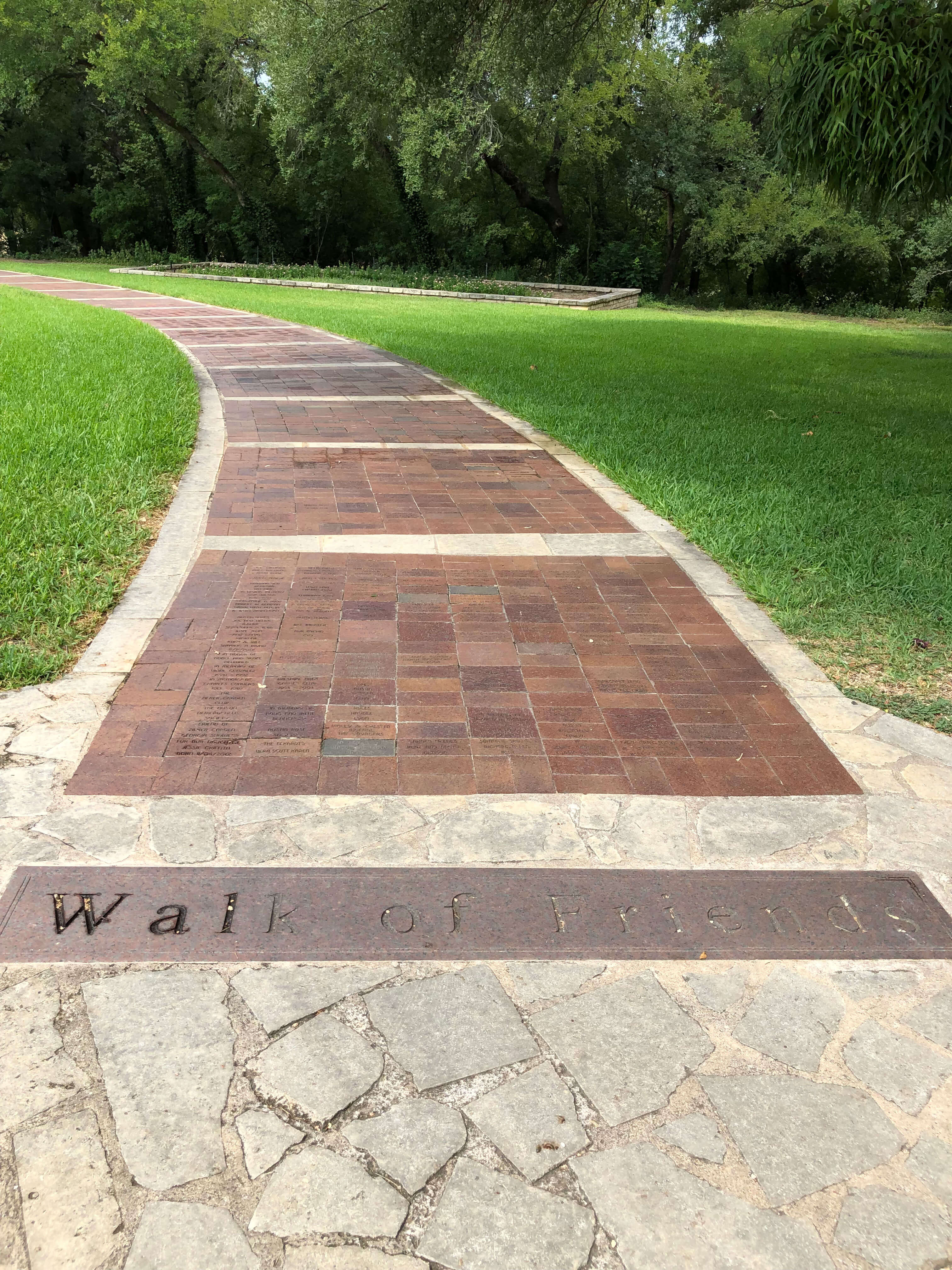
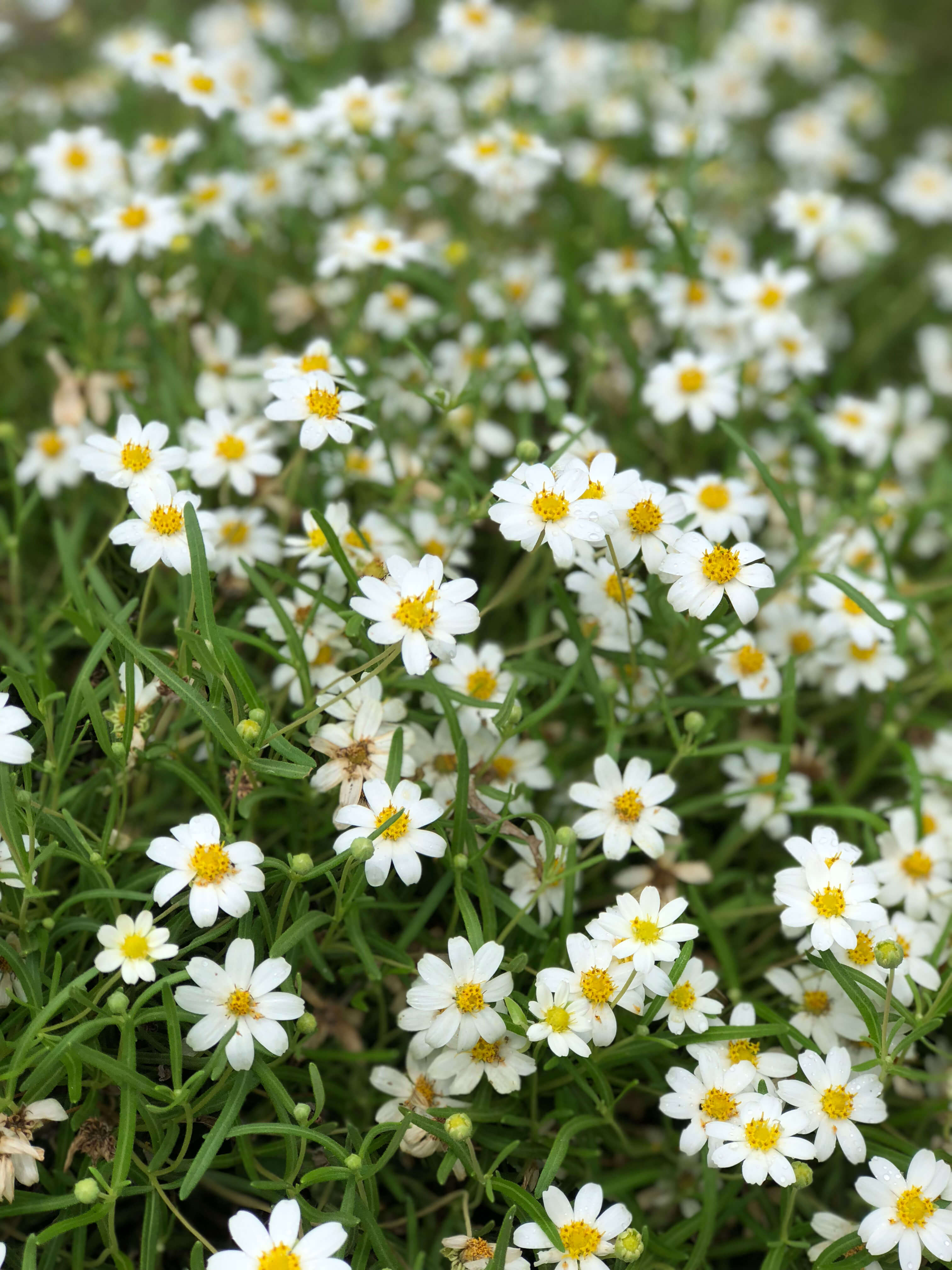
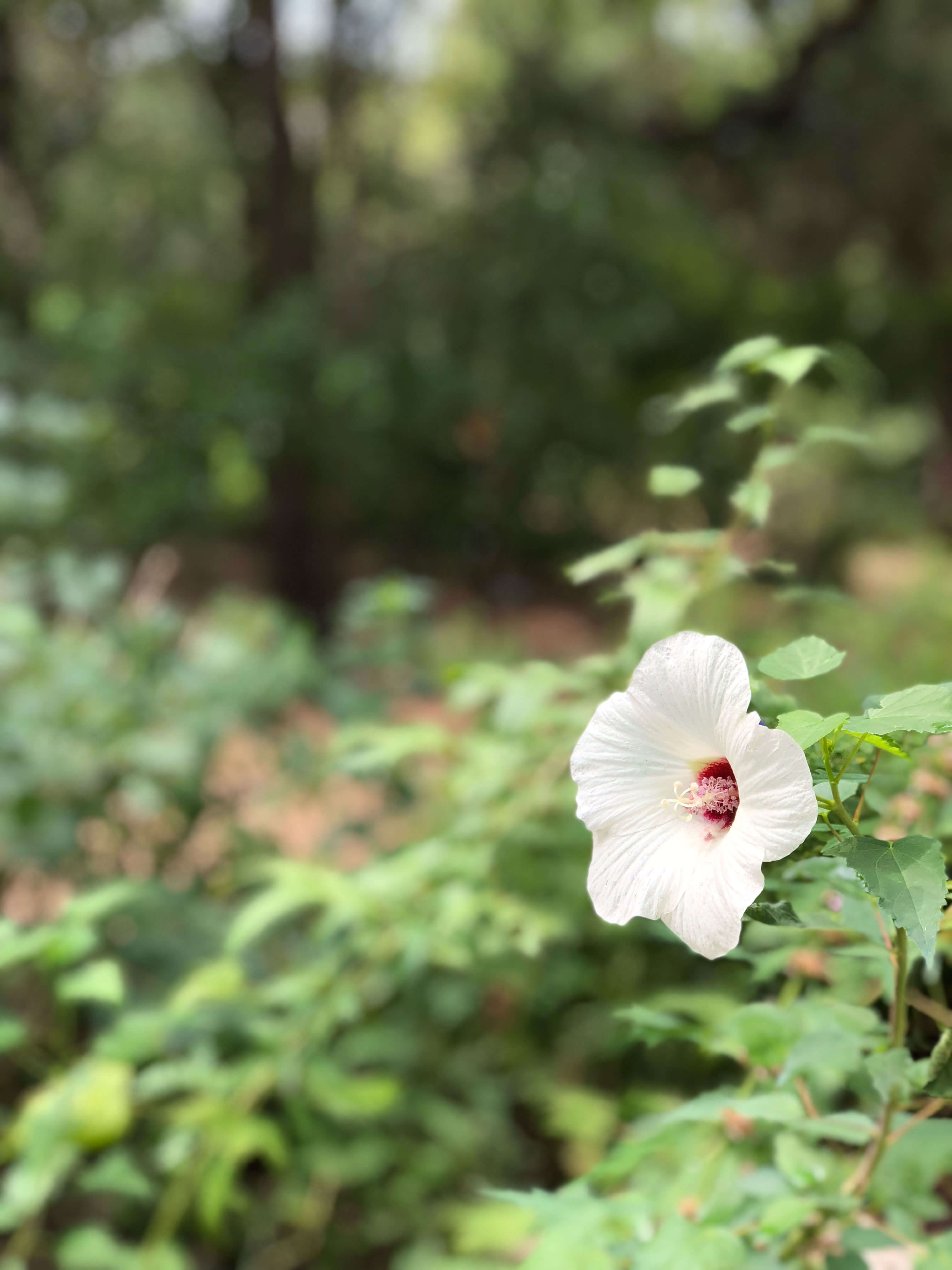

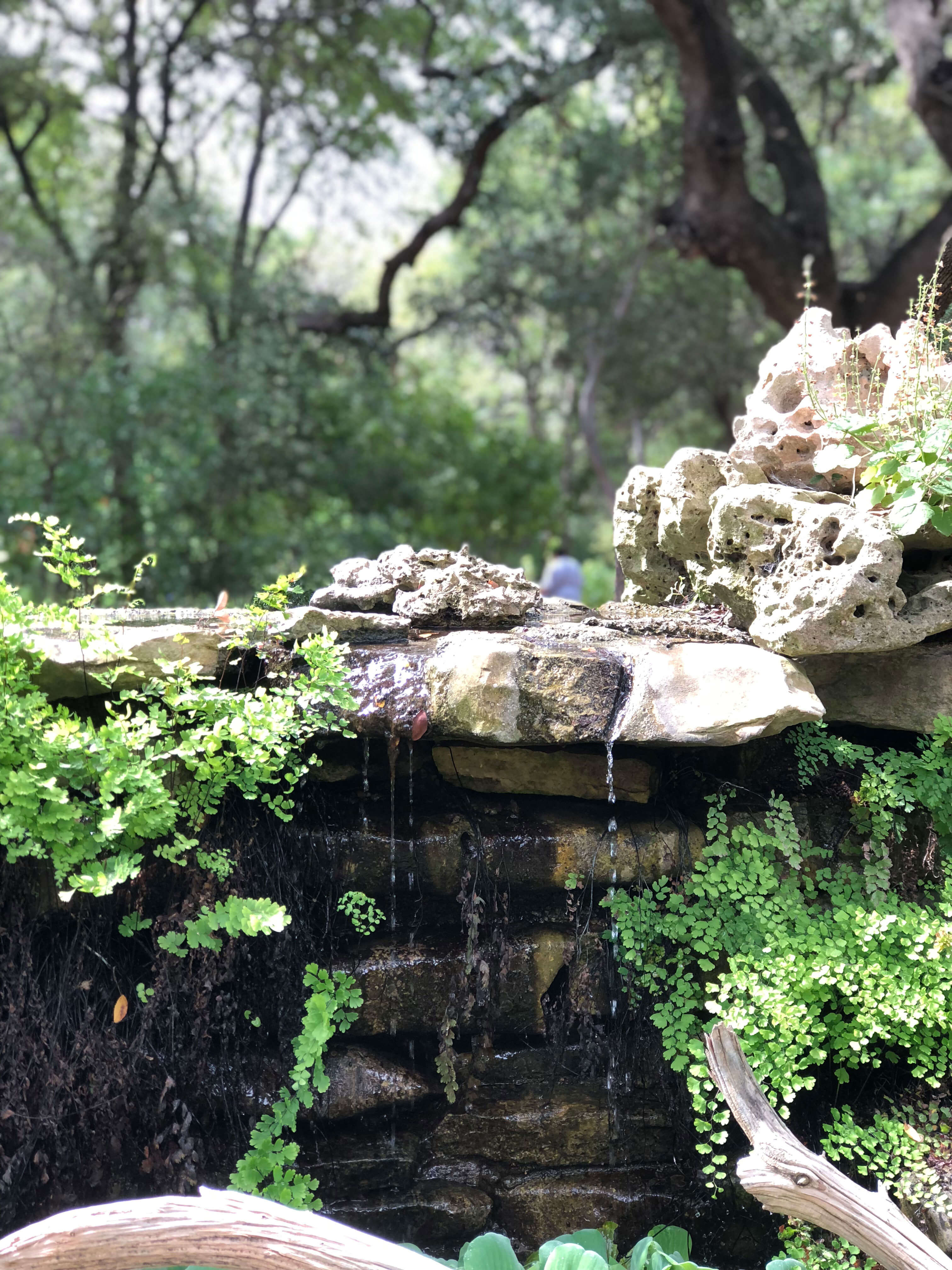
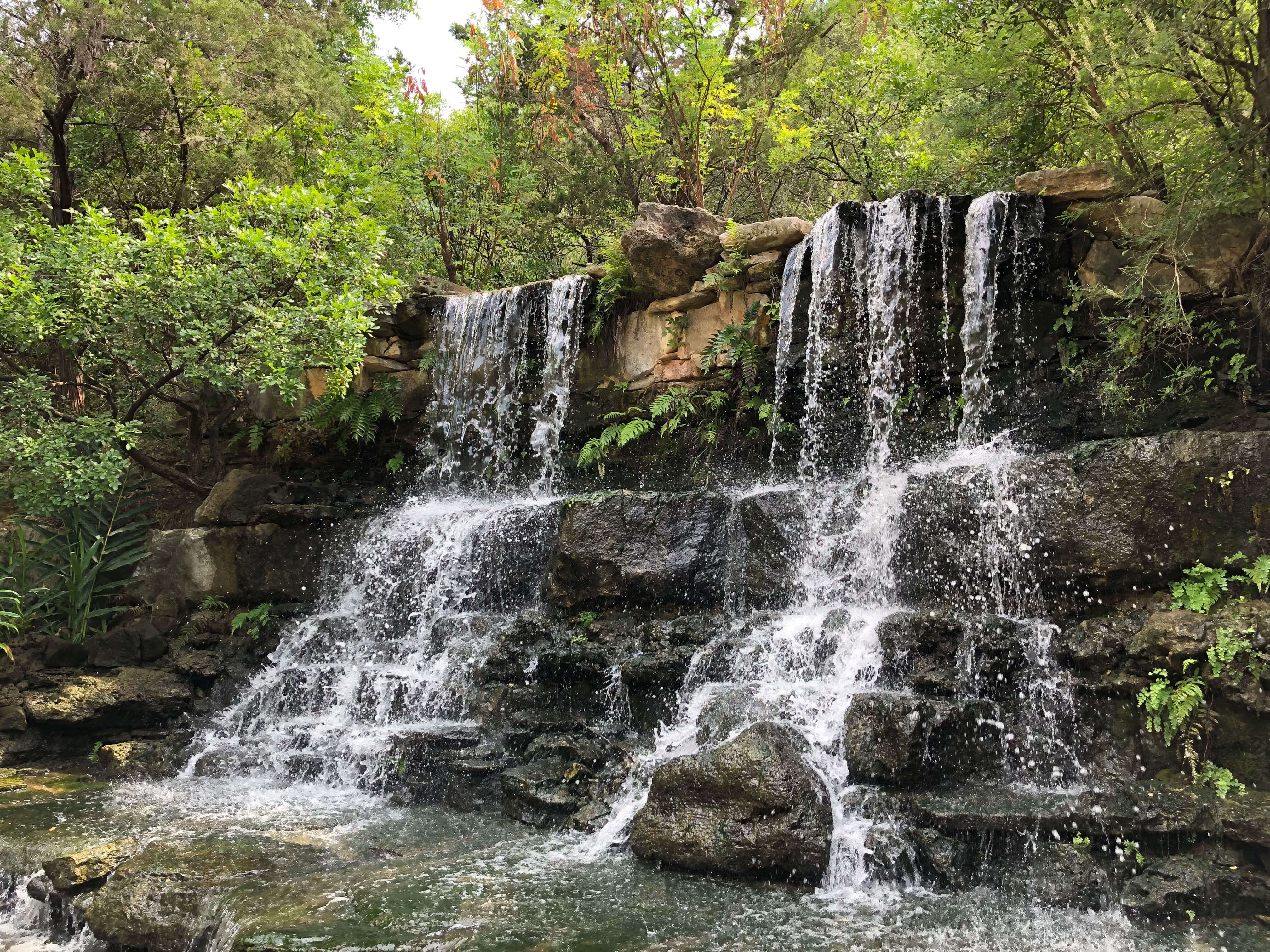
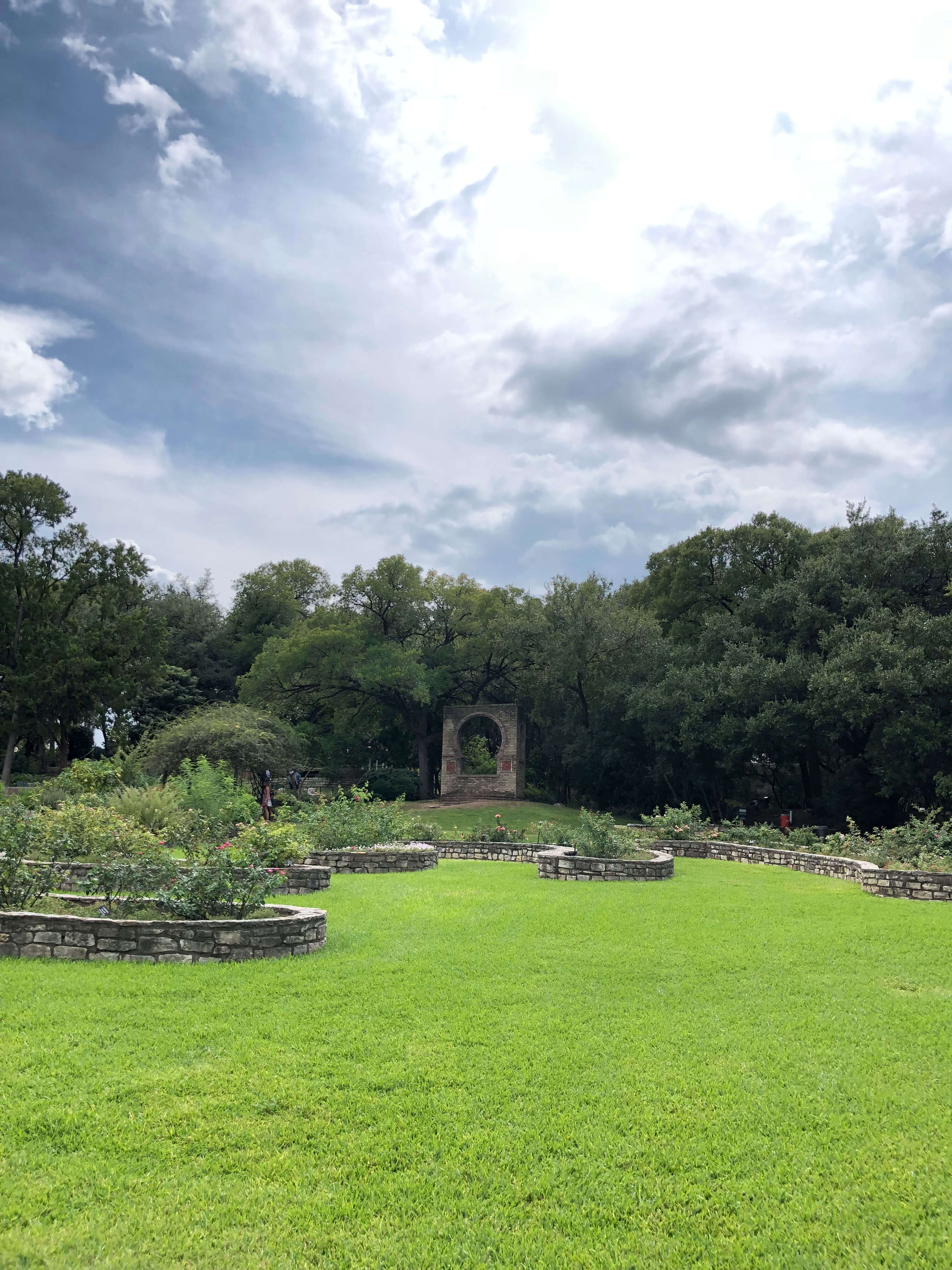
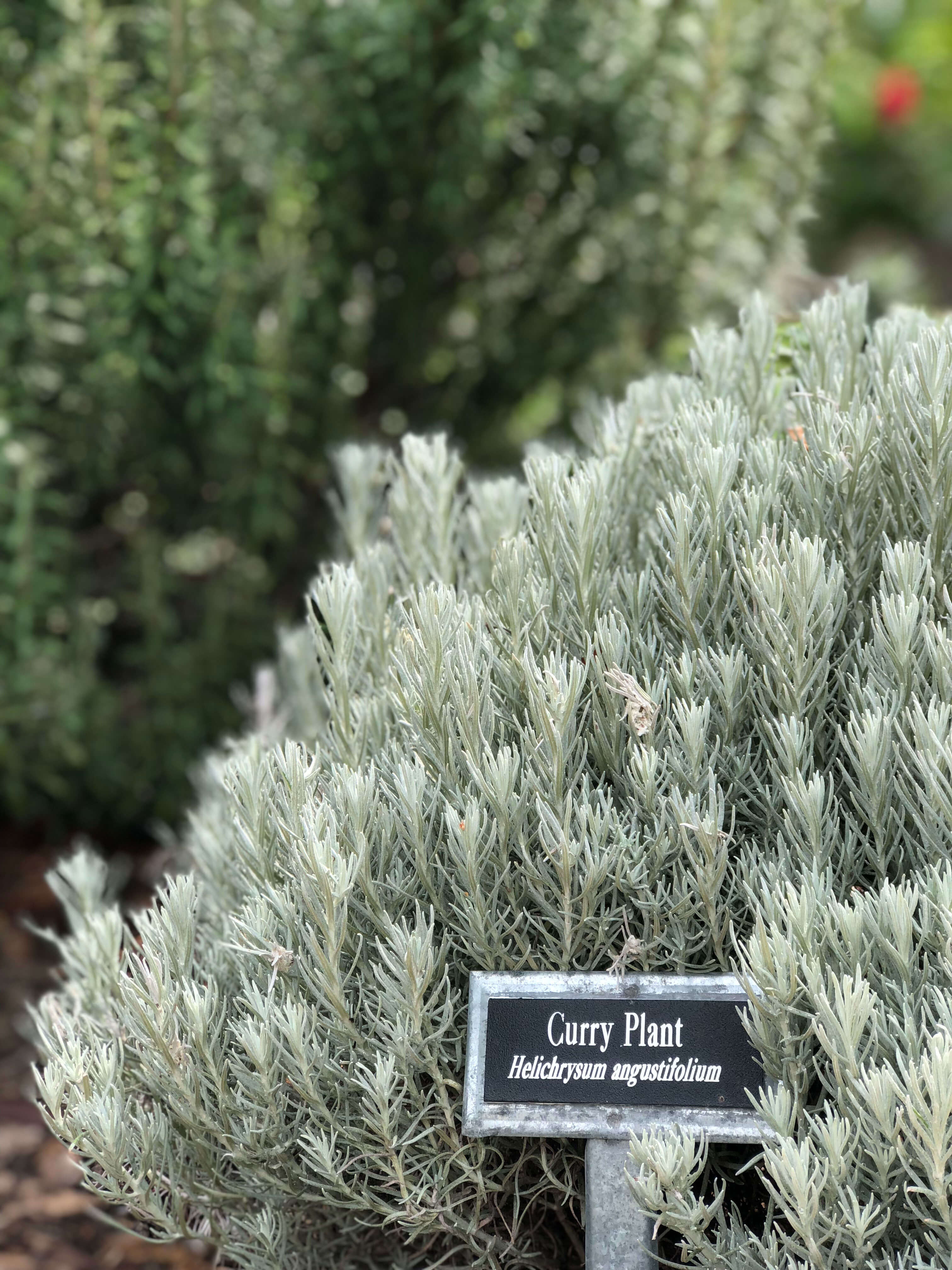
It’s these little things that depict people’s dedication towards making a cleaner environment. And as I walked into a large clearing with a massive spade thrust into the earth with a social message on it, I knew that it was all more than just talk. The population of Austin is taking steady steps, small though they are, to leave this earth better than the way we found it.
I lingered a little longer for the fresh air, glistening grass, and beautiful flowers, but when I left, peace reigned.
The best part of travelling to a new city is the discovery. You discover traditions, cultural qualms, and awe-striking moments that the inhabitants of the city take for granted.
New York City was like that for me. In addition to my Wall Street adventures and the breeze-kissing Staten Island Ferry ride, I also happen to walk, a lot, into nature while she was doing what she does best—being.
It was during one of those unexpected walks that I came across Strawberry Fields.
The moment I knew I’d be visiting NYC, I made a “where to go when” list. And I’d set aside the entirety of a Sunday to exploring the Central Park. I’d heard of it so many times, referenced in movies, TV series, and books, that I was itching to experience it for myself. But I had no idea about Strawberry Fields.
Walking around Central Park on a warm Sunday morning, I felt home. All around me tourists dropped jaws, clicked photos, and shopped for souvenirs while locals jogged on, unperturbed, uncaring. Letting my feet guide me to no place in particular, I headed ahead seeing green everywhere I turned.
And then I stopped at a board that read, Strawberry Fields. It had a mention of Yoko Ono, a vague message I couldn’t discern, but it urged me to enter anyway. A large triangular-shaped field met my eyes. I walked along the edge of it which, though covered in trees, still had a good view of the residential buildings that lay beyond.
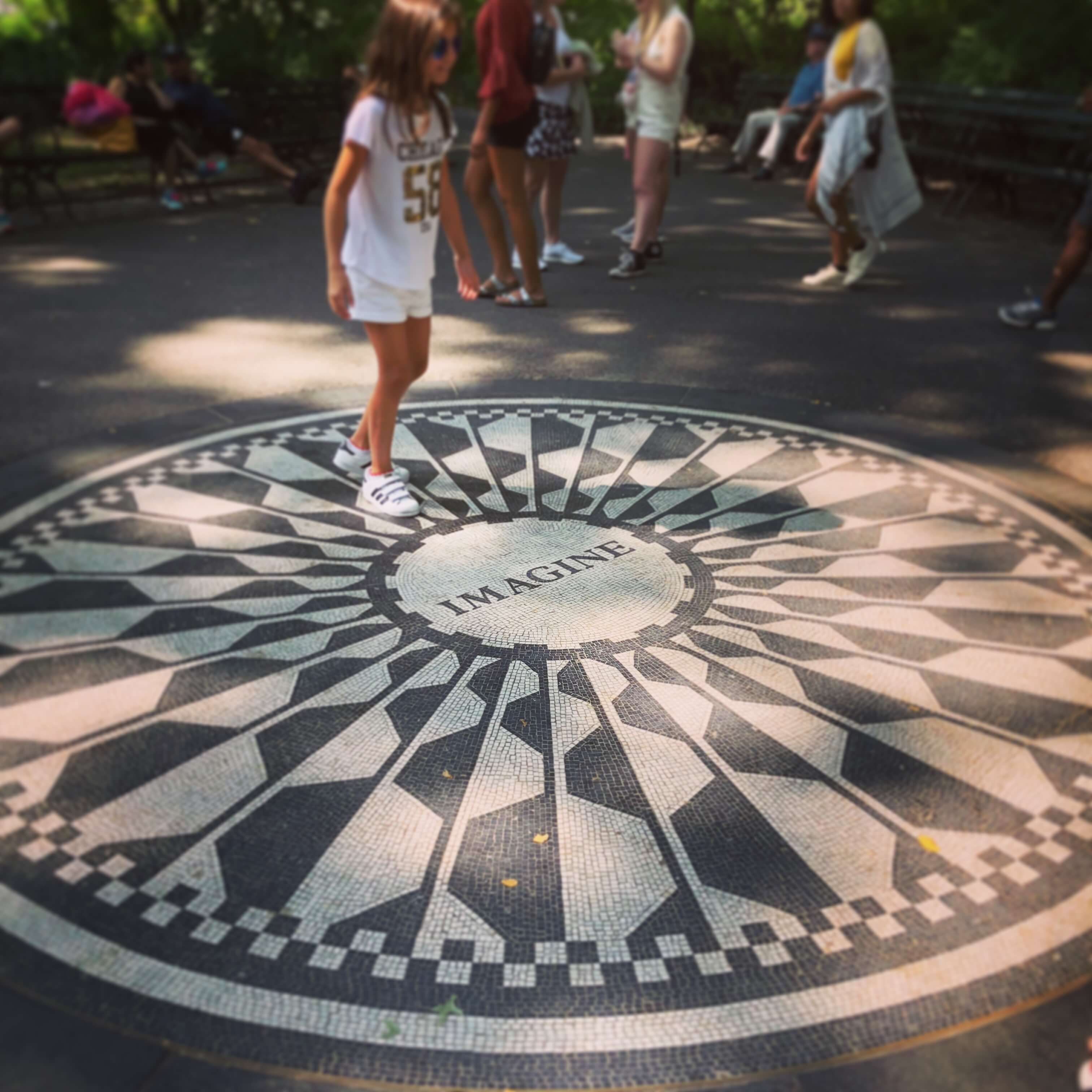
Turning around, I noticed a clamour of people huddling around. It took me a while to spot the massive mosaic on the ground, around which they took turns photographing. The words I’d seen on the board at the entrance made sense now. This was John Lennon’s memorial, and Yoko Ono had something to do with its dedication to him.
Approaching the mosaic, I passed painters and small-scale vendors who sold John Lennon buttons and magnets. Engravings, quotes, photos, song names—it was more than enough to kindle nostalgia and tease passers-by to buy. When I approached the mosaic, I saw what attracted people so much: an engraving with a single word, Imagine.
Of course, it’s one of the first John Lennon songs I’d heard, and it’s still my favourite. A smile escaped my lips without my consent. For the first time in life, it didn’t bother me that I was part of a cult. It didn’t bother me that I, like the rest of the idiots around me, was a fan. Perhaps not as raving as they, but raving still in my own way. I watched as couples, groups, and kids came forward one after the other, taking turns to capture their moment with what’s left of John Lennon’s memory.
Travel, and nature, for me, isn’t just about going to places. It’s not about posing for photographs in front of aged memorials and historical monuments. Travel for me is about being in the moment. It’s about inhaling a fresh breath of history, of standing someplace reminiscing its story and sensing the elation that comes with knowing that I’d become part of that history. Knowing that everything we consider essential and grand in our lives is futile and will fade away just like the people and the stories of which I was hearing. Travel, in that aspect, teaches that nothing we cling to is permanent.
And with that thought, I turned away. I later learnt that the name Strawberry Fields comes after a song he wrote for The Beatles, Strawberry Fields Forever—which, in turn, was his dedication to a children’s home called Strawberry Field back in Liverpool, England near the house he grew up in.
As for the residential area I’d seen while walking around the edge of the field are the Dakota Apartments—where Lennon lived in his later years and where he was killed in 1980.
I didn’t know all these when I stood in the field but knowing it now magnifies my experience and adds a whole new layer of meaning to my trip.
 The Chaos Within