The Millennium Park

My first day in Chicago, I decided to visit the bean. Of course, I’d heard from friends who’d visited and from the countless online recommendations that visiting the Millennium Park and The Bean within is a must-do activity while in town.

And so I did. Clutching my umbrella trying to stay dry—on the second day of summer, mind you—I entered the almost empty park. It was a Friday, but the rains had doused minds of potential tourists (I realised on another day).

Unmissable and grand was the Jay Pritzker Pavilion. Facing the Great Lawn, it’s a massive open area fit for concerts and parties for none other than the second-most populous city in the United States.

Jay-Pritzker-Pavilion

It took me a while to comprehend the grandeur of the Pavilion, and even more time to understand how weird the structure is. It’s an architectural marvel, for sure, but to me at first, it looked like a giant spider’s web—but a beautiful one at that, though.

Turning away, I faced the only other thing everyone spoke about—The Bean. I’d never understood what all the hoopla was about it. And I thought perhaps I’d see what’s so great about it when I did indeed see it in real life. I didn’t.

This slideshow requires JavaScript.

Sure, it looked nice. It’s a giant coffee-bean-shaped metal structure that reflects everything in front and underneath it. And because of the unique shape, the reflections are different from one place to another. When I stood outside the bean, my reflection seemed just like on any other mirror, but as I walked underneath, my reflection distorted. It was interesting for a few minutes, but I couldn’t gather why it’s such a huge tourist destination.

At that point I realised: The bean isn’t the only worth-while spot in the city. And I decided to find the other, less known marvels—the places that don’t make it into popular tourism brochures. And I did find some of them, too. (More on them later.)

Expecting something more promising from Chicago, I turned to the Lurie Garden. The raindrops on petals made already enchanting plans even more attractive. It was a beautiful sight. And like any plant-laden area, the scent of wet grass and fresh blossoms cheered me up in an instant.

As I walked around the garden, crouching low to read the name cards of the plants, I realised how towering the buildings of Chicago are. All around me were high-rise constructions—some gawk-worthy, to be honest—looking over puny trees and humans alike. I was in a natural sanctuary in the middle of a concrete jungle.

Exiting the garden, I got lost. The Millennium Park is such a large area that it’s only too easy to lose your way. I didn’t mind, though. I like walking and exploring and I ended up going round and round in circles.

Then I saw something odd. It was a huge pillar, sitting snug in the middle of a big clearing. As I approached it, I saw it wasn’t a pillar but a fountain. A huge structure spitting water in an incessant manner. And it was still raining. When I walked around it, I saw there was another one, and with the face of a child on it. It was a pair of fountains, both flashing human faces that spew copious amounts of water.

This slideshow requires JavaScript.

It was fun to watch, but soon lost it’s thunder. It’s a massive attraction for tourists, and as I saw on a different day, children and parents alike play and drench themselves in the fountain.

Crown-Fountain---twins

For me, though, it’s more interesting to think about the resources and effort it took to construct these architectural wonders of the Millennium Park. During my visit I came across hundreds of such large and grand structures that must’ve taken the best of architectures and the most expensive of materials. It put the wealth of corporate America in a new perspective.

Oh, but the trip was wonderful. And more posts (and photos) follow.
 

A new city, a new me

It wasn’t my first time experiencing high rise buildings, gluttonous restaurants, or the comforts of a first world country. But it was my first visit to Chicago, and everything about the city mesmerised me (more on that later).

I landed late in the evening, on the first day of summer.

It rained through the night. And when I, with high spirits and a spring in my step, came to the entrance of my hotel the next morning, it was still raining. And I had no umbrella. Who would’ve expected rains in summer?

That first hurdle taught me to get over it. None of the locals seemed to be bothered by the rain. Some of them had umbrellas, most of them didn’t. Some wore rain coats, some water boots. The common streak between them all—none of them frowned at the rain.

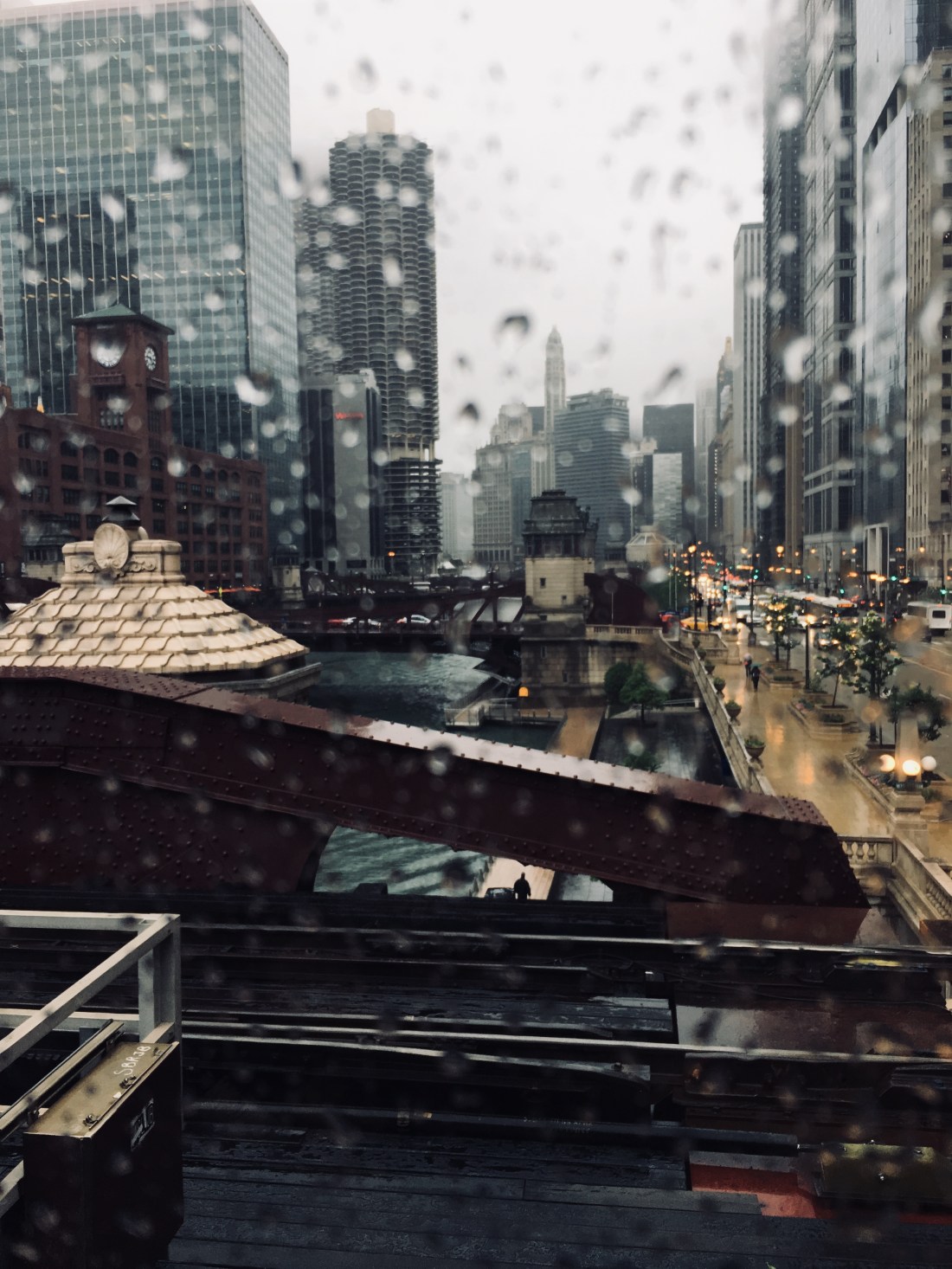
Chicago through the train

That’s when I realised—if I’m to be like a local, I have to be like a local. I hate typical tourism. Hate the tour buses, group photos, selfies, gawking and pointing at tall buildings. I’d rather walk down the streets in silent rumination. You learn so much about a city just by observing what’s what and the way people behave. And so, I pulled up my hood. Appreciating my sensibility to buy a jacket before the trip, I left the hotel while little drops of rain came down on my hood. It wasn’t so bad.

I kept to the sidewalks and walked about half a mile to the train station. I got myself a Ventra card (the Chicago Transit Authority’s ticketing system) and loaded a seven-day pass, and set off to the Loop—the heart of the city. The rest is history. Although I ended up buying an umbrella, for the next few days, I explored the city like a local. Some days it rained, and some days it shone. But with my backpack and public transportation, it felt good to be lost in the right direction.

I felt grown up.

– – – –

P.S: The Chicago Transit Authority (CTA) is great for a traveller. They offer 1-day, 3-day, and 7-day passes which allow you to travel up and down on any train and bus routes unlimited times. It’s super helpful when you’re new in a city and have more chances of missing a stop or getting down at an earlier stop than making it to your destination on time.


A walker’s haven

I always appreciate a good walk. And that’s why I can’t get it out of my head how accommodating the streets of Portland, Seattle, and Oakland were to the pedestrian. I love big broad walks and I cannot lie.

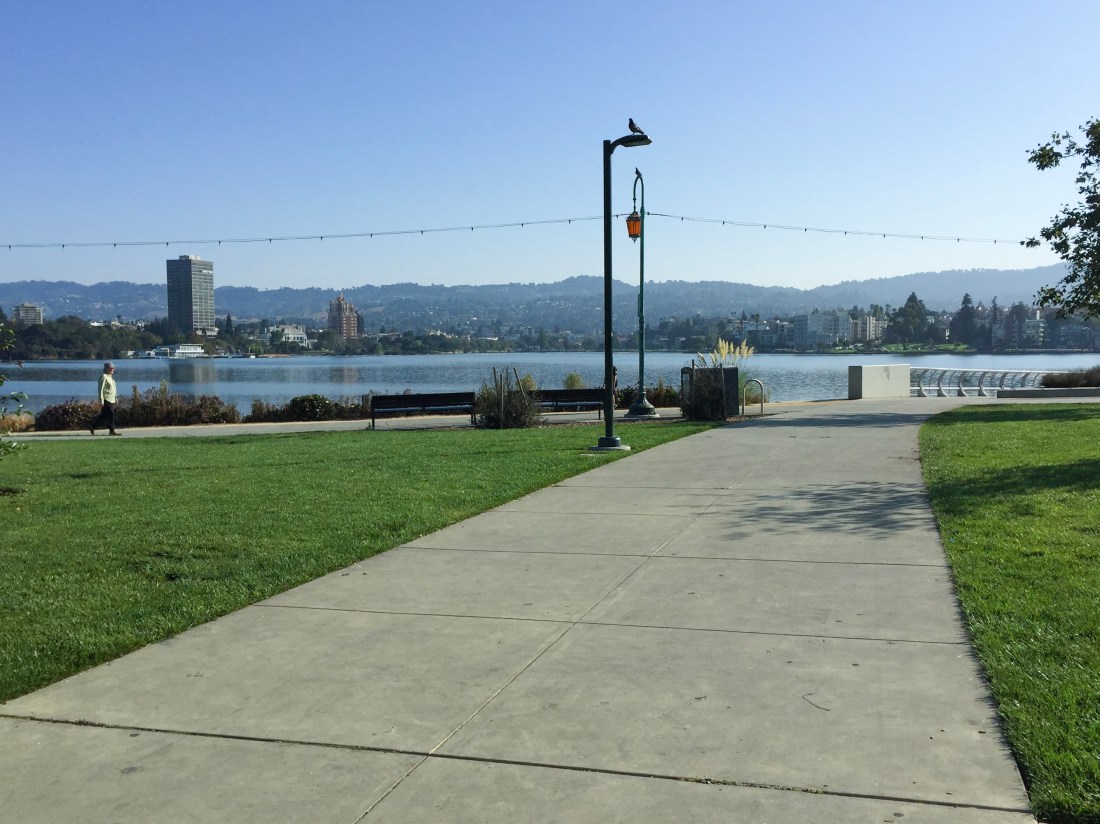
This was at the Oakland Civic Centre.

Oakland Civic Centre

Cookie

Even though I’m not much of a sweet tooth I can never pass up the opportunity to devour cookies. At the near-end of my first visit to the US, I realised I’d been there a whole month without ever trying out Starbucks. So it was with much facepalming that I entered the Starbucks outlet at the Dubai airport. I was in transit from Seattle, and not at all hungry.

But who needs to be hungry to eat cookies?

Starbucks cookie and coffee

Decoding culture

One of the most prominent aspects of an Indian society is its lack of sociableness. Not that Indians aren’t approachable or jovial. On the contrary, Indians are some of the most hospitable folks in the world—but for someone travelling to India for the first time, our society throws more than a few culture shocks.

When walking on the streets, for instance, people never smile or acknowledge an unfamiliar face. They won’t maintain eye contact for more than three seconds, in fear of the other person misunderstanding. Most people I’ve come across on the streets, look straight ahead and then down as if focussed on avoiding potholes.

It’s not the fear of conflict that makes people avoid expressing themselves. Instead, it’s a habit that stems from childhood, when we learn to avoid speaking to strangers and accepting candy from them. We grow up with the same stigma, so much so that we don’t differentiate potential threats from unassuming people trying to be pleasant.

Most people you’d come across on the streets don’t see the point of smiling at someone they’ve never met before and will never again. When it makes no sense to grin at a wall, why should it make sense to grin at someone who’s as insignificant in their life as that wall?

That’s the reasoning I dabbled in for over twenty years before I landed in the United States. Where tables turned.

I walked into a restaurant, and the staff welcomed me with a gigantic smile and wide open arms. It was the first time we’d met and without a second thought, she made me feel as if I’d known her all my life. I didn’t even ask for her name, but we’re friends by recognition.

It’s her job to be social, a little voice in my head nagged. Not everyone would be the same.

Jet-lagged one morning, I awoke early for a walk around the neighbourhood I stayed at. It was a cold September morning and artificial pumpkins hung from behind locked stores. A single person lumbered on in the distance. When I got closer, I realised he was the garbage collector reporting on time for his duty. He smiled and waved at me for no reason. Without even knowing it, I was reciprocating his gestures. I didn’t think, and I didn’t debate with myself as to why I should wave. It was just nice, two people from such different backgrounds, with nothing in common, sharing a moment of warmth, each wrapped up in their own jackets trying to stay warm.

It’s not his job to be social, I realised. It wouldn’t have offended me at all if he’d had ignored me altogether. I would’ve gone my way and he would have gone his, both of us bracing the cold. Instead, we did go our own ways but with a cheery stride. And that made all the difference.

Later as I sat in the shuttle, a complimentary service my hotel offered, my driver—an employee of the hotel—asked me how I was. She didn’t have to. It was a ten-minute ride from my hotel to my workplace, but she took that time to share a conversation. We didn’t discuss global economy, but we did talk about how difficult it is to find employment nowadays. I left the shuttle a little wiser to the reality of the world, and I felt myself balloon with compassion and sincere respect for my driver. We weren’t venting to a stranger, but instead, we were riders in the same boat, sharing observations.

Throughout my stay in the US, I met with countless people who volunteered to make my day better. With a smile, a wave, a head bob, and even a small nod in the right direction, strangers all around me made me feel at home.

Perhaps it’s all because I was a tourist, my skeptical inner voice piped. No, I answered as I explored the streets further. More about that later.