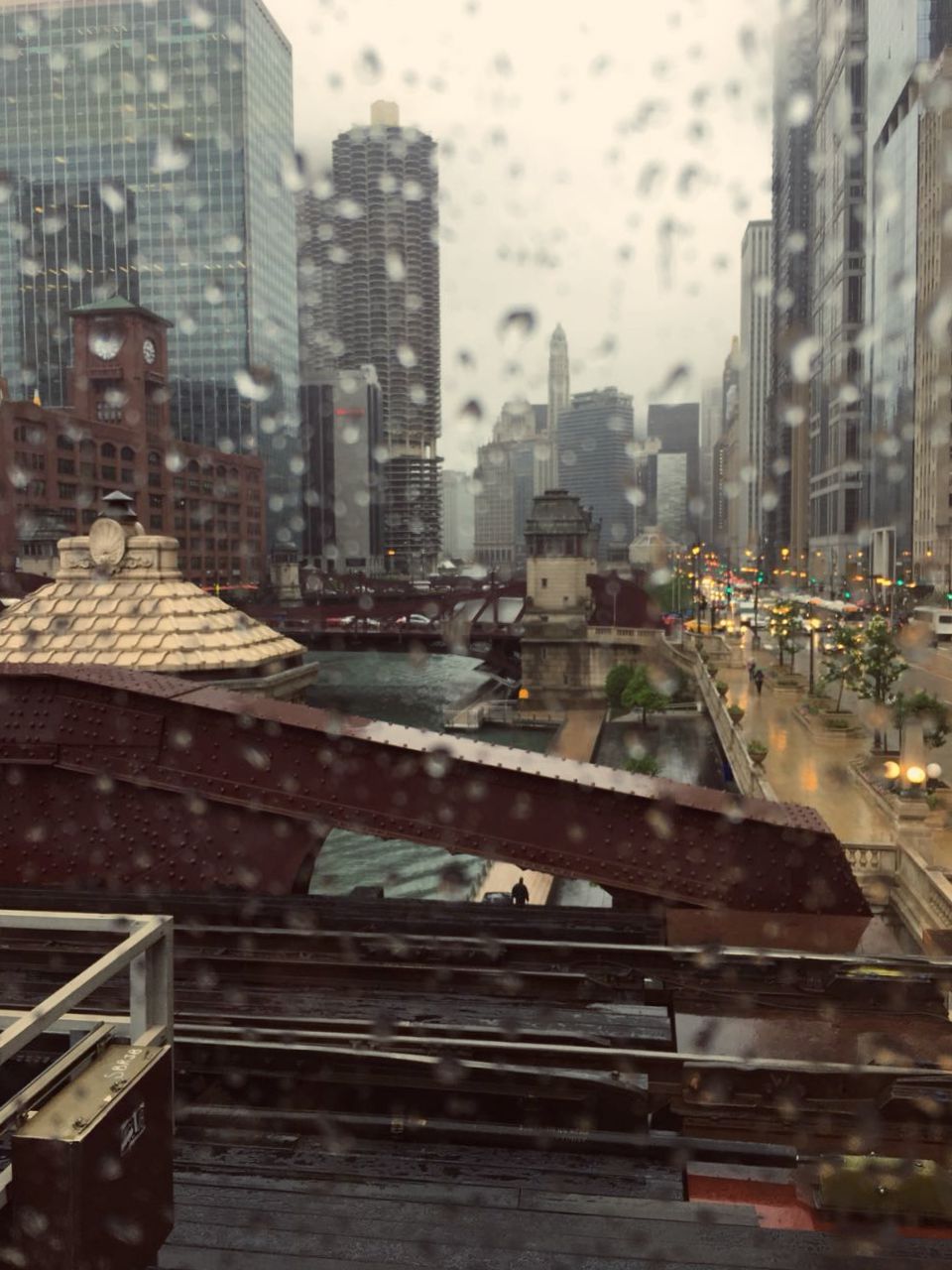
Busy Beaver Buttons

I’ve never understood the hoopla around buttons. When I say buttons, I don’t mean the essential ones that hold shirts and pants in place. I mean the ones that pop up in unnecessary places and situations just because they’re a cool thing—places like school bags, caps, hats, and scarves.

Students and adults alike share this affliction with buttons, I realised when I was in Chicago for a work-related event. It’s now the most popular swag corporates can give away at trade shows. People grab these fancy, custom-designed buttons, endorsing companies they’d never even heard of before.

And so it seemed pretty ordinary to have a museum of buttons. Or so I thought until I visited the place.

The Busy Beaver Button Museum (go o, click the link—it’s an online museum too) in Chicago hosts buttons dating back to the 70s and 80s. They have about 1200 buttons on display, all categorised, awaiting appreciation and well-deserved jaw drops. Oh, and they had another 3200 buttons in crates still unopened.

How do they get all these buttons?

They buy from various people and organisations—it was obvious that they’d been doing this for years.

As I browsed through the many witty buttons, I realised that the trend wasn’t new or specific to modern corporate culture. There were buttons about beer, parenting, wine (of course!), social causes, awareness, politics, and so many other topics the world’s cared about for years.

Buttons have helped people express their emotions for years. And this trend won’t go away anytime soon.

Oh, and if you’re interested in getting yourself some buttons, the folks who maintain the non-profitable museum, also have a for-profit business of making buttons. The factory consists of a few people and you can hear the machines while you walk along the wall of exhibits. It’s one of those little things in a city that not a lot of tourists know of. But it’s so worth the 20-minute train ride. Well, if you’re ever in town…

Airport head

It was an important day. I was flying to the United States again, and I couldn’t be more nervous. It happens every time. A huge believer in Murphy’s Law,  I always consider everything that could go wrong and dwell on anything that will go wrong.

This time, it was immigration. What if the officer asked a question and I stumbled because I was too nervous? What if they think I’m lying? Argh, the horror of having to face my friends, after bragging to them about the trip—every little immaterial flashed in my mind as I stood in the lengthy queue outside the Chennai International Airport.

While I struggled to get my head in order, people around me were having the time of their lives. Kids played with bulging baggage as their adults chit-chatted away without so much of a second glance. A couple of women debated in a frantic foreign tongue. Assuring her companion, the first woman made a phone call and after a few rushed moments later, disconnected it and smiled at her friend—all was well.

Except it wasn’t. My stomach was still refusing to digest the butterflies that’d taken to it as home.

Just then a line of professionals appeared—they strode with mild aloofness and sheer confidence. The security gave them precedence, and off they went, smiling, sharing jokes, and even making swooshing gestures with their hands.

It was the flight crew—pilots and stewards making their way to the next city on their schedule. They had not a care in the world, except they had to care for those flying the world.

It was strange. Watching the pilots, I thought how much they’re like any of us—with a job as any of us. They carry the weight of thousands of lives every day, and yet, it’s only a job. Here I was panicking about a simple trip, but in front of me relaxed were those who assumed such massive responsibility. And they took it in their stride. How much experience and gut courage would they have, I wondered. They don’t let the fear of the unknown and the unchallengeable affect their peace of mind. They’ll give their best every time. And that’s how you keep your cool—you be you and take life as it comes.

And with that realisation, I walked a little easier towards security. I only had to be calm and speak the truth. I might stumble and fumble, but it’s what it is—it happens. And when it does, I will move past it. It’s no big deal.

Chicago Riverwalk

Before I travel to a new city, I always scour the internet for activities to do while there. Which, I’m certain, most people do. But I also zoom in and out of the city’s online map trying to find parks and other open areas I can walk around.

And that’s how I found the Riverwalk in Chicago.

I love walking. And the idea of spending a day walking around a river was perfect. After all, the last time I visited the US, I spent a sunny Sunday morning circumnavigating Lake Meritt in Oakland.

Looking forward to a similar—or even better—experience, I added it in my to-do list. To make sure I had enough time for photographs, I also made a mental note to arrive well in advance.

When I came upon the Riverwalk, however, it was by complete chance. I was fumbling my way through the streets of Chicago—the best way explore a city, in my opinion—when on my left was an arch engraved with the word, Riverwalk.

“Hum,” I thought approaching the staircase that led down from the street. Going all the way down, I found myself at the base of the Chicago river. It teemed with people, and right on my face stood a banner listing out points of interest along on the riverwalk. It took me less than five seconds to realise that almost everything on the list was a restaurant or a snack bar.

As I turned my back to the board and faced the rest of the walkway, I felt a little dejected. Although it was majestic and charming as all natural waterways, buildings towered over the river on all sides. Instead of an open area, I felt as if I were, along with the thousands of people on the river, enclosed inside a massive balloon.

I didn’t want to let that bring me down, though. A nature lover at heart and soul, I thought the rest of the path would delight me. And delight me it did.
1

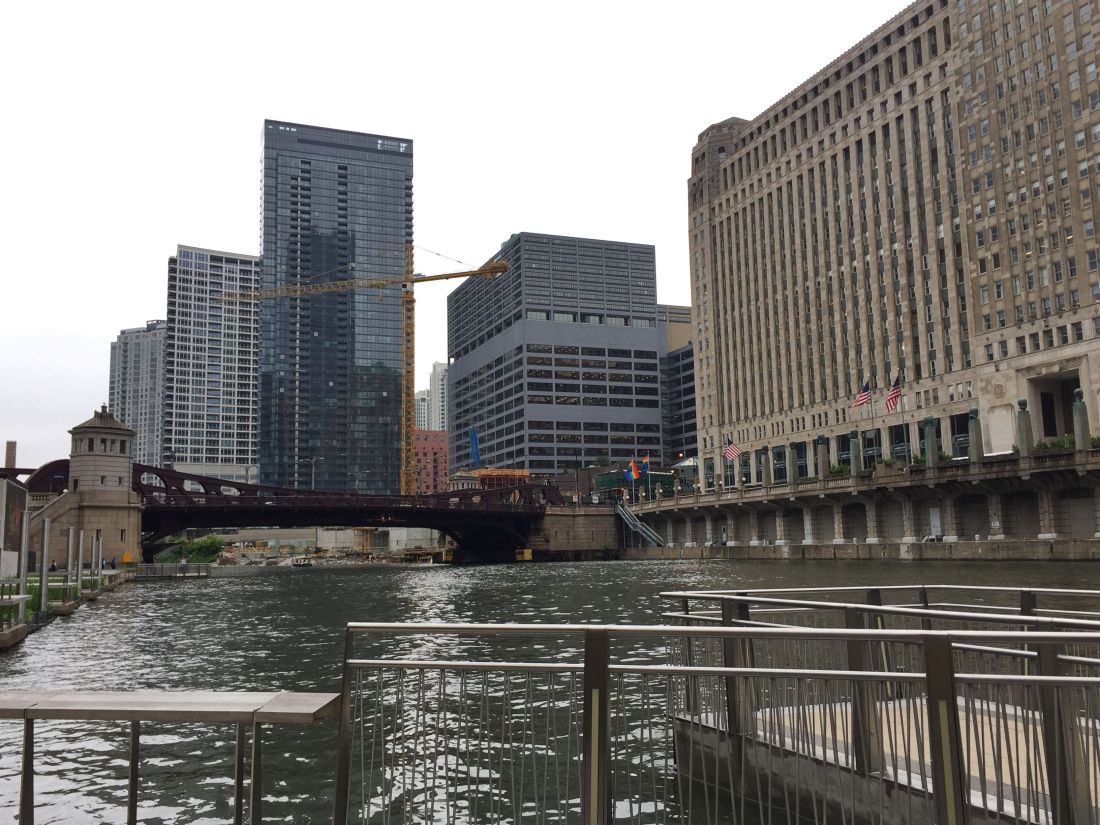
Not crying for attention, the river remained calm, bearing, in dignified silence, the many tourist cruise boats and kayaks that sailed on it. As I walked along, sunlight reflected off of the architecture along the river, while the water bed remained dark.

There was no lack for people, however. Much like the Lake Merritt, the Chicago Riverwalk also attracted thousands of onlookers, walkers, and camera enthusiasts. The jarring difference between the two, though, is that while the lake Merritt hosted most locals, the Chicago Riverwalk bore most tourists.

That’s when I understood that the Riverwalk, much like The Bean in The Millennium Park, is an iconic part of Chicago that always makes it to the brochures. That explained the restaurants, the elevated seating areas, and the endless stream of photographs. It was a much shorter walk than Lake Merritt, albeit it covered a handful of streets. I loved gaping up at the bridges that went across the lake, each a different street by itself. Everything seemed so colossal that it left me wandering as if I were inside the Coliseum, watching the metallic hum that echoed all around me

This slideshow requires JavaScript.

It took me a while to digest the idea of Chicago’s Riverwalk being a more visitor-focussed landmark as opposed to the Lake Merrit—more of a local monument. While I enjoyed every moment of my walk by the river, I also felt the unmistakable sense of not belonging there. I felt alien, as a visitor, as someone who will never return. With Lake Merritt, however, I felt more at home. The ducks, the ageing friends, young mothers, active runners, and that one angry teenager yelling at her mom on the phone all made Lake Merrit closer to reality.

6

The Riverwalk, on the other hand, was like a self-guided tour. I had my brochure, I had a list of stuff to do and see near by, and I had lots of sights expecting my camera. Fellow travellers and tourists joined in the walk, “ooh”ing and “ahh”ing, appreciating the city’s infrastructure, applauding the architects’ genius, and monumentalising memories for when they’re old and fragile.

I will say this, though: Despite being a honeycomb to buzzing tourists, the Riverwalk remains as one of the best 45 minutes of my time in Chicago. It’s an experience worth cherishing, and if I’m in the city again, I’ll pay the river a visit, not as a tourist walking along the river, but perhaps as someone more used to the city—perhaps as close to a local as a traveller can get.

 

Oh, money!

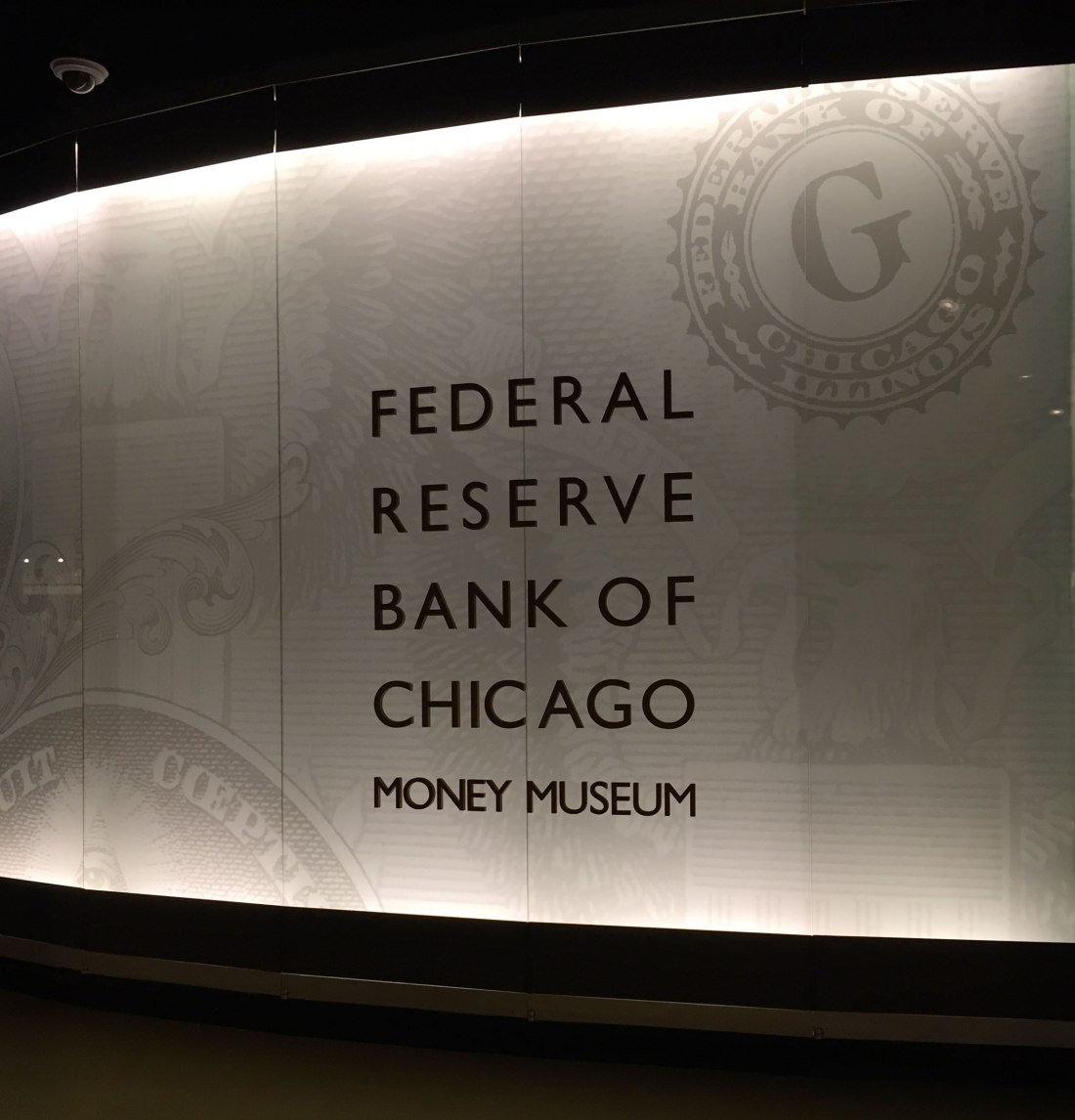
The Millennium Park left me craving less touristy experiences of Chicago. Having made up my mind to hit some of the not-so-popular destinations, I stopped by the Federal Reserve Bank of Chicago.

They have a money museum.

Federal-Reserve-Bank-of-Chicago---money-museum-1

I drew a blank walking in. It was a new idea—a money museum. I wasn’t sure if they’d have piles of money or just the history of money making. They had both.

Banners about Alexander Hamilton lines the walls He was the founder of the national bank, and the banners explained why and how the bank came into, and then went out of, practice.

This slideshow requires JavaScript.

Framed posters or print ads that ran during wartime lined the walls. It was like peaking into the past, observing the government’s strategies to encourage people to save money, and only donate to sensible causes. For someone who hadn’t the slightest knowledge about the financial history of America, it was all fascinating.

Currency notes are cotton and not paper, I learnt. Huh, I wondered—perhaps it was the then-government’s way of recycling and using less paper? It’s possible.

There was an interactive display with stories of the leaders etched in each of denomination of a currency note.  There were titbits about Grover Cleveland, Benjamin Franklin, Ulysses S. Grant, Thomas Jefferson, George Washington, and even more.

This slideshow requires JavaScript.

All the time, while I clicked away at the knobs, I couldn’t help but wonder how unlike a traditional history lesson this was. Instead of scanning through page after page here was a far more playful way for a child or a novice to start learning about a country’s currency system.

To take things further, there was a model of The Lifecycle of the Dollar. It showed how currency goes from production to circulation, and then to shredding and recycling. It took me a while to comprehend the complexity of the process and yet the simplicity of the explanatory model.

Federal-Reserve-Bank-of-Chicago---money-museum-7

Apart from those, were special exhibits about inflation, identifying counterfeit bills, the evolution of money, the types of bills used during various wars.

While I tried to wrap my head around all the new information coming my way, one of the museum staff announced a 30-minute presentation. A federal bank employee took to the stage, playing a 15-minute video explaining the federal bank’s operations in layperson terms. It was neither dense nor full of jargon—the presentation was understandable for someone foreign as I. And soon after the video, the presenter answered questions, dropping mind-blowing facts every now and then.

Who would’ve thought Abraham Lincoln founded the Secret Service a while before his assassination? Or that it’s the Secret Service that checks for counterfeit bills?

The Federal Bank of Chicago stores up to a hundred million dollars in its vaults, and is the only Federal Bank of all 52 states that remains unrobbed. Yet.

I came out of the session far more knowledgeable and curious than I’d ever been before. I was never one to care about banks, but that museum and the presentation made me see things with a renewed perspective.

If you’re in Chicago, visit this museum. It’s not just for kids, although it makes learning so much interesting, but it’s also a wonderful way for grown ups to pause and ruminate about the money we handle every day. We don’t realise this often enough but our purchasing power depends on so many varying factors and individuals. It’s eye-opening to understand how a single fluctuation in global economy can affect our rents, our mortgages, and our salaries.